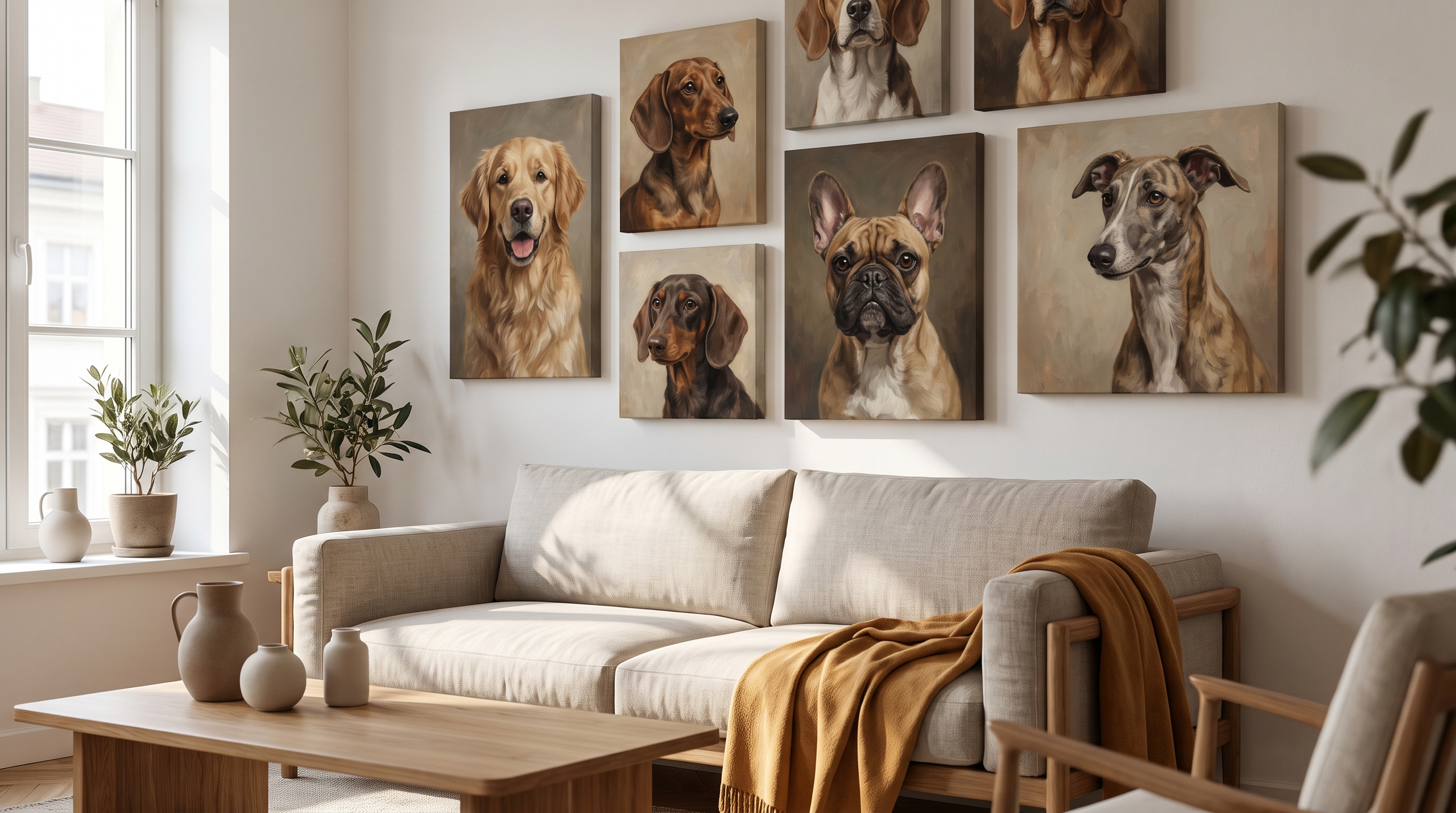

Introduction
Here is the thing about the photos on your phone: you have dozens of your dog, maybe hundreds, and you keep scrolling past them with this feeling that one of them should be on your wall. Dog canvas prints give you a way to take that favorite shot — the one where she is looking right at you, or the one where his ears are doing that thing — and turn it into something that actually belongs in your living room.
You are not buying a product. You are buying a way to keep them in the room with you. That is what makes canvas prints different from a framed photo or a print shoved in a drawer. The texture, the scale, the way the image wraps around the edges — it all adds up to something that feels intentional, like you meant for it to be there. And when people walk into your home, they notice. Not because it is flashy, but because it looks like it matters.
The best part? You do not need a fancy camera or a studio setup. The photo you already love — the one you keep coming back to — is probably the right one. Good light does most of the work, and the rest is just knowing which shot will hold up when it is printed big. If you have ever thought about turning one of those phone photos into real art, custom dog paintings from your photo can help you understand what makes a great portrait candidate.
Canvas prints are not just for dog owners who want to show off their pets (though that is a solid reason). They work as gifts, as memorial pieces, as a way to mark a chapter of your life when this dog was the center of it. They are personal, but they are also just really nice to look at. And unlike most things you put on your walls, they do not go out of style.
By the end of this, you will know exactly how to pick the right photo, what to look for in a canvas print, and how to make sure it looks like something you would actually hang — not something that screams "I ordered this online and hoped for the best."
What are Dog Canvas Prints?
Dog Canvas Prints are your dog's photo — the one you keep coming back to — printed on real canvas and stretched over a wooden frame, ready to hang. No glass, no matting, no studio required. Just the photo that actually looks like them, turned into something worth hanging.
Here is the thing: they are not fancy art prints behind glass. Canvas has texture. It breathes. The weave catches light differently than paper, so the same photo feels warmer and a little more alive on your wall. That is why people choose canvas for the portraits they want to keep in the room.
Why Canvas Works for Dog Photos
Canvas does most of the work for you. A good photo on canvas automatically looks more expensive than the same photo in a cheap frame. The texture hides small imperfections — a little motion blur, a slightly soft focus — that would stand out on glossy paper. And because there is no glass, you can hang it at their eye level without worrying about glare.
The appeal is simple: canvas prints celebrate the unconditional love your pet gives you every day by turning an everyday snapshot into a feature piece. You are not trying to make your dog look like someone else's dog. You are making the photo you already love into something that belongs on the wall.
Styles and Finishes You Will See
Most canvas prints come in two finishes: gallery wrap (where the photo wraps around the edges of the frame) or framed canvas (where a thin border or wooden frame surrounds the print). Gallery wrap is cleaner and more modern. Framed canvas feels a little more traditional. Neither is wrong — it is about what fits your wall.
Some services offer painted or artistic styles layered over the photo: watercolor effects, Renaissance-style portraits, or royal treatments where your dog wears a uniform. Those work best when the original photo is sharp and well-lit, because the style enhances what is already there. If you are starting with a blurry phone shot, stick with a straight canvas print — let the photo breathe.
When to Choose Canvas Over Other Formats
Choose canvas when you want the portrait to feel permanent, not temporary. Canvas is what you hang in the living room, not what you prop on a shelf. It is the format for photos you are sure about — the one you have looked at a hundred times and still makes you smile.
If you are memorializing a pet or giving a gift that needs to feel substantial, canvas delivers that weight. It says, "This matters." For more guidance on choosing the right photo for a lasting tribute, see Pet Memorial Portraits: A Lasting Tribute to Your Beloved Pet.
Creating Your Canvas Print
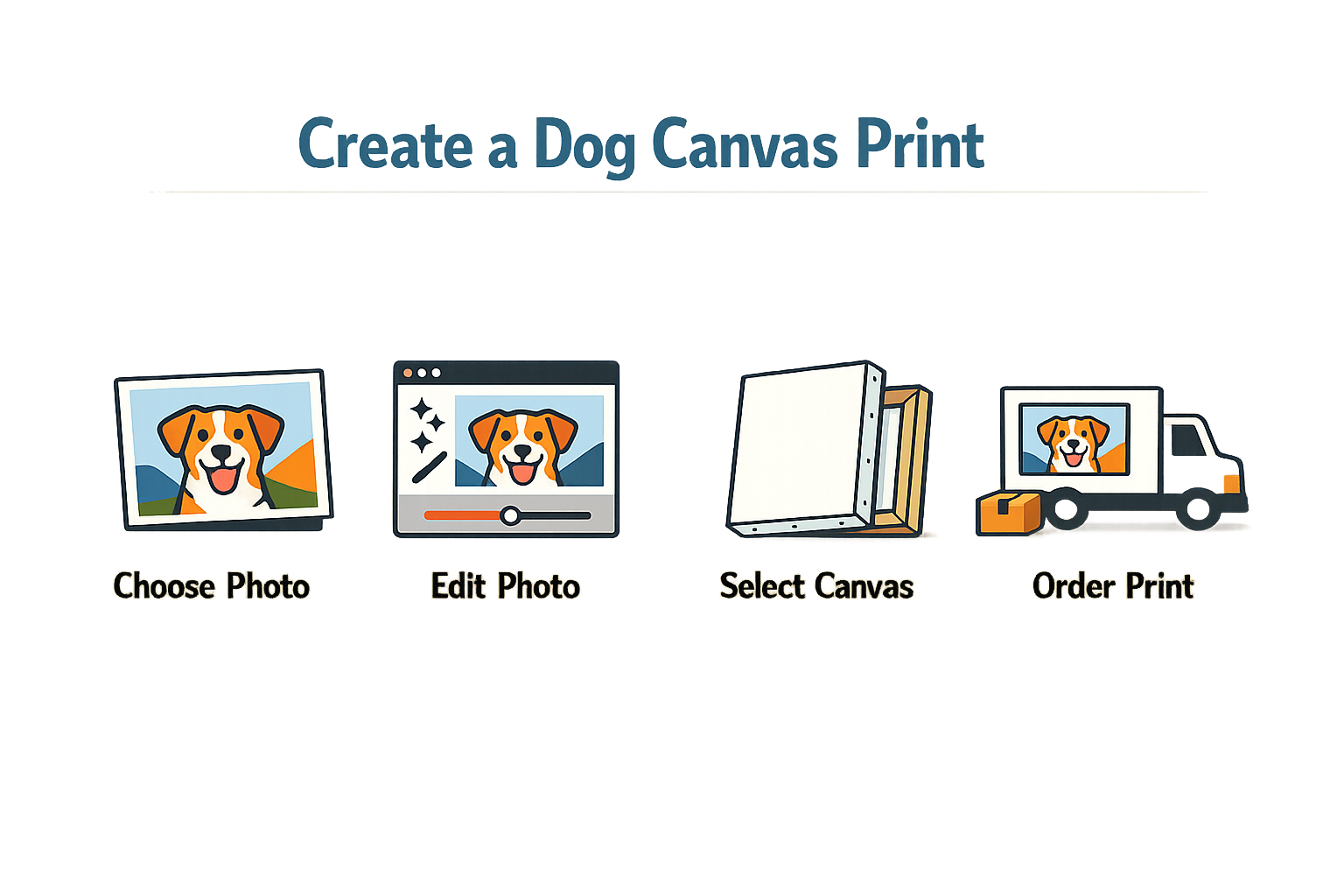
Here is the thing about turning a phone photo into a Dog Canvas Prints piece you actually want to hang: the photo you love on your screen is not always the one that works on the wall. You need a shot that shows off your dog's personality — the happy expression, the relaxed pose, the moment that feels like them. That is where you start.
Choosing the Right Photo
Good light does most of the work. Look for photos taken near a window or outside during golden hour — soft, warm, and a little dramatic. Your dog should be the clear focus, not competing with a busy background or half-hidden in shadow. The shot that actually works is usually the one where their eyes are sharp and their expression is unmistakable.
Skip the photos where they are mid-blink, turning away, or cut off at weird angles. You want something that feels like them — not a stranger who happens to have their collar. If you are stuck between two shots, pick the one with better light and a cleaner background. You can always crop tighter, but you cannot fix bad lighting after the fact.
Cropping and Framing for Canvas
Let the photo breathe. When you crop for a canvas print, leave a little space around your dog — do not jam their face right to the edge. At their eye level is usually the sweet spot for framing: if they are sitting, center the crop just above their shoulders; if they are standing, keep their head in the upper third.
Portrait orientation works best for head-and-shoulder shots. Landscape orientation suits full-body poses or when you have two dogs side by side. Square crops are the safe middle ground — they work for almost any pose and fit most wall spaces without looking awkward.
Step 1
Frame the face first
Position your dog's eyes in the upper third of the frame. This keeps the composition balanced and draws the viewer's eye exactly where you want it.
Step 2
Check the edges
Make sure no paws, ears, or tails are awkwardly cut off at the border. If something is close to the edge, either include it fully or crop it out entirely — half a paw looks like a mistake.
Step 3
Test the aspect ratio
Most canvas print services offer 8×10, 11×14, 16×20, and square formats. Preview your crop in the size you want before you order — what looks good as a thumbnail might feel cramped or empty at full scale.
Selecting a Printing Service
You do not need a specialty studio to get a portrait worth framing. Many online canvas print services let you upload a photo, choose a size, and preview the layout before you order. Look for services that show you a proof or mockup — this is the part people skip, and it is the one that saves you from a canvas that feels off when it arrives.
Pay attention to the canvas weight and finish options. A thicker canvas (at least 400gsm) feels more substantial and resists warping. Matte finishes work best for most dog portraits — they cut down on glare and give the print a painterly, gallery-ready look. Glossy finishes can look cheap under the wrong light, especially if your photo has a lot of contrast.
If you are creating a custom dog painting from your photo, many services will convert your image into a painted style before printing. This adds texture and warmth that straight photo prints sometimes lack, and it hides small imperfections in the original shot.
Displaying Your Canvas Prints
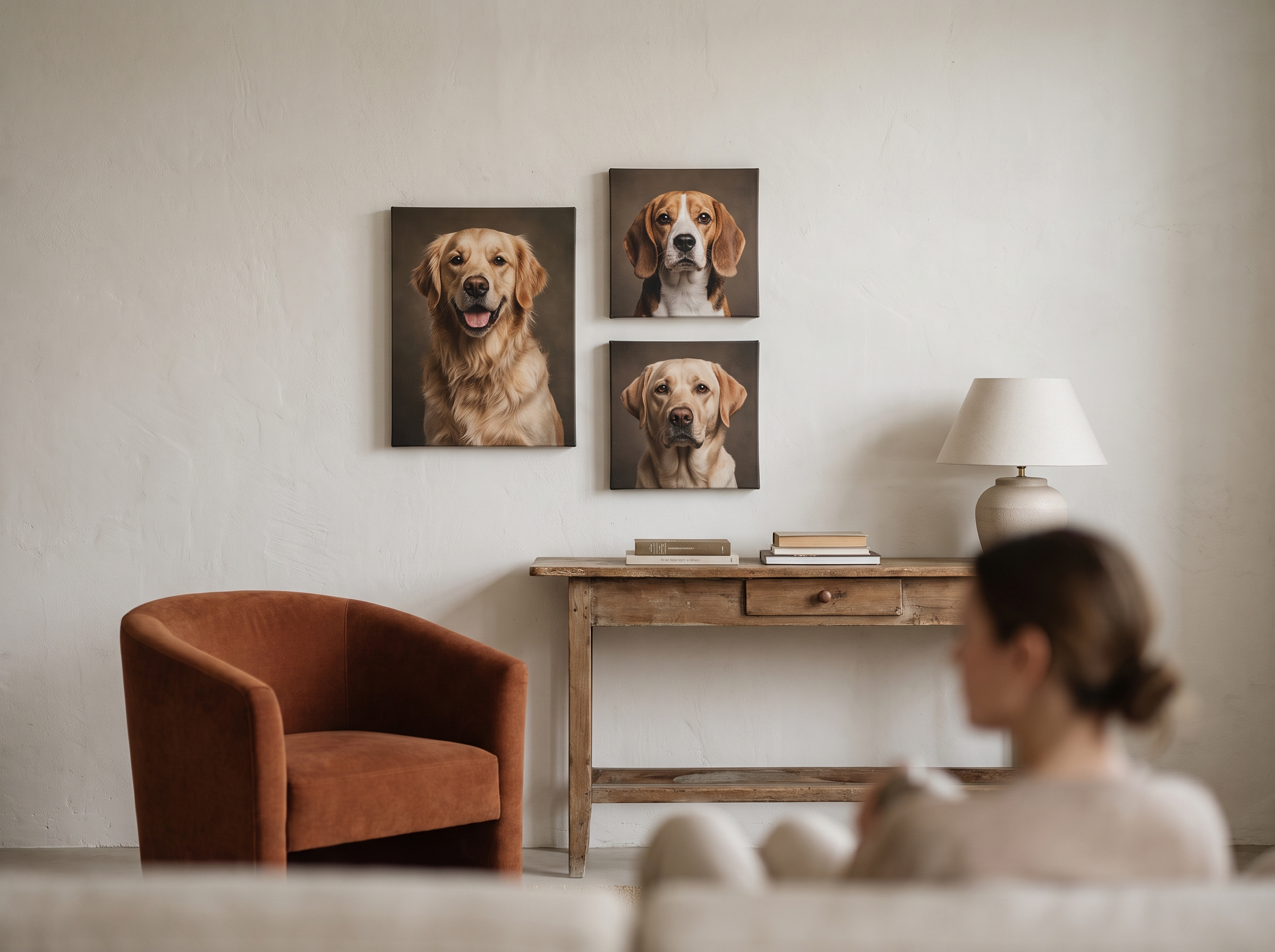
Here is the thing about hanging a dog canvas print: placement matters more than you think. A great portrait at the wrong height or in the wrong room just sits there. Put it where you actually look — at eye level, in a spot you pass every day — and it becomes part of the house.
The photo everyone gets wrong is the one they hang too high. Eye level means your eye level when you are standing in that room, not the ceiling. For most people that is around 57 to 60 inches from the floor to the center of the canvas. If you hang it above a sofa or console, leave 6 to 8 inches between the furniture and the bottom edge. Let the photo breathe.
Dog Canvas Prints Work Best in Rooms You Use
Your living room, hallway, or bedroom — these are the spaces where a canvas print actually gets seen. A portrait tucked into a guest room or a back hallway does not do much. You want it in the room where you drink your coffee, where your family gathers, where your dog spends her time. That is where it feels like them.
If you have more than one print, a gallery wall lets you mix different shots together — a close-up, an action shot, maybe a custom dog painting from your photo in a complementary style. The key is keeping a consistent visual thread: same frame style, same mat color, or a repeated color palette across the images. You do not need perfect symmetry, but you do need a plan before the first nail goes in.
Framing and Finishing Touches
Canvas prints look clean on their own — the wrapped edges give them a gallery feel without a frame. But if you want a more formal look, a simple float frame (where the canvas sits inside a shallow frame with a small gap all around) adds weight without covering the image. Avoid heavy ornate frames unless your print is a formal portrait; most dog photos want something lighter.
Good light does most of the work. Natural light from a window is ideal, but keep the canvas out of direct sun — UV fading is real, and it happens slowly enough that you will not notice until it is too late. If you are lighting it artificially, use a warm LED picture light or a track light angled from above. Cold overhead lighting flattens everything.
Displaying pictures of your pet turns everyday photos into lasting personal art, filling your home with warmth and happy memories.
Make It Feel Intentional
The difference between a canvas print that looks expensive and one that looks like an afterthought is intention. Measure twice, use a level, and do not rush the hanging. If you are building a gallery wall, use painter's tape on the wall to map out each frame before you start drilling. This is the part people skip, and it shows.
Your dog deserves a spot that feels permanent, not temporary. Treat the canvas like the art it is — worth hanging, worth getting right, worth coming back to every time you walk past.
Benefits of Canvas Prints
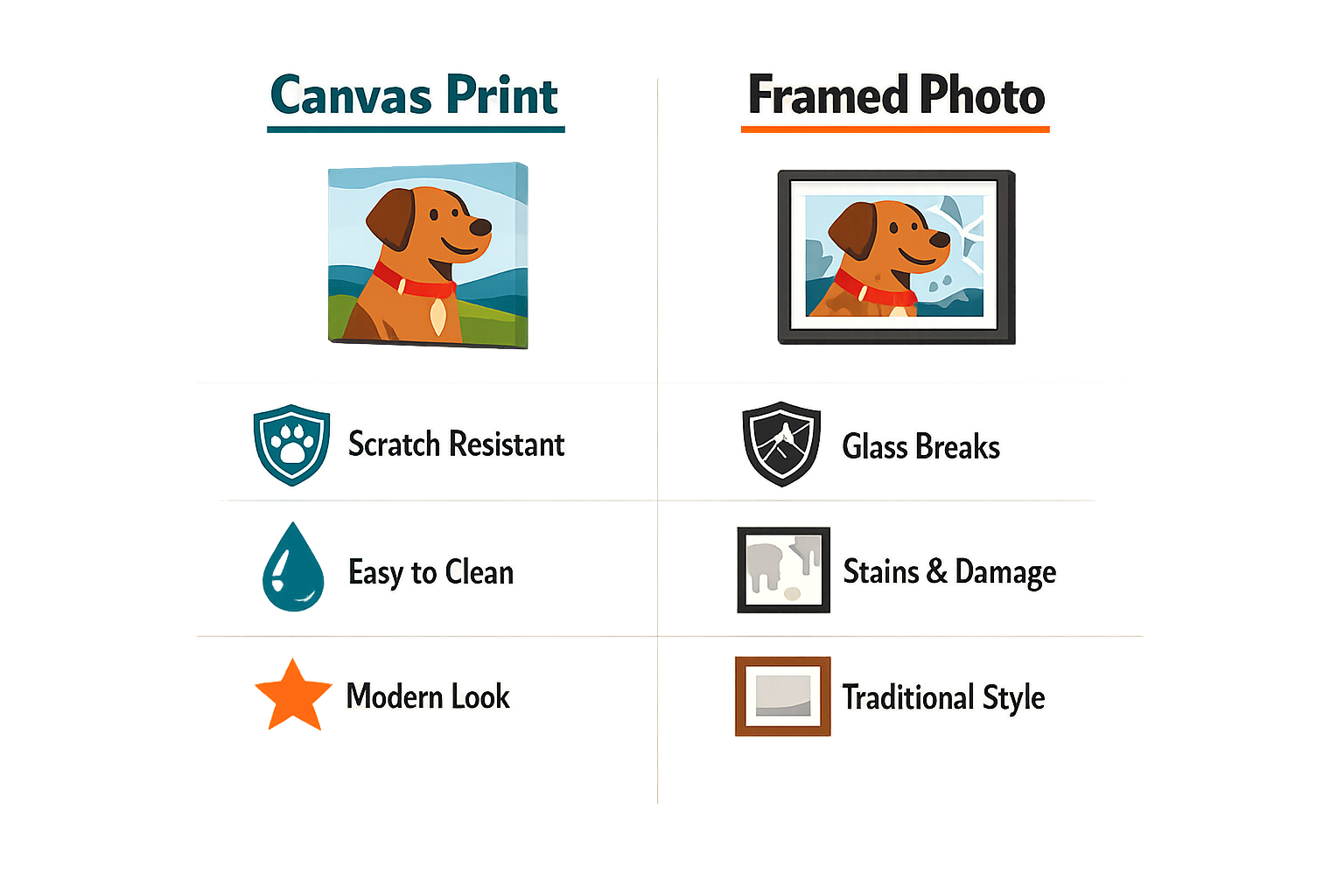
Here is the thing about Dog Canvas Prints: they are not just pretty. They last. A good canvas print will outlive a framed photo behind glass, and it does it without the glare, the weight, or the fragile edges that crack when you move apartments. Canvas breathes. It ages gracefully. And when you hang one of your dog, it does not look like you printed something at the drugstore — it looks like you meant it.
They Turn Everyday Photos Into Something Worth Hanging
You already have the photo. The one where she is looking right at you, ears up, the light hitting her face just right. That photo lives on your phone, and you scroll past it every week. A canvas print takes that moment and makes it permanent. It transforms your favorite snapshot into a high-quality feature piece that celebrates the unconditional love your pet gives you every day. No studio required. Just the shot that actually works, printed on material that makes it feel like art.
The photo everyone gets wrong is the one they overthink — your dog does not need a costume or a backdrop, just good light and your full attention.
Durability That Outlasts Paper and Glass
Canvas does not fade the way paper does. It does not shatter. You can hang it in a hallway where the sun hits it every afternoon, and it will hold up. The texture hides dust better than glass, and if you bump it with a chair, it flexes instead of cracking. That matters when you are hanging something you actually care about — something that represents years, not just a moment.
For pet owners, that durability means the portrait you hang today will still look like her ten years from now. Not yellowed. Not warped. Just there, soft and warm, keeping them in the room long after they are gone. If you are thinking about a memorial piece, Pet Memorial Portraits: A Lasting Tribute to Your Beloved Pet walks through how to choose a style that honors them without feeling heavy.
Aesthetic Appeal That Fits Any Room
Canvas prints do not demand a specific decor style. They work in a modern apartment with white walls and they work in a house full of wood and vintage furniture. The texture gives them depth — they do not sit flat the way a photo print does. That little bit of dimension makes them feel more expensive, more intentional, even when the photo itself is casual.
You do not need a frame. You do not need matting. The canvas wraps around the edges, so the image continues on the sides, and the whole thing mounts flush to the wall. It is clean. It is simple. And it lets the photo breathe instead of boxing it in.
Caring for Your Canvas Prints
Here is the thing about canvas: it is tougher than you think, but it still needs a little respect. You do not need a conservation lab or white gloves — just a few basic rules and your Dog Canvas Prints will look good for years.
Keep Them Out of Direct Sunlight
This is the part people skip. Sunlight fades everything — photos, paint, fabric, all of it. If your canvas hangs where the sun hits it for hours every day, the colors will drift over time. You do not have to keep it in a cave, but try to avoid that one wall where the afternoon light is relentless. Indirect light is your friend.
Dust Them Regularly
Canvas collects dust just like anything else on your wall. Once a month, take a soft, dry cloth — microfiber works great — and wipe it down gently. No sprays, no water, no cleaning solution. Just a quick pass to keep the surface clear. If you let dust build up, it settles into the texture and makes the whole thing look dull.
Avoid High-Humidity Rooms
Canvas does not love moisture. Bathrooms, laundry rooms, and anywhere with a lot of steam can warp the frame or make the canvas sag. If you want to hang a portrait in one of those spots, consider a framed print instead — it will hold up better. For living rooms, hallways, and bedrooms, canvas is perfect.
Handle With Care When Moving
If you need to take it down or move it to another room, hold it by the frame, not the canvas itself. The surface is durable, but pressing your fingers into it can leave marks or dents. When you store it, keep it upright or flat — never lean anything heavy against the front.
When to Clean More Thoroughly
If your canvas gets a smudge or a mark, use a barely-damp cloth and blot it gently. Do not scrub. If it is something stubborn, leave it alone — aggressive cleaning does more harm than good. Most of the time, a dry dusting is all you need.
Treat your canvas like the piece of art it is, and it will stay sharp and vibrant. No fuss, no special products — just a little attention and the right spot on the wall. If you are thinking about adding more portraits to your collection, check out Custom Dog Paintings From Your Photo for ideas on styles and finishes that suit different rooms.
Conclusion
Here is the thing: the photo sitting on your phone right now — the one you keep coming back to — can become the portrait worth hanging. You do not need a professional photographer or a studio setup. You just need good light, your dog at their eye level, and a little patience. The rest is choosing a canvas size that fits your wall and letting the photo breathe.
Dog canvas prints are not just decor. They are identity, memory, and pride rolled into one piece you will walk past every day. When you pick the right photo — the one that actually feels like them — and put it on canvas, you are not buying art. You are keeping them in the room.
If you are looking for more ways to turn everyday photos into something worth framing, check out our guide on custom dog paintings from your photo to explore different styles and what works best for your space. Whether it is a single portrait or a gallery wall, the goal is the same: make it feel like them, and trust me on this — you will know it when you see it.