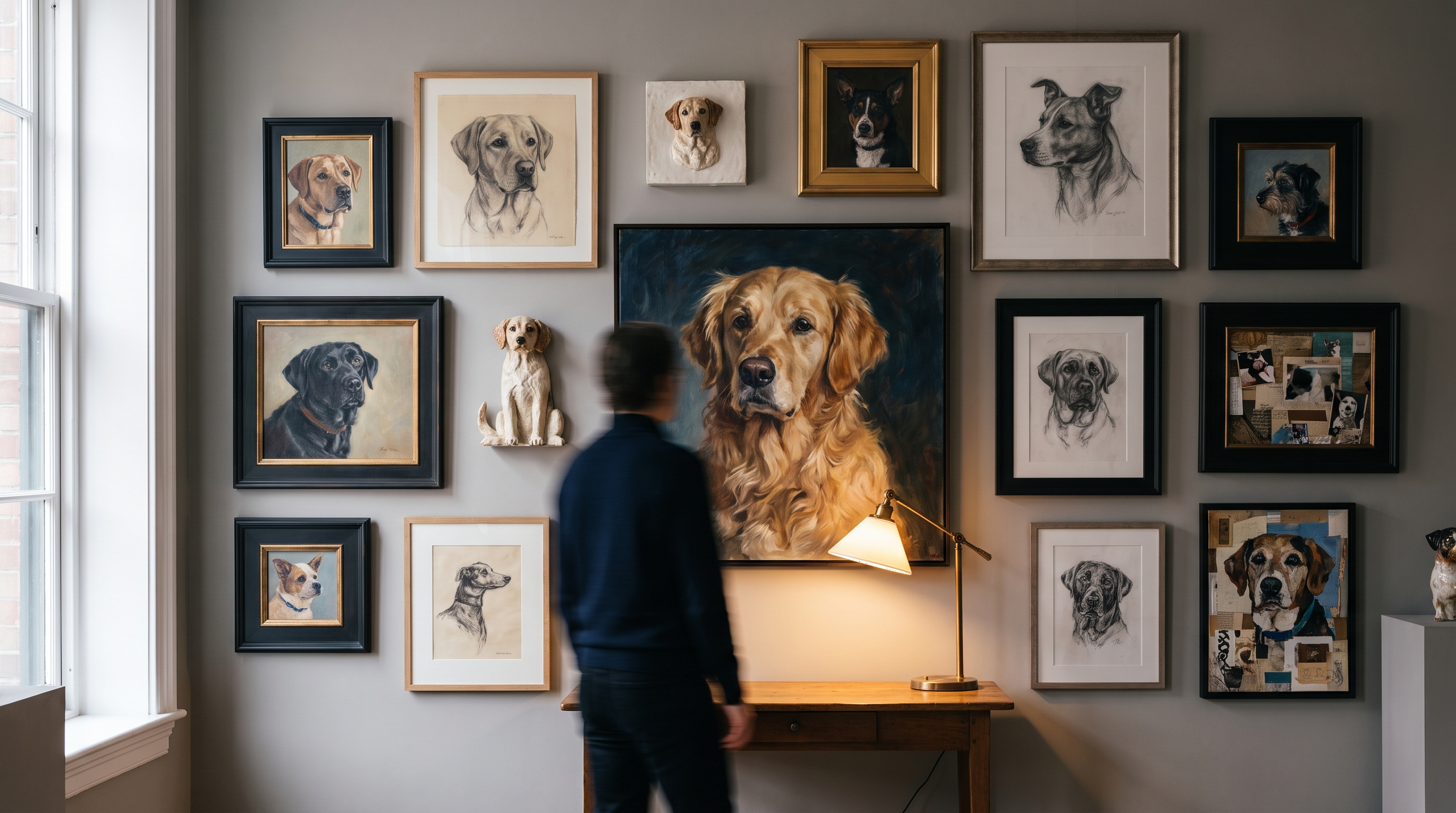

Turn Your Pet Photo Into Art: What You Need to Know
Turn your pet photo into art by starting with the right source image. The photo you love on your phone is almost never the one that makes a great portrait. You scroll past a hundred blurry action shots and stop on the one where your dog is sitting still, looking right at you, with soft light coming from the side. That is the shot that actually works.
Choosing your favorite photos of your pet and giving them life on paper—or canvas, or your living room wall—matters more than most people think. It is not just about decoration. It is about keeping them in the room with you, painted in a way that feels like them. The era you choose, the style, the framing—all of it adds up to something you will know when you see it.
The challenge is real: capturing the bond between you and your pet in a single image is tough enough, but turning that photo into a genuine-looking painting—whether oil, watercolor, or Renaissance—requires the right starting material. Human skin and coarse canine fur have contrasting textures that need careful handling. The little details that sell it—the glint in their eye, the way their ears sit, the expression you recognize instantly—those come from the source photo, not the style you pick later.
That is why understanding custom dog portraits from photos and how different styles work is the first step. You do not need a studio or professional gear. You need the one photo where your pet looks like themselves, in decent light, at their eye level. Everything else—the artistic transformation, the style, the final framing—builds on that foundation.
This is the part people skip: they pick a style first, then realize their photo does not fit. Do it backward. Start with the photo that makes you stop scrolling. Then find the style that makes it worth hanging.
Popular Art Styles for Pet Portraits
Here is the thing about pet portrait styles: the one you pick changes everything. A golden retriever in Renaissance robes feels different than that same dog in watercolor — same photo, completely different mood. The style you choose tells the story, and trust me on this, you want it to feel like them.
The good news? You have options. Lots of them. The era you choose, the brushwork, the vibe — it all matters, and none of it requires you to be an art expert. Let me walk you through the styles that actually work.
Renaissance and Royal Portraits
This is the one everyone comes back to. Your pet in period costume — velvet robes, gold embroidery, maybe a crown — painted like an old master hung it in a palace. Think Rembrandt lighting, rich textures, the kind of thing you would see in a museum wing dedicated to nobility.
It works because it is dramatic without being silly. A dog in a ruffled collar feels regal. A cat in ermine and jewels? That is just accurate. The style suits pets with expressive faces and a little attitude — the ones who already act like royalty.
The Renaissance style works because it treats your pet exactly how they see themselves: as the most important figure in the room.
If your pet has that dignified, slightly aloof energy, this is the move. Dog breeds with strong, noble features translate especially well — think anything with a profile that could have ruled a small European principality. For cats, Renaissance cat portraits capture their natural nobility perfectly.
Watercolor and Soft Painting Styles
Watercolor is the opposite of Renaissance: light, airy, and a little dreamy. The edges are soft, the colors bleed into each other, and the whole thing feels warm without being heavy. This is the style for pets who are gentle, sweet, or just ridiculously photogenic in natural light.
It works best when the photo already has good light and a clean background. Watercolor does not fight the image — it enhances what is already there. If your dog looks amazing in golden hour or your cat has that soft, fluffy coat that catches the light just right, watercolor lets the photo breathe.
This style also scales beautifully. A small watercolor print feels personal and delicate; a large one on canvas still feels approachable. It is the style that keeps them in the room without demanding all the attention.
Fantasy and Themed Transformations
This is where it gets fun. Your golden retriever as a knight in shining armor. Your cat as a wizard with a staff and robes. A hamster in a tiny space suit. Fantasy portraits lean into imagination — you are not just painting your pet, you are casting them in a role.
The key here is commitment. A half-hearted fantasy portrait feels like a costume. A fully realized one — detailed armor, dramatic lighting, a background that sells the scene — feels like your pet belongs in that world. It is the little details that sell it: the glint on the armor, the texture of the fabric, the way the light hits their face.
| Style | Best For | Mood |
|---|---|---|
| Renaissance | Dignified, expressive pets | Regal, timeless |
| Watercolor | Gentle, photogenic pets | Soft, warm |
| Fantasy | Pets with big personalities | Playful, imaginative |
| Comic/Cartoon | Action shots, quirky expressions | Fun, energetic |
Fantasy works for memorial portraits too — not in a heavy way, but as a celebration. Your dog as a guardian angel, your cat as a mythical creature. It honors them by imagining them larger than life, which is often exactly how they felt to you. Mythological dog portraits explore this approach through historical and artistic lenses.
Comic and Cartoon Styles
If your pet has one of those goofy, mid-action photos — tongue out, ears flying, pure chaos — this is the style. Comic and cartoon portraits turn movement and personality into bold lines and bright colors. Think graphic novel, not Sunday funnies.
The style works because it captures energy. A realistic painting of a dog mid-leap can feel stiff; a comic-style version of the same moment feels alive. The exaggeration is the point — bigger eyes, bolder expressions, the kind of thing that makes you smile every time you walk past it.
This is also the style for pets who are characters. The one who photobombs every family picture, the cat who knocks things off counters and stares you down while doing it. Comic style says: this is who they are, and we love it.
Oil Painting and Classical Realism
Oil painting is the heavyweight. Rich colors, visible brushstrokes, the kind of texture you can almost feel through the canvas. It is the style that says: this is serious art. Not stuffy — just confident.
Realism works when the photo is already strong. A well-lit portrait, a clear expression, good framing. Oil painting does not fix a bad photo; it elevates a good one. The brushwork adds depth, the color palette adds warmth, and the whole thing feels substantial in a way that lighter styles do not.
This is the style for the photo you keep coming back to. The one where the light is perfect, the expression is just right, and you can already see it on the wall. Oil painting makes it feel permanent, like it was always meant to be art.
How Do You Choose the Right Style to Turn Your Pet Photo Into Art?
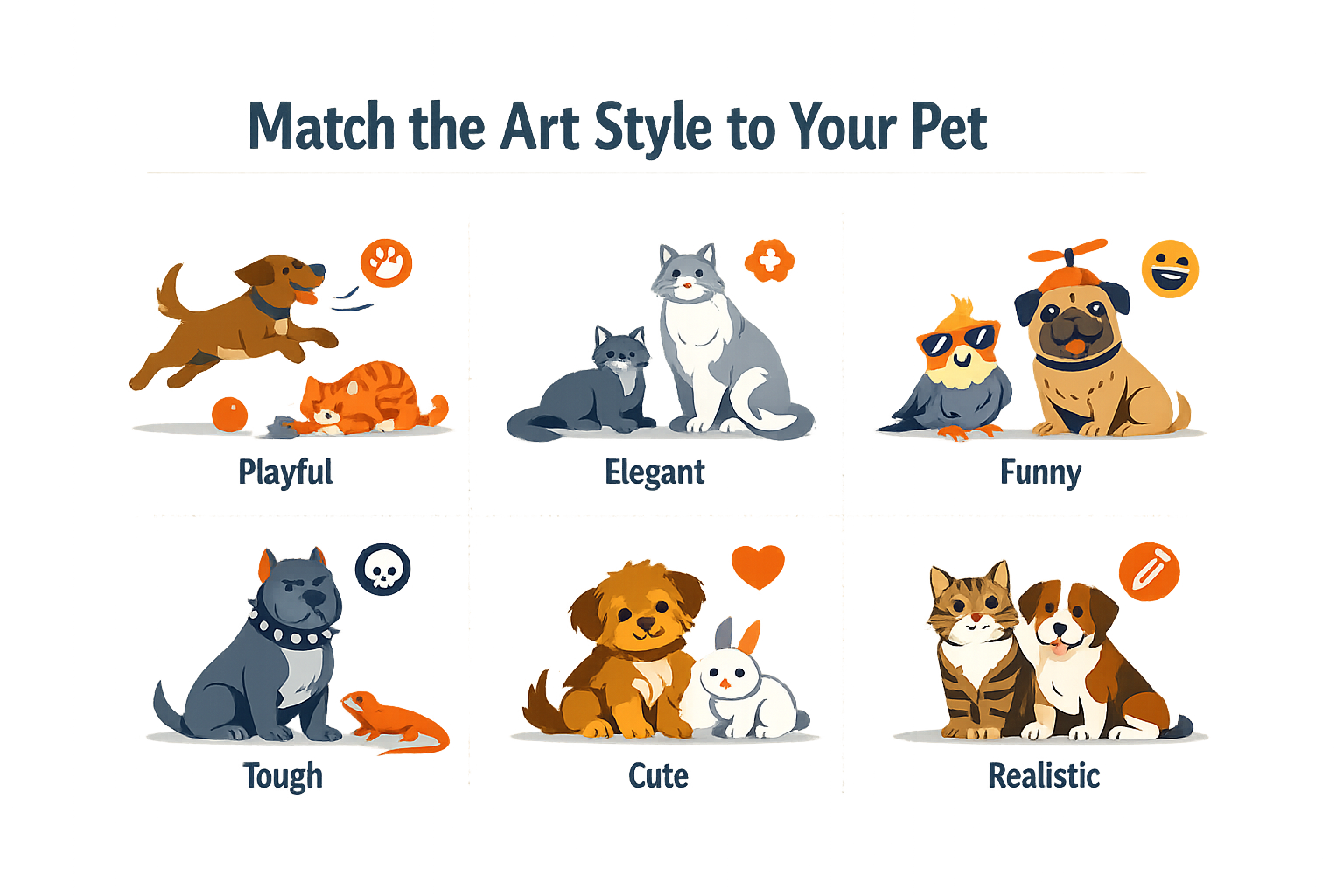
Here is the thing about choosing a style: the one that feels right on Pinterest is not always the one that actually works for your pet. You want something that feels like them — not just pretty, but true. The difference is smaller than you think, but it shows up the second you hang it on the wall.
Start With the Photo, Not the Style
The photo you love on your phone is almost never the one that prints well. Trust me on this. Sharpness at the eye is everything — if their face is soft or blurry, no style will save it. Look for a shot where you can see their expression clearly, where the face or body is fully visible, and where the light does most of the work.
Your pet's personality lives in their eyes and their posture. A good portrait keeps that intact, no matter which era you choose. If the photo does not feel like them before you turn it into art, it will not feel like them after. For cats specifically, photographing your cat for a portrait requires patience and the right approach.
Match the Style to Their Energy
Some pets just look right in a ruff and velvet. Others need something softer — watercolor, maybe, or a clean oil portrait with warm light. The era you choose should echo how they carry themselves. A regal, still dog suits Renaissance or royal styles. A wiggly, expressive cat might need something looser and more painterly.
Think about the room, too. A dramatic Renaissance portrait works in a gallery wall or over a mantel. A soft watercolor sits well in a bedroom or hallway. Let the photo breathe in the space it will live in — that is the part people skip, and it shows.
Step 1
Pick a clear, sharp photo
Make sure the face is visible, the expression is recognizable, and the image is not too blurry. Sharpness at the eye is the single most important factor for a portrait worth framing.
Step 2
Consider your pet's personality
A calm, dignified pet fits formal styles like Renaissance or oil. An energetic, playful pet works better in watercolor or softer, looser treatments. Match the style to how they actually are.
Step 3
Think about where it will hang
A bold, dramatic portrait needs wall space and good light. A quieter piece works in tighter spots or alongside other frames. The style should fit the room as much as it fits the pet.
The Little Details That Sell It
Good light, a clean background, and a photo where your pet is looking somewhere close to the camera — those three things do more than any filter or effect. You do not need a studio. You just need a window, a patient pet, and the shot that actually works.
If you are choosing between two photos, pick the one you keep coming back to. That is the one that feels like them, and that is the one worth hanging.
Customer Experiences and Testimonials
Here is the thing about turning your pet photo into art: the moment you hang it, it stops being just a picture. It becomes the thing people notice first when they walk into the room — the conversation starter, the piece that makes your space feel like yours. That shift is what people talk about when they tell me why they did it.
The stories I hear are never about the technical side. No one says, "The brushstrokes were rendered beautifully." They say things like, "I cried when I opened the box," or "It feels like he is still in the room with us." That is the part that matters — not the style you picked or the frame you chose, but the fact that you now have something that keeps them close.
What Makes a Portrait Feel Worth It
The portraits that land are the ones that feel like them. Not a generic dog in a ruff, not a cat that could be anyone's — the one you keep coming back to because you can see their personality in it. That is what makes it worth hanging, and that is what people remember.
Illustrating your pet is not just about making a pretty picture — it is about creating a unique keepsake that exists nowhere else.
Some people frame theirs and put it over the mantel. Others keep it in the office, at their eye level, so they see it every day. A few have told me they ordered a second one as a gift after seeing how much the first one meant. The pattern is always the same: you think you are buying wall art, and then it turns into something bigger.
The Process as the Payoff
What surprises people is how much they enjoy the process itself. Picking the photo, choosing the era, watching it come together — it is a moment of calm in the middle of everything else. You are not rushing through it. You are sitting with the memory of your pet, deciding how you want to see them, and that part alone is worth doing.
One thing I have noticed: people who were on the fence about which style to pick end up loving whichever one they chose, because the act of choosing made it personal. The dog painting styles all work if the photo is good and the fit feels right. Trust me on this — the style is less important than the fact that you did it.
Why People Keep Coming Back
The portraits that get reordered are almost always memorials or gifts for family. Someone loses a pet, orders a portrait, and then a year later they are back ordering one for their sister who just went through the same thing. It becomes the gift you give when you do not know what else to say — the one that actually lands.
Others come back because they got a new pet and want them in the same style, same frame, same spot on the wall. It is not about collecting art. It is about keeping everyone in the room, even after they are gone.
The little details that sell it are always the same: good light in the original photo, the expression you recognize, and a style that does not fight the personality of the pet. When those three things line up, you get something you will look at every single day and never get tired of.
Pricing and Options for Pet Photo Art
Here is the thing about turning your pet photo into art: the price usually tells you what you are actually getting. Free tools exist, and they are fine for a quick phone wallpaper or a social media post. But if you want something worth hanging — something that looks sharp at eye level and does not pixelate when you print it — you need to understand what you are paying for.
Free Generators: What You Get (and What You Don't)
Free AI portrait generators will turn your photo into art in minutes. That part is real. The catch is resolution. Most free tools output images that look fine on a screen but fall apart the moment you try to print them larger than a postcard. Low resolution means blurry edges, visible artifacts, and a portrait that screams "I downloaded this for free."
If you just want to see what your dog would look like in Renaissance robes, free is perfect. If you want to frame it and hang it in your living room, it is not.
Paid Services: The Quality You Can Actually Print
Paid platforms like Pet Canvas produce images in 4K resolution — the kind that prints sharp at large sizes. That is the difference. You are not paying for the AI to work harder; you are paying for an image file that a professional printer can handle without making you regret it.
These services typically generate portraits in classic styles — Renaissance, Baroque, Postimpressionist — and deliver them in about two minutes. The turnaround is fast, but the real value is in what you get: a high-resolution file you can print on canvas, metal, or fine art paper without losing detail.
What to Look for in a Paid Package
Not all paid options are built the same. Here is what separates a portrait worth framing from one you will bury in a folder:
- Resolution: 4K minimum. Anything lower and you are gambling on print quality.
- Style range: Does the service offer the era you want? If you are set on Baroque drama or watercolor softness, make sure they deliver that style well.
- File ownership: You should get a downloadable file you can print anywhere, not just through their shop.
- Turnaround time: Most good services deliver in minutes, not days. If it takes longer, it is probably not automated.
The best platforms let you preview the style before you pay, so you know exactly what you are getting. If they do not offer a preview or sample, that is a red flag.
The photo you love on your phone is not the same as a portrait you will love on your wall — resolution and print quality make that difference real.
When Free Is Enough (and When It's Not)
Use a free generator if you want to experiment, test styles, or create something just for digital use. It is a no-risk way to see if your pet's photo works in a painted format. But if you are buying a frame, planning a gift, or creating a memorial piece, go paid. The difference in quality is not subtle — it is the difference between a keepsake and a placeholder.
For more guidance on selecting the right artistic approach for your pet, see Dog Painting Styles: Watercolor vs Oil vs Renaissance.
Frequently Asked Questions About Turning Pet Photos Into Art
What photo works best to turn your pet photo into art?
A clear, well-lit photo where your pet's face is sharp and their expression is visible works best. Natural light from a window, eye-level framing, and minimal background clutter give any artistic style the best foundation. Sharpness at the eye matters more than professional equipment.
How much does it cost to turn your pet photo into art?
Free generators create low-resolution images suitable for screens but not printing. Paid services offering 4K resolution for framing-quality prints typically range from moderate to premium pricing, depending on size and style complexity. Print quality and file ownership justify the cost difference.
Which art style should I choose for my pet portrait?
Match the style to your pet's personality and the room where it will hang. Dignified pets suit Renaissance or oil painting styles. Gentle, photogenic pets work well in watercolor. Energetic pets shine in comic or fantasy styles. The photo you keep returning to usually reveals the right choice.
Can you turn any pet photo into art?
Most photos can be converted, but quality varies. Blurry images, poor lighting, or obscured faces limit how well the final portrait captures your pet's personality. Start with the sharpest photo where your pet looks like themselves, and the artistic transformation will preserve what matters.