
Introduction to Mythological Dogs
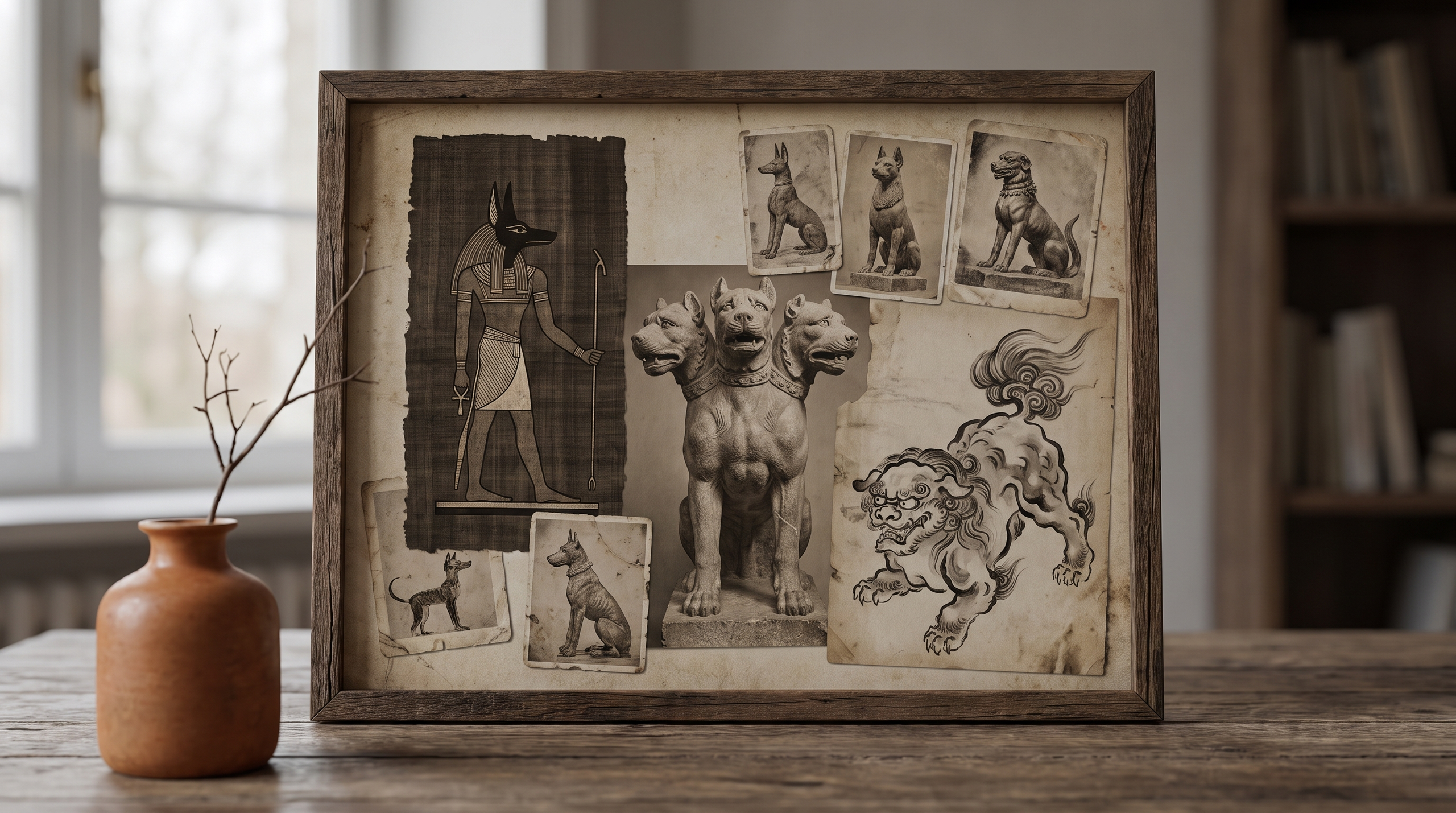
Here is the thing about mythological dog portraits: they are some of the oldest painted subjects we have. Long before anyone thought to immortalize a king or a saint, artists were carving and painting dogs — guardians, hunters, companions to gods. The painted dog has a longer and more illustrious lineage than the painted man, and that tells you something about how deeply these animals have shaped human culture.
From Mesopotamian reliefs to Egyptian tomb paintings, dogs appeared not as background decoration but as central figures with their own symbolic weight. In Ancient Egypt, Anubis — depicted as a man with a jackal's head or as a lying black dog — symbolized the protection of the dead and guided souls through the underworld. He was not just a pet. He was a deity whose image carried the gravity of life, death, and what comes after. That is the kind of presence a custom dog painting from your photo tries to capture today — not just what your dog looked like, but what they meant.
The painted dog has a longer and more illustrious lineage than the painted man.
Dogs in art have always played multiple roles. They accompanied powerful figures — pharaohs, gods, warriors — but they also stood beside shepherds, beggars, and everyday people. This range reflects their symbolic flexibility: loyalty, protection, companionship, vigilance. A mythological dog portrait was never just a likeness. It was a statement about the values the dog represented and the relationship between the human and animal worlds.
Why Mythological Dog Portraits Still Matter
When you look at a Renaissance painting of a dog at its owner's feet or an ancient relief of a guardian hound, you are seeing a tradition that has carried forward for thousands of years. These are not random decorative choices. Artists used dogs to communicate ideas about fidelity, social status, and the sacred. The way a dog was posed, the expression in its eyes, the setting around it — all of it was intentional.
Today, when you commission a portrait of your own dog, you are tapping into that same lineage. You are saying this animal mattered, this bond was real, and I want something that holds up to that weight. The styles may have changed — watercolor, oil, digital rendering — but the impulse is ancient. You want a portrait worth hanging, one that keeps them in the room with you.
The best mythological dog portraits share a few traits: strong composition, expressive faces, and a sense of presence that goes beyond photographic accuracy. The artists who painted Anubis or the hunting dogs in a Flemish tapestry were not just documenting animals. They were creating symbols that would endure. That is the standard your own dog's portrait is reaching for — not perfection, but meaning.
Famous Mythological Dog Portraits
Here is the thing about mythological dog portraits: they are not just pretty pictures of dogs in fancy settings. These paintings carry weight — fidelity, violence, devotion, status — depending on which story the artist chose and how they framed it. The Renaissance masters knew this. They painted dogs that anchored entire compositions, dogs that symbolized loyalty in marriage, and dogs that turned on their own masters in mythological fury. Let me show you the ones that still matter.
Jan van Eyck's The Arnolfini Portrait
The small brown dog at the couple's feet is not decoration. It is the anchor. In Jan van Eyck's The Arnolfini Portrait, that dog faces outward, looking straight at you, and it represents marital fidelity — the kind of loyalty that holds a household together. The dog is tiny, but it does more compositional work than half the objects in the room. Van Eyck knew what he was doing. This is Northern Renaissance painting at its most deliberate, and the dog is not an afterthought.
The portrayal of dogs in Northern Renaissance art shifted to symbolize fidelity, anchoring the moral and emotional center of domestic scenes.
You see this pattern repeat across the era. Dogs in Renaissance art often symbolize fidelity, status, guidance, or devotion, depending on the context of the painting. The same breed can mean loyalty in one frame and violence in another — it is all about the story the artist is telling.
Titian's The Death of Actaeon
Titian's The Death of Actaeon shows the other side. Here, dogs are not companions — they are weapons. Actaeon, transformed into a stag by the goddess Diana, is torn apart by his own hunting dogs. The painting illustrates how dogs can shift from companionship to violence in a single mythological turn. It is brutal, and it is meant to be. The dogs are doing what they were trained to do, but the cruelty is in the logic of the myth itself: the hunter becomes the hunted, and his most loyal tools become his executioners.
This is the part people skip when they think about custom dog paintings from your photo — the old masters did not paint dogs to make you smile. They painted them to carry meaning, to anchor a narrative, to make you feel something specific. Fidelity, status, devotion, or doom.
Why These Portraits Still Work
The reason these paintings hold up is simple: the artists let the dog breathe. They gave the animal space in the composition, a role in the story, and enough detail to make you believe it was real. Whether the dog symbolized loyalty or violence, it was never just background. That is the lesson. A portrait worth hanging — mythological or not — gives the subject room to be more than decoration.
The era you choose, the pose you pick, the light you use — all of it comes back to what you want the portrait to say. The Renaissance masters were not guessing. Neither should you.
Historical Representations of Dogs
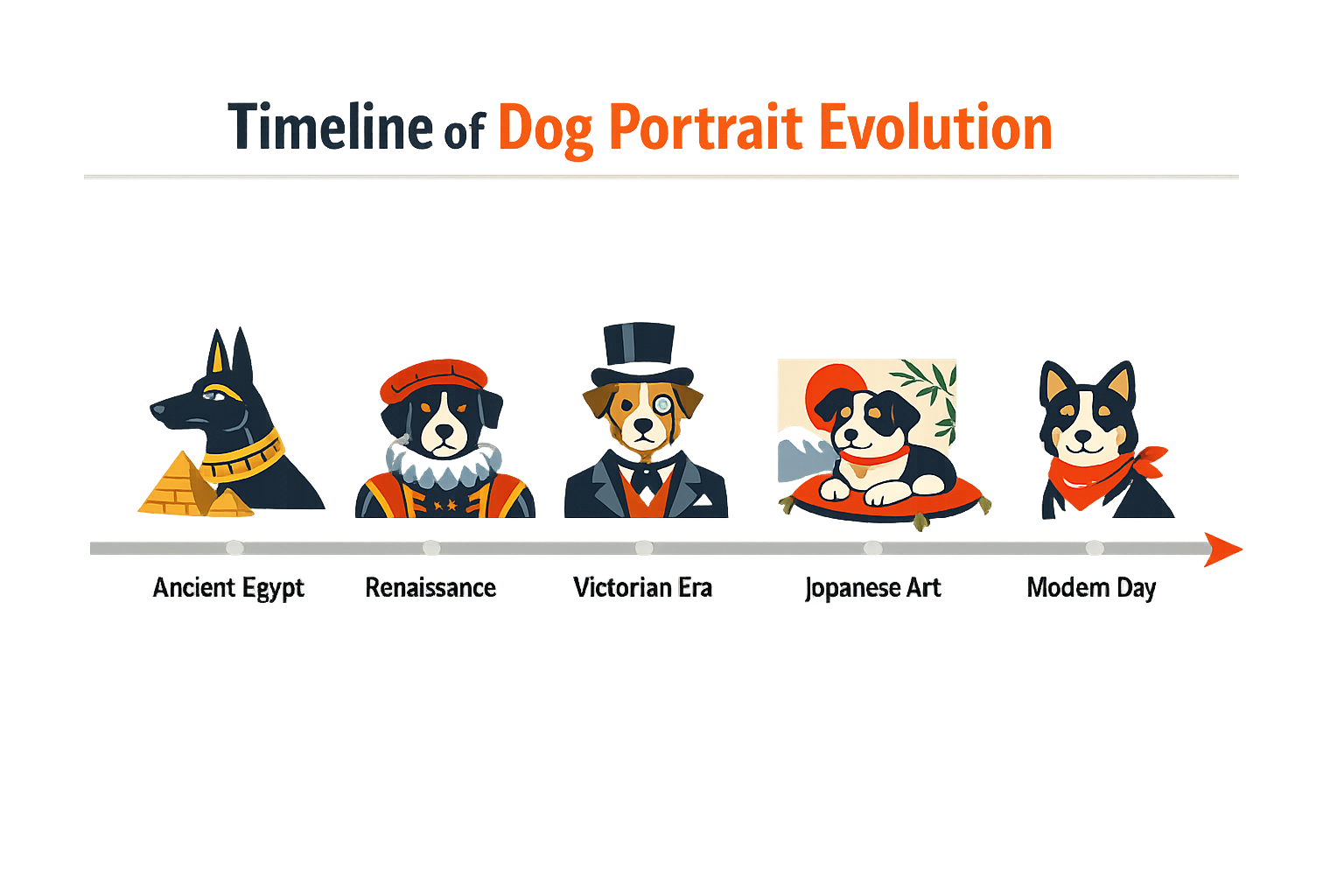
The history of dog portraits stretches back thousands of years, crossing cultures and continents in ways that might surprise you. Dogs were not just companions — they were symbols of loyalty, wealth, and status, which is why they kept showing up in the art that mattered.
Here is the thing: the way dogs appear in art tells you as much about the people who owned them as it does about the dogs themselves. A hunting spaniel in a gilt frame said something very specific about an English gentleman in the seventeenth century. A dachshund sitting beside Queen Victoria said something else entirely. The portraits were never just about the dog.
Ancient Beginnings and Early Portraits
The Pompeii mosaic from around 79 CE — the famous "Cave Canem" (Beware of Dog) — is one of the earliest examples we have of a dog portrayed with individual features. This was not a generic guard dog. Somebody took the time to capture the specific look of that animal, down to the details that made it recognizable. That matters, because it means the idea of a portrait — something that looks like this dog, not just a dog — goes back further than most people think.
By the time you get to ancient Egypt and early Mediterranean cultures, dogs were already appearing in art alongside their owners, often in hunting scenes or as symbols of fidelity. The tradition was old even then.
The Renaissance: Where Pet Portraiture Really Took Off
This is the era that changed everything. Dogs started appearing not just as background details but as central figures in family portraits. They were painted with the same care and attention as the humans in the frame — sometimes more. The symbolism was clear: a well-bred dog meant a well-bred family.
Artists like Titian and Velázquez included dogs in their compositions because they added narrative weight. A spaniel at a noblewoman's feet was not decoration. It was a statement about her character, her household, her place in the world. The dog was doing work in the painting.
The Seventeenth Century and the English Gentleman
By the seventeenth century, an English gentleman could not properly furnish a country house without a portrait of his hunting spaniel in a gilt frame. This was not optional. It was part of the visual language of status and tradition. The dog portrait hung in the same rooms as the family portraits, and for good reason — it was family.
Even Queen Victoria sat with her dachshund Dash for half a dozen commissioned likenesses.
Queen Victoria's relationship with her dogs set the tone for an entire era. If the monarch was commissioning multiple portraits of her dachshund, you can bet the aristocracy followed suit. The dog portrait became a fixture of upper-class life, and the tradition stuck.
Evolution Across Cultures
Dog portraits were not just a European phenomenon. Across Asia, dogs appeared in scroll paintings and decorative art, often representing protection or good fortune. In Japan, dogs were painted in ink with the same reverence given to other noble subjects. The styles differed, but the impulse was the same: to capture the animal that mattered to the household.
The tradition spans roughly five thousand years across cultures, which tells you something about how deeply dogs have been woven into human life. The art followed the relationship, and the relationship has always been there.
If you are thinking about turning a photo of your own dog into something worth hanging, you are not inventing a new idea — you are continuing a very old one. The difference is that now, instead of hiring a court painter, you can start with the photo already on your phone. The same care that went into those old portraits — choosing the right light, the right expression, the details that make it feel like them — still applies. For more on how to pick the right photo for that kind of project, see Custom Dog Paintings From Your Photo: Styles, Process & Pricing.
Conclusion: The Legacy of Dogs in Art
From ancient Mesopotamian carvings to Renaissance oil paintings to the photo on your phone right now — dogs have been worth painting for thousands of years. The thread that connects all of it is not technique or era. It is the fact that we keep them in the room with us, and we want to remember them that way.
The Victorians commissioned memorial portraits. The Dutch masters painted hunting dogs at their owners' feet. Egyptian tombs held carved images of dogs who guarded the dead. Every culture that loved dogs found a way to keep them on the wall. That impulse has not changed. What has changed is how easy it is to do it yourself.
The Part That Still Matters
You do not need a royal bloodline or a Renaissance painter to turn your dog into a portrait worth hanging. You need a photo that shows who they actually are — the tilt of the head, the way they look at you, the light that makes their eyes readable. The rest is just choosing an era that suits them. A scruffy terrier might belong in a Victorian hunting scene. A regal shepherd fits a royal portrait. A goofy lab works in almost anything if the photo is good.
The lesson from five centuries of dog portraits is this: the ones that last are the ones that feel like the dog. Not a generic animal in fancy clothes, but the specific personality you lived with. That is what makes a portrait worth keeping, whether it is oil on canvas in 1650 or a custom painting generated from your phone photo today.
Renaissance pet portraits bridge the 500-year gap between old master paintings and modern pet photography, creating conversation pieces that honor both art history and beloved companions.
If you are thinking about turning a favorite photo into something you can frame, start with the image itself. Good light does most of the work. So does getting down at their eye level. The era you choose matters less than the photo you give it. A strong portrait starts with a strong shot — one where you can see them, not just their collar.
For memorial portraits especially, the photo is everything. You want the one you keep coming back to, the shot that actually feels like them. If you are not sure which photo works best or how to frame it right, choosing the right memorial portrait photo walks through what to look for and what to skip.
Dogs earned their place on the walls centuries ago. Now it just takes a decent photo and a style that suits them. That is the whole game, and it is easier than you think.