Introduction
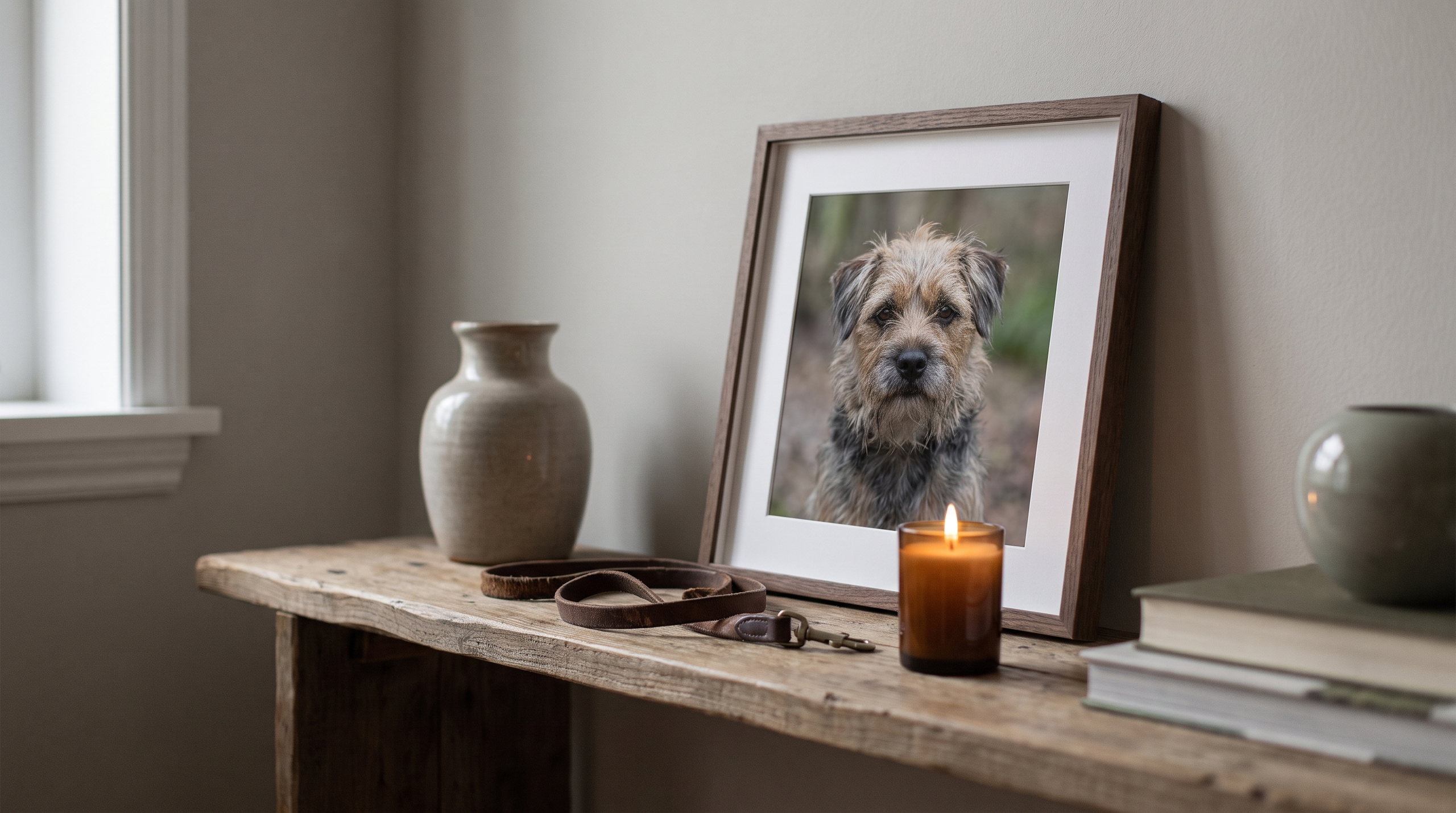
A pet memorial portrait photo is a selected image of a pet who has passed away, chosen specifically to be transformed into custom artwork that captures their likeness and personality. Here is the thing about choosing a pet memorial portrait photo: the one you cry over on your phone is not always the one that makes a great portrait. Trust me on this. The photo you choose becomes the foundation of a piece you will look at every single day, so it has to feel right. It does not have to be perfect, but it does have to be them.
You want something that actually looks like them — not a stranger who happens to have their collar. The memorial photo becomes a lasting tribute that reflects the pet's significance in your life. Most people skip the part where they think about what makes a photo work as a portrait. They go straight to the one that tugs hardest at their heart, and sometimes that works. But sometimes the lighting is wrong, or the angle is off, or the expression does not quite capture the personality everyone remembers. By the end of this you will know exactly which photo to use — and which three to skip.
If you are also considering a portrait for a pet who is still with you, you might find helpful tips in our guide to custom dog paintings from your photo, which covers how to choose images that translate beautifully into art. For cat owners, our custom cat portraits guide offers specific insights for feline memorial images.
The little details that sell it — the way the light hits their face, the softness in their eyes, the tilt of their head — those are what turn a snapshot into a portrait worth framing. Let me show you how to find them.
Understanding the Importance of the Right Photo
The photo you choose is not just an image — it is the foundation of a tribute that will hang in your home, maybe for the rest of your life. It transforms a personal snapshot into a lasting memorial that reflects how much your pet meant to you. The right pet memorial portrait photo does not just look nice; it feels like them. That is what makes it worth framing.
Here is the thing: the strongest memorial portraits usually feel specific rather than overly polished. You want the tilt of the head, the worn collar, the look they gave you every morning. Those little details are what make the tribute comforting instead of generic. A photo that captures a unique trait — the way they sat, the light in their eyes — will always be more meaningful than one that is technically perfect but feels like a stranger.
The photo you keep coming back to is almost always the one that should be painted.
Why the Photo Anchors the Entire Portrait
When you turn a photo into a custom dog painting or memorial portrait, the artist is working from what you give them. If the photo is blurry, backlit, or cropped too tight, even the best painter cannot invent the details that are missing. The photo is the blueprint — it sets the tone, the composition, and the emotional weight of the final piece. A clear, well-lit pet memorial portrait photo with good headroom and a natural expression gives the artist room to work. A poor photo forces them to guess, and that is where portraits start to feel off.
You do not need a professional shoot or a studio setup. You need a photo that shows your pet at their eye level, in good light, doing something that feels like them. Soft, warm, and a little dramatic is ideal — but honest always beats posed. Trust me on this: the photo everyone gets wrong is the one they think looks "nice" instead of the one that actually feels like their pet.
What Should You Look for in a Pet Memorial Portrait Photo?
Here is the thing: the pet memorial portrait photo you pick is doing all the heavy lifting. You want something that actually looks like them — not a stranger who happens to have their collar. Let me walk you through what makes a memorial image worth turning into a portrait.
Eyes Open and in Focus
The eyes are the first thing anyone looks at. They need to be open, visible, and sharp. If the eyes are closed, half-shut, or blurred, the portrait loses the spark that made your pet recognizable. Trust me on this — a pet memorial portrait photo where the eyes are clear will always beat a technically better shot where the face is soft or turned away.
Good Light Does Most of the Work
You do not need a studio setup. You need decent light. Natural light — the kind that comes through a window or from being outside in soft daylight — gives a face structure and warmth. Overhead indoor light flattens everything and makes the portrait feel cold. If the only photos you have are dim, look for one taken near a window. That side light will give you shape and depth that overhead bulbs never will.
A Clear View of the Face
The head should be facing mostly toward the camera. A profile can work if that was their signature look, but a three-quarter or straight-on angle gives you more to work with. Avoid shots where the head is badly angled away or where half the face is hidden. You want enough of their face visible that someone who knew them would recognize them instantly.
The photo everyone gets wrong is the action shot — it is almost always too blurry or too far away to make a portrait worth hanging.
Their Characteristic Expression
This is the part people skip: does the pet memorial portrait photo feel like them? Some pets always had their tongue out. Some had a serious, regal look. Some were goofy. The expression should match the personality you are trying to honor. A posed, stiff photo of a dog who was never still will feel off. A silly shot of a cat who was dignified will not land right. You will know it when you see it — it is the one you keep coming back to.
If you are thinking about turning a favorite memory into something more permanent, custom dog paintings from your photo can help you understand how different styles handle expression and detail.
| Factor | What to Look For | What to Avoid |
|---|---|---|
| Eyes | Open, visible, sharp | Closed, half-shut, blurred |
| Lighting | Natural light, window light | Overhead indoor light, harsh flash |
| Angle | Face toward camera, three-quarter view | Profile only, head turned away |
| Expression | Matches their personality | Stiff, uncharacteristic pose |
Avoid Action Shots and Motion Blur
Action shots are fun to look at on your phone. They are terrible for portraits. Running, jumping, or mid-play photos are almost always blurry, and the face is contorted in a way that does not read as "them" when it is painted. Save those for your photo album. For a memorial portrait, you want stillness — a moment where they were just being themselves, not performing.
The little details that sell it are simple: clear eyes, reasonable light, a face you recognize, and an expression that feels right. It does not have to be perfect. It just has to be them.
Common Mistakes to Avoid
Here is the thing about memorial photos: the mistakes people make are almost always the same, and they all come from overthinking it. You want the perfect shot — sharp, well-lit, technically flawless — and you skip right past the one that actually looks like them. Trust me on this: a slightly soft picture where the face is unmistakably theirs beats a razor-sharp image where they are looking away or mid-sneeze every single time.
Chasing Technical Perfection Over Personality
The photo everyone gets wrong is the one they choose because it is pretty instead of because it is them. You scroll through your camera roll and land on the shot with perfect lighting, a clean background, maybe even a little bokeh in the distance. It looks expensive. It looks like it belongs in a magazine. But when you look at it, you do not immediately say their name — you have to think about it for a second. That hesitation is the problem.
Ask yourself this: which photo, if you saw it across a room in ten years, would make you say their name without thinking? That is the one. It might be grainy. The ears might be a little out of focus. The background might have your laundry basket in it. None of that matters if the expression is right. Good light does most of the work, but the face does all of it.
Cropping Out What Makes Them Recognizable
Another mistake: cropping so tight that you lose the context. You want their face big and clear, so you zoom in until all you see is eyes and nose. But here is what happens — you cut off the tilt of their head, the way one ear always flopped funny, the little white patch on their chest. Those details are what make the portrait feel like them instead of just a dog or a cat.
Let the photo breathe. Leave a little room around the face. You do not need their whole body in the frame, but you do need enough that someone who loved them would recognize the posture, the angle, the way they held themselves. The little details that sell it are usually just outside the tight crop you were planning.
Using a Photo That Is Too Busy or Distracting
Backgrounds matter more in a memorial portrait than they do in a snapshot. A photo that works great on your phone — your pet on the couch, at the park, in the car — can fall apart when it is painted and hung on the wall. Suddenly that pile of shoes behind them is all you see. The pattern on the rug competes with their face. The other dog in the corner pulls your eye away.
Look for photos where the background is simple or at least neutral. Soft, blurry, one color, or far enough back that it does not fight for attention. If the photo you love has a messy background, that is okay — just know that it might need to be simplified or replaced when the portrait is made. The shot that actually works is usually the one where nothing competes with their face.
The mistakes people make are almost always the same, and they all come from overthinking it.
Choosing Based on What You Wish You Had, Not What You Have
This is the part people skip: being honest about which photos you actually have. You want a portrait of them looking straight at the camera, ears up, perfect light, no distractions. But maybe you do not have that photo. Maybe the best shot you have is them mid-yawn, or looking off to the side, or with their eyes half-closed because they were falling asleep on your lap.
It does not have to be perfect. It has to feel like them. If the pet memorial portrait photo that makes you smile is the one where they are being goofy, or sleepy, or caught mid-bark, that is the one worth hanging. Do not force a photo that checks all the boxes but does not make you feel anything. A portrait worth framing is the one you keep coming back to, even if it is not the one you thought you wanted.
For more guidance on turning everyday photos into meaningful art, see our guide to custom dog paintings from your photo or explore custom cat portraits for feline memorial images.
How Do You Take a Great Pet Memorial Portrait Photo?
Here is the thing: you do not need a fancy camera or a studio setup to get a pet memorial portrait photo worth hanging. Most of the time, the shot that works is the one you take on your phone on a normal Tuesday afternoon. Good light does most of the work, and after that it is just about catching them at their eye level when they are being themselves.
Find Natural Light
Window light is your best friend. If you only have dim indoor photos, look for one taken near a window — natural light gives a face structure that overhead bulbs just cannot match. Early morning or late afternoon works beautifully outdoors, but even overcast days give you soft, even light that flatters every coat color. Avoid direct sun at noon; it washes out detail and creates harsh shadows.
Get Down to Their Level
Shoot from your pet's eye level, not yours. Crouch, sit, or lie down if you have to. A straight-on angle captures their expression the way you actually see them when you are together, and it keeps the proportions natural. Top-down shots make them look small and distant — not what you want in a pet memorial portrait photo you will look at every day.
Focus on the Face and Eyes
The eyes are the whole story. Make sure they are in focus and clear. A slightly blurry ear or paw is fine, but if the eyes are soft, the portrait will not feel like them. Look for a moment when they are looking at you or just past the camera — engaged, not distracted. That connection is what makes a portrait worth framing.
Capture a Happy Moment
Look for a photo where they are relaxed and themselves — not mid-bark, not startled, just present. Many people find it more healing to use a photo from when their pet was healthy and vibrant rather than from their last days. You want the version of them you keep coming back to in your memory, the one that feels most like who they were.
Keep the Background Simple
A busy background pulls attention away from your pet. Grass, a neutral wall, a couch — anything that lets them be the focus works. You do not need a blank studio backdrop, just something that does not compete. If the background is cluttered, a tighter crop on their face can solve it.
The photo everyone gets wrong is the one they think is technically perfect but does not actually feel like their pet.
Let the Photo Breathe
Leave a little space around their head — do not crop so tight that their ears are cut off or their face fills every pixel. Portraits need headroom to feel balanced. If you are not sure, err on the side of a little extra space; you can always crop tighter later, but you cannot add back what you cut off.
For more guidance on turning your favorite photos into custom dog paintings from your photo, the same principles apply: clear face, good light, and an expression that feels like them.
Frequently asked questions
What makes a good pet memorial portrait photo?
A good pet memorial portrait photo has clear, open eyes in focus, natural lighting (preferably window or outdoor light), a face-forward angle, and an expression that captures your pet's personality. The background should be simple and not distracting. Most importantly, it should feel like them — not just technically correct, but emotionally true.
Can I use a phone photo for a pet memorial portrait?
Yes. Most modern phone cameras capture enough detail for a beautiful memorial portrait, especially if the photo was taken in good natural light with the pet at eye level. The key is clarity in the face and eyes, not professional equipment. Many of the best memorial images come from everyday moments captured on a phone.
Should I choose a recent photo or one from when my pet was younger?
Many people find it more comforting to use a photo from when their pet was healthy and vibrant, capturing them as they were in their prime. The memorial image should represent the version of your pet you want to remember most — the one that brings you peace when you look at it.
What if my best photo has a busy background?
A busy background can often be simplified or removed during the portrait creation process. If the face, expression, and lighting are right, the background is secondary. Focus on finding a pet memorial portrait photo where your pet looks like themselves, and discuss background options with your artist.
Conclusion
Here is the thing: the pet memorial portrait photo you choose is not about perfection — it is about them. The tilt of their head, the worn collar, the way they looked at you on an ordinary Tuesday. Those are the details that make a portrait worth keeping.
You have the tools now. Good light, their eye level, soft focus on the face, and a background that lets the photo breathe. Skip the group shots, the blurry action frames, and the ones where they are looking away. Trust the photo you keep coming back to — the one that feels like them.
A memorial portrait is not just art on the wall. It is the moment you get to keep them in the room, and that starts with the right image. Take your time. Let the photo do the work. And if you are ready to turn that favorite shot into something lasting, explore custom dog paintings from your photo or custom cat portraits to see how a simple memorial image becomes a tribute worth hanging.
The pet memorial portrait photo that feels specific — not polished, just true — is the one that will comfort you every time you see it.