Introduction
Here is the thing about cat photos: the one you love on your phone is almost never the one that makes a great portrait. You shoot down from standing height, your cat looks like a fuzzy blob, and you wonder why it does not translate. The answer is simple — you are not at their eye level. People often ask me why their cat photos never seem to work, and it is almost always about the angle. Shooting down from human height does not do justice to their majestic presence. Instead, try getting on their level to capture those expressive eyes and unique personalities.
Custom cat portraits have become a way for pet owners to turn that favorite photo into something worth hanging. The market has expanded as more people look for ways to preserve the bond they share with their cats, and the options for customization are nearly endless. You can go Renaissance, Baroque, watercolor, or full royal treatment — whatever feels like your cat.
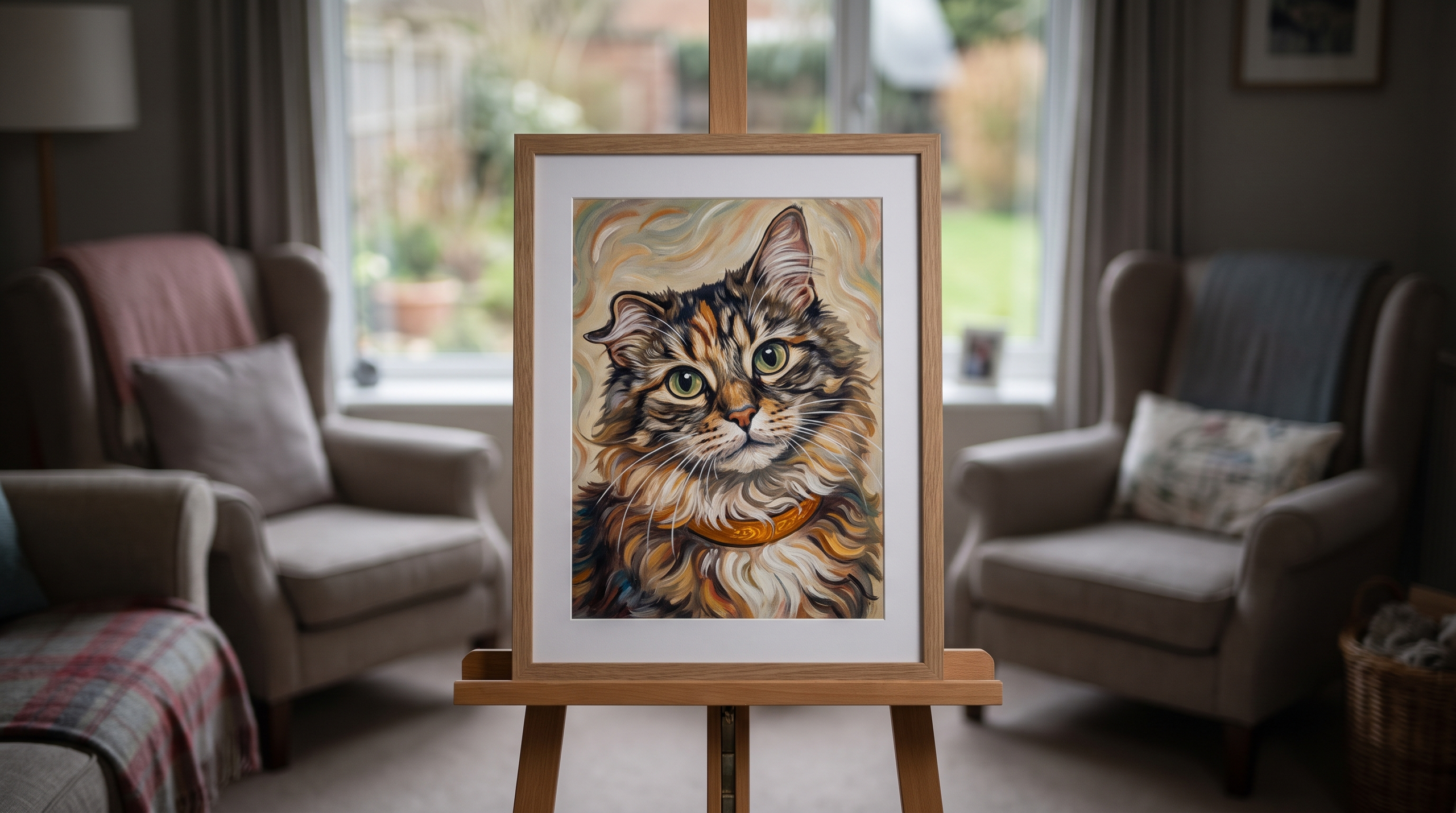
When it comes to choosing a style, consider Baroque. Baroque is all about drama and warm light, with deep shadows and a glow that highlights the subject's features. On a cat with striking eyes, this style can create an image that feels both timeless and captivating. If you are curious about how these techniques apply to other pets, custom dog paintings follow many of the same principles.
There is a whole tradition of royal pets in court portraits. The Rijksmuseum, for instance, is filled with very serious-looking dogs. Imagine your cat's portrait hanging alongside those regal figures — it is a fun way to celebrate their place in your life. A portrait is not just a picture. It is a way to keep your beloved pet in the room with you, capturing their spirit in a way that a simple photo cannot.
By the end of this guide, you will know which photo of your cat to use, which style suits them best, and what the process looks like from start to finish. You will also understand what makes a portrait feel expensive versus cheap, and how to get something you will actually want to hang.
Learn how to turn your feline friend into a masterpiece with custom cat portraits. Explore styles, pricing, and the creative process involved.
Understanding Cat Portraits
A custom cat portrait is more than a picture — it is a way to capture your cat exactly as they are, turned into something you would actually hang on the wall. The photo you love on your phone is almost never the one that makes a great portrait, and understanding what works is the first step to getting something worth framing.
The market for custom cat portraits has grown because people want to preserve the bond they share with their cats in a tangible, artistic way. It is not about perfection — it is about keeping them in the room with you, even when they are napping three rooms away. The options for customization are endless, from choosing the style to deciding how much drama you want in the lighting.
What Makes a Cat Portrait Custom
Custom means the portrait is made specifically from your photo, tailored to your cat's unique features and personality. You are not getting a generic tabby — you are getting your tabby, with the crooked whisker and the one ear that flops just slightly. The artist (or process) works from the details you provide, whether that is a phone snapshot or a carefully composed shot at their eye level.
The key is in the starting photo. Good light does most of the work, and shooting at your cat's level rather than looking down from human height makes all the difference. A portrait worth framing starts with a photo that already captures something true about them — the expression, the posture, the way they hold themselves when they think no one is watching.
Popular Styles for Custom Cat Portraits
Different styles flatter different cats, and the era you choose sets the tone for the whole piece. Renaissance and Baroque styles bring drama and warm light, with deep shadows that highlight striking eyes and create a glow that feels timeless. If your cat has a regal bearing or intense gaze, these styles can turn them into something you would see in a museum.
Beyond the old masters, cats also look great in minimalist line art, watercolor, and abstract styles, which capture their elegance and mystery without the weight of a full oil painting. Watercolor works beautifully for cats with soft, flowing fur, while line art suits sleek, modern spaces where you want something clean and understated.
The style you pick should feel like them — not just what is trendy, but what matches their personality and the room where the portrait will hang. If you are curious about how different artistic approaches work across various pets, custom dog paintings from your photo explore similar style considerations that apply to any beloved companion.
Why Cat Owners Choose Custom Portraits
People commission cat portraits for all kinds of reasons — gifts, memorials, or simply because their cat deserves to be painted. The tradition of pet portraits goes back centuries; royal courts had their dogs immortalized, and the Rijksmuseum is full of very serious-looking animals in gilt frames. Your cat's portrait is part of that same lineage, a way to celebrate their place in your life with something that lasts.
A custom portrait also solves the problem of what to do with all those phone photos. You have hundreds of shots, but only one or two that really capture who they are. Turning that one photo into a portrait gives it permanence and weight — it becomes the version of them you keep coming back to.
Choosing the Right Style for Your Cat
Here is the thing about portrait styles: the one that works for your neighbor's tabby might make your tuxedo cat look like a stranger. The era you choose changes everything — not just the look, but whether the portrait actually feels like your cat.
Most people skip this part and go straight to uploading a photo. Trust me on this: spend five minutes thinking about which style suits your cat's personality, and you will end up with something worth hanging instead of something that lives in a drawer.
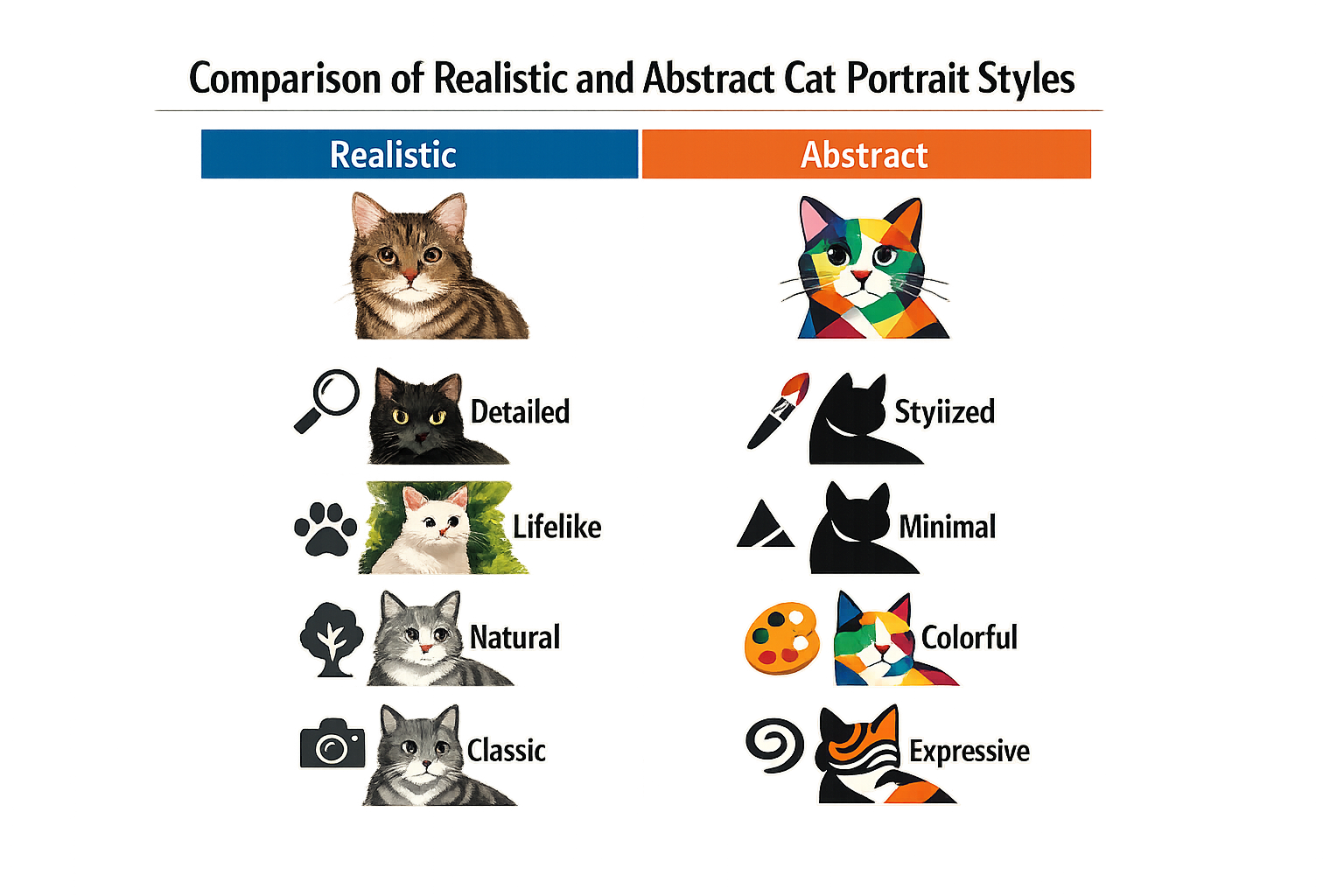
Realistic Styles That Let the Photo Breathe
Realistic portraits keep your cat recognizable. These styles work when you have a great photo — good light, sharp focus, and your cat looking like themselves. The portrait stays close to the original image, just elevated with brushwork or a painted finish.
This approach is the one you keep coming back to if your goal is "I want it to look exactly like her." No costumes, no dramatic backgrounds — just your cat, painted, in a way that makes the everyday photo feel like art.
Realistic styles include traditional painting techniques and modern illustration. Both keep the focus on your cat's actual features: the stripe pattern, the eye color, the little white patch on the chest. If you are gifting this to someone who knew the cat, realistic is almost always the safer bet.
Abstract and Character Styles That Add Drama
Abstract styles take more liberties. Watercolor portraits soften the edges and add a dreamy quality. Royal character portraits put your cat in a ruffled collar or a velvet cape, turning them into a figure from a Dutch master painting. These styles make it feel like them, but with a little extra theater.
Watercolor works well for cats with soft fur and gentle expressions — think long-haired breeds or cats with that perpetually sleepy look. The style adds warmth and a hand-painted feel that photographs alone cannot capture.
Royal and Renaissance-inspired portraits are for cats with attitude. If your cat already acts like they own the place, putting them in a gold frame wearing a baroque collar just makes it official. The humor is part of the appeal, but the portrait still needs to be recognizable. You want people to laugh and say "that is absolutely her" at the same time.
The style you choose should match your cat's presence — soft and warm for the lap cat, dramatic and regal for the one who judges you from the top of the fridge.
Matching Style to Your Cat's Features
Some cats photograph better in certain styles. A cat with striking eyes — green, gold, or that intense blue — benefits from styles that emphasize contrast and detail. Realistic or baroque styles with deep shadows and warm light make those eyes the focal point.
Cats with unique markings — calico patches, tuxedo masks, tabby stripes — show up best in styles that preserve detail. You do not want a watercolor so loose that the markings blur into mush. Keep enough structure so the portrait still reads as your specific cat.
For solid-colored cats, you have more freedom. A black cat can go full Renaissance drama with moody lighting. A white or cream cat looks stunning in watercolor, where the softness of the style complements the softness of the fur.
What to Avoid
Skip styles that turn your cat into a cartoon character unless that is genuinely what you want. Some abstract approaches lose the cat entirely in favor of a generic "cute pet" look. If you cannot recognize your cat in the sample, you will not recognize them in the final portrait either.
Also avoid overly busy backgrounds in styled portraits. A simple, neutral backdrop keeps the focus on your cat. The portrait should be about them, not about proving the artist can paint a bookshelf.
If you are considering custom dog paintings from your photo, many of the same style principles apply — match the style to the subject's personality and features, and let the portrait breathe.
| Style | Best For | What It Keeps | What It Changes |
|---|---|---|---|
| Realistic | Cats with unique markings or coloring | Exact features, coat patterns, eye color | Adds painted texture, refines lighting |
| Watercolor | Soft-furred or gentle-looking cats | Overall shape and expression | Softens edges, adds dreamy quality |
| Royal/Baroque | Cats with strong presence or attitude | Recognizable face and posture | Adds costume, dramatic lighting, regal setting |
The Process of Creating a Custom Cat Portrait
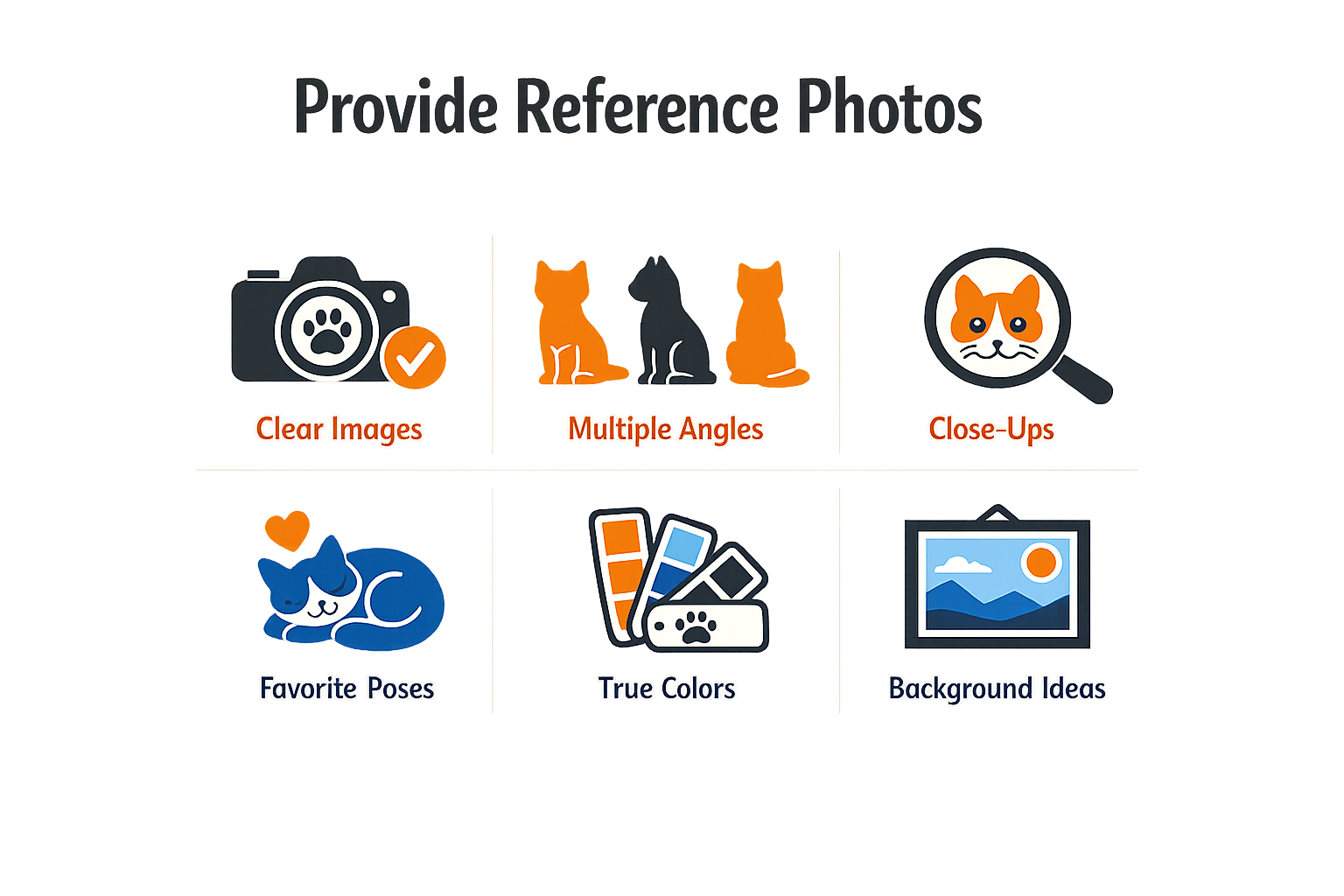
Here is the thing about commissioning a custom cat portrait: the photo you choose does most of the work. A strong source photograph — one with soft directional light, a near-frontal angle, and both eyes visible — will make the entire process faster and smoother. Think of it as handing the artist a clear roadmap instead of asking them to guess what your cat looks like.
Start With the Right Photo
Before you reach out to anyone, go through your camera roll and pick the shot that actually works. You want good light doing most of the work — natural light from a window is ideal. Your cat should be at their eye level, not shot from above, and both eyes need to be in focus. The little details that sell it — whiskers, ear tufts, that one crooked fang — should be visible and sharp.
Once you have your photo, the commission process itself is straightforward. You submit the image, choose your style, and confirm the details. Most artists will walk you through size, framing, and any customization options — like adding a royal collar or placing your cat in a Renaissance setting.
What Happens During the Commission
After you submit your photo and place your order, the artist begins working. This is the part people skip: communication. Maintaining excellent communication throughout the process is what separates a portrait you love from one that feels off. If the artist offers a draft or proof stage, take it seriously. This is your chance to request tweaks — a lighter background, a warmer tone, a slight adjustment to the eyes.
Step 1
Submit your photo
Choose a high-resolution image with good light and both eyes visible. Upload it through the artist's platform and confirm the file is clear and uncompressed.
Step 2
Select your style and size
Pick the portrait style that suits your cat — Baroque for drama, watercolor for softness, or royal portraiture for a regal look. Confirm the canvas or print size based on where you plan to hang it.
Step 3
Review the proof (if offered)
If the artist provides a draft or digital proof, review it carefully. Check the eyes, the expression, and the overall tone. Request any adjustments now — this is your window.
Step 4
Approve and finalize
Once you are happy with the proof, approve it. The artist will finalize the portrait and prepare it for printing or framing. Expect a few days to a week for final production, depending on the medium.
If you are commissioning during the busiest period — late November through mid-December — expect lead times to stretch. High volume during the holiday season can extend timelines by fifty to one hundred percent, so plan ahead if the portrait is a gift.
Tips for Collaborating With the Artist
You will know it when you see it, but only if you communicate what you want upfront. Be specific about what matters to you. If your cat has one ear that flops funny, mention it. If you want the background to match your living room walls, say so. Artists appreciate clarity — it helps them deliver the portrait you are picturing.
Trust me on this: the photo everyone gets wrong is the one where the cat is backlit or shot in harsh overhead light. Those photos flatten features and lose detail. If your favorite photo has bad lighting, it is worth taking a new one. No studio required — just a window and a patient cat.
If you are curious about how this process compares to other pet portraits, check out our guide on Custom Dog Paintings From Your Photo: Styles, Process & Pricing for a similar breakdown.
The cheapest shortcut is the one you regret when the portrait arrives and the eyes look wrong.
Pricing for Custom Cat Portraits
Here is the thing about pricing: the range is huge, and it all comes down to how the portrait gets made. A hand-painted original on canvas will cost you significantly more than a digital or AI-generated piece. That is not a judgment on quality — it is just the reality of what goes into each method.
The creation method is the single biggest factor in what you will pay. Hand-painted portraits require hours of an artist's time, specialized materials, and shipping costs for a physical piece. Digital portraits are faster to produce and deliver, which brings the price down. AI-generated portraits sit at the lowest end because the process is automated.
What You Can Expect to Pay
Prices vary widely depending on the method and the provider. A digital portrait can start as low as $8.00, while a hand-painted 8"x10" canvas jumps to $149. The difference is not just in the final product — it is in the labor, the materials, and the turnaround time.
If you are working with a budget, digital portraits offer a solid middle ground. You get a piece that is worth hanging without the wait or the cost of a traditional painting. For those who want something truly one-of-a-kind, hand-painted originals deliver that heirloom quality — but you will pay for it.
Budgeting for Your Cat Portrait
Think about what you are willing to spend before you start browsing. If you are looking for a gift or a memorial piece, set a range that feels comfortable and then explore options within that range. The cheapest option is not always the one you will want to hang, and the most expensive is not always the best fit for your space.
Consider the size, too. Larger portraits cost more, but they also make a bigger statement. A small 8"x10" works well on a shelf or in a gallery wall, while a 16"x20" or larger becomes a focal point. If you are not sure, go smaller first — you can always commission a larger version later if you love the result.
If you are exploring different styles and want to see how a portrait of your cat might compare to a dog portrait, custom dog paintings from your photo follow a similar process and pricing structure. The principles are the same — it is all about finding the right fit for your pet and your budget.
The portrait you keep coming back to is the one that feels like them, not the one that cost the most.
Previewing Your Custom Cat Portrait
Here is the thing about previews: they are your chance to make sure the portrait actually looks like your cat. Not a generic tabby, not someone else's orange boy — yours. The preview step is where you catch the little details that sell it, and honestly, it is the part people skip that they should not.
Most services send you a proof before finalizing the portrait. This is not a formality. It is your opportunity to say, "Wait, her eyes are green, not blue," or "He has that one white whisker on the left side." The photo everyone gets wrong is the one they approve without looking closely, and then they are stuck with a portrait that feels off.
What to Look for in a Preview
Start with the eyes. They should feel like your cat is looking at you, not past you. If the expression is flat or the gaze is slightly wrong, say something. Good light does most of the work in a photo, but the artist has to translate that into the portrait — and sometimes they need a nudge.
Check the proportions. Cats have very specific ear-to-head ratios, and if those are off, the whole portrait feels like a stranger. Look at the whiskers, the fur texture, and any distinctive markings. If your cat has a notch in her ear or a crooked stripe, that is what makes it feel like her.
The background matters too. If you chose a Renaissance or royal style, the background should complement your cat, not compete with them. If the drapes or the gold frame are pulling your eye away from the subject, that is worth mentioning.
How to Give Feedback
Be specific. "I do not like it" does not help the artist fix what is wrong. Instead, say, "Her left ear is too pointy," or "The stripe on his forehead should curve more." The clearer you are, the faster you get a portrait worth framing.
If you are not sure what is off, compare the preview side-by-side with your original photo. Sometimes the issue is obvious when you see them together — a color shift, a missing detail, or a pose that does not quite match.
Most artists are happy to make adjustments at the preview stage. It is part of the process. If you are polite and clear, they will work with you to get it right. This is your cat, and you will know it when you see it.
A preview is not just a courtesy — it is your last chance to make sure the portrait captures the cat you know, not the one the artist imagined.
If you are working on a memorial portrait, take your time with the preview. You want something that keeps them in the room, and that means getting the details right. It does not have to be perfect, but it does have to feel like them.
For more ideas on how different portrait styles work for different pets, check out our guide on custom dog paintings from your photo — the same principles apply, and you might find inspiration for your cat's portrait too.
Conclusion
A custom cat portrait is more than just a picture — it is a way to keep your cat in the room with you, capturing their spirit in a way that a simple photo cannot. Whether you choose the drama of Baroque, the warmth of watercolor, or the elegance of Renaissance, the right style turns an everyday moment into something worth hanging.
The process is straightforward: pick a photo where your cat looks like themselves, choose a style that flatters their features, and let the preview guide you to the final piece. You will know it when you see it — that one image that feels like them, the one you keep coming back to. Trust me on this: shooting at their eye level and letting good light do most of the work makes all the difference.
If you are considering a portrait for another pet in your life, the same principles apply. Custom dog paintings follow the same creative process, and the styles that work for cats often translate beautifully to dogs as well.
Remember, a portrait is not just about preserving a likeness — it is about celebrating the personality, the quirks, and the presence that makes your cat irreplaceable. Whether it is a gift, a memorial, or simply a way to honor the companion who shares your home, a custom cat portrait is a piece of art that keeps them with you, painted and permanent, in a way that no photograph alone can achieve.