Introduction
Here is the thing about custom paintings: everyone wants to know how long they take, but almost no one asks the right follow-up question — which kind? The timeline for a hand-painted portrait of your dog in Renaissance garb is nothing like the timeline for an AI-generated version of the same idea. Both are custom. Both are paintings. The clock just runs differently.
You are planning a gift, or you want something on your wall before the holidays, or you need a memorial portrait that does not feel rushed. Whatever the reason, the timeline matters. And the good news is that once you understand the two main paths — traditional hand-painting and AI-generated art — you can pick the one that fits your schedule without compromising on quality.
This is not about which method is better. It is about which method gets you what you need, when you need it. By the end of this, you will know exactly how long each approach takes, what slows things down, and how to plan so your custom painting arrives on time. Let me walk you through it.
Understanding Custom Paintings
A custom painting is any piece of art made specifically for you — from your photo, your idea, or your pet looking regal in a velvet cape. It is not a print you bought off a wall. It is not clip art with your dog's face pasted in. It is original, it is yours, and the timeline depends entirely on how it gets made.
Here is the thing: when someone asks how long a custom painting takes, they are really asking two different questions. The first is about hand-painted work — an artist with a brush, canvas, and a lot of decisions to make. The second is about AI-generated portraits, where the painting is created digitally and printed. Both are custom. Both end up on your wall. But the timelines are not even close.
Why the Timeline Matters
You are not ordering a pizza. Most commissioned artworks take anywhere from 2 to 12 weeks, and that range is not a typo. If you need a birthday gift in two weeks, or a memorial portrait before a ceremony, knowing what is realistic keeps you from panic-ordering something that will not arrive in time — or worse, rushing an artist and getting work that feels half-finished.
The majority of time spent on artwork is not the physical painting. It is the mental creation — the vision, the decisions, the edits, the tweaking until it feels right. That is true whether a human is holding the brush or a machine is rendering pixels. Understanding that upfront changes how you plan, how you communicate with whoever is making your piece, and what you expect when it arrives.
Hand-Painted vs. AI-Generated: The Real Difference
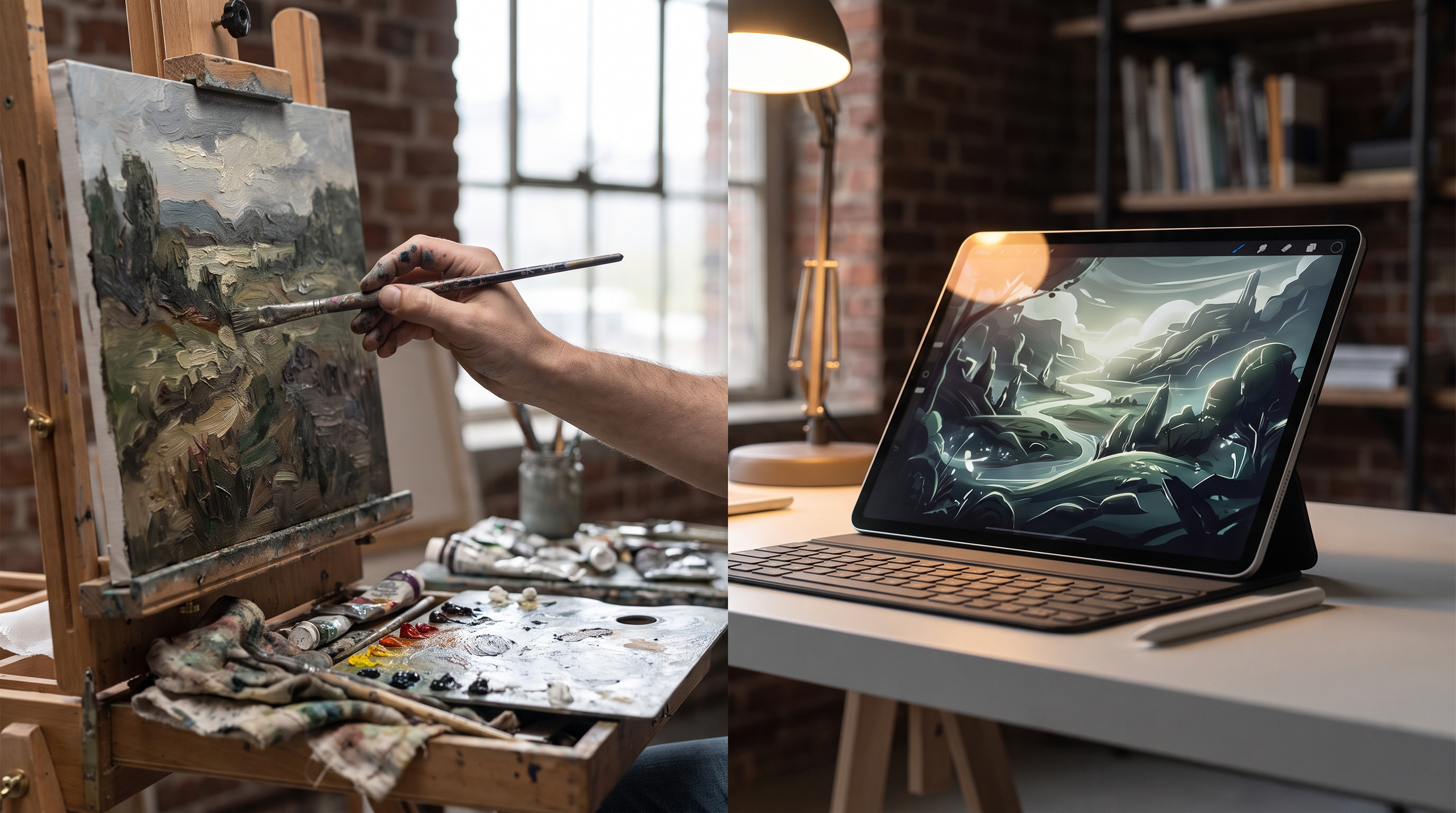
Hand-painted custom paintings involve an artist working in oils, acrylics, or watercolors. They sketch, layer, revise, and let paint dry between sessions. The process is slow, intentional, and subject to the artist's schedule, their other commissions, and how many times you ask for changes. Expect weeks to months.
AI-generated custom paintings start with your photo and a style you choose — Renaissance, royal, watercolor, whatever fits. The AI renders the portrait digitally, it gets reviewed, and then it is printed on canvas or paper and shipped. The creative decisions happen faster, the drying time is zero, and the whole thing can be done in days instead of weeks. If you are comparing timelines, this is where the gap lives.
Both methods produce something worth hanging. Both require a good photo and a clear idea of what you want. But if you are working backward from a deadline, knowing which path you are on is half the battle. For more on choosing the style that suits your subject, see Dog Painting Styles: Watercolor vs Oil vs Renaissance.
Time Required for Hand-Painted Custom Paintings
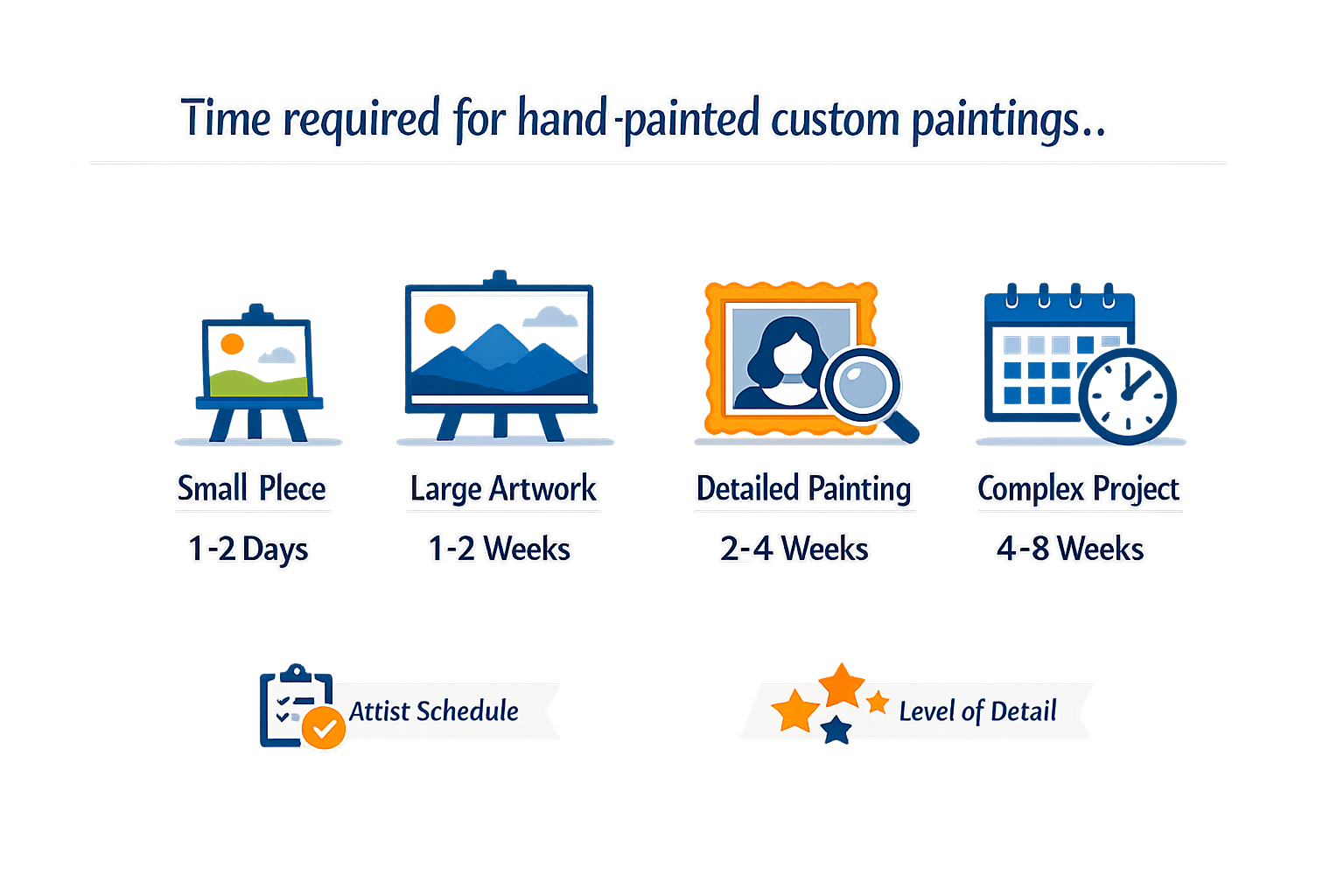
Here is the thing about hand-painted custom paintings: the timeline is not just about the brush strokes. It is about prep, drying, revisions, and the artist's queue. When someone tells you "a few weeks," they usually mean the painting itself takes days — but everything around it takes longer.
A traditional portrait artist working on a single commissioned piece typically spends anywhere from two weeks to several months on your project. That range is wide because every painting is different, and so is every artist's process.
What Actually Takes the Time
The work breaks into phases, and each one has its own clock. First comes the consultation and approval of the reference photo — that alone can take a week if you are going back and forth on which shot to use. Then the artist sketches, you approve the sketch, and the actual painting begins.
Most artists work in layers. Oil paintings need drying time between layers — sometimes days. Watercolors are faster to dry but require precision that cannot be rushed. Acrylics split the difference. A small 16×20 portrait might take 15 to 30 hours of active painting time, but spread that across drying phases and an artist's other commitments, and you are looking at three to six weeks minimum.
Complexity and Style Make a Difference
A simple portrait with a plain background goes faster than a full Renaissance-style painting with elaborate costumes and scenery. If you are commissioning something in the style of the Dutch masters — rich textures, dramatic lighting, intricate details — expect the timeline to stretch. Those paintings were not quick then, and they are not quick now.
Animal portraits add another variable. Fur, feathers, and expressions require detail work that takes time to get right. A watercolor dog portrait might take two weeks; an oil painting of the same dog in royal garb could take six.
Artist Availability and Scheduling
This is the part people skip when they are planning: most good portrait artists are booked. If you reach out in November hoping for a Christmas gift, you might already be too late. Many artists work on a queue system — your painting does not start the day you pay the deposit. It starts when they finish the three commissions ahead of you.
Some artists take on multiple projects at once and rotate through them as layers dry. Others work one painting start to finish before moving to the next. Ask up front how their process works and where you are in the line.
The timeline for a hand-painted portrait is less about the painting itself and more about everything that happens before and between the brush strokes.
Delays You Should Expect
Revisions extend timelines. If the artist sends you a progress photo and you want changes — a different expression, a lighter background, a costume adjustment — that adds days or weeks depending on how far along they are. Most artists include one or two rounds of revisions, but major changes mean restarting sections of the work.
Shipping and framing add time too. If the artist is across the country, budget a week for transit. If you want it framed before it arrives, add another week or two depending on the framer's schedule.
Weather and materials can cause delays as well. High humidity slows drying. A backorder on a specific pigment or canvas size can pause work. These are not common, but they happen, and they are outside the artist's control.
Typical Timelines by Project Type
For a standard commissioned portrait — one subject, simple background, common size — expect six to eight weeks from deposit to delivery. That includes the artist's queue time, painting time, drying, and shipping.
Larger or more complex works — multiple subjects, detailed backgrounds, unusual styles or sizes — often run three to four months. High-demand artists with long waitlists can push timelines to six months or more.
If you are working with a local artist who has immediate availability and you are flexible on details, you might get a finished piece in two to three weeks. That is the best-case scenario, not the norm.
The short version: hand-painted custom paintings are worth the wait, but you have to plan for it. If your timeline is tight, ask the artist before you commit — and be ready to hear that it might not be possible.
Time Required for AI-Generated Custom Paintings
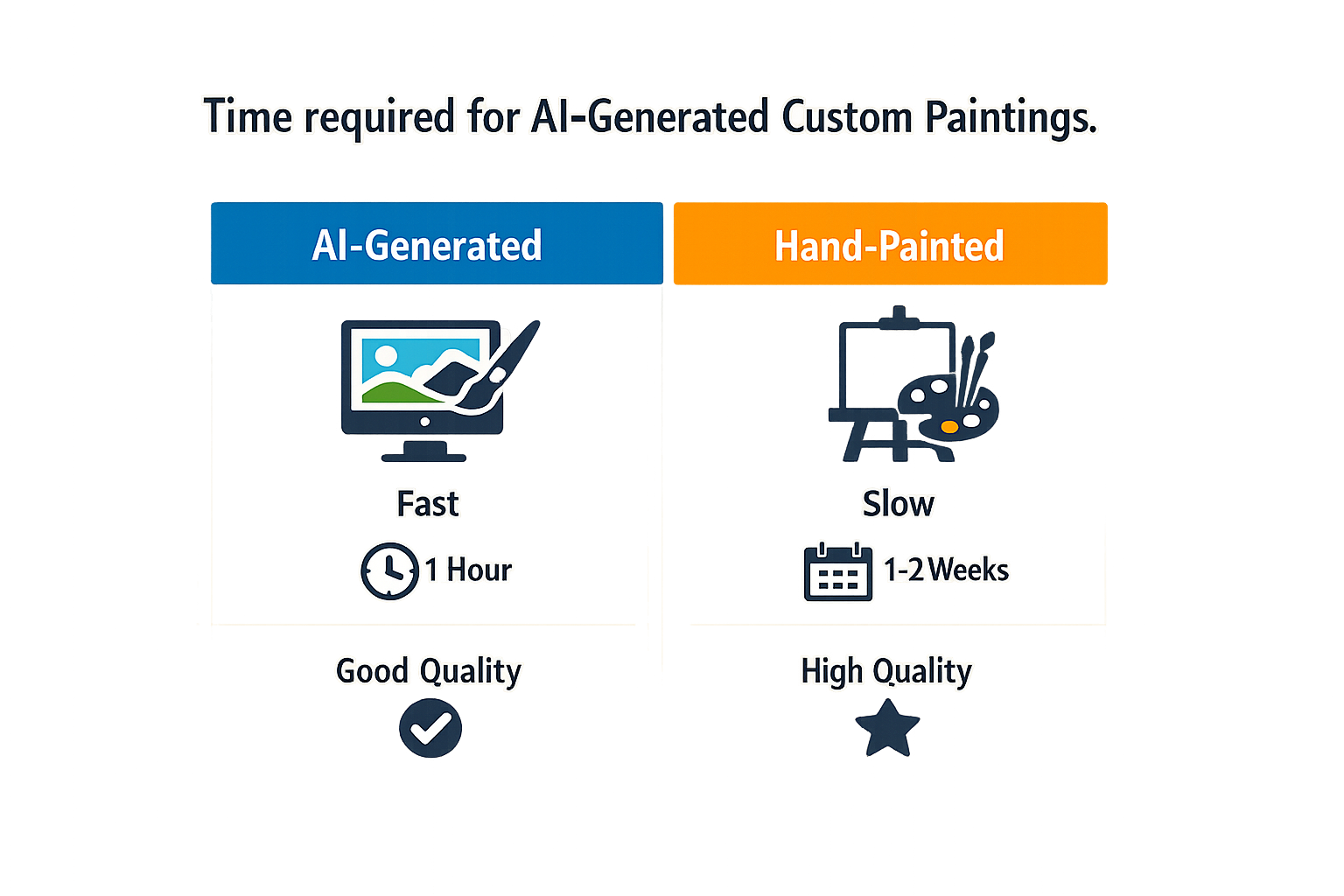
Here is the thing about AI-generated custom painting: the actual generation happens in minutes, not weeks. You upload your photo, choose your style — Renaissance, watercolor, royal portrait — and the system delivers a finished digital file in under an hour in most cases. That is the technical part, and it is fast.
The timeline you experience depends on what happens before and after that generation step. If the service includes human review, style adjustments, or quality checks, add time. If you request revisions or want to see multiple versions before committing, add more. But the core painting itself? That part is nearly instant.
What the Speed Actually Looks Like
Most AI portrait services work like this: you submit your photo, the system processes it, and you get a preview or final file within 30 minutes to a few hours. Some platforms deliver in real time — you see the result as soon as the generation completes. Others batch requests or add a review step, which pushes the timeline to 24 hours or less.
The difference between a five-minute turnaround and a same-day turnaround usually comes down to whether a person is checking the output before it reaches you. That review step catches things like awkward cropping, style mismatches, or technical glitches that the AI does not see. It does not make the painting better in an artistic sense — it just makes sure the one you get is the one you wanted.
Quality Versus Speed
The speed is real, but it comes with a trade. AI-generated portraits do not have the texture, brushwork, or handmade irregularities that make traditional paintings feel warm and personal. The image is clean, consistent, and stylized — which works beautifully for some projects and feels flat for others.
You will know it when you see it. If the portrait feels too smooth or too digital, that is the AI showing through. If it captures the personality and the style you wanted, the speed stops mattering. The question is not whether AI is faster — it is whether faster is what you actually need for this project.
The generation is instant; the decision about whether it is right for you is the part that takes time.
How It Compares to Hand-Painted Timelines
A hand-painted custom painting takes weeks to months. An AI-generated version of the same portrait takes hours. That is the gap, and it is significant if you are working with a deadline — a birthday, a memorial service, a holiday gift.
But here is what the speed does not replace: the one-of-a-kind quality of a painting made by a person who interprets your photo with their own hand. AI gives you style applied to your image. A painter gives you their version of your image, filtered through skill and taste and years of practice. Both are custom. Both are paintings. They are just not the same thing.
If you want to see what your pet would look like in a royal portrait or a Renaissance style without waiting, AI gets you there. If you want a painting that feels like an heirloom, you are probably looking at the longer timeline. For more on choosing a style that suits your subject, see Dog Painting Styles: Watercolor vs Oil vs Renaissance.
When Speed Is the Right Priority
There are times when the fast turnaround is exactly what you need. Last-minute gifts. Memorial portraits when you are working against a service date. A surprise for someone who is not expecting it. Testing a style before committing to a larger or more expensive version.
AI-generated portraits are not a shortcut or a compromise in those cases — they are the tool that makes the project possible at all. The speed is the feature, and the quality is good enough to hang, frame, and keep.
Factors Influencing Painting Duration
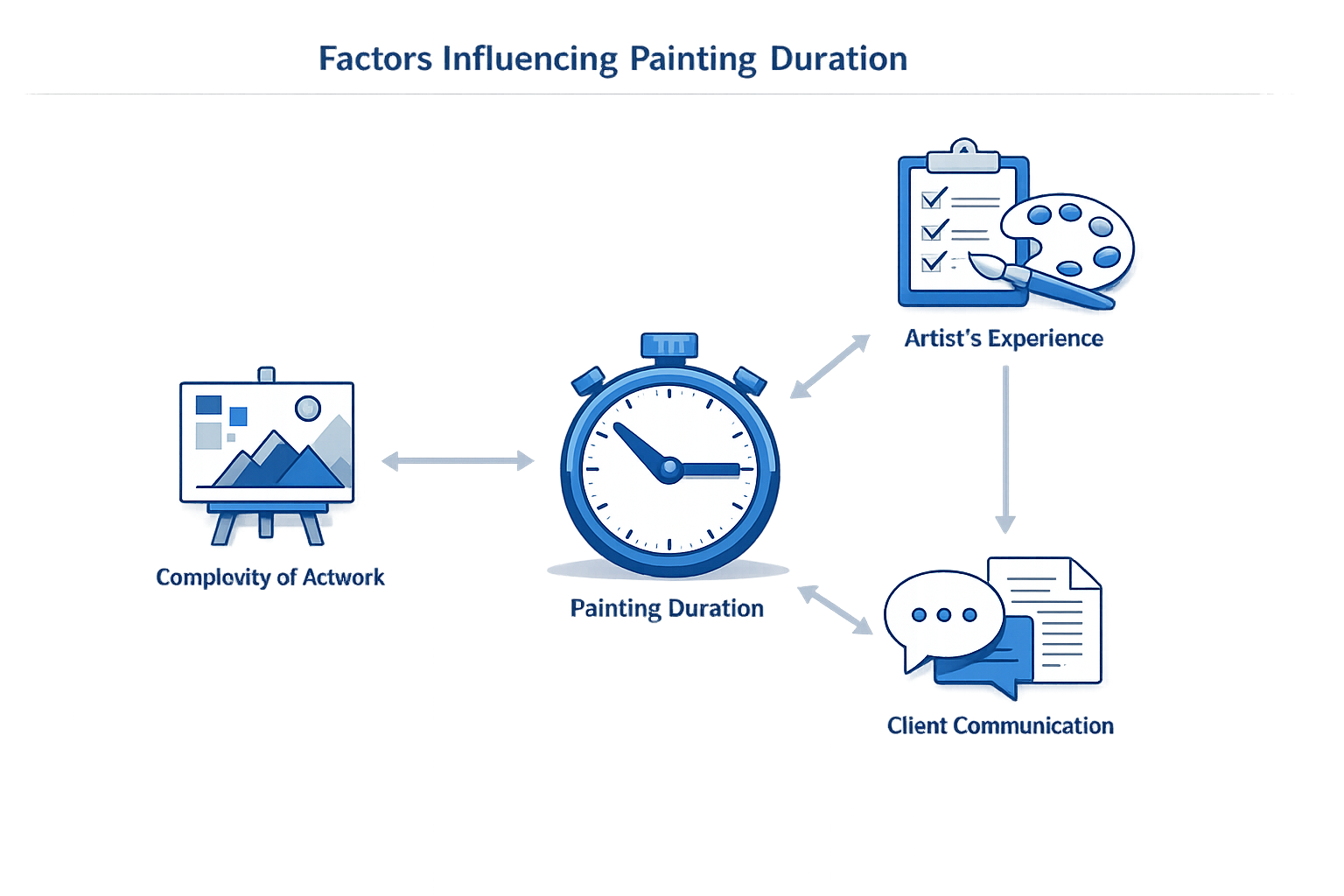
Here is the thing: two portraits of the same size can take wildly different amounts of time to finish. The timeline is not just about the artist sitting down and painting — it is about what you are asking them to paint, how they work, and how smoothly the back-and-forth goes. Understanding these factors helps you set realistic expectations and avoid surprises halfway through.
Complexity of the Artwork
A simple portrait of one pet against a clean background will always be faster than a multi-subject piece with intricate details and a custom setting. If you want your dog painted as a Renaissance duke with embroidered robes, detailed architecture in the background, and a specific historical color palette, expect the timeline to stretch. More subjects, more layers, more detail — all of it adds time.
The medium matters too. Oil paint dries by oxidizing rather than evaporating, which means each layer can take several days to cure before the next one goes on. That is just the nature of the material — not a delay, just chemistry. Watercolor and acrylic move faster, but oil gives you that depth and richness that some styles demand.
Artist Experience and Skill Level
An experienced artist who has painted hundreds of pet portraits will work faster and more confidently than someone still finding their rhythm. They know which shortcuts are safe, which details matter, and how to troubleshoot problems without starting over. That efficiency shows up in the timeline — not because they are rushing, but because they have done this enough times to know the path.
Skill also determines how much revision happens. A seasoned artist will nail the likeness and composition early, which means fewer rounds of feedback and adjustments. Less experienced painters might need multiple passes to get the expression or proportions right, and that adds days or weeks to the schedule.
Client Communication and Approvals
This is the part people skip: the timeline is not just the artist's responsibility. If you take three days to respond to a proof, or a week to approve the final photograph before shipping, that time gets added to the total. Delays in approval can extend the timeline significantly, especially if the artist is juggling multiple commissions and has to slot you back in after a pause.
Clear communication at the start also speeds things up. If you provide a high-quality reference photo, specify the style and size upfront, and answer questions promptly, the artist can work without stopping to clarify details. Vague requests or low-resolution photos mean more guesswork, more revisions, and more time.
The fastest custom painting is the one where the client knows exactly what they want and communicates it clearly from the start.
Environmental and Material Factors
Weather and humidity can affect drying times, especially for oil and acrylic work. High summer humidity can add 24 to 48 hours to cure times, and if the artist is working in a space without climate control, they might have to wait longer between layers. It is not a mistake — it is just the reality of working with paint that reacts to the air around it.
Other factors like color changes mid-process, textured surfaces, or complex framing requests can extend timelines by up to 50 percent. If you decide halfway through that you want a different background or an additional subject added, the artist has to rework sections that were already finished. That is not a quick fix — it is a rebuild.
For a faster, more predictable alternative, dog canvas prints offer a streamlined process with consistent timelines and no drying delays.
Conclusion: Choosing the Right Option for Your Needs
Here is the thing: the timeline you need depends entirely on what you are making and when you need it. A hand-painted custom painting — the kind where an artist mixes pigment and builds layers — typically takes three to four weeks in the studio, plus a few more days for delivery. If you are working with a gallery on something larger or more complex, you are looking at twelve to twenty weeks from the first conversation to the piece hanging on your wall. That is not a problem if you plan ahead, but it is a deal-breaker if you need something next week.
AI-generated custom paintings flip that script. You upload a photo, choose a style, and the system generates your portrait in minutes. No drying time, no back-and-forth on brushstrokes, no waiting for the artist to finish three other commissions first. For most people — especially if you are working on a gift, a memorial piece, or something you want to see before you commit — that speed makes all the difference.
What to Consider
If you value the hand of the artist, the texture of real paint, and the time-intensive craft of traditional portraiture, a hand-painted commission is worth the wait. You will get something one-of-a-kind, and the process itself can be part of the experience. Just build in enough lead time — at least a month for a straightforward piece, and closer to three or four months if the work is large, detailed, or part of a professional installation.
If you need flexibility, speed, or the ability to preview and adjust before anything is printed, AI-generated portraits give you that control. You are not locked into a single interpretation, and you can see the final result before it ships. That is especially helpful when you are working with a photo that might not translate perfectly, or when you want to try a few different styles before you decide. For pet memorial gifts or time-sensitive projects, the turnaround is unbeatable.
The best choice is the one that fits your timeline, your budget, and what you want hanging on your wall. Both paths get you a custom painting — one just gets you there faster, and the other gets you there with a brush in someone's hand. Neither is better or worse; they are just built for different needs. Know what you are working with, plan accordingly, and you will end up with something worth keeping.