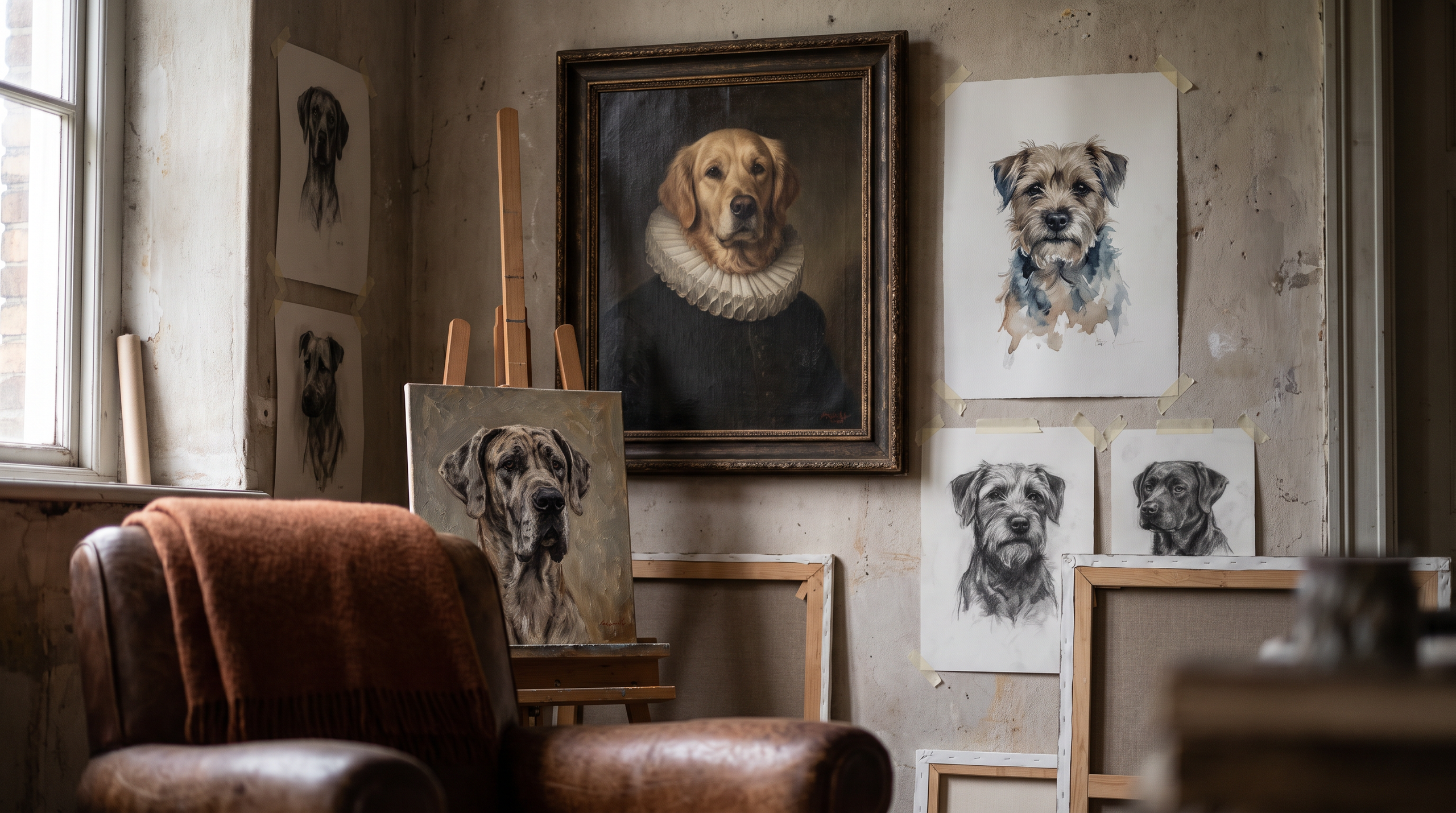

Introduction to Dog Painting Styles
Here is the thing about turning your dog into a painting: the style you choose changes everything. Not just the look — the whole feeling of the piece. A watercolor Golden Retriever feels soft and nostalgic. That same dog painted Renaissance-style, in a velvet robe with a gold frame? Completely different energy. And an oil portrait sits somewhere in between — rich, textured, a little more serious.
You want something that actually looks like her — not a stranger who happens to have her collar. That is the whole game. The photo you start with matters, but so does the style you pick. Get it right, and you have a portrait worth hanging. Get it wrong, and it just feels off, even if you cannot quite say why.
The three styles we are talking about — watercolor, oil, and Renaissance — each have their own strengths. Watercolor is light and airy, great for dogs with soft coats or gentle personalities. Oil brings depth and texture, perfect for dogs with bold features or dramatic coloring. Renaissance is the one that gets the biggest reaction: your dog dressed like royalty, painted in the style of the old masters. It is fun, it is over-the-top, and it works for almost any dog if you lean into it.
By the end of this you will know exactly which style fits your dog — and which one to skip. We will walk through what each style does well, where it falls short, and the little details that sell it. If you are thinking about custom dog paintings from your photo, understanding these differences up front saves you from second-guessing later.
What Makes a Dog Painting Style Work
A good portrait style does three things. It captures your dog's personality. It flatters their features — coat texture, face shape, coloring. And it fits the space where you are going to hang it. A watercolor might look perfect in a bright, casual room but feel too soft for a formal gallery wall. Renaissance portraits are bold and dramatic, so they need a space that can handle that energy.
The era you choose also sets the tone. Renaissance portraits lean into history and grandeur — think Rembrandt, Vermeer, the Dutch masters. Watercolor and oil are more neutral, less tied to a specific time period, which makes them easier to match with modern decor.
Trust me on this: the style you pick should feel like your dog, not like someone else's idea of what a pet portrait should be. If your dog is goofy and loves attention, Renaissance might be perfect. If she is quiet and sweet, watercolor could be the one. And if you want something timeless and a little more serious, oil is worth a look.
Watercolor Painting Style
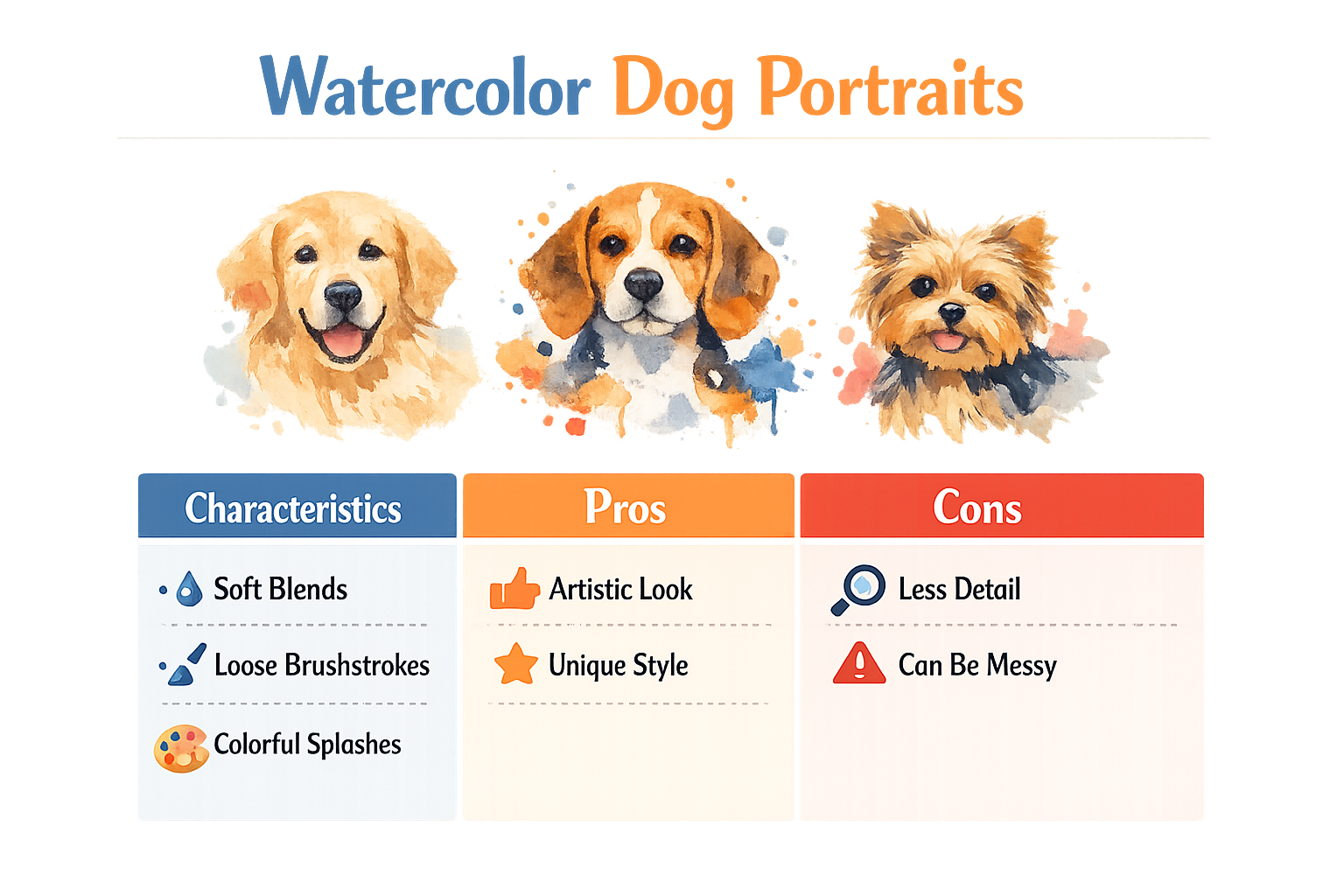
Watercolor has this soft, glowing quality that makes everything feel a little lighter — like the portrait is breathing. The paint moves in ways you cannot fully control, and that spontaneity is the whole point. You get luminous layers, gentle blends, and an ethereal feel that works beautifully when you want something warm and a little romantic.
Here is the thing about watercolor: it teaches you to let go. The medium rewards economy — every brushstroke counts, and you cannot pile on corrections the way you can with oil. That restraint gives watercolor portraits a freshness that feels immediate, like the dog just turned to look at you.
What Makes Watercolor Work
Watercolor captures light better than almost any other medium. The translucent layers let the white of the paper show through, creating that signature glow. It is soft without being weak, and it handles fur textures in a way that feels natural — not overworked.
The trade-off is that watercolor does not forgive easily. Once the paint is down, you are mostly committed. That can be a feature, not a bug — it keeps the portrait from getting fussy. But it also means the artist has to get it right the first time, which is why pigment quality matters. High concentrations of finely milled pigment keep the colors vibrant and prevent muddiness as layers build up.
Best Dogs for Watercolor Portraits
Watercolor flatters dogs with softer features and lighter coats. Golden Retrievers, Cocker Spaniels, and long-haired breeds with flowing fur look stunning in watercolor because the medium mirrors their texture. The soft edges and gentle color transitions match the way their fur catches light.
Smaller dogs with expressive faces — Cavaliers, Havanese, Bichons — also translate beautifully. Watercolor captures their sweetness without making them look cartoonish. If your dog has a gentle, approachable personality, watercolor will feel like them.
Watercolor captures spontaneity in a way no other medium can — it is all about the glow.
When Watercolor Is Not the Move
If your dog has a strong, bold personality — a Rottweiler, a Bulldog, a German Shepherd with that intense stare — watercolor might feel too delicate. The softness that works for a Golden can make a working breed look washed out. For dogs with dark, dramatic coats or sharp features, you want something with more weight and texture.
Watercolor also struggles with high contrast. If your photo has deep shadows or a very dark coat against a bright background, the medium will lose some of that punch. It is built for subtlety, not drama.
If you are considering a watercolor portrait as part of a memorial or tribute, the gentle quality can be exactly right — it feels tender and timeless. You can explore more ideas in custom dog paintings from your photo to see how different styles handle different moods.
Oil Painting Style
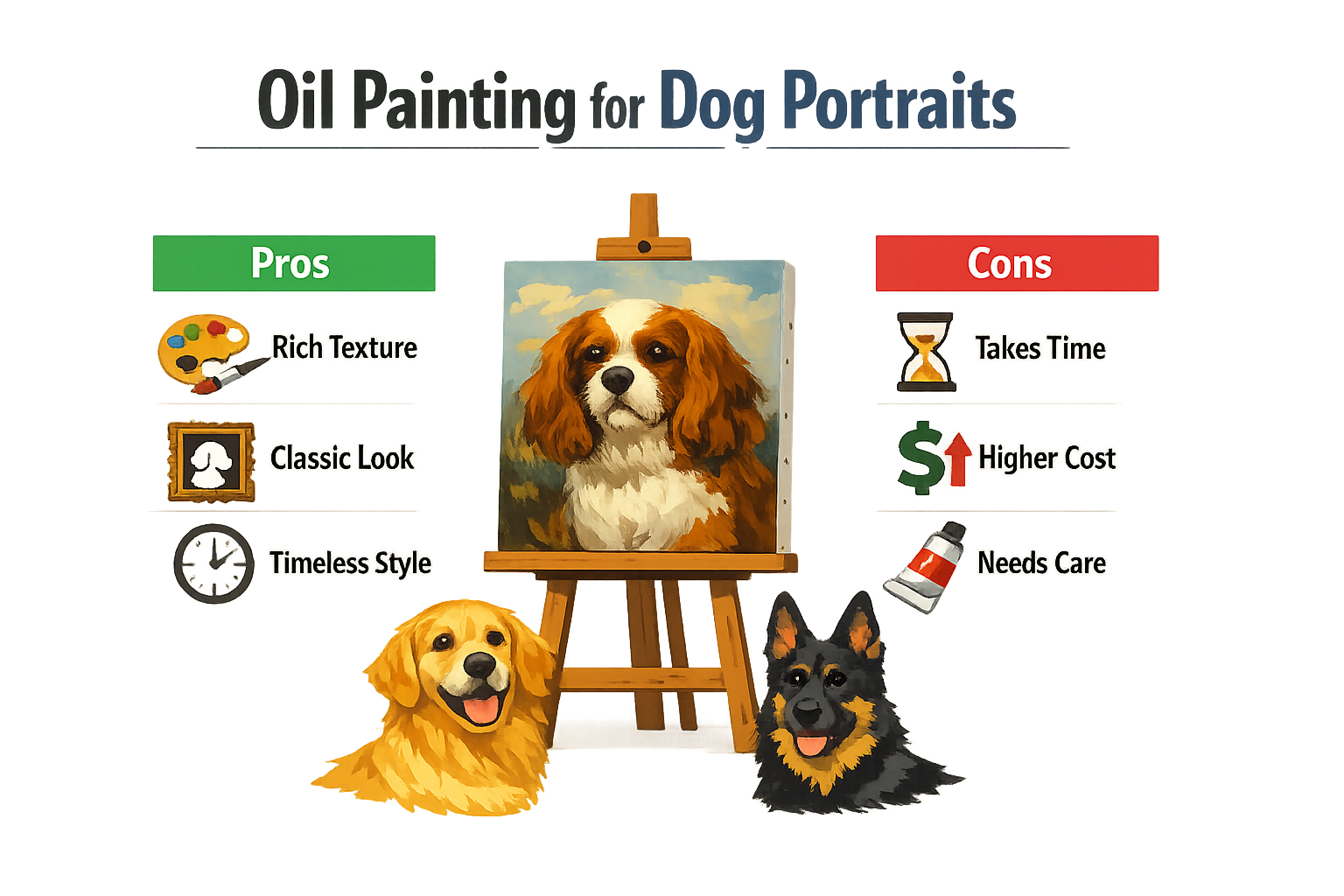
Oil paintings are what most people picture when they think "real art." Thick brushstrokes, warm lighting, and a richness that makes the portrait feel expensive — even when it is not. The style works because it does what oil has always done: it captures texture and depth in a way that feels solid and permanent.
Here is the thing about oil: it loves drama. The visible brushstrokes give the portrait movement and energy, and the layered look adds weight. Your dog does not just sit there — they command the room. If you want something that feels like it belongs in a gallery, oil is the style that delivers.
What Makes Oil Painting Work for Dogs
Oil portraits thrive on contrast and texture. The style handles dark fur beautifully — think black Labs, German Shepherds, or Rottweilers — because the brushwork picks up the light and shadow that makes their coats look dimensional. A flat photo of a black dog can disappear; an oil painting of the same dog glows.
The warm lighting is built into the style. Even a casual snapshot gets that golden-hour treatment when it is rendered in oil. You do not need perfect light in the original photo — the painting does most of the work for you.
Pros and Cons of Oil Painting Style
What oil does well:
- Texture and depth. The layered brushstrokes give the portrait a three-dimensional feel that makes it worth hanging.
- Drama without effort. The style adds warmth and richness automatically — no studio required.
- Works for any breed. Oil handles everything from a fluffy Samoyed to a sleek Doberman, because the brushwork adapts to the subject.
Where oil falls short:
- Not subtle. If you want soft and delicate, oil is not your style. It is bold, and it takes up space.
- Can feel heavy. The richness that makes oil portraits expensive-looking can also make them feel too formal for casual spaces.
- Detail gets abstracted. Fine features — whiskers, individual hairs, tiny markings — get lost in the brushwork. Oil is about the overall impression, not the fine print.
Which Dogs Look Best in Oil
Oil painting style flatters dogs with strong, expressive faces and coats that catch the light. Breeds with defined features — Boxers, Bulldogs, Huskies — translate beautifully because the brushstrokes emphasize their structure. Dogs with glossy or textured coats — Goldens, Spaniels, Shepherds — gain depth and movement that makes the portrait feel alive.
Small, delicate breeds can work in oil, but you lose some of the charm. A Chihuahua or a Maltese might feel overwhelmed by the heavy brushwork. If your dog is tiny and you want them to feel precious rather than powerful, oil is not the move.
Oil painting does not whisper — it announces. If your dog has presence, oil gives them the portrait they deserve.
For a deeper look at how different styles work with your dog's personality and photo, check out Custom Dog Paintings From Your Photo: Styles, Process & Pricing.
Renaissance Painting Style
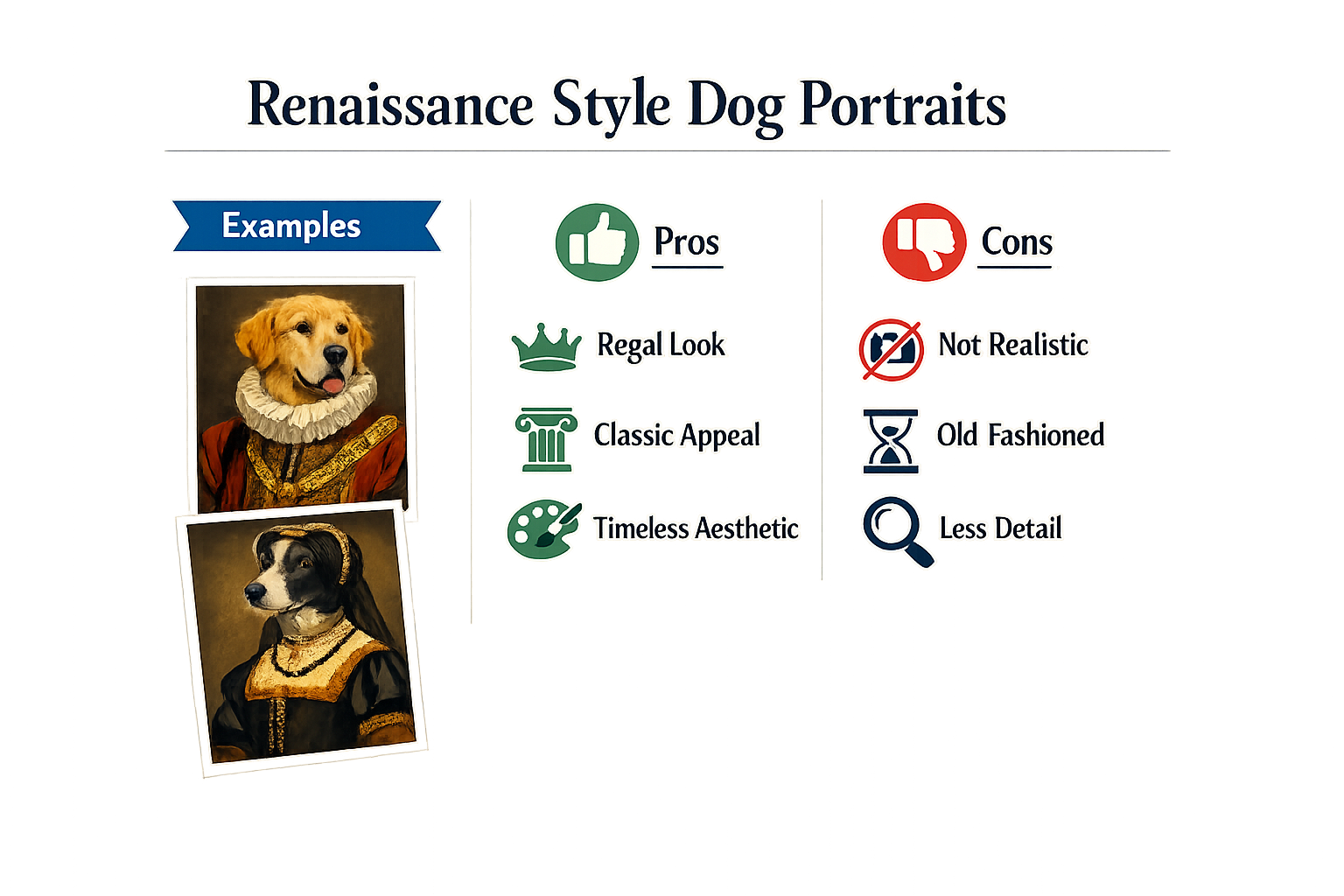
Here is the thing about Renaissance portraits: they turn your dog into royalty. This is the style where your golden retriever gets a velvet cape, your beagle becomes a duke, and your mutt looks like they just stepped out of a painting hanging in a museum. The whole game is drama, formality, and a little bit of humor—because let's be honest, a corgi in a ruff collar is objectively funny and also worth hanging.
Renaissance-style dog portraits borrow from the old masters—think Rembrandt lighting, rich backgrounds, ornate costumes, and that slightly serious expression that says, "I have seen many battles (mostly with the squirrels in the yard)." The portraits are painted, layered, and detailed. They feel expensive because they reference an era when only the wealthy commissioned art. Your pet gets the same treatment a 16th-century nobleman would have received, minus the political intrigue.
What Makes Renaissance Style Work
The Renaissance look is all about formality and grandeur. Your dog is posed like a portrait subject, often with period clothing—military uniforms, royal robes, lace collars, or armor. The backgrounds are typically dark and moody, which makes the subject pop. The lighting is soft, warm, and a little dramatic, just like the Dutch masters used. The whole composition feels deliberate and stately.
This style works best when you lean into the contrast between your dog's actual personality and the serious, regal presentation. A goofy Lab in a general's uniform is funnier and more charming than a stoic-looking breed in the same outfit. The little details that sell it—the gold braid, the family crest, the velvet texture—are what make the portrait feel like a real heirloom piece.
The era you choose tells the story—Renaissance says "timeless, important, and a little tongue-in-cheek."
Pros and Cons of Renaissance Portraits
Pros:
- Timeless and formal. Renaissance portraits have serious visual weight. They look like something that has been in the family for generations, even if you ordered it last week.
- Great for gifts and memorials. The formality and dignity of the style make it a natural fit for honoring a pet who has passed or celebrating a milestone.
- Works with any breed. Big dogs look noble, small dogs look hilarious (in the best way), and mutts get the royal treatment they deserve.
- Conversation starter. People stop and stare. A Renaissance dog portrait is never boring.
Cons:
- Not for minimalists. If your home is all clean lines and neutral tones, a Renaissance portrait might feel too heavy or ornate.
- Requires the right photo. You need a clear, well-lit shot of your dog's face. Blurry action shots do not translate well into this style.
- Can feel overly formal. If you want something soft, warm, and understated, this is not it. Renaissance is bold.
Best Breeds and Personalities for Renaissance Style
Renaissance portraits work for almost any dog, but some breeds and personalities are naturals. Large, dignified breeds—Great Danes, German Shepherds, Golden Retrievers, Bernese Mountain Dogs—look like they were born to wear a cape. Their size and bearing fit the grandeur of the style.
Small breeds with big personalities—Corgis, French Bulldogs, Pugs, Dachshunds—are where the style gets fun. The contrast between their actual size and the oversized formality of the portrait is what makes it work. A Pug in a powdered wig is objectively delightful.
Mixed breeds and rescues are also perfect candidates. Renaissance portraits give them the royal treatment they never got in real life. It is a way of saying, "You are important, you are loved, and you deserve to be painted like a king."
If your dog has a strong, expressive face—lots of character in the eyes, a memorable expression—Renaissance style will capture that. The style rewards personality. If you are looking for more ideas on turning your dog's photo into a lasting piece of art, check out Custom Dog Paintings From Your Photo: Styles, Process & Pricing.
When to Choose Renaissance Over Other Styles
Pick Renaissance when you want something that feels like an heirloom. This is the style for people who want their dog's portrait to anchor a room, not blend into it. It works beautifully in traditional spaces—libraries, dining rooms, entryways—and it holds its own in modern spaces if you want a bold contrast.
Renaissance is also the go-to for memorial portraits. The formality and dignity of the style honor your pet without being overly sentimental. It says, "This was someone important," which is exactly right.
If you want something softer, lighter, or more understated, watercolor is the better choice. If you want rich color and texture but less formality, oil is the way to go. Renaissance is for when you want drama, humor, and a portrait that makes people stop and look twice.
Conclusion: Choosing the Right Style
Here is the thing: the right dog painting style is the one that actually looks like your dog when you hang it on the wall. Not the one that sounds fanciest or the one everyone else is getting — the one you keep coming back to when you picture it in your house.
Watercolor works when you want soft, warm, and a little bit dreamy. Oil is the move when you need rich texture and that painted-by-hand feel that pulls people across the room. Renaissance is for the dog who already acts like royalty — or the one you want to remember that way. Trust me on this: you will know it when you see it.
Match the Style to the Moment
If this is a gift, think about the person receiving it. Watercolor feels gentle and personal — it is the style that says "I see how much you loved them." Oil painting feels more formal, the kind of thing you frame big and hang in the living room where everyone can see it. Renaissance is bold — it makes a statement, and not everyone wants that. The era you choose tells the story as much as the photo does.
For a memorial portrait, let the style match the energy your dog had. A calm, sweet dog might feel right in watercolor. A big personality — the one who owned every room — might deserve the drama of oil or the grandeur of Renaissance. It does not have to be perfect. It just has to feel like them.
Start With the Photo That Actually Works
No matter which style you pick, the photo is what makes or breaks the portrait. Good light does most of the work — a clear shot at their eye level, with a background that lets the photo breathe. If you are not sure which photo to use, choosing the right photo for a memorial portrait will walk you through exactly what to look for and what to skip.
The little details that sell it — the expression, the way the light hits their fur, the one where they look like themselves and not a stranger in their collar — that is what turns a snapshot into a portrait worth framing. You do not need a studio. You just need the shot that actually works.
The best part? You can explore all three and see which one clicks. No pressure, no rush. Just you, your favorite photo, and the style that makes it feel like a portrait worth hanging.