
Introduction
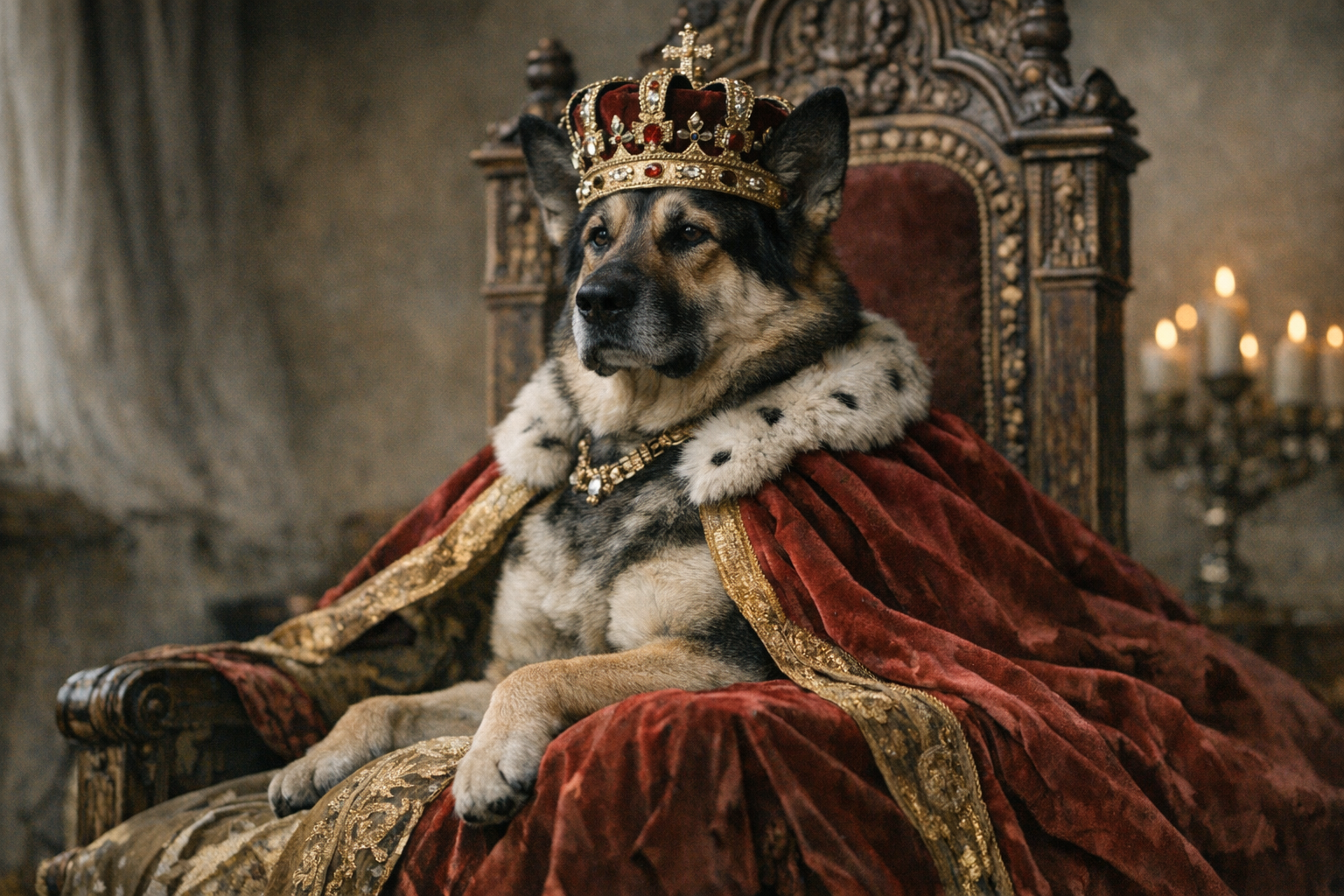
Here is the thing about your dog: they already act like royalty. They have their favorite chair, they expect dinner on time, and they absolutely know they run the household. Royal dog portraits just make it official.
A royal dog portrait places your pet's face on a historical figure's body — complete with regal robes, medals, lace collars, and all the trappings of aristocratic life. The result is part joke, part genuine art, and entirely worth hanging. Your golden retriever becomes a Renaissance duke. Your beagle transforms into a Victorian countess. It is dignified and a little ridiculous, which is exactly the point.
These portraits work because they capture something true: the outsized personality packed into every dog. The one who greets you like you have been gone for years when you were only outside for three minutes deserves a portrait that matches that energy. Whether you want a gift that will get a laugh, a tribute to a dog who left paw prints on your heart, or just a piece of art that feels like them, royal portraits deliver.
The best part? You do not need a professional photo shoot or a fancy camera. The shot you already have on your phone — the one where they are looking right at you with that expression — that is the one. Royal portraits are about personality, not perfection. If you are considering custom dog paintings from your photo, the royal style is one of the most forgiving and fun options out there.
Royal dog portraits turn everyday pets into conversation starters — art that is both humorous and genuinely dignified.
By the end of this, you will know exactly what makes a royal portrait work, how to pick the right photo, and how to display it so it gets the reaction it deserves. Let your dog take their rightful place on the throne.
What are Royal Dog Portraits?
Here is the thing about royal dog portraits: they put your dog's face on a body dressed in velvet robes, military regalia, or aristocratic finery — the kind of thing you would see in a museum painting of a duke or a queen. The result is part humor, part reverence, and entirely worth hanging. Your dog looks dignified and slightly ridiculous at the same time, which is exactly the point.
The format is simple. You supply a photo of your pet. The artist — or, increasingly, a skilled digital process — places that face onto a historical figure's body, complete with ruffled collars, gold braid, or a jeweled crown. The composition mimics the formal portraits of the Renaissance and the royal courts: centered subject, rich background, serious expression. It treats your dog like royalty, and the contrast between a goofy Lab and a powdered wig is what makes it work.
The Tradition Goes Back Further Than You Think
Pet portraits have been around since the Renaissance, when owning a well-bred dog was a status symbol. Painters like Rembrandt and the Dutch masters included pets in family portraits to signal wealth and taste. By the Victorian era, that relationship had shifted. Queen Victoria's devotion to her Cavalier King Charles Spaniel, Dash, marked a cultural turning point — pets were no longer just accessories, they were companions. Portraits became more personal, more affectionate, less about showing off and more about showing love.
Modern royal dog portraits inherit that lineage but flip the script. Instead of your dog appearing at your feet in a family painting, your dog is the subject. The regal trappings stay, but the tone is warmer, more playful. It is a way to honor the bond without taking yourself too seriously.
The best royal portraits treat your dog like the subject of a museum painting — formal composition, rich detail, and a face you cannot stop looking at.
Why People Love Them
Royal dog portraits work because they hit two notes at once: they are funny and they are sincere. Your dog does not know they are wearing a general's uniform, but you do, and that gap is the joke. At the same time, the portrait is beautifully composed, well-lit, and carefully detailed. It is art you can hang in the living room without explaining yourself.
They also work as gifts. A royal portrait of someone's dog says you see their pet the way they do — as a character, a personality, someone worth commemorating. It is the kind of thing people keep. For more ideas on turning a favorite photo into a lasting tribute, see Custom Dog Paintings From Your Photo: Styles, Process & Pricing.
The appeal is not just nostalgia or kitsch. It is about elevating the everyday relationship you have with your dog into something that feels permanent and a little grand. You are not commemorating a champion or a pedigree. You are commemorating the dog who sits on your feet every morning, now dressed like they own a castle.
Commissioning a Royal Portrait
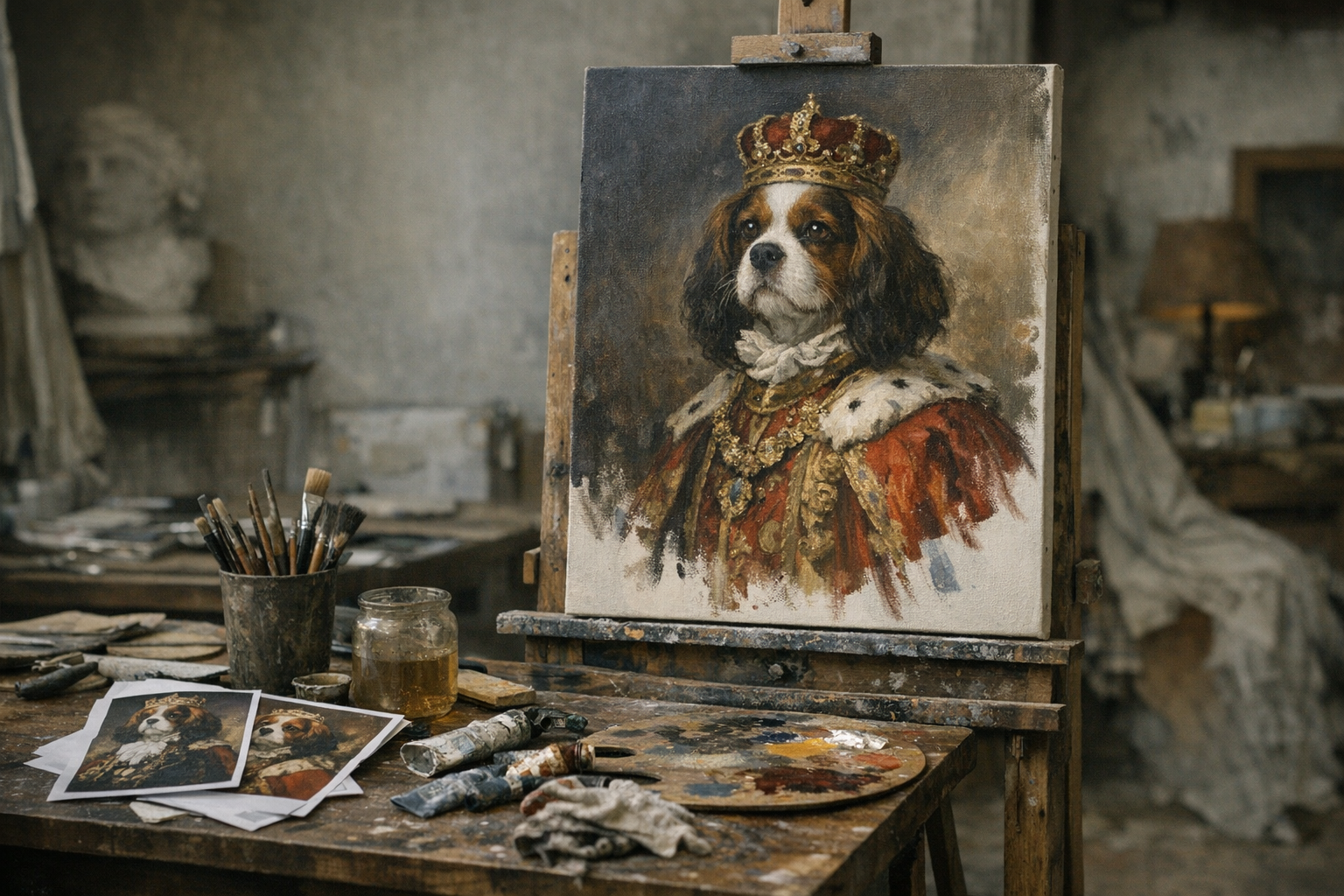
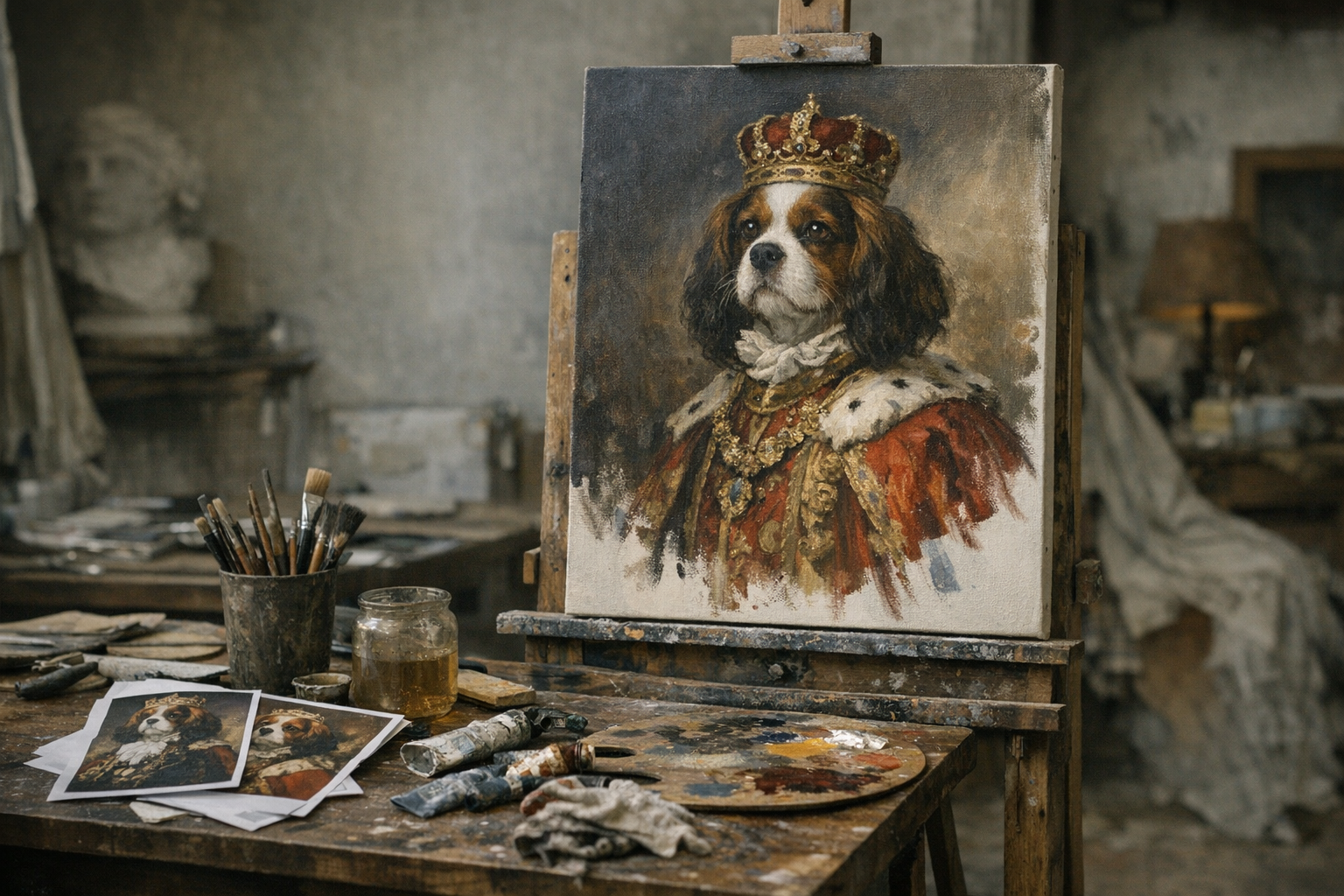
Here is the thing about commissioning a royal dog portrait: the process is simpler than you think, but the photo you choose makes or breaks the final piece. You want something that actually looks like your dog — not a stranger who happens to have his collar. Let me walk you through how to get this right.
Choosing the Right Photo
The best portraits start with a clear, front-facing photo in good light. Your phone camera works fine — no studio required. Look for a shot where your dog's face is fully visible, eyes are open and alert, and the lighting shows their coat color accurately. Avoid heavily shadowed photos or angles where their head is turned away.
If you are working on a custom dog painting from your photo, the same rules apply: good light does most of the work, and a straight-on angle beats a dramatic profile every time.
Understanding Your Options
You have three main paths for commissioning a portrait, and they differ in speed, cost, and how hands-on the process feels. AI-powered services deliver same-day results for minimal cost. Online portrait services take a few days to a week and offer more customization. Hand-painted artists work over several weeks and give you a fully original piece.
Step 1
Select your style
Browse the available royal styles — think Renaissance, Victorian, or military regalia. Choose the era and costume that feels right for your dog's personality. A dignified older dog might suit a Renaissance robe; a scrappy terrier might look perfect in a general's uniform.
Step 2
Upload your photo
Use the clearest photo you have. The system or artist will place your dog's face into the royal costume template. If the photo is blurry or poorly lit, the final portrait will be too.
Step 3
Review and finalize
Most services let you preview the portrait before finalizing. Check that the face looks like your dog and that the costume sits naturally. If something feels off, now is the time to request adjustments or try a different photo.
What to Expect During the Process
Timelines vary depending on the method you choose. AI-generated portraits arrive the same day. Online services typically deliver within three to ten days. Hand-painted commissions take one to four weeks, sometimes longer during busy seasons.
Communication matters. If you are working with an artist, be clear about what you want — the pose, the costume, the background. If you are using an automated service, double-check that your photo meets the resolution and format requirements before you upload.
The photo everyone gets wrong is the one they love on their phone but that does not translate to a portrait — too much shadow, too far away, or taken at an odd angle.
Most services handle revisions differently. AI tools let you regenerate instantly if you are not happy. Traditional artists may include one or two rounds of changes in the base price. Read the terms before you commit so you know what is included.
Pricing and Options
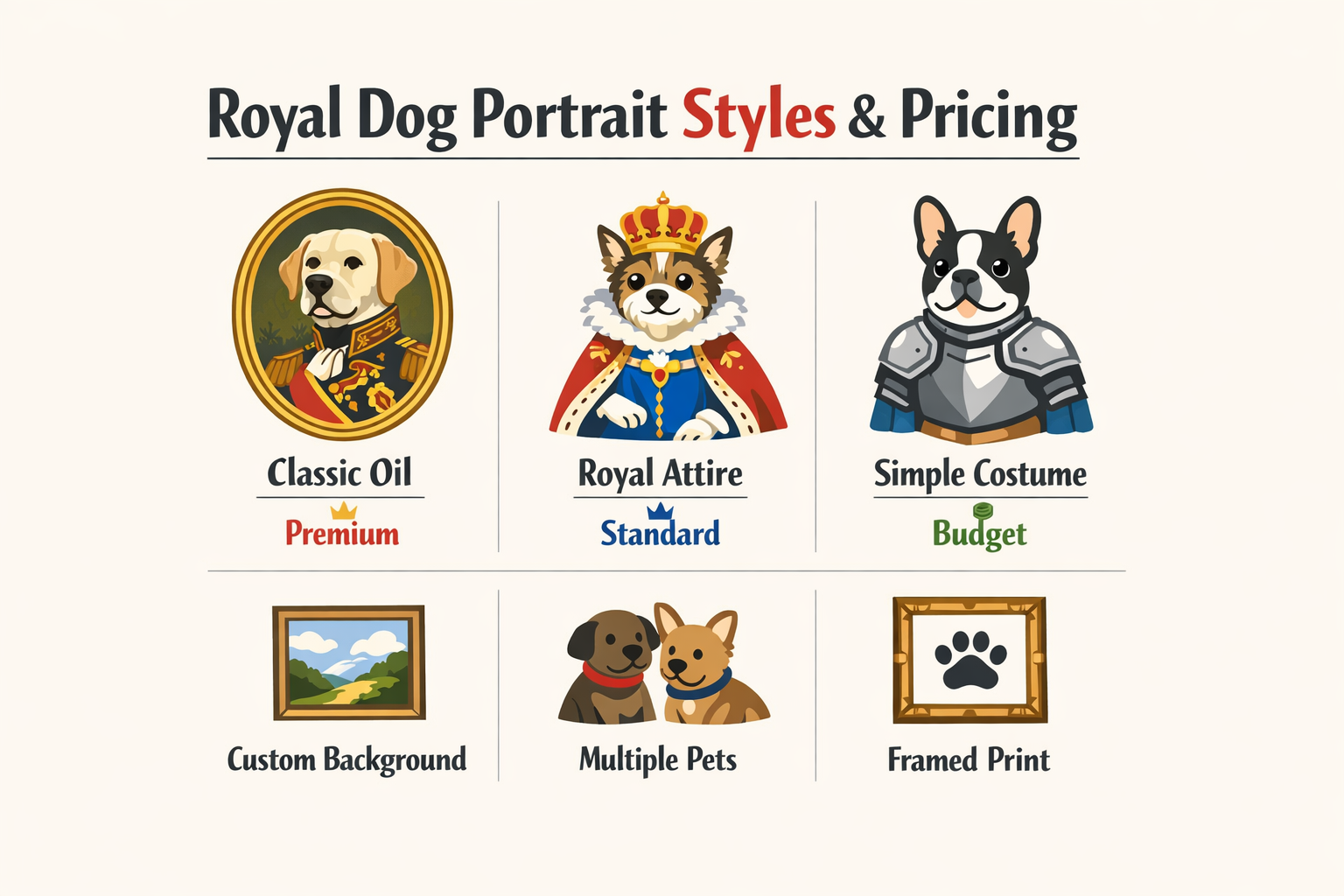
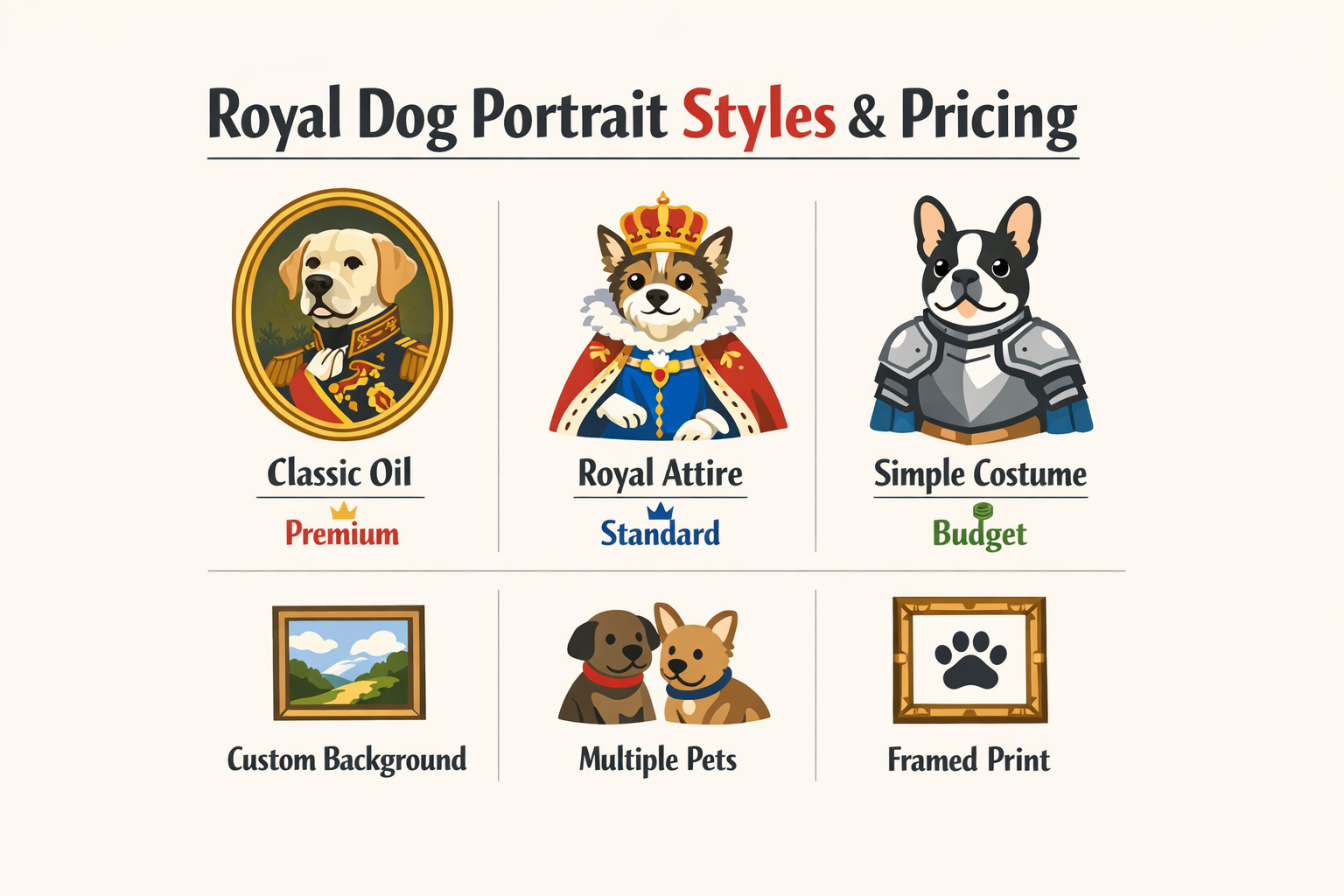
Here is the thing about pricing a royal dog portrait: the range is wide, and what you pay depends on how you want it made. You can spend anywhere from a few dollars to a few hundred, and the difference is not just about quality — it is about speed, customization, and whether a human hand ever touches the canvas.
The three main routes are AI apps, online portrait services, and hand-painted artists. AI apps run about five to fifty dollars and deliver the same day. Online portrait services — where a designer works from your photo — typically cost thirty to a hundred dollars and take three to ten days. Hand-painted artists start around seventy-five dollars and can go past three hundred, with turnaround times of one to four weeks. Each has its place, and none of them is wrong if it gets you the portrait you want.
What You Are Really Paying For
The price is not just about the final image. It is about how much control you get, how long you wait, and whether the style can bend to fit your dog. AI apps are fast and cheap, but you are working within a template — the crown, the uniform, the background are preset. Online services give you a designer who can tweak things, swap out elements, and adjust the composition. Hand-painted work gives you a one-of-a-kind piece where every brushstroke is a choice someone made looking at your dog.
If you are buying a gift or something for a gallery wall, the hand-painted route usually feels more special. If you want something fun for your desk or to test a style before committing, AI apps do the job. Online services sit in the middle — more personal than AI, faster and cheaper than a painter.
Style Options and What They Cost
Royal dog portraits come in a few signature styles, and each one emphasizes something different about your dog. Renaissance royalty leans into soft light, rich fabrics, and a timeless look — it works for dogs with expressive faces and calm energy. Military uniforms add structure and drama, which suits larger breeds or dogs with a serious presence. Pop art goes bold and colorful, turning your dog into something you would see in a gallery — it is playful, modern, and works for dogs with big personalities.
Most services charge the same across styles, but hand-painted artists sometimes charge more for intricate uniforms or detailed backgrounds. If you are working with a painter, ask upfront whether the style you want affects the price. For a deeper look at how different portrait styles translate from photo to canvas, check out Custom Dog Paintings From Your Photo: Styles, Process & Pricing.
| Method | Price Range | Turnaround | Customization |
|---|---|---|---|
| AI apps | $5–$50 | Same day | Template-based |
| Online services | $30–$100 | 3–10 days | Moderate |
| Hand-painted | $75–$300+ | 1–4 weeks | Fully custom |
Budgeting Without Compromising
You do not need to spend three hundred dollars to get a portrait worth hanging. The trick is knowing what matters to you. If the goal is a conversation piece for your living room, invest in a painted version with good framing. If you want something for your office or a gift that feels personal but not precious, an online service will get you there.
One thing to watch: add-ons. Some services charge extra for rush delivery, high-resolution files, or physical prints. If you are ordering a digital file, make sure it is high enough resolution to print at the size you want — at least 300 DPI at the final dimensions. If you are ordering a physical print, ask about the paper or canvas quality before you pay. The cheapest option often uses thin canvas or low-grade paper that does not hold up.
Another budget move: order the digital file and handle the printing yourself. You can take a high-res file to a local print shop or an online printer and often get better quality for less money than the portrait service charges for their standard print.
The cheapest portrait is not the one that costs the least — it is the one you actually hang and keep coming back to.
When to Spend More
There are a few situations where spending more makes sense. If the portrait is a memorial piece, the extra investment in hand-painted work or museum-quality printing feels right — it is not just decoration, it is a tribute. If you are giving it as a major gift, the recipient will notice the difference between a printed canvas and a painted one. And if your dog has unusual coloring, a tricky expression, or features that do not translate well in a template, a custom artist can adjust in ways that automated tools cannot.
You will know when it is worth it. If you keep coming back to the idea of a painted piece, trust that instinct. If the AI version makes you smile every time you look at it, you are done — spend the savings on a great frame.
Displaying Your Royal Portrait
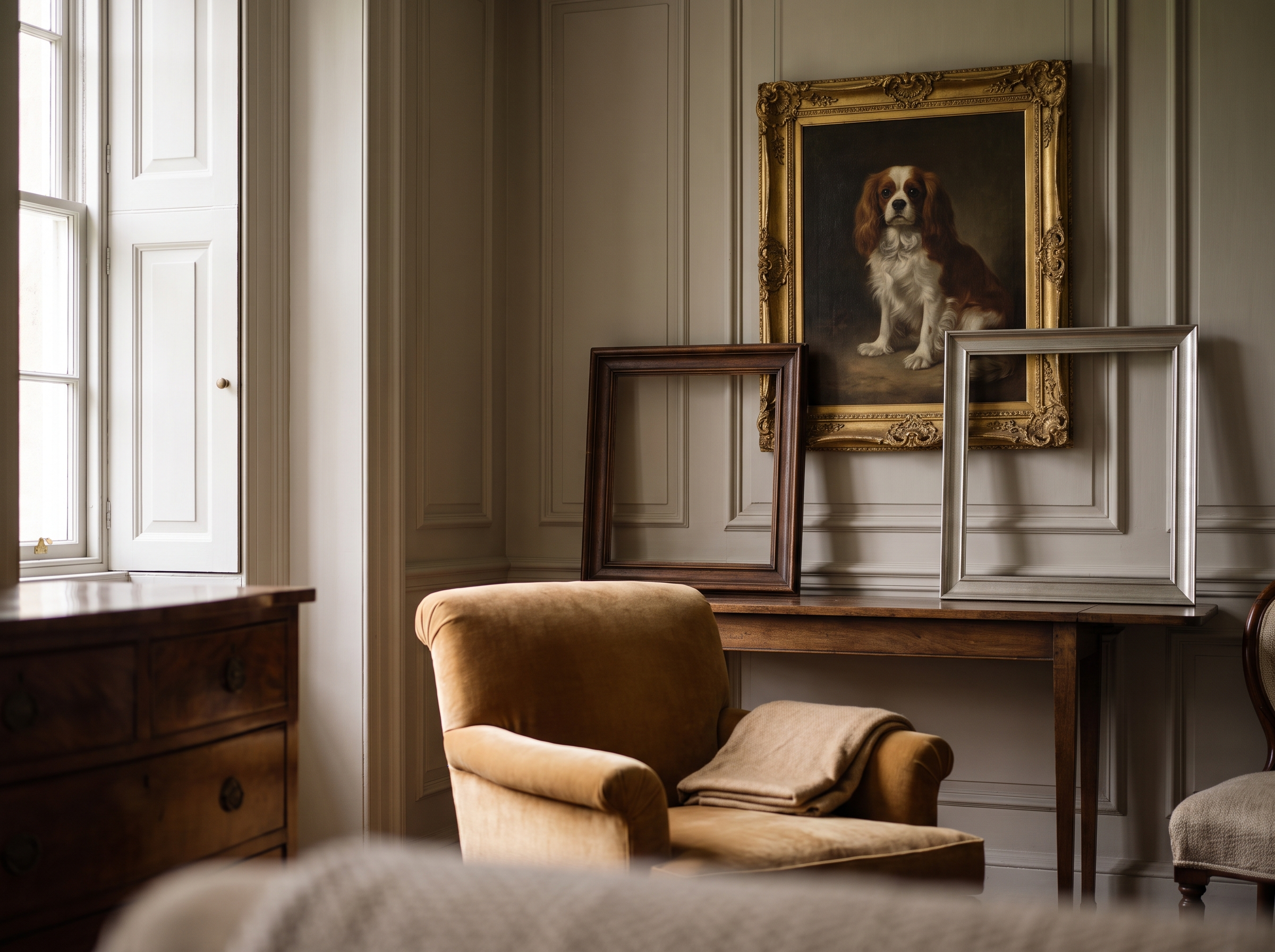
Here is the thing about royal dog portraits: you went through the trouble of commissioning one, so do not stick it in the hallway where nobody looks. The whole point is to keep them in the room — literally. Put it where you spend time, at their eye level, and let the portrait breathe.
A royal portrait is not a snapshot. It is painted, formal, and a little dramatic, so it needs space and the right frame to sell it. Trust me on this — the frame does half the work. Go ornate if the portrait leans Renaissance or Victorian. Gold leaf, carved wood, something that feels expensive. If your dog is dressed as a general or wearing a ruff, lean into it. A thin modern frame will make the whole thing look like a joke.
Where to Hang It
The living room is the obvious choice, but think about sightlines. You want it on a wall people actually face when they sit down — not behind the couch where it becomes wallpaper. Above a console table or mantel works well because you can frame it with a lamp or a few books. The portrait becomes the anchor.
If you have a gallery wall, the royal portrait should be the centerpiece — larger than everything around it, or at least visually heavier. Do not bury it in a grid of family snapshots. It is formal art, and it should feel like it.
For a more personal touch, some people hang custom dog paintings in a study or home office. It is a conversation starter, and it keeps your dog with you while you work. Just make sure the lighting is good — soft and warm, not harsh overhead fluorescents that flatten everything.
Framing Choices That Work
Ornate frames suit the era you choose. If your dog is dressed in 18th-century finery, go for carved wood with a distressed finish. If the style is more restrained — think Dutch Golden Age — a simpler dark wood frame with clean lines will do the job without competing.
Matte boards add breathing room. A wide matte in a neutral tone (cream, soft gray) gives the portrait formality and keeps the eye from jumping straight to the frame. It also makes a smaller portrait feel more substantial.
Glass or no glass depends on the medium. If it is a print, use UV-protective glass to keep the colors from fading. If it is a canvas, skip the glass entirely — let the texture show. Canvas under glass looks trapped.
Lighting Matters
Good light does most of the work. Natural light is fine if it is indirect — a wall perpendicular to a window, not directly across from it. Direct sunlight will fade the portrait over time, especially if it is a print.
If you want to get serious, add a picture light. A small brass or bronze fixture mounted above the frame casts warm light down the surface and makes the portrait look gallery-ready. It is the little detail that sells it.
Avoid placing the portrait near heat vents or fireplaces. Heat and humidity warp frames and canvases, and you will end up with buckling or discoloration. Keep it cool and dry, and it will last.
Making It Feel Like Them
The shot that actually works is the one that feels like your dog — not a stranger in a costume. Even in a formal royal portrait, their personality should come through in the expression, the tilt of the head, the way they hold themselves. When you hang it, you should recognize them immediately.
Pair the portrait with a small brass nameplate if you want to go full museum. It is a fun touch, and it gives the piece a sense of occasion. You can include their name, their "title," or just the year. Keep it simple and let the portrait do the talking.
This is the part people skip: step back and look at the whole wall. Does the portrait feel balanced, or is it fighting with everything around it? If it feels crowded, edit. Remove a piece or two. A royal portrait worth framing deserves space to command the room.
Caring for Your Royal Portrait
You spent time picking the right photo, the right style, the right frame — now here is how to make sure it stays worth hanging for years.
The good news: a portrait on canvas or quality paper is tougher than you think. The bad news: a few common mistakes can fade colors, crack paint, or warp the canvas faster than you would expect. Most of it comes down to light, humidity, and where you hang it.
Keep It Out of Direct Sun
Direct sunlight is the fastest way to fade a portrait. Even behind glass, UV rays break down pigments over time — reds and blues go first, then everything starts looking washed out.
Hang your portrait somewhere that gets indirect light, or at least rotate it away from windows that get full afternoon sun. If you love the spot but it is sunny, consider UV-protective glass when you frame it. It costs a little more, but it does most of the work for you.
Watch the Humidity
Canvas and paper both react to moisture. Too much humidity and the canvas can sag or develop mildew; too little and it can crack. Bathrooms, laundry rooms, and unfinished basements are risky.
Aim for normal indoor humidity — if your home feels comfortable to you, the portrait will be fine. If you live somewhere very dry or very humid, a small humidifier or dehumidifier in the room can help. Just keep the portrait away from vents that blow hot or cold air directly on it.
Dust Gently, Clean Rarely
Dust the frame and glass with a dry microfiber cloth every few weeks. For the portrait itself, less is more — if it is behind glass, you are mostly dusting the glass. If it is an unframed canvas, a very soft brush (like a clean makeup brush) works better than a cloth.
Never use water, glass cleaner, or furniture polish directly on the portrait. If something gets on it — a splash, a smudge — dab it gently with a barely damp cloth and let it air-dry. If it is serious, take it to a framer or conservator rather than trying to fix it yourself.
The portrait that lasts is the one you do not have to think about — good light, stable air, and a quick dust now and then.
Reframe or Refresh When Needed
Frames get dinged, glass gets scratched, and tastes change. If the frame starts looking tired or does not match the room anymore, swap it out. A good framer can remount the portrait in a new frame without damaging it.
If the portrait itself starts looking dull or the colors seem off, it might just need better light or a cleaner frame. But if you see cracks, warping, or real fading, that is when you call in a professional — most framers know a conservator who can assess it.
For tips on choosing the right photo in the first place, check out How to Choose the Right Pet Memorial Portrait Photo — the better the source photo, the easier the portrait is to care for long-term.
Conclusion
Here is the thing about royal dog portraits: they turn the photo you already love into something you actually want to hang. Not tucked away in an album or buried in your phone — on the wall, where everyone who walks into the room sees your dog the way you do. Regal, ridiculous, and completely worth it.
The portrait you commission does not have to be serious. It can be a conversation starter, a gift that makes someone laugh and cry at the same time, or just a way to keep your pet in the room long after they are gone. The era you choose, the uniform, the background — all of it says something about the dog and the person who loves them. That is what makes it feel like them, not just a painting of a dog in a costume.
If you are thinking about commissioning one, trust me on this: the photo you keep coming back to is the one that will work. Good light does most of the work, and the rest is about finding an artist or service that gets what you are going for. You do not need a studio or a perfect shot — just the one where your dog looks like your dog. From there, it is about choosing the style that fits: Renaissance for the dignified breeds, military for the working dogs, royal robes for the ones who already think they run the place.
Royal dog portraits are not just art — they are a way to honor the bond you share with your pet. Whether you are celebrating a loyal companion or creating a lasting tribute to a beloved pet, a portrait worth framing keeps them in your life in a way that feels permanent and personal. Soft, warm, and a little dramatic — exactly the way they deserve to be remembered.
Explore royal dog portraits and learn how to transform your furry friend into a regal masterpiece with our guide on commissioning and displaying art.