
Introduction
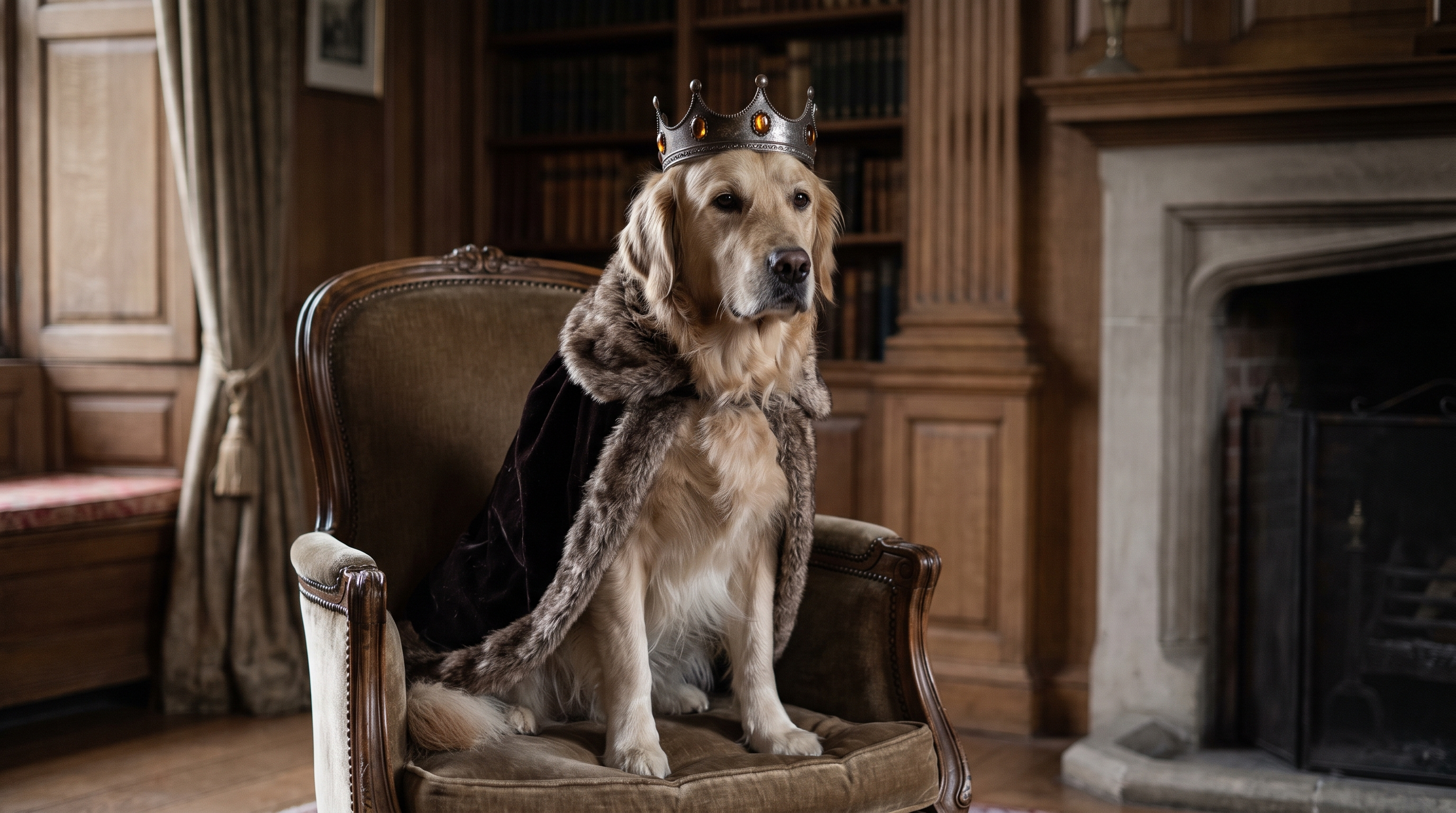
Here is the thing about your pet: they already act like royalty. The way your dog claims the best spot on the couch, or how your cat surveys the room from their favorite perch — they know they run the place. A royal pet portrait just makes it official.
When it comes to capturing the essence of your pet in a royal pet portrait, there is a delightful tradition to draw upon. The Rijksmuseum is filled with paintings of very serious-looking dogs, and your pet deserves a spot in that lineage. Imagine them in regal attire, their expression reflecting the wisdom of a seasoned monarch — or at least the confidence of someone who has never paid rent.
The beauty of royal dog portraits is that they work for any pet. A rescue mutt looks just as commanding in an admiral's uniform as a purebred does in velvet and pearls. The era you choose, the light you start with, and the personality that comes through — that is what makes a portrait worth framing, not pedigree.
Your pet already owns the room — a royal portrait just gives them the frame to prove it.
By the end of this, you will know exactly which style suits your pet, which photo to use, and how to turn that snapshot on your phone into something that belongs on a gallery wall. No studio required. Just you, your pet, and a little bit of history.
What is a Royal Pet Portrait?
A royal pet portrait is exactly what it sounds like — your dog or cat painted as a king, queen, or noble, complete with the regal trappings. Think velvet robes, gold embroidery, crowns, and the kind of dramatic lighting that makes even a goofy Labrador look like they rule a small European country. It is not just a costume photo. It is a full painted portrait in the style of the old masters, the ones you see in museums where everyone looks very serious and very important.
The tradition goes back further than you might think. Pets showed up in Renaissance portraits as symbols of status and wealth — if you could afford to commission a painting that included your dog, you were doing well. By the time Queen Victoria came along with her Cavalier King Charles Spaniel, Dash, the cultural shift was complete. Pets were no longer just accessories in the background. They were family, and they deserved their own moment in the frame.
A pet in a royal portrait was not decoration — it was a statement about loyalty, power, and who mattered in your household.
The Styles That Define Royal Pet Portraits
When you choose a royal pet portrait, you are choosing an era and a mood. Baroque is all about drama and warm light — deep shadows and a glow on the face. On a dog with soulful eyes, it is almost unfair how good it looks. Renaissance portraits lean into detail and balance, with rich fabrics and careful composition. Victorian styles bring in softer edges and more ornate frames, perfect for a cat who already acts like minor nobility.
The style you pick should match your pet's personality. A dignified older dog might suit a somber Renaissance look, while a mischievous terrier could pull off the full Baroque drama. The era you choose sets the tone for the whole piece — and that is where the fun starts.
Why They Work as Wall Art
Here is the thing about royal dog portraits: they are funny and sincere at the same time. You hang one in your living room and guests stop to look, then smile, then ask where you got it. It is a conversation piece that also happens to be a genuine tribute to the animal you love. The formality of the style makes the affection feel bigger, not smaller.
And because these portraits borrow from centuries of real painting tradition, they do not look cheap or gimmicky. The lighting, the posture, the fabric folds — all of it comes from techniques that painters spent lifetimes perfecting. Your pet gets the full treatment, and the result is something you would actually hang.
The Process of Creating Your Portrait
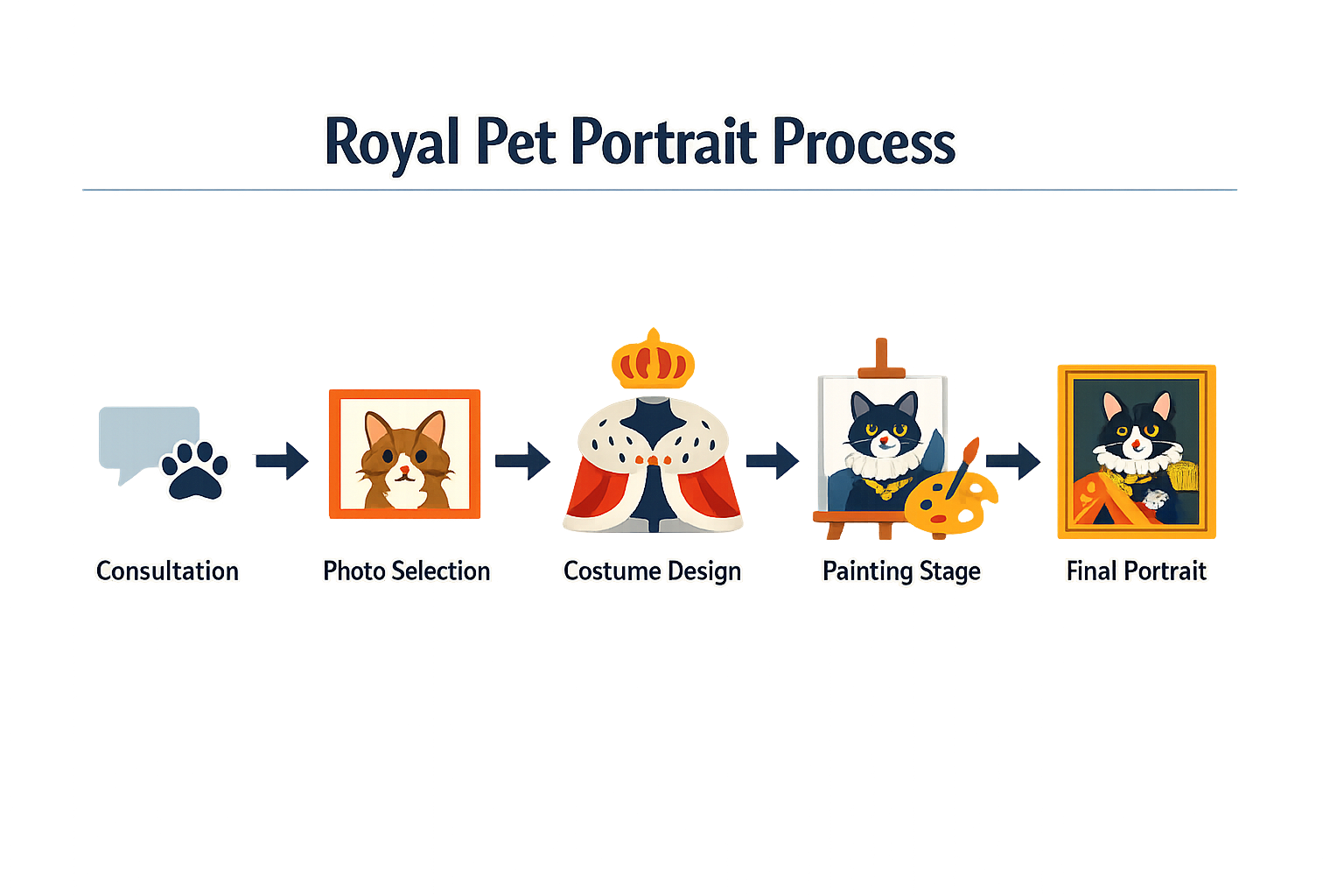
Here is the thing about turning your pet into royalty: the actual process is simpler than you think. You do not need a professional photographer or a studio setup. You just need a clear photo of your pet's face and a way to get it into the right hands.
Most royal pet portraits start with a digital artist merging your pet's photo with the body of a regal figure. The goal is a seamless result — one where your dog or cat actually looks like they belong in that velvet cape and crown, not like someone pasted their head onto a stock image.
What You Need Before You Start
The photo does most of the work. You want a clear shot of your pet's face — good light, sharp focus, and their eyes visible. The background does not matter; the artist will replace it. What matters is that the expression feels like them.
Once you have the photo, you will need access to a platform or service that handles the transformation. Some use AI tools to generate the portrait; others rely on digital artists who do the work by hand. Either way, you will choose a theme — Renaissance, Baroque, Victorian — that suits your pet's personality.
The Steps from Photo to Portrait
Step 1
Upload your pet's photo
Start with a high-resolution image of your pet's face. The clearer the photo, the better the final result. Most platforms let you upload directly from your phone.
Step 2
Choose your royal style
Pick the era and outfit that fits your pet. A dignified older dog might suit a Baroque general; a mischievous cat could work as a Renaissance courtier. Trust your gut — you know which one feels right.
Step 3
Let the artist or AI do the work
This is where the magic happens. A professional digital artist merges your pet's face with the regal body, adjusting lighting and shadows so it looks like one cohesive painting. If it is AI-powered, the platform handles the blending automatically, though results vary.
Step 4
Review and finalize
Most services let you preview the portrait before committing. Look for clean edges around the face, natural lighting, and an expression that actually looks like your pet. If something feels off, ask for adjustments.
The whole process — from uploading the photo to getting the final file — usually takes a few days to a week, depending on whether it is hand-painted or AI-generated. If you are working with an artist, expect a little back-and-forth to get the details right.
What Makes a Portrait Work
The best royal pet portraits feel believable. The lighting on your pet's face should match the lighting on the body. The proportions should make sense — no giant heads on tiny shoulders. And the expression should be theirs, not some generic royal stare.
The photo you keep coming back to is almost always the one that makes the best portrait.
If you are choosing between a few photos, pick the one where your pet looks most like themselves. The portrait will only be as good as the source image, so start with something you already love.
For more ideas on how different styles can transform your pet, check out Royal Dog Portraits: Capture Your Pet's Majesty.
Choosing the Right Style for Your Pet
Here is the thing about choosing a style: the era you choose matters less than whether it actually feels like your pet. A regal Golden Retriever might look incredible in Renaissance robes, while a grumpy Persian cat could be born for Victorian lace collars. The trick is matching the vibe to the animal in front of you, not forcing them into a costume that does not fit their personality.
Watch How They Move Through the Day
Your pet tells you everything you need to know if you pay attention. Does your dog lounge like they own the place, or do they bounce off the walls? A calm, dignified pet suits something stately — think Renaissance or Baroque, where the pose is still and the light is warm. A playful, energetic animal might look stiff in those styles. Watch them for a week. The portrait that works is the one that captures how they already carry themselves.
Let Their Face Do the Talking
Baroque is all about drama and warm light — deep shadows and a glow on the face. On a dog with soulful eyes, it is almost unfair how good it looks. Pets with expressive faces and strong features can handle that kind of intensity. If your pet has softer, rounder features, something gentler like Victorian Aristocrat — with its high lace collars and silk cravats — might flatter them more. Poodles and Persian cats, for example, have that reserved elegance that Victorian style was made for.
For more ideas on matching your dog's personality to a painting style, see our guide on dog painting styles.
Consider Where It Will Hang
The portrait has to live somewhere, and that somewhere matters. If your home leans modern and minimal, a heavy Baroque portrait might feel out of place. If you have warm wood tones and classic furniture, Renaissance or Victorian will sit right in. The portrait should keep them in the room, not fight with everything else on the wall. Think about the colors in your space — warm golds and deep reds suit certain eras, while cooler tones might need a different approach.
The portrait that works is the one that feels like your pet walked into the frame and belonged there from the start.
Trust What You Keep Coming Back To
You will know it when you see it. When you are scrolling through style examples, one will stop you. That is the one. It is not about what is trendy or what someone else chose for their pet. It is about the style that makes you think, "That is exactly who they are." Trust that instinct. The photo everyone gets wrong is the one they pick because it looks impressive, not because it actually matches the animal. Go with the style that feels like them, and the portrait will be worth hanging.
Customer Testimonials and Examples
Here is the thing about royal pet portraits: they work because they turn something you already love — your pet's face — into something you cannot stop looking at. The photo you took on your phone becomes a painting you actually want to hang. And the reactions? They are exactly what you hope for.
People frame these. They send them as gifts. They post them everywhere, and the comments roll in. Royal portraits stand out on social media because they combine the real charm of your pet with a scenario that is imaginative and a little over the top. Your dog in a ruff and crown, painted like a Dutch master, gets more engagement than another snapshot of them on the couch. It just does.
What Happens When You Get It Right
The portraits that people love most are the ones where the pet still looks like themselves — just dressed for a coronation. The expression, the tilt of the head, the eyes — those stay. The costume and the era you choose are what make it memorable. When the photo you start with is good (clear face, good light, a little personality), the portrait feels like them. That is what makes it worth hanging.
Royal pet portraits make thoughtful gifts for pet lovers, providing a humorous yet treasured keepsake.
Gift-givers get this. A royal portrait of someone's dog or cat is funny, personal, and completely unexpected. It is the kind of thing that sits on a desk or goes on the wall in the hallway — the spot where you keep the things that make you smile. For memorial portraits, the royal treatment adds dignity without being heavy-handed. It honors the pet without making the whole thing feel sad.
The Before-and-After That Sells It
The best examples are simple: a phone photo of a scruffy terrier becomes a Baroque portrait with warm light and deep shadows. A tabby cat lounging in the sun turns into a Renaissance noble in velvet and lace. The transformation is obvious, but the pet is still recognizable. That is the balance. If you lose the pet in the costume, the portrait does not work. If you nail the likeness and let the era do the rest, it does.
People who order these tend to choose one of two routes: either a style that matches their pet's personality (a dramatic dog gets Baroque, a chill cat gets Renaissance) or a style that is the opposite for comedic effect (a goofy golden retriever as a stern monarch). Both work. The key is that the photo you send in has to give the portrait something to work with. Good light does most of the work. So does a clear, straight-on face shot. Skip the blurry action shots and the weird angles — they do not convert well.
If you are considering a royal dog portrait or a regal rendering of your cat, start with the photo you keep coming back to. The one where they look most like themselves. That is the one that will make a portrait you will actually keep in the room.
Pricing and Packages
Here is the thing about pricing a royal pet portrait: you are not buying a print-on-demand poster. You are commissioning a piece of art that took thought, time, and a whole lot of tweaking to get right. The good news? You do not need a palace budget to make it happen.
Most services offer tiered packages based on size, framing, and how many pets you want in the frame. A single-pet digital portrait — the file you can print yourself or share online — usually sits at the entry level. Add a physical canvas, museum-quality paper, or a custom frame, and the price climbs accordingly. The jump from digital to framed is where you see the real value: a framed piece arrives ready to hang, and that matters more than you think when you are staring at a roll of canvas and a trip to the frame shop.
What You Are Actually Paying For
You are paying for the photo selection process, the style consultation, the digital painting work, the revisions, and the materials if you order a physical piece. Some providers include one or two rounds of edits in the base price; others charge per revision after the first draft. Ask up front. You do not want to love 90 percent of the portrait and then get hit with a fee to fix the collar or lighten the background.
The memorial sub-niche for pet portraits is a high-intent area worth handling with care, and it sees steady demand year-round. If you are ordering a portrait as a pet memorial gift, many studios offer discreet, thoughtful packaging and faster turnaround times. That is worth asking about.
Size, Framing, and the Extras
Canvas sizes typically range from 8×10 inches up to 24×36 or larger. The sweet spot for most walls is 16×20 or 18×24 — big enough to make an impact, small enough to fit in a standard frame if you ever want to swap it out. Framing adds cost, but it also adds polish. A cheap frame makes even a great portrait look like an afterthought. If the studio offers framing, look at the samples. If they do not, budget for a decent frame separately.
Some packages include multiple pets in one portrait — your dog and cat side by side in matching regalia, for example. This usually costs less than ordering two separate portraits, but the composition gets trickier. Make sure the studio has examples of multi-pet work before you commit. Not every artist handles group dynamics well, and you do not want your cat looking like an afterthought next to your golden retriever.
| Package Tier | What You Get | Best For |
|---|---|---|
| Digital Only | High-res file, web-ready version | DIY printing, social media, budget-conscious buyers |
| Canvas Print | Stretched canvas, ready to hang or frame | Standard gift, living room or hallway display |
| Framed Canvas | Canvas + custom frame, fully finished | High-end gift, formal spaces, heirloom quality |
| Multi-Pet | Two or more pets in one portrait | Families with multiple pets, group memorials |
What Makes It Worth the Money
A portrait worth framing is one you keep coming back to. That is the test. If you are going to spend money on this, spend it on something that actually looks like your pet — not a generic dog in a wig. The era you choose, the light, the expression, the little details that sell it — those are what separate a portrait you hang from one you shove in a closet.
The providers who get this right offer previews, revisions, and a clear sense of what the final piece will look like before you pay in full. If a studio will not show you a draft or a proof, that is a red flag. You are commissioning custom work. You should see it before it ships.
Pricing varies, but transparency does not have to. Ask what is included, what costs extra, and what the turnaround time looks like. A good studio will walk you through it without making you feel like you are nickel-and-dimed. If the process feels murky, keep looking.
Final Verdict
Here is the thing: your pet already acts like royalty at home. A royal pet portrait just makes it official.
This is not about being precious or over-the-top. It is about taking the photo you already love — the one where they are looking right at you, or mid-yawn, or absolutely regal without trying — and giving it the treatment it deserves. Baroque is all about drama and warm light — deep shadows and a glow on the face. On a dog with soulful eyes, it is almost unfair how good it looks. The same goes for cats in Renaissance garb or that one rabbit who somehow channels Victorian nobility better than most humans.
A royal dog portrait or a regal rendering of your cat is not just wall art. It is a conversation starter, a gift that actually gets remembered, and a way to keep them in the room long after they are gone. The Rijksmuseum is filled with paintings of very serious-looking dogs, and your dog deserves a spot in that lineage.
Your pet already acts like royalty at home — a royal portrait just makes it official.
The process is easier than you think. You send a photo, you pick a style, and someone who knows how to make pets look expensive does the rest. No studio, no costume wrangling, no trying to get your cat to sit still in a velvet cape. Just the photo you already have and a little bit of artistic magic.
Whether it is for yourself, a gift, or a memorial, this is the kind of portrait worth hanging. It does not have to be perfect — it just has to feel like them. And when you get it right, you will know it the second you see it.
Discover the art of royal pet portraits and how to immortalize your pet as a king or queen in a stunning masterpiece.