Introduction
Here is the thing about turning your photos into paintings: the shot you love on your phone is not always the one that makes great art. You want something that actually looks like the moment you remember — not a stranger who happens to be wearing the same sweater. That is the whole game, and it is easier than you think.
The picture to painting process has become a popular way to turn everyday photos into something you would actually hang on your wall. A family photo can become a Renaissance portrait. Your dog can get the royal treatment. The vacation snapshot that has been sitting in your camera roll can turn into a piece that belongs in your living room. The transformation works because it takes what you already love about a photo and gives it the weight and presence of fine art.
By the end of this you will know exactly which photos to use, which styles flatter which subjects, and how to get a result that feels like the person or pet you know — not a generic painting that happens to share their features. Whether you are looking for custom cat portraits or want to turn a family moment into something gallery-worthy, the process starts with understanding what makes a photo convert well.
Let the photo breathe. Keep them in the room. Make it feel like them. Those are the three things that separate a portrait worth framing from one that looks like it was rushed.
The Art of Transformation
Here is the thing about turning a picture to painting: you are not just running a filter over your photo. You are choosing how that moment gets remembered — the style, the mood, the era it lives in. A snapshot of your dog becomes a Dutch master. A family photo turns into something you would actually hang in the living room. That shift from phone screen to wall art is what this whole process is about.
What Picture to Painting Actually Means
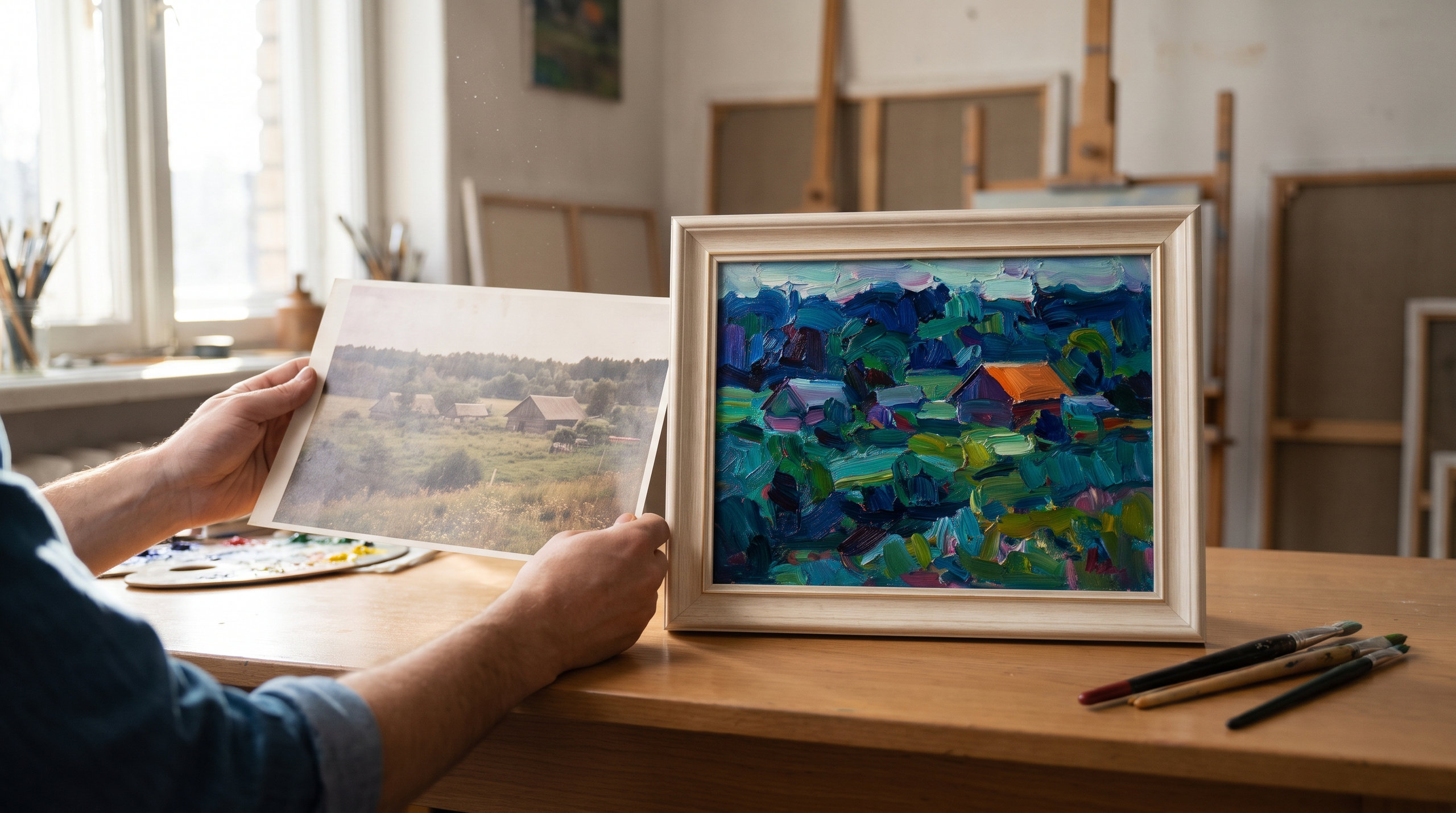
Picture to painting is the process of taking a photo — any photo, from your phone or camera — and transforming it into a painted artwork. The photo is the starting point, but the end result looks hand-painted, with brushstrokes, texture, and the visual language of traditional art. You are not printing a photo on canvas. You are reimagining it as a painting, in a style that suits the subject and the space it will live in.
The beauty of this approach is that you can take a photo you already love and give it a completely different life. A casual portrait becomes a royal oil painting. A pet photo becomes a Renaissance masterpiece. The same image, reinterpreted through the lens of fine art, carries more weight — it feels intentional, curated, worth framing.
Why People Choose This Over Printing
A printed photo is fine. But a painted portrait feels like an heirloom. It has presence. It reads as art, not documentation. When someone walks into a room and sees a painted portrait of your pet or family, they stop. They look. They ask about it. That is the difference.
Painted portraits also solve a common problem: most photos do not translate well to large prints. They pixelate, they lose detail, or they just look flat at scale. A painting bypasses all of that. The brushwork and texture fill the frame naturally, and the style itself — whether it is oil, watercolor, or impressionist — gives the piece depth and character that a photo cannot match.
The Styles That Actually Work
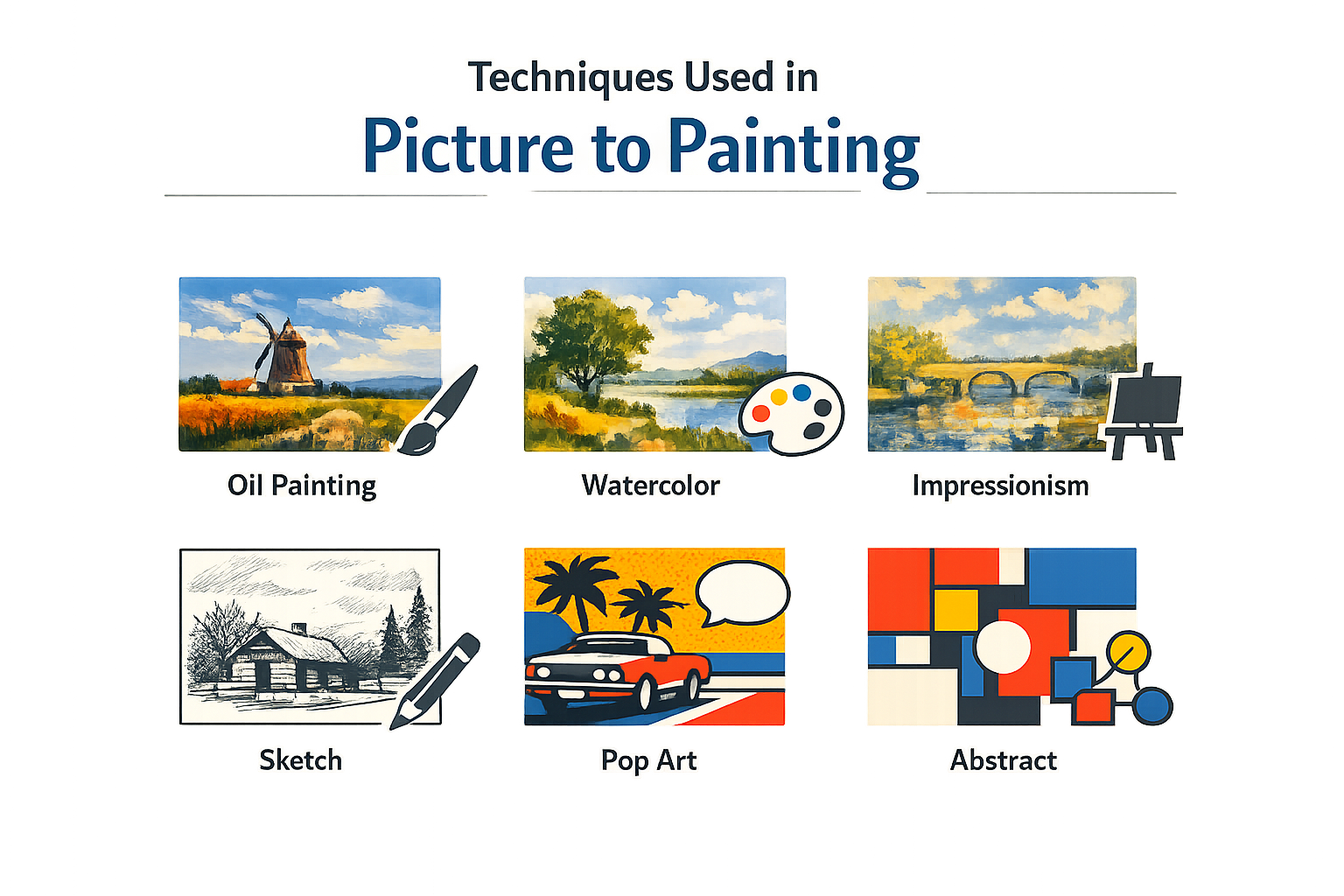
Not every style suits every subject. A Renaissance portrait works beautifully for a regal-looking dog or a formal family photo. Watercolor feels softer, more delicate — it is perfect for pets with gentle expressions or memorial pieces. Oil painting gives you richness and drama, the kind of thing that looks expensive even from across the room. Impressionist styles work when you want something dreamy and warm, less about precision and more about feeling.
The style you choose sets the tone. A royal portrait in full regalia is playful and grand. A soft watercolor is intimate and heartfelt. You can even combine elements — an oil painting with subtle surrealist touches, or an impressionist landscape background behind a more realistic subject. The key is matching the style to the personality of the subject and the vibe of the space where it will hang.
Combining elements of different artistic styles can lead to striking transformations, such as blending oil painting with modern elements or impressionist landscapes with more realistic features.
What Makes a Transformation Feel Right
You will know it when you see it. A good picture to painting transformation keeps the soul of the original photo — the expression, the light, the thing that made you love it — while elevating it into something that feels timeless. The details that matter stay sharp. The background softens or stylizes in a way that supports the subject, not distracts from it. The colors deepen or warm up, depending on the style, but the person or pet still feels like themselves.
The transformations that fall flat are the ones that lose the subject in the process. Too much stylization, and you are left with a stranger wearing your dog's collar. Not enough, and it is just a photo with a texture overlay. The sweet spot is when the painting feels both new and familiar — recognizably them, but elevated.
If you are considering custom cat portraits or dog art, the same principles apply: the photo you start with and the style you choose will determine whether the final piece feels like a keepsake or just another print.
Techniques Used in Picture to Painting
Here is the thing about turning a photo into a painting: the technique matters more than the tools. You can have the fanciest setup in the world, but if you skip the steps that make a photo breathe like painted art, you end up with something that looks filtered — not painted.
The good news? Once you understand what separates a photograph from a painting, the process clicks. Let me walk you through the techniques that actually work.
Start by Softening the Photo
Photographs are sharp. Paintings are not. That edge — the crisp line where your dog's ear meets the sky, or where a collar sits against fur — is the first thing that gives away a digital conversion.
Soften detail before adding texture. If you leave photographic edges intact and then slap brushstrokes on top, they fight each other. The photo wants to stay a photo; the brushstrokes look like a bad overlay. Blur or diffuse the original image just enough to lose that camera-sharpness, and suddenly the painted layers have room to do their job.
Layer in Texture and Brushwork
This is the part people skip, and it shows. A painting has texture — not just the look of brushstrokes, but the feel of them. Canvas weave, paint ridges, the way light catches on thick strokes versus thin washes.
When you add texture overlays or brushstroke filters, apply them in passes. One heavy layer looks digital. Three or four lighter passes, each with slight variation in direction and opacity, look like someone actually painted it. Let the texture build up the way real paint does — thicker in highlights, softer in shadows.
Compositing and background swaps also come into play here. If the background in your photo is busy or distracting, swapping it for a painted backdrop — something soft, warm, and a little dramatic — keeps the focus on your subject and sells the painted look.
Adjust Color Like a Painter Would
Photographers chase accurate color. Painters chase mood. That is the shift you need to make.
Warm up the highlights. Deepen the shadows without going flat-black. Push midtones toward a single color family — maybe everything leans slightly gold, or slightly cool blue. Real paintings have a color story; photos often do not.
If you are working digitally, this is where you can push saturation in one area and pull it back in another. A painted portrait does not treat every pixel equally. The face gets detail and color richness. The background fades, goes softer, loses saturation. That hierarchy — what gets attention and what does not — is what makes it feel like art you would hang.
The technique that separates a photo from a painting is not the brushstroke — it is knowing where to let the photo go and where to let the paint take over.
Blend and Refine Until It Feels Right
You will know it when you see it. The moment a converted photo stops looking like a photo with effects and starts looking like something someone painted, the whole thing shifts. It feels warmer. It feels like it belongs on a wall.
That moment comes from blending. Painted edges into soft backgrounds. Sharp details in the eyes or nose, softer everywhere else. Texture that varies across the canvas instead of sitting uniformly on top.
This is also where custom cat portraits and dog portraits really shine — because the techniques that work for fine art work just as well for turning your pet's photo into something worth framing.
Trust me on this: the photo everyone gets wrong is the one they rush. Take the time to soften, layer, adjust color, and blend. That is the difference between a picture with a filter and a portrait that actually looks painted.
Selecting the Right Artist
Here is the thing about choosing someone to turn your photo into a painting: the technical skill is table stakes. What you actually need is someone who understands the photo you are handing them — not just what is in it, but why you chose it in the first place.
The artist you pick shapes everything. They decide how much of the background stays, whether the light feels warm or cool, and how closely the final piece matches the moment you remember. That is a lot of trust to hand over, so let me show you what to look for.
Match the Style to Your Photo
Not every painting style flatters every photo. If your source image has strong directional light — sun coming in from one side, casting shadows — it is built for an oil painting. The texture and depth in oil work loves that kind of contrast. But if your photo is soft, evenly lit, maybe taken near a window on an overcast day, watercolor is your friend. The gentleness in the light translates beautifully into washes and subtle color shifts.
Look at the artist's portfolio and find a piece that feels like your photo. Not the subject — the light. If their work handles light the way your photo does, you are halfway there.
Ask About Their Process
You want to know how they work, not because you need to micromanage, but because their process tells you whether they will get it right. Do they ask for multiple photos of the same subject? Do they want to know the story behind the image? Good artists do both.
The best ones will also tell you, up front, if your photo is not going to convert well. Maybe the resolution is too low, or the subject is backlit into a silhouette, or the crop is so tight there is no room to breathe. If they flag it early, that is a sign they care about the final piece more than just taking your money.
Communication Matters More Than You Think
This is the part people skip: how does the artist talk to you? Are they asking the right questions — what room will this hang in, what era feels right, do you want them to soften anything or keep it exactly as-is? Or are they just nodding and saying "we'll make it beautiful"?
Trust me on this — vague reassurances mean vague results. You want someone who makes you describe what you love about the photo, because that is the only way they can protect it in the painting. If they are not curious about your answer, keep looking.
For custom cat portraits or dog paintings, this is even more critical. The little details — the way their ear folds, the exact shade of their eyes — are what make it feel like them, and a good artist will not guess at those.
The artist you pick shapes everything — they decide how much of the background stays, whether the light feels warm or cool, and how closely the final piece matches the moment you remember.
Look for Flexibility in Revisions
No matter how good the artist is, the first draft might not land perfectly. Maybe the background color feels off, or they softened a detail you wanted sharp. A professional will build a round or two of revisions into the process — not because they expect to get it wrong, but because they know interpretation is subjective.
If revisions cost extra from the jump, or if the artist bristles when you ask about them, that is a red flag. You are commissioning something custom. It should feel collaborative, not like you are bothering them.
Trust Your Gut on the Portfolio
At the end of the day, the portfolio is the only proof that matters. Do their finished pieces look like something you would actually hang? Not just technically competent — worth hanging. If you find yourself scrolling past most of their work and only pausing on one or two, that is a sign. You want someone whose entire body of work makes you stop and look.
The photo you hand them is already meaningful. The artist's job is to turn it into something that holds that meaning on the wall, in the room, at their eye level, for years. Pick someone who has done that before, and who can show you exactly how it looks when they do.
Conclusion: Bringing Your Photos to Life
Here is the thing about turning a photo into a painting: the result is only as good as the photo you start with. If the original has no soul, no amount of editing can breathe life into it. That is not about megapixels or perfect lighting — it is about whether the photo feels like the person or pet you are trying to honor. You will know it when you see it.
The whole process comes down to choosing the right photo, the right style, and the right approach. Whether you want something soft and watercolor or bold and Renaissance, the goal is the same: create something that feels familiar yet special, like you have been here before, in a memory you keep coming back to. That is what makes a portrait worth hanging.
Trust me on this: step away from the finished piece for at least 24 hours before you decide it is done. Come back with fresh eyes and ask yourself if it captures what you wanted. If it does, you have something that will keep them in the room with you for years.
If you are ready to turn a favorite photo into art, start with the shot that actually works — the one where the light is good, the expression is right, and the background lets the photo breathe. From there, the transformation is easier than you think. For more on choosing the right photo for a memorial or gift portrait, see our guide on how to choose the right photo for a pet memorial portrait.
Learn about the picture to painting process, techniques, and tips for transforming your favorite photos into stunning fine art.