
Introduction
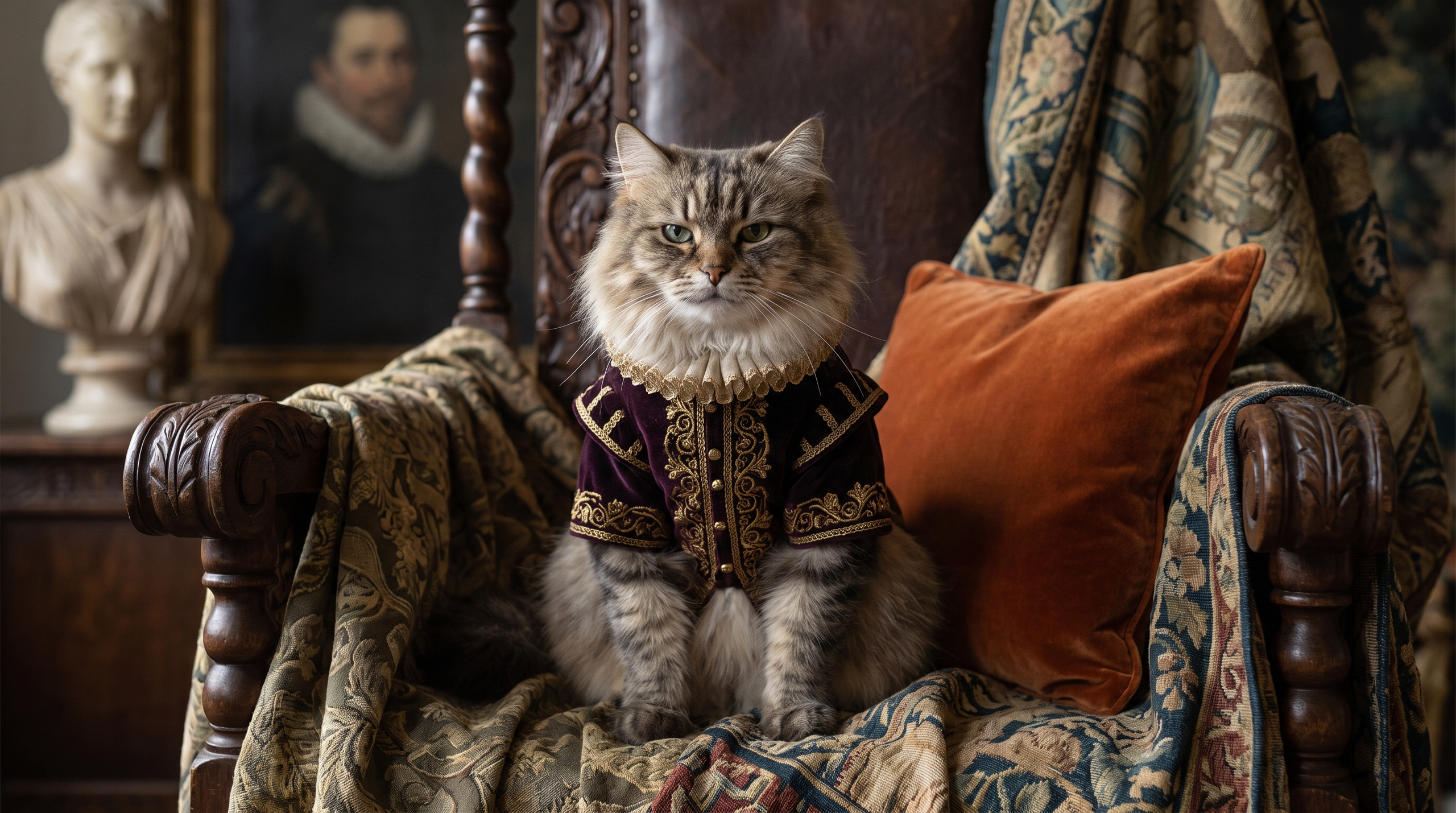
Here is the thing about seeing your cat in a velvet ruff and crown: it hits you in two places at once. First you laugh — because it is your cat, the one who knocks things off counters, dressed like a Medici duke. Then you stop laughing, because it is beautiful. It is funny and sincere at the same time, and that combination is why Renaissance cat portraits have become the most popular style of custom pet art right now.
The contrast is what makes it work. Your cat's familiar face — the one you see every morning — set against the unexpected grandeur of Renaissance attire creates something you cannot look away from. Laughter first, then admiration, then the urge to hang it where everyone can see it. That is the whole game, and it is easier to pull off than you think.
By the end of this you will know exactly which photo of your cat to use, what to look for in an artist, and how to turn a phone snapshot into a portrait worth framing. If you are also exploring custom cat portraits in other styles, the same principles apply — but the Renaissance era has a particular magic that flatters almost every cat.
The contrast between a familiar pet face and unexpected royal attire creates an emotional reaction: laughter first, then admiration, then the urge to display the portrait.
You want something that actually looks like your cat — not a stranger who happens to have her markings. That is the whole point, and it starts with the photo you choose and the artist you trust to turn it into something you will keep coming back to look at.
Understanding Custom Cat Portraits
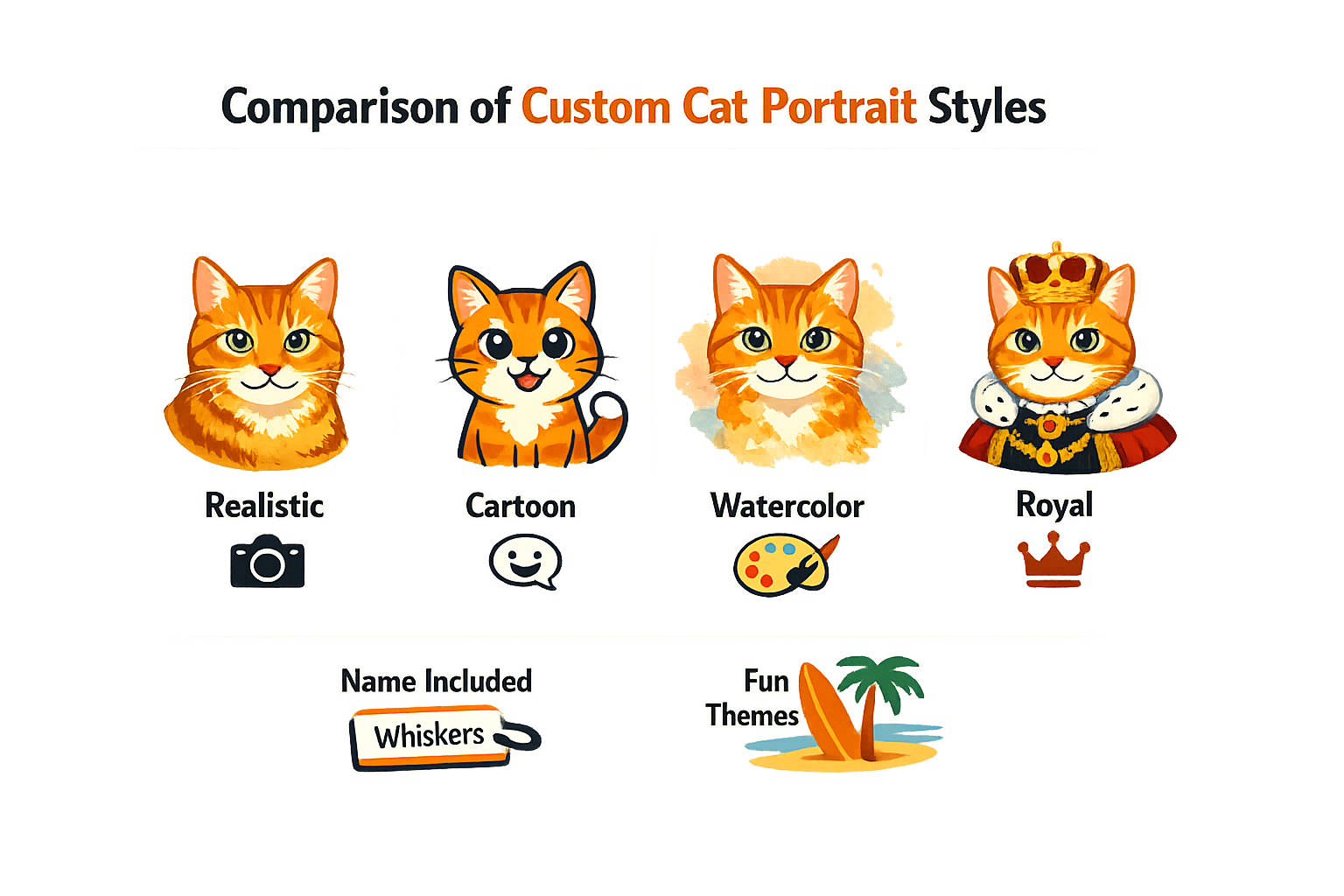
A Renaissance cat portrait is exactly what it sounds like — your cat's actual face, placed into the world of old-master paintings. Think Rembrandt lighting, regal clothing, and a composed pose that makes your tabby look like she ruled a small European country. The recognizable face is the whole point. You want something that actually looks like her — not a stranger who happens to have her collar.
The style borrows from painters like Titian and Vermeer — rich, painterly backdrops, ceremonial dress, and that soft, warm, dramatic light that makes everything look expensive. Your cat gets the full treatment: velvet robes, gold trim, maybe a lace collar. The era you choose sets the tone, but the core idea stays the same — your pet as nobility, rendered with the texture and gravity of a portrait worth hanging.
What Makes a Portrait Feel Renaissance
Here is the thing: not every painted cat is a Renaissance portrait. The style has specific visual markers. Soft, directional light — often from one side, like a window — creates depth and dimension. The background is never plain; it is layered, textured, and a little moody. The clothing and accessories are historically grounded, even if your cat is wearing them. The pose is formal but not stiff. And the whole thing has that painterly, hand-worked quality — visible brushstrokes, rich color, a sense of weight.
Modern custom cat portraits come in many styles, but Renaissance stands out because it treats your pet like a historical figure. It is not cute or cartoonish. It is respectful, a little grand, and completely worth framing.
Personalization Options
You are not locked into one look. Renaissance portraiture spans centuries, and each period has its own flavor. Early Renaissance portraits are simpler, with flat backgrounds and minimal clothing detail. High Renaissance brings in richer fabrics, more complex compositions, and that golden Venetian light. Baroque pushes the drama — deeper shadows, more movement, heavier ornamentation.
You also get to choose the outfit. Military dress, royal robes, merchant clothing, or religious garb — each one changes the mood. A cat in armor reads differently than a cat in a bishop's miter. The backdrop can be a dark interior, a landscape through a window, or a draped curtain. And the framing — tight on the face or full-length — shifts how formal it feels.
The photo everyone gets wrong is the one where the cat is mid-yawn or half-hidden. Renaissance portraits need a clear face, good light, and a moment where your cat looks composed.
The key is starting with a photo that gives the artist something to work with. Good light does most of the work. Natural light from a window, your cat at eye level, and a moment where she is calm and facing you — that is the shot that actually works. No studio required.
Choosing the Right Artist
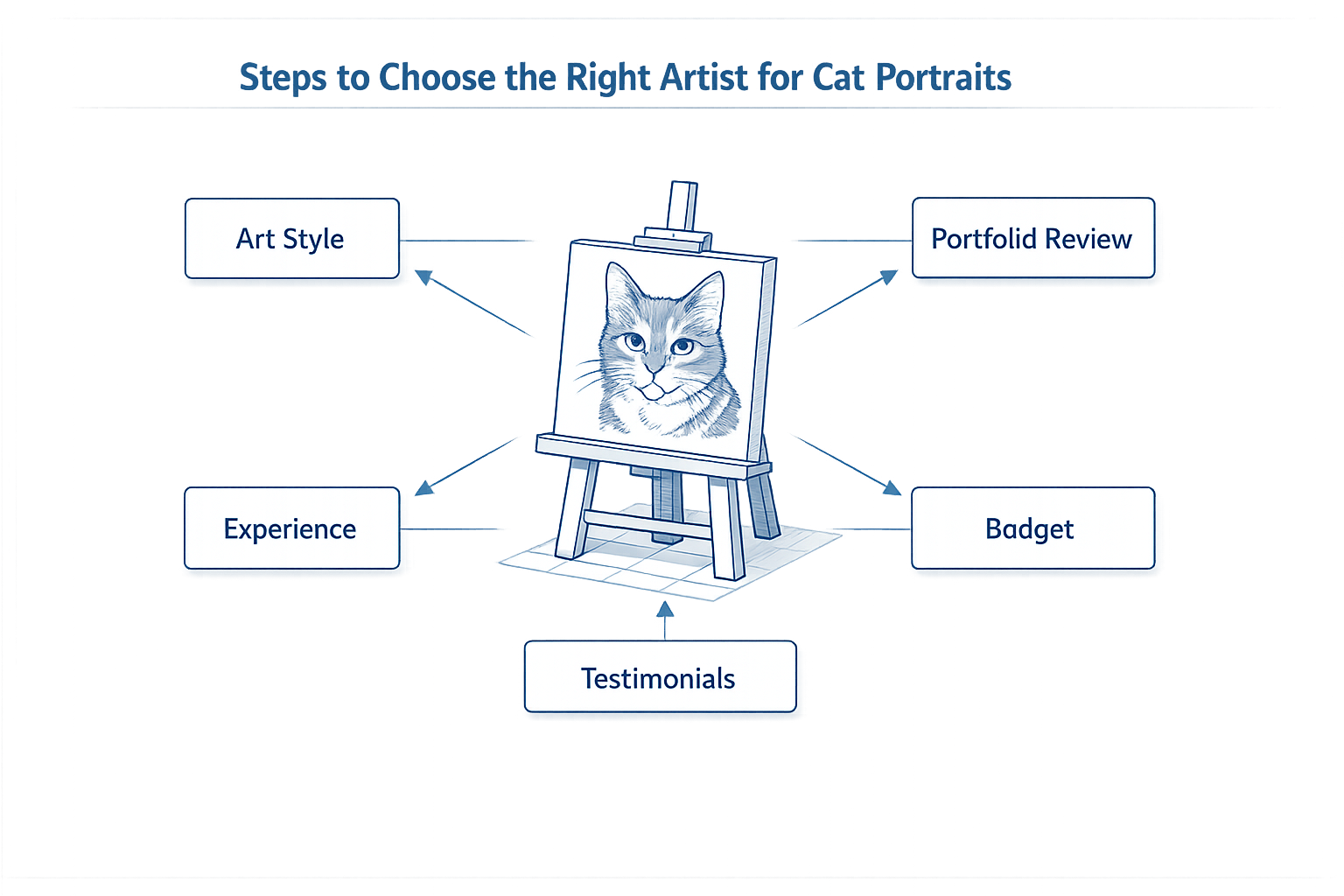
Here is the thing about choosing someone to paint your cat: the cheapest option is almost never the one you end up hanging. You want a portrait that actually looks like her — not a stranger who happens to have her collar. That means knowing what to look for before you commit.
A good Renaissance cat portrait should check four boxes: recognition, visual hierarchy, coherent style, and clean detail. Recognition means your cat's face — the eyes, the ear tilt, the little white patch on her chest — comes through. Visual hierarchy means the painting puts her face front and center, not buried in fancy costume details. Coherent style means the era you choose feels intentional, not like a costume party. And clean detail means the image holds up when you step back — no muddy edges or weird proportions.
What Separates a Portrait Worth Hanging from a Throwaway
The difference between a museum-grade portrait and a free AI-generated image is preview and refinement. A custom artist — whether human or AI-assisted — lets you see the likeness before it goes to print, adjust what is not working, and choose high-quality materials that last. Free tools give you one shot and no control over the final output. If the eyes are off or the expression does not feel like your cat, you are stuck with it.
This is the part people skip: asking to see samples of the artist's previous work with cats specifically. Dogs and cats are not interchangeable. A painter who nails a golden retriever's goofy grin might struggle with a cat's subtle, regal expression. Look for portfolios that show range in feline faces — different breeds, different moods, different lighting.
Questions to Ask Before You Commission
Start with the basics: What file formats do they deliver? Do they offer revisions? What is the turnaround time? Then get specific. Ask how they handle your cat's unique markings — the tabby stripes, the odd-colored eyes, the ear notch from that one vet visit. A good artist will ask you for multiple photos from different angles and in good light. If they say one blurry phone pic is fine, that is a red flag.
For custom cat portraits, you also want to know about print quality and material options. Canvas, fine art paper, and metal prints all age differently. Canvas can sag over time if it is not mounted well. Fine art paper needs framing with UV-protective glass. Metal prints are durable but expensive. The artist should walk you through these trade-offs, not just upsell you on the priciest option.
The photo everyone gets wrong is the one taken from above — it flattens your cat's face and makes the portrait look off no matter how skilled the artist is.
Red Flags and Green Lights
Red flags: no portfolio, no revisions, no preview, and vague timelines. If an artist cannot show you past work or refuses to let you approve the likeness before printing, walk away. Green lights: clear samples, a revision policy, and questions about your cat's personality and the room where the portrait will hang. An artist who asks about your home decor and your cat's quirks is thinking about the final piece, not just cranking out another commission.
About 65% of Renaissance pet portrait orders are gifts — birthdays, holidays, or memorials for a pet who has passed. If you are commissioning a portrait as a gift, make sure the artist understands the recipient's taste and the emotional weight of the piece. A memorial portrait needs a different tone than a birthday surprise. The right artist will ask about that context and adjust the mood accordingly.
The Commissioning Process
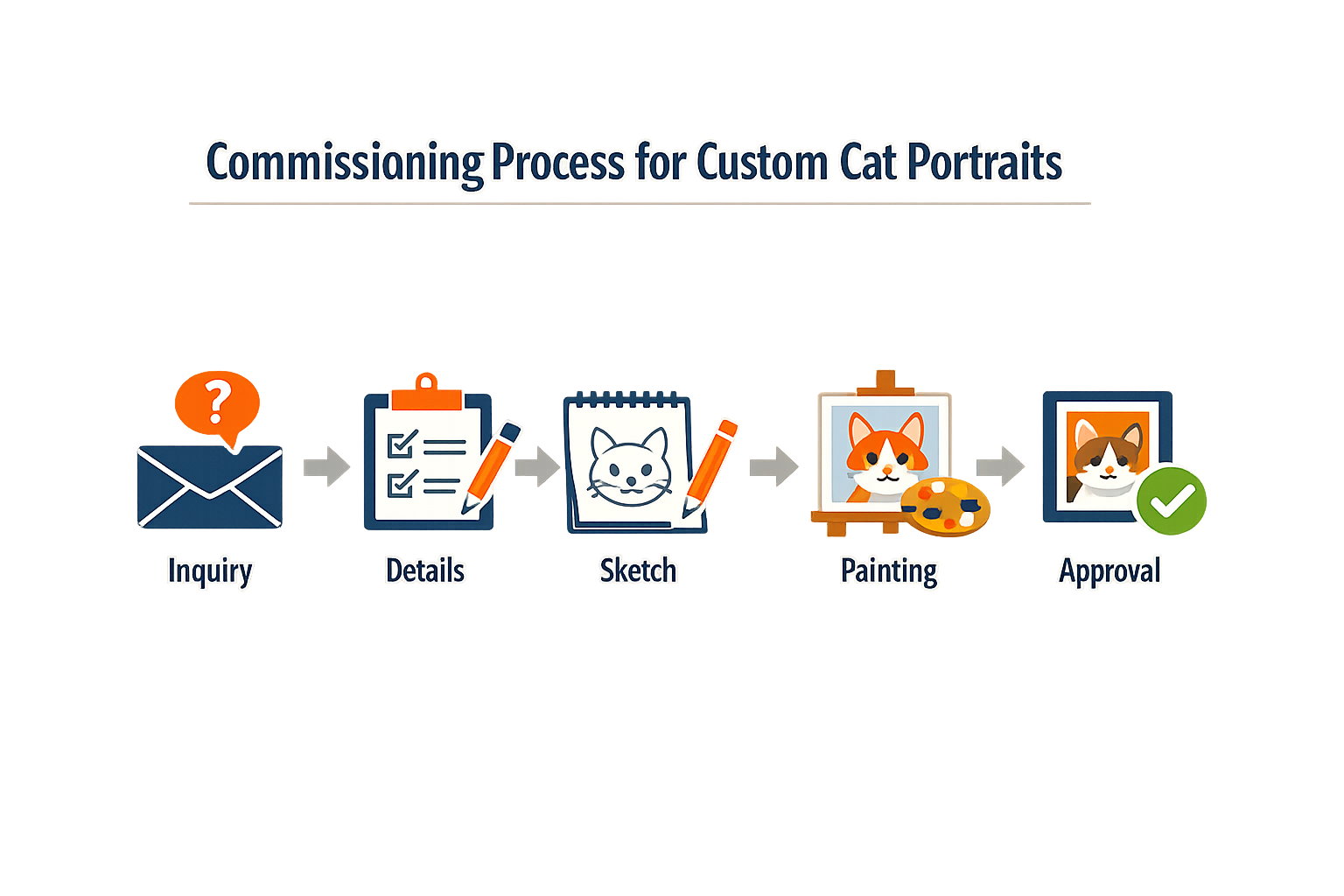
Here is the thing about commissioning a portrait: it is not complicated, but the order matters. You skip a step, and you end up with a painting that looks like someone else's cat wearing your cat's collar. Let me walk you through it.
Start With the Photo
The whole thing lives or dies on the photo you choose. You want one where your cat is looking at the camera — not past it, not at a toy, but actually making eye contact. Good light does most of the work here. Natural light from a window, your cat at their eye level, no flash. The photo everyone gets wrong is the one where the cat is mid-yawn or has their ears back. Those do not paint well.
Crop it tight around the face and shoulders. Let the photo breathe — you do not need the whole body for a portrait worth framing. If you are stuck between two shots, pick the one you keep coming back to. That is usually the one that feels like them.
Choosing Your Renaissance Style
The era you choose changes everything. Classic Renaissance uses warm earth tones and velvet clothing — it works beautifully for cats with brown, tan, or cream fur. The rich golds and deep reds sit naturally next to warm coats. For cats with cooler coloring — grays, whites, silvers — you might lean toward a style with jewel tones or darker backgrounds that let them pop.
The best [custom cat portraits](/blog/custom-cat-portraits-turn-your-cat-into-a-masterpiece) honor both the painting tradition and the specific cat in front of you.
This is the part people skip: matching the style to the personality. A regal, aloof cat belongs in formal court attire with a serious background. A goofy, playful cat? Maybe softer edges, a lighter palette, something that does not take itself too seriously. You will know it when you see it.
Working With the Artist
Once you have your photo and your style direction, the rest is straightforward. Most artists will ask for:
- The high-resolution photo (not a screenshot — the actual file from your phone or camera)
- Your preferred size and format (canvas, print, framed or unframed)
- Any specific requests about clothing, background, or accessories
Be clear about what you want, but trust the artist on the details. They know which collar styles read well in paint, which backgrounds make your cat's face the star, and how to handle tricky lighting. If something feels off in the preview, say so — but if it is just different from what you imagined, give it a minute. Sometimes the version that surprises you is the one worth hanging.
Step 1
Submit your photo
Upload the clearest, best-lit photo of your cat. Make sure their face is sharp and their expression feels like them. No studio required — your phone camera and a sunny window are enough.
Step 2
Select style and options
Pick your Renaissance style, size, and any extras like frames or specific background colors. If you are unsure, go with the classic option — it works for almost every cat.
Step 3
Review and approve
Most services send a preview before finalizing. Check that the face looks like your cat, the proportions feel right, and the style matches what you asked for. This is your chance to request tweaks.
Timeline and Expectations
Commissioned work takes time. Depending on the artist and the complexity, expect anywhere from a few days to a couple of weeks. Rush options exist, but the little details that sell a portrait — the way light catches fur, the exact tilt of an ear — those need time. It does not have to be perfect, but it does need to feel like your cat when you hang it on the wall.
The tradition of commissioned cat portraits goes back centuries — Victorian families hung watercolor portraits in their homes, keeping their pets in the room long after they were gone. You are part of that lineage now, just with better cameras and more clothing options.
Displaying Your Cat's Portrait
You commissioned the portrait. You picked the photo. You went with the King style because your cat already acts like royalty anyway. Now you have this beautiful piece of art, and it is sitting in a shipping tube or leaning against the wall. Here is the thing: where you hang it matters as much as the portrait itself.
Give It the Wall It Deserves
Renaissance portraits were painted to be seen at eye level — not tucked above a doorway or squeezed into a corner. The old-master style carries a weight that modern cartoon portraits cannot match, with deep shadows and warm light that make the moment feel significant. That means the portrait needs space to breathe. Hang it where you naturally stop and look — the living room wall you see when you walk in, the hallway you pass every morning, or above the mantel where guests actually stand and talk.
If your cat has warm fur colors like brown, tan, or cream, the Classic Renaissance style with its earth tones and velvet clothing will look right at home against neutral walls. The King portrait — wrapped in ermine-trimmed robes against deep shadows — reads best on a wall that is not competing for attention. White, soft gray, or deep jewel tones let the portrait be the anchor.
Frame It Like You Mean It
A Renaissance cat portrait in a cheap frame is like serving a fancy dinner on a paper plate. The frame does not have to be expensive, but it does have to match the era you chose. Look for frames with a little weight — carved wood, gilded edges, or a deep matte that gives the portrait some distance from the glass. The frame should feel like it belongs in the same century as the painting.
If you went with the King portrait style, a frame with gold or bronze tones reinforces that sense of permanence and importance. For the Classic Renaissance style, warm wood or a soft cream matte keeps the earth tones cohesive. The goal is to let the portrait feel like it has always been there — not like you just hung it last Tuesday.
Keep It Out of Direct Sunlight
This is the part people skip, and then six months later the colors look faded. Sunlight is brutal on prints and canvas. If your wall gets direct sun for more than an hour or two a day, either move the portrait or add UV-protective glass to the frame. You want this to be the portrait you keep coming back to, not the one you have to replace in a year.
The best spot for a portrait is the wall you see every day — the one that reminds you why you commissioned it in the first place.
If you are thinking about commissioning a portrait of another pet or turning a favorite photo into something worth hanging, the process is simpler than you think. Custom cat portraits follow the same principles — good light, a photo you love, and a style that feels like them.
Conclusion
Here is the thing about Renaissance cat portraits: they are not just art — they are a way to keep your cat in the room, even when you are scrolling past a hundred other photos on your phone. The one you hang is the one you keep coming back to, and that matters more than you might think.
Cats have come a long way in art. Five centuries ago, they were symbols of suspicion or worse. Today, we dress them in velvet and hang them on the wall — not because it is funny (though it is), but because it feels like them. Warm, a little dramatic, and worth framing.
The photo you choose, the era you choose, the frame you choose — none of it has to be perfect. It just has to feel right. Trust me on this: if you love the photo, the portrait will work. If you are forcing it, it will show.
Whether you are celebrating a cat who rules your house or honoring one who is no longer here, a custom cat portrait gives you something tangible to hold onto. Not a thumbnail. Not a file buried in the cloud. Something you can see at their eye level, every day, in good light.
You will know it when you see it. And when you do, hang it somewhere it can breathe.
Related reading
Renaissance and Classical Pet Portraits: Your Pet as Old-Master Art