
Introduction to Renaissance and Classical Pet Portraits
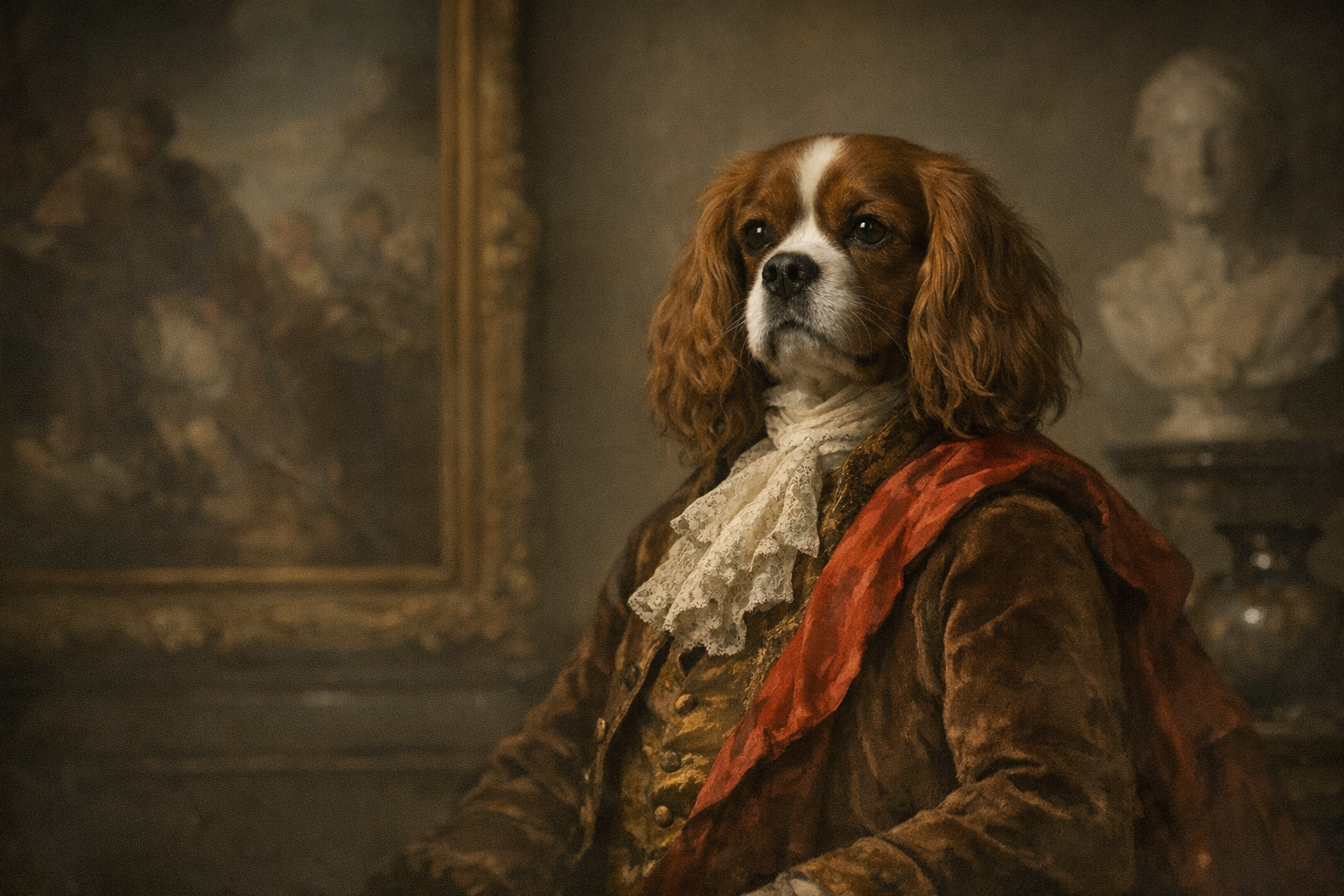
Here is the thing about Renaissance and Classical Pet Portraits: they turn your dog or cat into the kind of art people stop and stare at. Not cute-pet-photo art — the real stuff, the kind that looks like it belongs in a museum next to Rembrandt or Vermeer. Your pet, painted in the style of the Dutch masters, wearing a ruff collar or velvet robes, staring out from a dark background with that soft, warm light the old painters used to make everything look expensive.
This is not about dressing your pet up or staging a photo shoot. You start with the photo you already have — the one where they look like themselves, at their eye level, in good light. The portrait does the rest. The rich fabrics, the period details, the way the light falls across their face — it all comes together to make something that feels like them and looks like it cost a fortune.
Renaissance and Classical Pet Portraits have become conversation pieces because they do two things at once: they take your pet seriously as a subject, and they nod to the painting traditions that made portraiture an art form in the first place. When you hang one, people notice. They ask questions. They get it.
If you have been thinking about turning a favorite photo into something worth framing, or if you want a memorial gift that feels thoughtful and permanent, this is the style that delivers. Let me show you how it works, which pets it suits, and what makes a Renaissance portrait look like the real thing instead of a costume.
Discover the beauty of renaissance pet portraits and learn about styles, suitable pets, pricing, and the commissioning process.
Styles of Renaissance and Classical Portraits
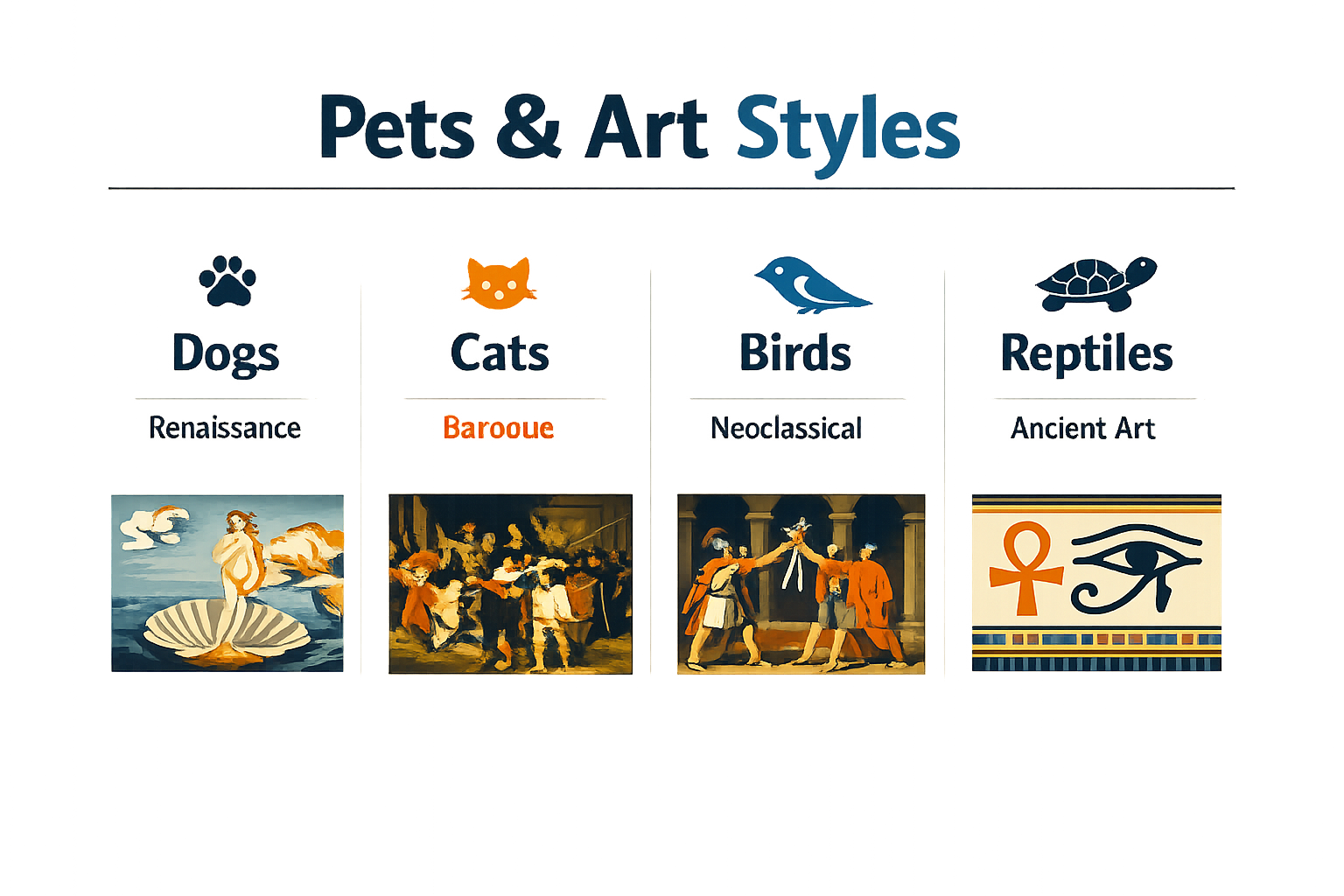
Here is the thing about Renaissance and Classical pet portraits: they are not all the same. The era you choose changes everything — the mood, the colors, the way your pet looks back at you from the wall. Some styles lean warm and soft, others go dramatic and regal. Knowing the difference means you pick the one that actually feels like your dog or cat, not just a costume they are wearing.
The best portraits borrow from the old masters without trying too hard. You want something that looks painted, not like a filter slapped on a phone photo. That means understanding what made those original paintings work — and which pieces of that toolkit translate to a pet.
Classic Renaissance: Warm, Balanced, and Timeless
Classic Renaissance style is all about balance and warmth. Think earth tones — rich browns, deep golds, soft creams. The clothing tends toward velvet robes and ornate collars, and the backgrounds are muted so your pet stays the focus. The shading is soft, almost blurred at the edges, which gives the whole thing a gentle, noble feel.
This style works best for pets with warm fur colors — golden retrievers, orange tabbies, brown-and-tan mutts. The palette flatters them. A golden retriever in a red velvet robe with gold trim is the classic example, and it works because the colors echo each other. The composition is centered and calm, no drama, just your pet looking directly at you with quiet dignity.
High Renaissance: Drama, Light, and Nobility
High Renaissance portraits lean more dramatic. The lighting is stronger — think Rembrandt, with one side of the face lit and the other falling into shadow. The clothing gets more elaborate, the backgrounds darker, and the whole composition feels more staged. This is the style for pets who look regal even when they are begging for treats.
The shading technique here is called sfumato — soft, gradual transitions between light and dark that give the portrait depth and realism. It makes your pet look three-dimensional, like they could step out of the frame. The anatomy is naturalistic, so the proportions stay true to life even when the outfit is over the top.
If you want your pet to look like they ruled a small European country, this is the style. It is bold, it is confident, and it does not apologize for being a little much.
Baroque: Movement, Richness, and Theatrical Flair
Baroque takes everything Renaissance did and cranks it up. More color, more movement, more texture. The fabrics are heavier — brocade, fur-lined capes, jeweled collars. The backgrounds are busier, sometimes with columns or draped curtains. The lighting is more theatrical, with strong contrasts that make your pet pop off the canvas.
This style works for pets with big personalities — the ones who already think they are the main character. A fluffy Persian cat in a jeweled collar against a deep burgundy drape is peak Baroque. The portrait feels alive, like your pet just turned to look at you mid-pose.
Baroque portraits were never meant to be subtle — they were designed to announce wealth, power, and presence the moment you walked into the room.
Neoclassical: Clean Lines and Understated Elegance
Neoclassical portraits strip away the drama and go for clean, elegant simplicity. The colors are cooler — grays, soft blues, muted whites. The clothing is less ornate, often inspired by ancient Greek or Roman tunics and togas. The backgrounds are plain or architectural, and the whole composition feels calm and refined.
This style suits pets with cooler coloring or sleek builds — gray cats, white dogs, lean breeds like greyhounds or Siamese. The portrait feels timeless without trying to impress you. It is quiet confidence, not a shout.
If you want something that fits a modern, minimalist home but still nods to the old masters, Neoclassical is the move. It does not compete with your decor — it complements it.
Choosing the Right Style for Your Pet
The style you pick should match your pet's coloring, personality, and the room where the portrait will hang. Warm-toned pets in warm-toned rooms pair well with Classic Renaissance. Bold, dramatic pets in spaces with strong color schemes can handle Baroque. Sleek, elegant pets in minimalist homes belong in Neoclassical.
You will know it when you see it. The right style makes the portrait feel like your pet, not someone else's idea of what a fancy pet portrait should look like. Trust your gut — and if you are stuck, start with Classic Renaissance. It is the most forgiving, and it flatters almost everyone.
For more guidance on matching styles to specific breeds and personalities, check out Dog Painting Styles: Watercolor vs Oil vs Renaissance.
Which Pets Suit Which Era?
Here is the thing about matching your pet to a Renaissance or Classical style: it is less about the breed and more about what you want the portrait to say. Some pets look like they were born to wear a ruff collar. Others need a softer, warmer approach. The era you choose sets the tone — dignified, playful, or somewhere in between.
Dogs That Shine in Renaissance Portraits
Golden retrievers are naturals for Renaissance portraits. Their warm, expressive faces and soft features translate beautifully into that old-master glow. The style gives them a dignified, almost noble presence without losing the warmth that makes them who they are. French bulldogs work surprisingly well too — their bold personality and comedic dignity make them perfect for Renaissance attire, especially when you want a portrait that is both serious and a little bit cheeky.
Larger breeds like German shepherds, Great Danes, and Bernese mountain dogs carry the gravitas of Classical portraiture well. They already look commanding, and the formal composition amplifies that. Smaller breeds — think Cavalier King Charles spaniels or Pomeranians — fit beautifully into the softer, more intimate Dutch Golden Age style, where the focus is on texture, light, and quiet charm.
Cats and the Classical Treatment
Cats are tricky in Renaissance portraits, but when it works, it really works. Long-haired breeds like Persians and Maine Coons suit the Baroque style — all that fur gives the portrait something to do, and the dramatic lighting plays up their natural elegance. Short-haired cats like Russian blues or Siamese can look stunning in the cleaner, more restrained Neoclassical style, where the composition is simple and the focus is on form and expression.
The one thing to watch: cats do not always read as "regal" in heavy costume. If your cat has a strong, expressive face, let that do the work. A simple collar or background is often enough.
Matching Personality to Era
If your pet is playful and a little goofy, the Dutch Golden Age or early Renaissance styles give you room to keep that warmth. If they are serious, stoic, or naturally commanding, the High Renaissance or Neoclassical approach will amplify that presence. And if you want something that splits the difference — dignified but not stiff — the Baroque era is your sweet spot. It has drama without being cold.
For more ideas on how different dog painting styles bring out different sides of your pet, that guide breaks down what works and why.
The Process of Commissioning a Portrait
Here is the thing: commissioning a Renaissance or classical pet portrait is simpler than you think. You do not need to understand art history or know which brush strokes belong to which century. You just need a good photo of your pet and a sense of the era that feels right.
The whole process comes down to three steps: choosing your photo, picking your style, and letting the portrait come to life. Most people overthink the first part and breeze through the rest, but getting the photo right does most of the work.
Start With the Photo Everyone Gets Wrong
The photo you love on your phone is almost never the one that makes a great portrait. You want a shot where your pet is looking at the camera — or at least toward the light — with their face clear and their expression calm. Blurry action shots, extreme angles, and busy backgrounds do not convert well into painted portraits.
Good light does most of the work here. Natural light from a window, your pet at their eye level, and a simple background give you a photo worth painting. If you are stuck choosing between two shots, pick the one you keep coming back to. That is usually the one that actually works.
For more guidance on selecting the right image, especially for memorial pieces, see How to Choose the Right Pet Memorial Portrait Photo.
Pick Your Era and Let the Photo Breathe
Once you have your photo, you choose the style that fits your pet. A regal dog in a velvet robe and gold chain feels Renaissance. A cat in soft robes with warm, glowing light feels more Baroque. The era you choose sets the mood, but it does not have to match your pet's personality — sometimes the contrast is what makes it fun.
Most services let you preview the style before committing, so you can see how your scruffy terrier looks in a powdered wig or how your tabby cat wears a pearl necklace. Trust me on this: the preview is worth looking at. It shows you whether the formality of the era suits the photo or fights it.
Step 1
Upload your photo
Choose a clear, well-lit image where your pet's face is visible and their expression is calm. Avoid busy backgrounds and extreme angles.
Step 2
Select your style
Pick the Renaissance or classical era that matches the mood you want — formal and regal, soft and romantic, or dramatic and painterly.
Step 3
Review and finalize
Most platforms generate a preview so you can see the portrait before it is finalized. Make any adjustments to framing, cropping, or style details.
What to Expect After You Order
After you finalize your choices, the portrait is generated and prepared for delivery. Digital portraits arrive quickly — often within minutes — while printed canvases or framed pieces take longer depending on production and shipping.
You will know it when you see it: a portrait worth framing, with the little details that sell it. The lighting, the textures, the way the background fades just enough to keep your pet in the room — those are the things that make it feel like them, not just a costume.
This is the part people skip: thinking about where the portrait will hang. A large canvas needs wall space and good lighting. A smaller framed print works on a shelf or in a gallery wall. The size and format you choose should fit the room, not just the photo.
Pricing for Renaissance and Classical Pet Portraits
Here is the thing about pricing a Renaissance or classical pet portrait: there is no single number. What you pay depends on size, style complexity, the number of pets in the frame, and whether you want extras like period costume or a custom background. But the good news is that most custom portrait services are transparent about their structure — you can usually see a breakdown before you commit.
Most portraits start in a moderate range for a single pet on a standard canvas size. Add a second pet, go larger, or request intricate period details — embroidered collars, gilded frames in the painting itself, or a specific old-master lighting style — and the price climbs accordingly. It is not arbitrary; you are paying for the time and skill it takes to make your dog look like she just stepped out of a Rembrandt.
What Drives the Cost
Size is the most obvious factor. A small print costs less than a large canvas, and a large canvas costs less than a gallery-sized statement piece. If you are planning a gallery wall or a single showstopper above the mantel, pick your size first — it anchors everything else.
Complexity comes next. A simple head-and-shoulders portrait in the style of Vermeer is faster to execute than a full-body scene with multiple pets, period furniture, and dramatic chiaroscuro. The more elements you add, the more hours go into making it look cohesive. If you want your cat painted as a Dutch merchant with a lace collar and a velvet curtain behind her, expect to pay for that level of detail.
Customization options — like matching the color palette to your room, adding text or a family crest, or requesting revisions — also affect the final number. Some services include one round of changes; others charge per revision. Read the terms before you upload your photo.
Comparing Across Services
Not all custom portrait providers price the same way. Some charge a flat rate per size; others use a tiered system where you pick a package (basic, premium, museum-quality) and the price reflects the level of finish and the artist's experience. A few offer subscription or bulk discounts if you are commissioning multiple portraits — useful if you have three dogs and want a triptych.
When you compare, look at what is included: digital preview, physical print or canvas, shipping, framing options, and whether the file is yours to reprint. A lower price that does not include the high-resolution file might cost you more in the long run if you want to order a second print later. For more on how different painting styles compare in cost and finish, that breakdown can help you decide where to invest.
Worth Hanging
The portraits that look like they belong in a museum are not always the most expensive ones — they are the ones where the photo was good, the style fit the pet, and the artist had enough detail to work with. A well-chosen snapshot and a mid-range package often produce better results than a high-end commission built on a blurry, backlit phone pic. Spend your money on the right photo first, then pick the package that matches your wall and your budget.
Most services let you see a preview before you pay for the final print, so you are not guessing. If the preview does not look like her, you can request changes or walk away. That safety net is worth more than any discount.
Free Preview of Your Pet Portrait
Here is the thing about ordering a portrait of your pet: you want to know it actually looks like them before you commit. That is where the preview comes in — and it is worth using, trust me on this.
How the Preview Works
You upload your photo, choose your style, and within a short window you get a digital mockup of what the finished portrait will look like. You are not locked in yet. You can ask for tweaks — adjust the expression, refine the costume, change the background tone — until the likeness feels right. The preview is your chance to make sure the portrait captures the personality you see every day, not just a generic version of your pet.
This step is what separates a museum-grade portrait from the free AI-generated images floating around online. Those tools give you something fast, but they do not let you refine the details. A preview-and-approval process means you are working with someone who will adjust until the portrait actually resembles your dog or cat, not just a stranger who happens to have the same fur color.
Why the Preview Matters
The preview is where you catch the little details that sell it. Maybe the tilt of the head is not quite right, or the ruff needs to be fuller to match your cat's actual floof. These are the things you notice when you look at your pet every day, and they are what make a portrait worth framing versus something that just looks close enough.
You will know it when you see it. The good previews feel like your pet walked into the frame wearing a doublet. The ones that need work feel like a costume on someone else. The preview gives you the power to bridge that gap before anything ships.
For more guidance on selecting the right source photo to ensure your preview turns out strong, see How to Choose the Right Pet Memorial Portrait Photo.
Conclusion
Here is the thing: a Renaissance or Classical pet portrait is not just art — it is a way to keep your pet in the room long after they are gone, or to celebrate them while they are still here. The photo you choose, the era that fits their personality, and the small details like light and expression all add up to something worth hanging.
You do not need a perfect photo or a fancy camera. You just need the one shot that actually looks like them — the one you keep coming back to. Let the portrait breathe, trust the process, and choose a style that makes sense for your pet. A regal Great Dane deserves something different than a scrappy terrier, and that is the whole point.
If you are thinking about a memorial portrait, take your time. There is no rush, and the right photo will feel right when you see it. If it is a gift, think about the recipient and their relationship with the animal — a thoughtful portrait shows you actually paid attention.
Whether you go Renaissance, Baroque, or Rococo, the goal is the same: something that feels like them, painted in a way that honors who they were. That is a portrait worth framing, and one that belongs on your wall.