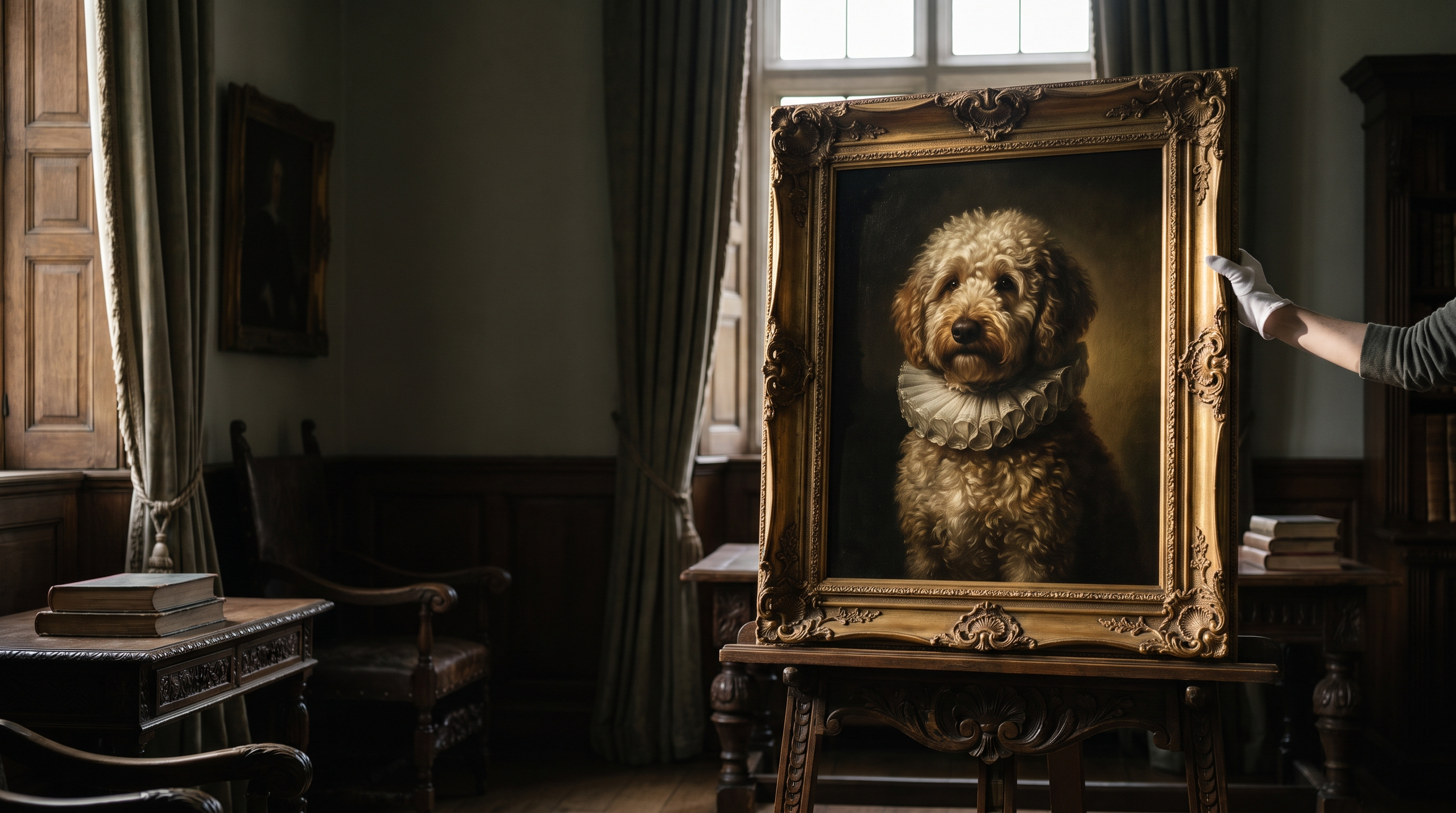

Introduction to Baroque Pet Portraits
Here is the thing about Baroque pet portraits: they take that photo of your dog looking thoughtful by the window and turn it into something that belongs in a museum. Baroque just means drama and warm light — deep shadows, a glow on the face. On a dog with soulful eyes, it is unfair how good it looks.
A Baroque pet portrait places your pet into a classical composition inspired by European master painters. The style is characterized by dramatic lighting, heroic themes, and ornate details — think medals, epaulettes, draped fabrics, and jeweled brooches. The lighting does most of the work: warm tones that pool on the face, shadows that add depth, and a background that fades into darkness so nothing competes with your pet's expression.
What makes this style different from other dog painting styles is the way it balances grandeur with recognizability. Your pet still looks like themselves — same eyes, same tilt of the head — but now they have the weight and presence of a 17th-century noble. The rich textures and lavish elements add drama without turning your pet into a stranger.
Why Baroque Works for Pets
The Baroque approach captures personality in a way that feels both timeless and a little bit ridiculous in the best way. Your dog belongs in a court portrait next to the very serious-looking dogs at the Rijksmuseum. The deep shadows bring out the contours of their face, the warm glow highlights their expression, and the ornate costume gives them the gravitas they have always deserved.
This is not about perfection. It is about taking the essence of your pet — the look they give you when they are thinking, the way they hold their head — and giving it the old-master treatment. The photo you keep coming back to, the one where the light is just right and their personality shows, that is the one that makes a Baroque portrait worth framing.
Understanding Baroque Art
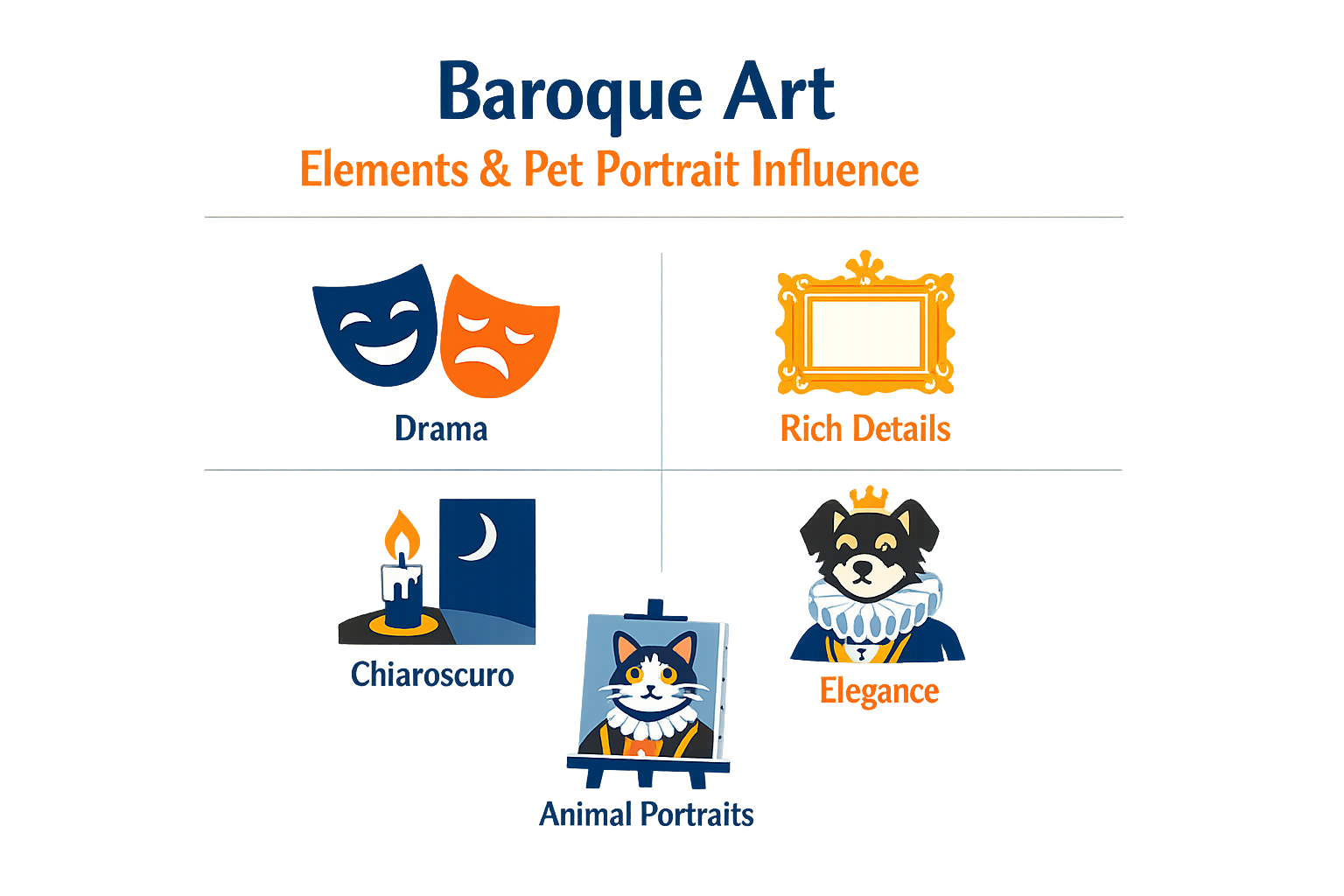
Baroque art is all about excess and opulence — the kind of drama that makes you stop and stare. Think deep shadows, glowing light on a face, and details so rich they feel almost tactile. It is the opposite of minimal. When you translate that into a pet portrait, you get something that looks expensive and regal without trying too hard.
The Baroque period loved heroic themes and ornate details — medals, epaulettes, velvet collars. That grandeur works beautifully on pets because they already carry themselves like royalty. A dog with a serious expression and that old-master light? It belongs in a museum. The style takes what is already there — the loyalty, the presence — and frames it the way the Dutch masters would have.
Why Baroque Works for Pets
Here is the thing: pets were included in serious portraiture during the Renaissance and Baroque eras as symbols of loyalty, wealth, and status. They were not decoration — they were part of the story. That tradition makes the style particularly suitable for modern pet portraits. Your dog is not just a pet; in a Baroque frame, he is a statement.
Pets in Baroque portraits were symbols of loyalty and status — your dog belongs in that tradition.
The dramatic lighting does most of the work. Baroque portraits rely on strong contrasts — light hitting the subject while shadows fall away into darkness. On a pet with expressive eyes or distinctive markings, that contrast brings out depth you did not know was there. It is the difference between a snapshot and a portrait worth hanging.
Baroque Pet Portraits Characteristics
Baroque pet portraits lean into drama. You will see deep, warm light on the face, rich backgrounds that suggest velvet or tapestry, and often ornamental details like collars, medals, or military-style embellishments. The composition is formal but not stiff — your pet looks dignified, not posed.
The style flatters pets with strong features — dogs with noble profiles, cats with intense eyes, even rabbits with that regal stillness. If your pet has a serious side, Baroque captures it. If they are goofy in real life, the portrait gives them gravitas. Either way, you get something that feels timeless.
For more ideas on how different painting styles bring out different qualities in your pet, see Dog Painting Styles: Watercolor vs Oil vs Renaissance.
The Artistic Process of Baroque Pet Portraits
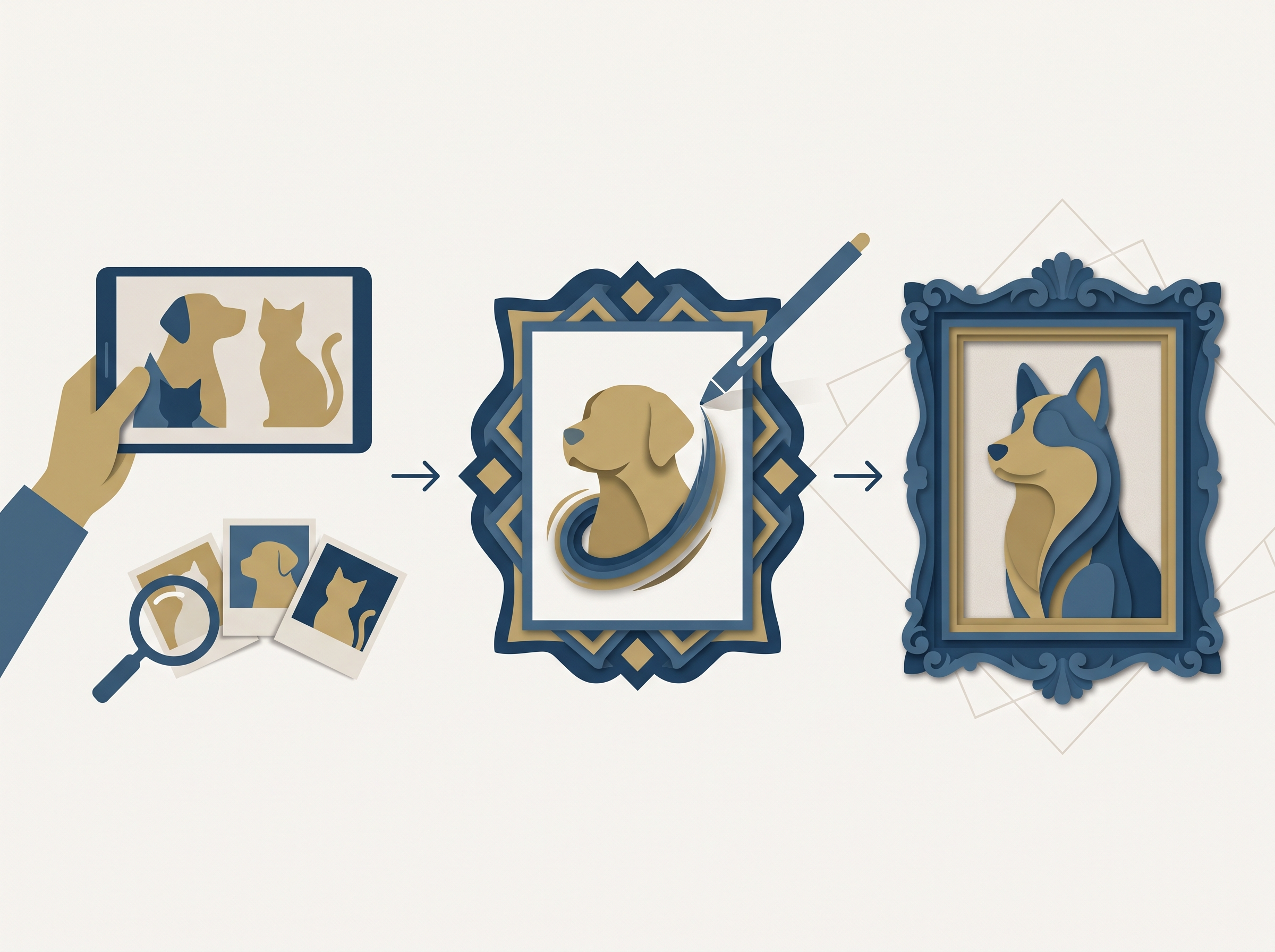
Here is the thing: a baroque pet portrait lives or dies on the photo you start with. The transformation process affects palette, edge treatment, texture, and tonal structure, but the source photo controls the subject and composition. You cannot paint drama into a flat snapshot — the light has to be there already, or at least the bones of it.
Choosing the Right Photo
A clear, well-lit reference photo is crucial for portrait quality, with sharp eyes and visible fur direction. Think natural light from a window, your pet at their eye level, and enough contrast that you can see the shape of their face. The photo everyone gets wrong is the one taken from directly above — it flattens the nose, hides the eyes, and kills any sense of depth. Shoot straight on or slightly below eye level, and let the photo breathe.
Building Depth Through Light and Shadow
Baroque portraits are all about chiaroscuro — the interplay of light and dark that gives a face dimension. The single most important technical element is the eyes. Painters tend to start with the eyes, because when the eyes look correct, the brain accepts the rest of the portrait as plausible. From there, the light wraps around the muzzle, catches the fur texture, and fades into shadow at the edges.
The transformation process works by identifying where light naturally falls in your photo and amplifying it — making highlights warmer and more luminous, pushing shadows deeper and richer. If you are curious about how different dog painting styles handle light and texture, baroque sits at the dramatic end of the spectrum: soft, warm, and a little theatrical.
Step 1
Start with the eyes
The eyes anchor everything. They need to be sharp, well-lit, and expressive. If the eyes are in shadow or out of focus, the portrait will feel off no matter how beautiful the rest of it is.
Step 2
Map the light
Identify the brightest point on your pet's face — usually the bridge of the nose or the cheekbone. That becomes your key light. Everything else is built around it, with gradual transitions into shadow.
Step 3
Let the background recede
Baroque portraits keep the subject in light and let everything else fall away. A dark or neutral background makes the warm glow on your pet's face feel even more dramatic.
Why Choose a Baroque Style for Your Pet
Baroque pet portraits are not for every pet — and that is the whole point. This style works best when your pet already has the face for it: big expressive eyes, a certain gravity, maybe a little drama in their everyday look. Think of the dog who stares out the window like she is contemplating the meaning of life, or the cat who poses on the back of the couch like he owns the place. Those pets belong in a Baroque portrait.
The Drama Suits the Personality
A Baroque pet portrait places your pet into a classical composition inspired by European master painters, characterized by dramatic lighting and rich textures. The deep shadows and glowing highlights do not just look expensive — they pull out something real. If your pet has a soulful side, this style will find it. If they are naturally regal or a little aloof, the old-master light makes that read as dignity instead of standoffishness.
Baroque portraits are suited for pets with big personalities and expressive faces, capturing their essence with depth and old-master light. The style does not work as well on pets with very light or fluffy coats where the shadow detail gets lost, or on pets whose charm is more about motion and energy than presence. Baroque is for the ones who hold still and look at you like they know something you do not.
What the Style Actually Does
The most popular version is the King portrait — your dog or cat wrapped in ermine-trimmed robes against deep shadows, conveying a sense of permanence and importance. It is theatrical, yes, but it is also warm. The light on their face is soft, the background recedes, and the whole composition keeps your eye on them. You are not looking at a costume — you are looking at your pet, painted.
This is not a style you choose because it is trendy. You choose it because your pet already has that look, and you want a portrait that matches what you see in them. For more guidance on capturing that expression at home, see How to Photograph Your Cat for a Portrait at Home.
When It Works Best
Baroque works when the photo you start with has good light and a clear face. The style amplifies what is already there — it does not invent it. If your pet's personality is more about goofiness or high energy, a different era might suit them better. But if they have that old-soul thing going on, Baroque is the one that actually looks like them.
Customer Experiences and Feedback
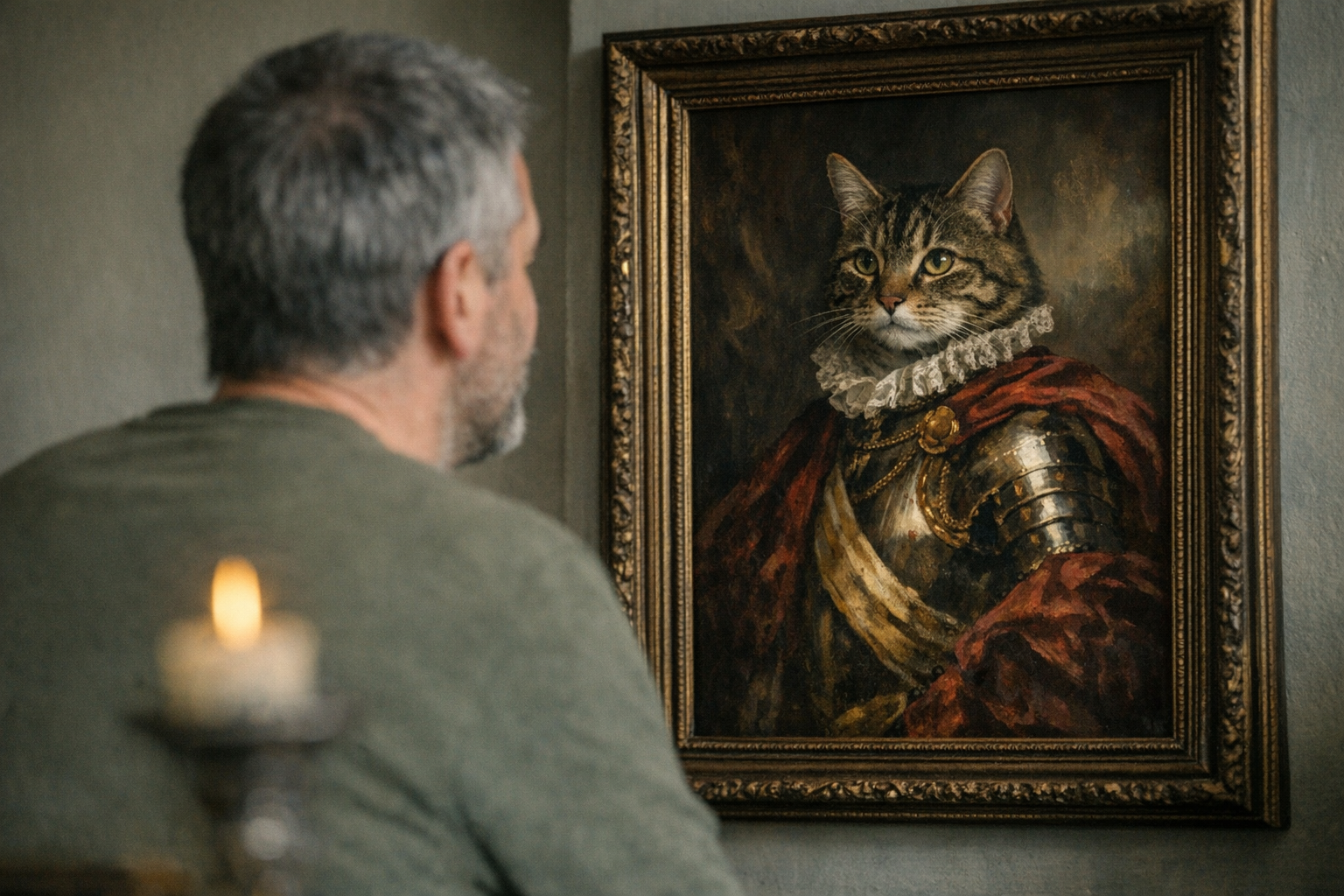
Here is the thing about baroque pet portraits: they land differently than other styles. The drama, the light — it turns a regular photo into something people actually stop and look at. About 65% of these orders end up as gifts, which tells you everything you need to know about how they make people feel.
The portraits bridge a gap between old master paintings and modern pet photography. You get a conversation piece that honors both art history and the animal you love. When someone hangs one of these, it is not just another pet photo on the wall — it is the one guests ask about.
What People Say About the Impact
The feedback centers on two things: the emotional weight and the sheer presence of the piece. A baroque portrait does not sit quietly in the background. The deep shadows and glowing highlights capture something soulful that a regular photo misses. People describe seeing their pet in a new way — not just cute or handsome, but dignified, almost noble.
Baroque pet portraits transform furry friends into dramatic art pieces, capturing their essence with depth and old-master light.
For memorial portraits, the style carries extra significance. The warmth of the light and the depth in the shadows feel right for honoring an animal who mattered. It is serious without being heavy, warm without being sentimental. That balance is hard to find, and it is why people keep coming back to this era.
The Gift That Actually Works
If you are looking for a gift that feels thoughtful without being overly personal, a baroque pet portrait hits the mark. It works for birthdays, adoptions, retirements — any occasion where you want to give something memorable. The recipient gets a piece of art they will actually hang, not something that ends up in a drawer.
The style also flatters almost any pet. Dogs with soulful eyes look unfairly good in baroque light, but cats, rabbits, even birds carry the drama well. The key is choosing a photo where the animal is looking directly at the camera or slightly off to the side — that is where the old-master light does most of the work.
If you are curious about other classic portrait styles that bring out your pet's personality, royal dog portraits offer a complementary approach with regal settings and formal composition.
Pricing and Options for Baroque Portraits
Here is the thing about pricing a baroque pet portrait: you are not just buying a picture — you are commissioning a piece that belongs on a wall, not tucked in a drawer. The cost reflects the drama, the depth, and the old-master light that makes your pet look like they stepped out of a Rembrandt. Most services offer a range of options, from digital files to gallery-wrapped canvas prints, so you can choose what fits your space and budget.
What You Are Actually Paying For
When you order a baroque portrait, you are paying for the transformation. The lavish elements — draped fabrics, jeweled brooches, dramatic warm lighting — are layered in to capture your pet's essence while keeping their features recognizable. This is not a filter you slap on a photo. The process involves choosing the right composition, adjusting the light to create that signature glow on the face, and rendering the deep shadows that give the portrait its weight. If you want something that looks expensive, this is how you get it.
Package Options and What to Choose
Most providers offer tiered packages. A digital file is the most affordable option — you get the portrait as a high-resolution download that you can print yourself or share online. If you want it ready to hang, canvas prints are the move. They come gallery-wrapped, which means the image wraps around the edges of the frame, so you do not need a separate frame to make it look finished. Sizes typically range from small (8x10 or 11x14) to large statement pieces (24x36 or bigger). The larger the print, the more the dramatic lighting and depth shine through.
For baroque specifically, go bigger if your wall can handle it. The style is built for impact — deep shadows and glowing highlights need room to breathe. A tiny print loses the drama. If you are choosing between sizes, pick the one that makes you hesitate for a second because it feels bold. That is the right size.
Is It Worth the Money?
If you love the photo and the era suits your pet, yes. A dog with soulful eyes in baroque light is unfair how good it looks. You will keep coming back to it. The portraits that feel worth hanging are the ones where the style matches the personality — a regal dog, a cat who already acts like minor nobility, a pet with expressive eyes that hold the light. If that is your animal, the investment makes sense. You are not just decorating a wall; you are keeping them in the room.
For more ideas on how different dog painting styles compare and which one suits your pet best, explore the options that go beyond baroque to see what resonates.
Final Verdict on Baroque Pet Portraits
Here is the thing: a baroque pet portrait is not for everyone, and that is exactly why it works. If you want something that actually looks like your pet — not a generic painting that could be anyone's dog — this is the style that delivers. The drama and warm light bring out the personality in a way that feels both serious and deeply personal. Your dog belongs in that old-master light, the kind you see in the Rijksmuseum where very serious-looking dogs have been immortalized in court portraits.
The depth is what sells it. Baroque just means drama and warm light — deep shadows, a glow on the face. On a dog with soulful eyes, it is unfair how good it looks. The style does not flatten your pet into a cartoon or a stiff formal pose; it captures the expression, the weight, the presence. That is the part people skip when they choose a style that does not match their pet's personality.
A baroque pet portrait transforms your furry friend into a dramatic art piece worth hanging — not just another photo on your phone.
If you are looking for a gift, this is the one that lands. The research shows that about 65% of orders for renaissance and baroque-style pet portraits are gifts, and it makes sense — this is the portrait you give someone when you want them to feel seen. It works for memorials, too, because the warmth and gravitas honor the pet without tipping into overly sentimental. You are giving them art, not just sentiment.
The style flatters almost any pet, but it really shines on dogs and cats with expressive faces and rich coats. The interplay of light and shadow brings out texture and depth that other styles miss. If your pet has that quiet dignity or that intense stare, baroque is the era you choose. If you are still exploring which style fits best, dog painting styles can help you decide between watercolor, oil, and the old-master approaches.
The final word: if you want a portrait that feels expensive, that stops people in the room, and that actually looks like your pet painted into history, this is it. No studio required, no perfect photo necessary — just one shot that captures their expression, and the style does the rest. Trust me on this: the portrait you keep coming back to is the one where the light makes them look the way you see them every day.