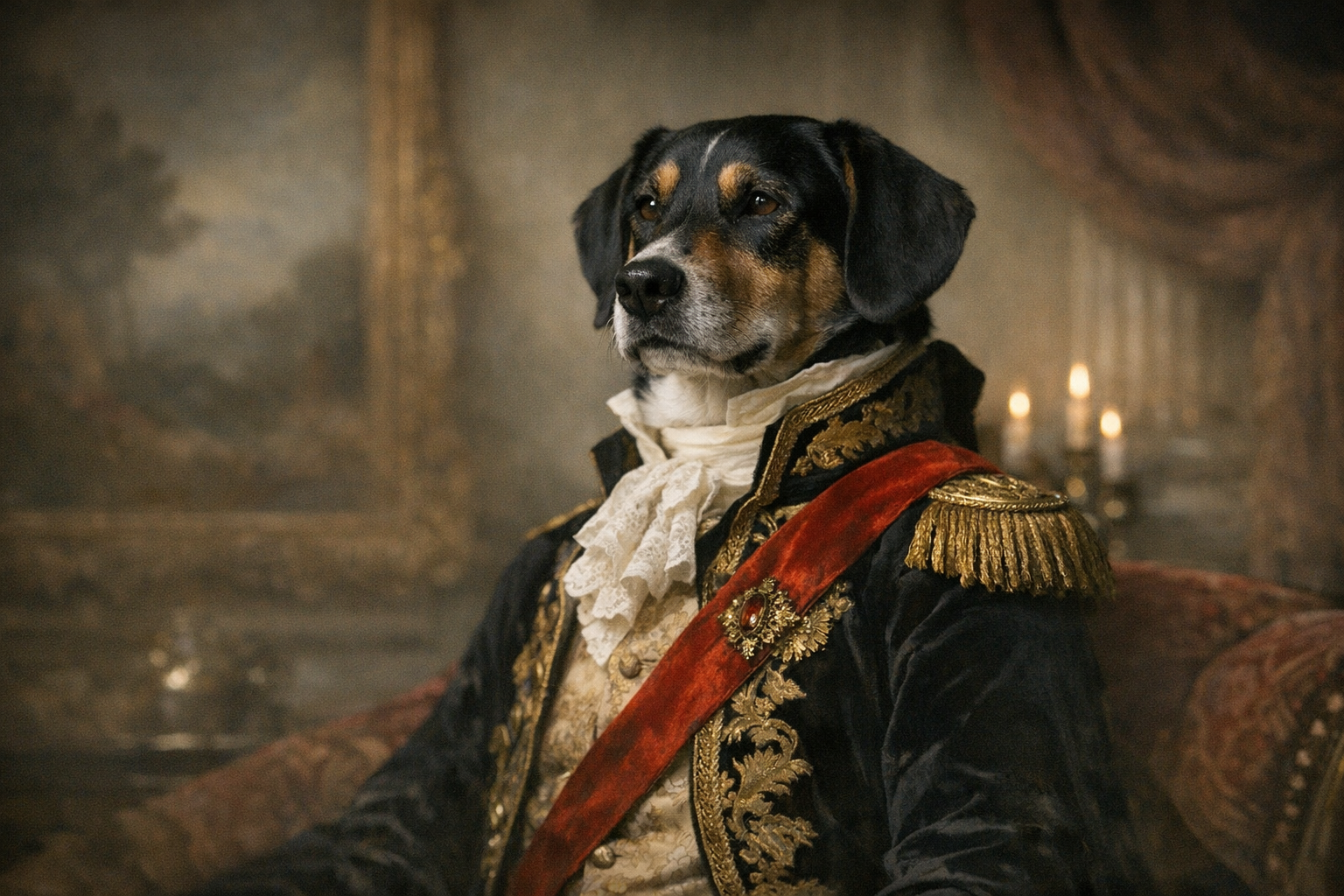

Welcome to the World of Regal Pet Portraits
Here is the thing about regal pet portraits: the moment you see your scrappy rescue in a velvet cape and crown, something clicks. It is funny and it is beautiful and it is deeply personal, all at once. You already know your pet is special — this just makes it official.
The whole idea works because of that emotional connection. Your dog is not just a dog. Your cat is not just a cat. They are the one who greets you at the door, the one who sits on your lap during hard days, the one you keep coming back to in your camera roll. A regal portrait takes that feeling and puts it on the wall in a way that actually looks like them — not some generic painting of a stranger who happens to have the same collar.
You do not need a fancy studio or a degree in art history to get this right. What you need is a good photo, a style that fits your pet's personality, and a little guidance on what makes a portrait feel expensive versus cheap. By the end of this you will know exactly which photo of your pet to use — and which three to skip. Whether you are thinking royal dog portraits or a softer, more painterly look, the process is the same: start with the shot that actually works, and let the style do the rest.
There is something about seeing your scruffy rescue dog in a velvet cape and crown that hits you right in the heart. It is funny and it is beautiful and it is deeply personal, all at once.
This is not about perfection. It is about capturing the thing you love about your pet — the tilt of their head, the way they look at you, the personality that makes them yours. Good light does most of the work. The rest is knowing what to look for in a photo and which style will make it feel regal without losing what makes it them.
Understanding Regal Pet Portraits
Here is the thing about regal pet portraits: they are not just fancy paintings — they are a whole tradition borrowed from the way royalty used to commission their own likenesses. Think Renaissance oil paintings, ornate frames, velvet capes, and that unmistakable air of "I own this castle." The style transforms your pet into nobility, and when it is done right, it looks like something you would find hanging in a museum wing dedicated to very important animals.
What Makes a Portrait "Regal"
A regal pet portrait pulls directly from the visual language of Renaissance-era royal portraiture. That means rich, warm tones, dramatic lighting (the kind Rembrandt loved), and formal posing that suggests your dog or cat has been sitting for a court painter. The most popular version features your pet in period costume — military regalia, fur-trimmed robes, lace collars — set against a dark or muted background that lets the subject pop. The frame matters too: heavy, gilded, ornate. It is the whole package that sells the aristocratic vibe, not just the painting itself.
The era you choose sets the tone — Renaissance feels grand and timeless, Victorian feels sentimental and stately.
What you are really doing is placing your pet in the visual tradition of people who had the resources and status to commission painted portraits. It is a playful nod to history, but it also taps into something real: the way we see our pets as family, as individuals worth memorializing in a format that has always been reserved for the most important figures in a household.
Why This Style Works for Pets
Regal portraits work because they take the personality your pet already has — dignified, goofy, aloof, loyal — and frame it in a way that amplifies it. A Great Dane or a Persian cat naturally carries a certain gravitas; put them in a general's uniform or a duchess's gown, and suddenly the photo you have been staring at on your phone becomes something worth hanging. The formality of the style also hides a lot of the quirks that make casual pet photos hard to turn into wall art: messy backgrounds, weird lighting, that half-blink expression. The regal format is forgiving because it is stylized from the start.
The style also suits a wide range of pets. Dogs with strong profiles — think dog breeds for Renaissance portrait work like Greyhounds, German Shepherds, or even scrappy terriers — look incredible in military dress. Cats, especially long-haired breeds, translate beautifully into the soft, painterly textures of oil-style rendering. Even smaller pets can hold their own in this format if the composition is tight and the costume is chosen to match their scale and personality.
Popular Variations Within the Regal Genre
Not all regal portraits look the same, and that is a good thing. Some lean heavily into the Renaissance oil-painting aesthetic: thick brushstrokes, muted earth tones, that unmistakable Flemish-master glow. Others go full Baroque — more drama, more contrast, more gold trim. Victorian-style portraits tend to be softer, with lace and pastel backdrops, while Napoleonic or military portraits emphasize medals, epaulettes, and a stern, forward gaze.
The costume is where you get to play. Generals, admirals, kings, queens, duchesses — each carries a different mood. A ruffled collar and velvet cape feels Elizabethan; a tricorn hat and sash feels 18th-century naval officer. The background can be a solid dark field (classic, timeless) or a faint suggestion of a landscape or interior (adds context without stealing focus). The key is that everything — costume, lighting, frame — works together to create a unified, gallery-ready piece.
Choosing the Right Artist
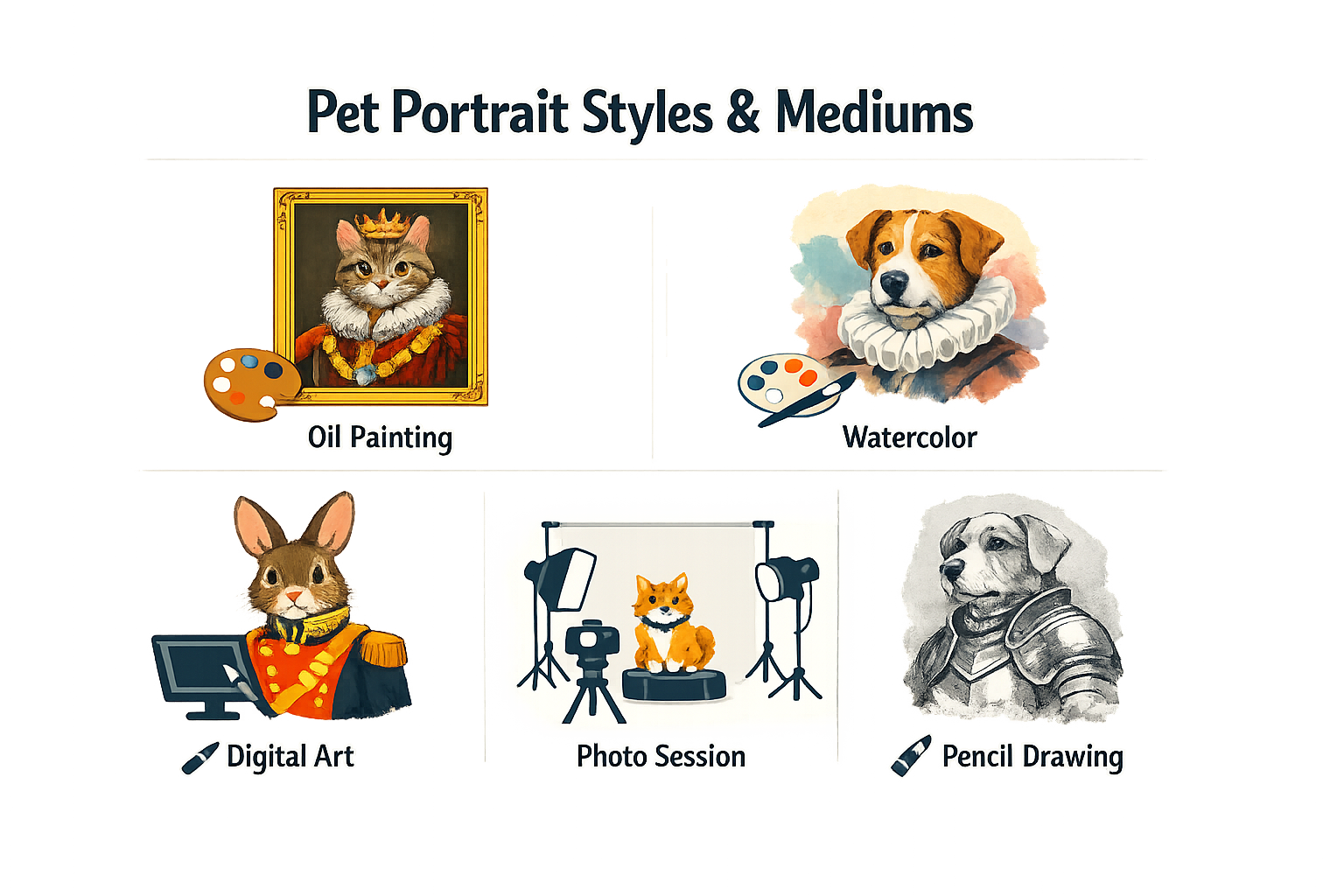
Here is the thing about choosing someone to paint your pet: you are not just hiring technical skill. You are trusting them to see what you see — that specific tilt of the head, the way her ears catch the light, the personality that makes her her. The artist who nails one dog's expression might completely miss another's. Your job is to find the match.
Start by looking at their portfolio with one question in mind: do these animals look like individuals, or do they all have the same face? A good portrait artist captures character, not just breed. You want someone who can translate your scruffy terrier's mischief or your cat's resting disdain into paint. If every pet in their gallery looks generically noble, keep looking.
What Customization Actually Means
When an artist offers customization, they should mean everything — the clothing style, the background, the era, the little details that sell it. You should be able to choose whether your dog wears a general's uniform or a velvet Renaissance doublet, whether the background is a grand library or a misty landscape. Crowns, jewels, collar details — all of it should be on the table.
The best services let you personalize every element of the portrait, so the final piece feels like it belongs to your pet, not a template. You are not ordering a stock image with your dog's face pasted in. You are commissioning something that reflects how you see them — regal, yes, but also unmistakably them.
Questions to Ask Before You Commit
Before you hand over a deposit, ask how many rounds of revisions are included. The answer should not be "one" or "two." A portrait worth hanging takes iteration — you will know it when you see it, but you might not see it on the first try. Unlimited revisions mean the artist is willing to work with you until the portrait actually captures your pet's character and royal charm.
Also ask about turnaround time and what happens if you are not happy with the final proof. A confident artist will have clear answers and a process that protects both of you. If they get defensive or vague, that is your cue to walk.
You might also want to explore dog painting styles to understand which medium best suits your vision — watercolor has a softer, more ethereal quality, while oil brings weight and drama.
Trust Your Gut on the Samples
Look at their sample portraits and ask yourself: would I hang this? Does the pet look alive, or does it look like a caricature? Are the proportions right — eyes at their eye level, ears in the right place, expression recognizable? The little details that sell it are the ones most artists skip. A great regal pet portrait feels like your pet walked into a painting, not like a painting walked into your living room.
If the samples make you smile because you can see the personality, you have found someone worth talking to. If they just look expensive but cold, keep searching. Regal does not mean stiff. It means your pet, painted with the dignity they already have.
Preparing Your Pet for the Portrait
Here is the thing about getting the right photo for a regal pet portrait: you do not need a professional studio or a photographer on speed dial. You need good light, a clear shot of your pet's face, and a little patience. That is it. The photo everyone gets wrong is the one where they try too hard — the pet is squirming, the lighting is harsh, and the background is cluttered. Let me show you what actually works.
Start With Natural Light
Good light does most of the work. Put your pet near a window in the morning or late afternoon when the light is soft and warm. Avoid overhead lights or direct sun — they create harsh shadows and make your pet squint. You want their face evenly lit, their eyes bright, and their expression relaxed. If you can see their eyes clearly, you are halfway there.
Get Close and Shoot at Their Eye Level
The shot that actually works is front-facing and close-up. Kneel down or sit on the floor so you are at their eye level, not shooting down at them. Fill the frame with their face — you want to see their expression, not the whole room behind them. A clear, well-lit photo of their face will convert into a portrait worth hanging. A distant shot with too much background will not.
If your pet will not sit still, try a favorite toy or a treat to get their attention. You are not looking for a posed smile — you want the moment when they lock eyes with you and you see their personality. That is the one you keep coming back to.
Skip the Busy Backgrounds
Your pet should be the star, not the couch or the pile of laundry behind them. A plain wall, a neutral blanket, or even a blurred outdoor background works. The simpler the background, the more the portrait feels like them. If you are shooting outside, find a spot with even shade — no dappled light, no harsh sun. Let the photo breathe.
The Little Details That Sell It
Make sure their fur is brushed and their collar is clean (or take it off entirely if you want a more timeless look). Check for distracting reflections in their eyes or stray hairs covering their face. It does not have to be perfect, but these small tweaks make the difference between a snapshot and a portrait you will frame.
If you want more specific guidance on photographing your pet at home, How to Photograph Your Cat for a Portrait at Home walks through the setup step by step.
Displaying Your Regal Portrait
You spent time picking the photo, choosing the era, and getting the portrait just right — now comes the fun part: putting it where people can actually see it. Here is the thing: a regal pet portrait is not a magnet-on-the-fridge situation. It is art worth hanging, and where you hang it changes how it feels in the room.
Give It the Right Wall
The portrait should live somewhere you walk past every day — not tucked in a hallway nobody uses. Living rooms, entryways, and home offices are your best bets. You want it at eye level, which for most people means the center of the frame sits around 57 to 60 inches from the floor. If you hang it too high, it floats. Too low, and it gets lost in the furniture.
Good light does most of the work. Natural light is ideal, but keep the portrait out of direct sun — it will fade over time. If you are lighting it artificially, use a warm bulb and angle it so there is no glare on the glass or canvas.
Frame It Like You Mean It
The frame is not an afterthought. A regal portrait — especially one with Renaissance or royal styling — deserves a frame that matches the era you chose. Ornate gold or dark wood frames work beautifully for traditional portraits. If your home leans modern, a simple black or walnut frame keeps the focus on the painting without fighting the décor.
Mat it if the portrait is smaller or if you want a little more presence on the wall. A wide mat in cream or charcoal gives the piece room to breathe and makes it feel more gallery-ready.
Let the portrait breathe — cramming it between other frames or too close to a corner makes it compete instead of command.
Make It Part of a Gallery Wall (or Let It Stand Alone)
If you are building a gallery wall, the regal portrait should anchor the arrangement — not get buried in it. Put it in the center or slightly off-center, and let the other frames support it. Family photos, smaller prints, or even a mirror can fill out the wall, but the portrait is the star.
That said, some portraits work best solo. If the piece is large or especially dramatic, give it its own wall. You will know it when you see it — some paintings just want the whole room to themselves.
For more ideas on pairing styles and choosing the right portrait for your space, check out Dog Painting Styles: Watercolor vs Oil vs Renaissance.
Keep Them in the Room
This is the part people skip: once it is up, live with it for a few days before you decide it is perfect. Walk past it in the morning, at night, when the light changes. If it feels right, you nailed it. If something is off — the height, the frame, the wall color behind it — adjust it. The goal is a portrait that feels like it has always been there.
Conclusion
Here is the thing about regal pet portraits: they turn the photo you already love into something you will actually hang. You do not need a fancy camera or a professional setup — just a good shot of your pet, the era you choose, and a little trust in the process. The one you keep coming back to on your phone is probably the right one.
Renaissance pet portraits have become the single most popular style of custom pet art in 2026, and it is easy to see why. People are obsessed with seeing their pets reimagined as 17th-century aristocrats, medieval knights, and royal monarchs — the contrast between your golden retriever and a velvet cape is the whole point. It does not have to be perfect. Soft, warm, and a little dramatic is all you need.
The little details that sell it — the light, the expression, the headroom — those are the parts people skip. But once you know what to look for, you will know it when you see it. A portrait worth framing is the one that feels like them, not just looks like them. That is what makes it worth hanging.
If you are ready to turn your favorite photo into something regal, start with the shot that actually works. Good light does most of the work. Keep them in the room, let the photo breathe, and pick the style that matches their personality. No studio required. For more inspiration on which breeds naturally suit the aristocratic look, check out Dog Breeds for Renaissance Portrait: Regal Canines in Art.
Your pet painted as royalty is not just a fun idea — it is a portrait you will keep coming back to. Trust me on this.
Explore regal pet portraits and learn how to choose the perfect piece for your furry friend with this engaging guide.