
Introduction to Victorian Pet Portraits
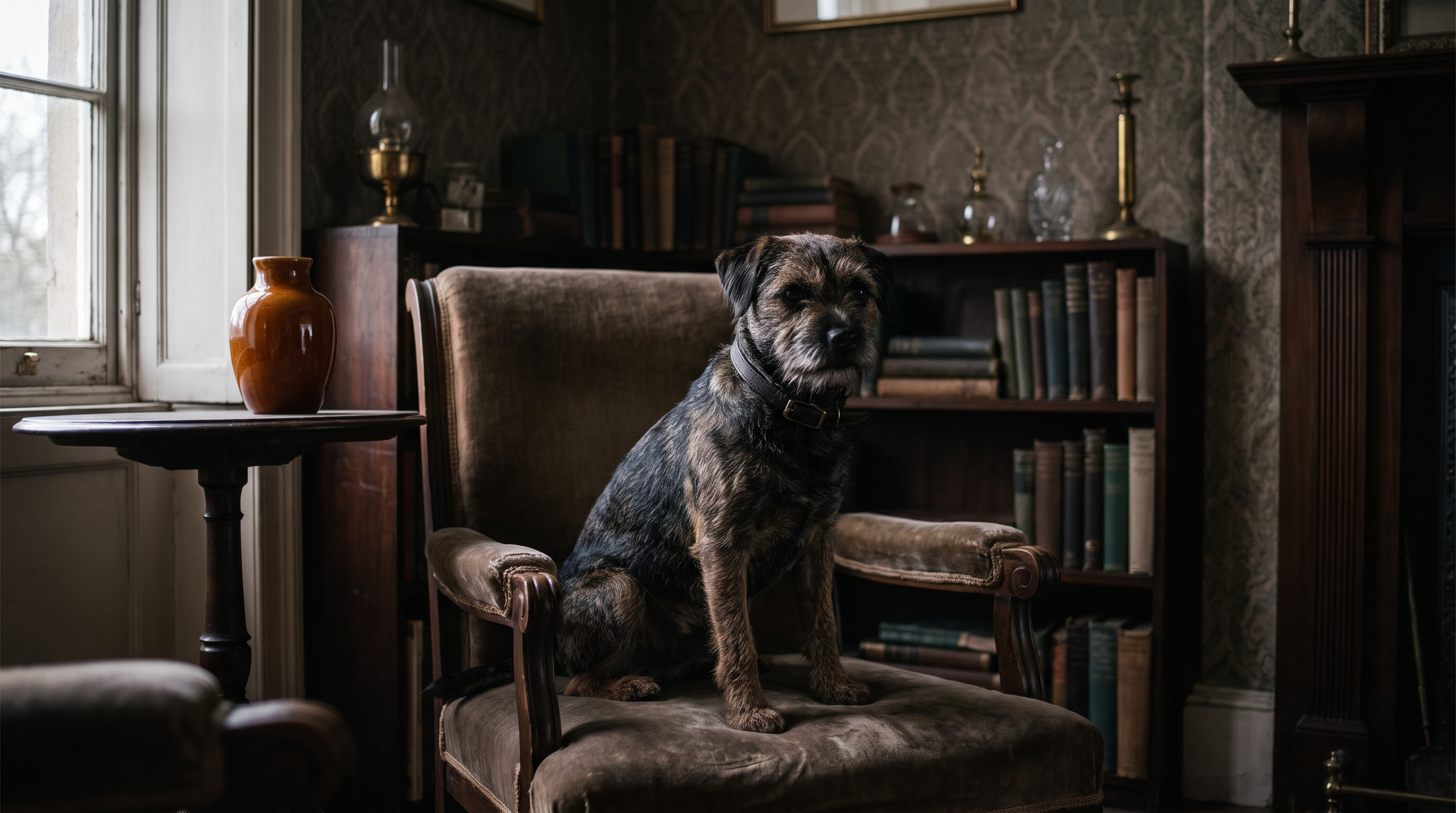
Here is the thing about Victorian pet portraits: they turn your dog or cat into the kind of subject you would see hanging in a museum. Not the cutesy, modern kind of pet art — the serious, elegant, this-belongs-in-a-manor-house kind. When we think of these portraits, we often imagine the elegance and grandeur of a bygone era, where every detail mattered and pets were painted with the same care as nobility.
The Victorian era changed how society saw pets. Before that time, animals were often status symbols — proof you had land, wealth, or hunting privileges. But during the Victorian period, something shifted. Pets became companions, family members worth celebrating. That is when pet portraits stopped being about showing off and started being about love.
What makes Victorian pet portraits work is how they frame your pet. The style features elegant poses and refined attire — think velvet collars, ornate backgrounds, rich textures that make the whole thing feel expensive. Your dog belongs in those grand halls, next to the very serious-looking dogs you see in old court portraits. There is a whole tradition of royal pets in court portraits, and the Rijksmuseum is full of them. Your dog belongs there.
The tradition of turning pets into painted art goes back over 500 years, but the Victorian era made it accessible and meaningful in a new way. It was not just about wealth anymore — it was about the bond. That is what you are capturing when you choose a Victorian-style portrait: not just how your pet looks, but the timeless connection you share.
Explore the charm of Victorian pet portraits and learn how to capture your pet's elegance in a timeless style.
The Essence of Victorian Art
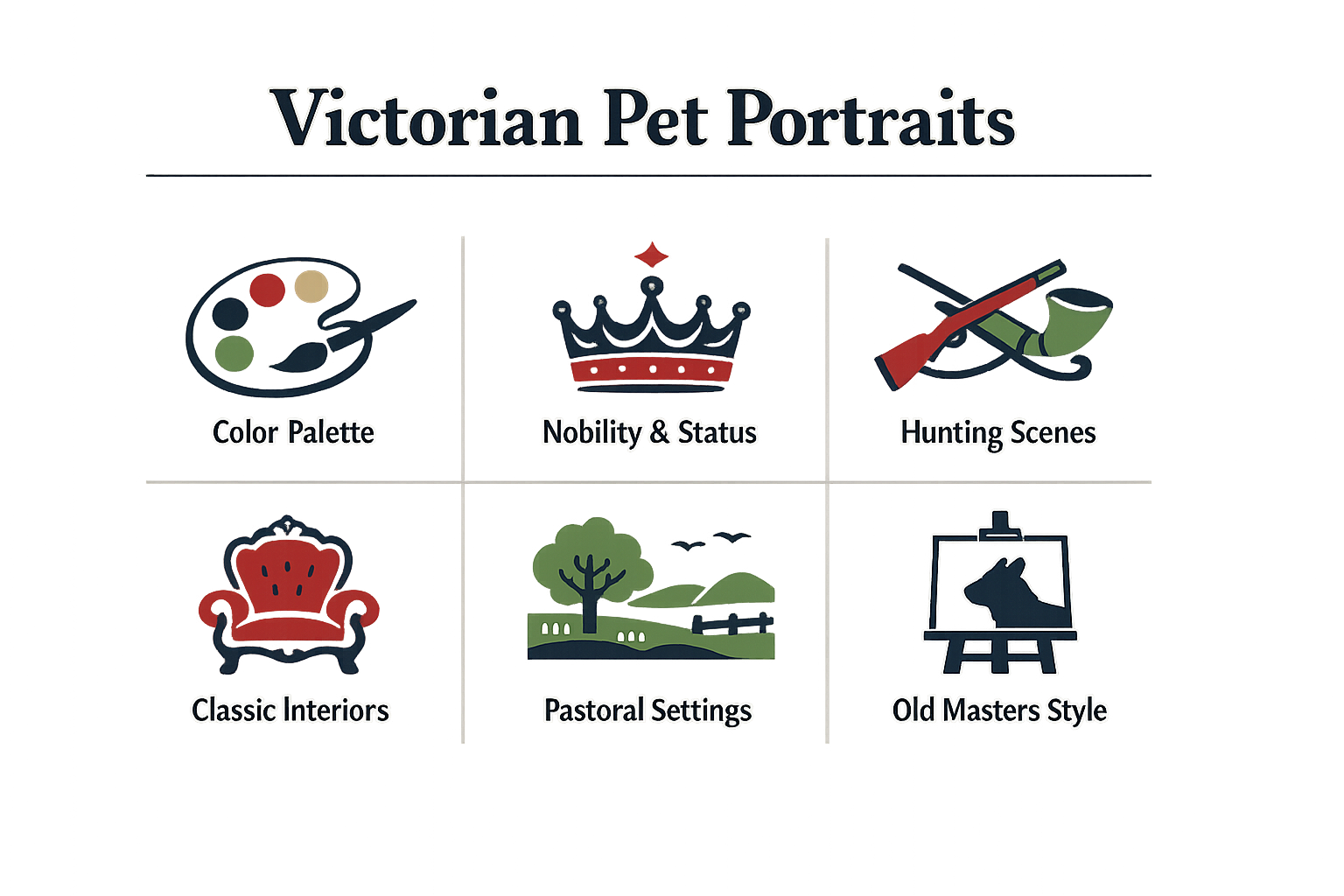
Victorian art is all about dignity, detail, and a certain kind of quiet grandeur. The portraits from this era — whether of people or pets — were painted to last, to hang in homes for generations. Muted sepia tones, soft olive greens, and that warm, diffused light that makes everything look like it belongs in a museum. The brushwork is delicate, almost obsessive in its attention to texture — every strand of fur, every fold of fabric, every glint in the eye.
This is not flashy art. It is elegant, restrained, and deeply respectful of its subject. Victorian pet portraits capture the same dignity that was reserved for the aristocracy. Your dog is not just a pet in these paintings — she is a presence, a character, someone worth commemorating.
What Makes Victorian Pet Portraits Timeless
The tradition of turning pets into art goes back over 500 years, but the Victorian era was when it really took hold as something middle-class families could afford and cherish. It was no longer just for royalty — it was for anyone who loved their dog or cat enough to want them on the wall. The Victorians understood that pets were family, and they painted them that way.
The Victorian style, with its emphasis on elegance and sophistication, perfectly complements the natural grace of our pets.
The palette is what sells it. Those muted tones — soft browns, grays, and creams — give the portrait a sense of age and permanence. The lighting is never harsh. It is the kind of soft, natural light you get near a window on an overcast day, and it does most of the work. It flatters every subject, smooths out the rough edges, and makes even the scruffiest mutt look like landed gentry.
The Details That Define the Era
Victorian portraits are built on fine detail. The fur is rendered in delicate, almost invisible brushstrokes. The background is often simple — a dark drape, a hint of a room, maybe a piece of furniture — but never busy. The focus stays on the subject. This is the part people skip when they try to recreate the look themselves: the restraint. Less is more. Let the photo breathe.
If you are thinking about a royal dog portrait for your own pet, the Victorian style is a strong choice. It works for any breed, any personality. The formality of the composition gives even the goofiest dog a sense of gravitas. And that is the whole point — to elevate them, to show them as you see them: worthy of hanging.
Creating Your Victorian Pet Portrait
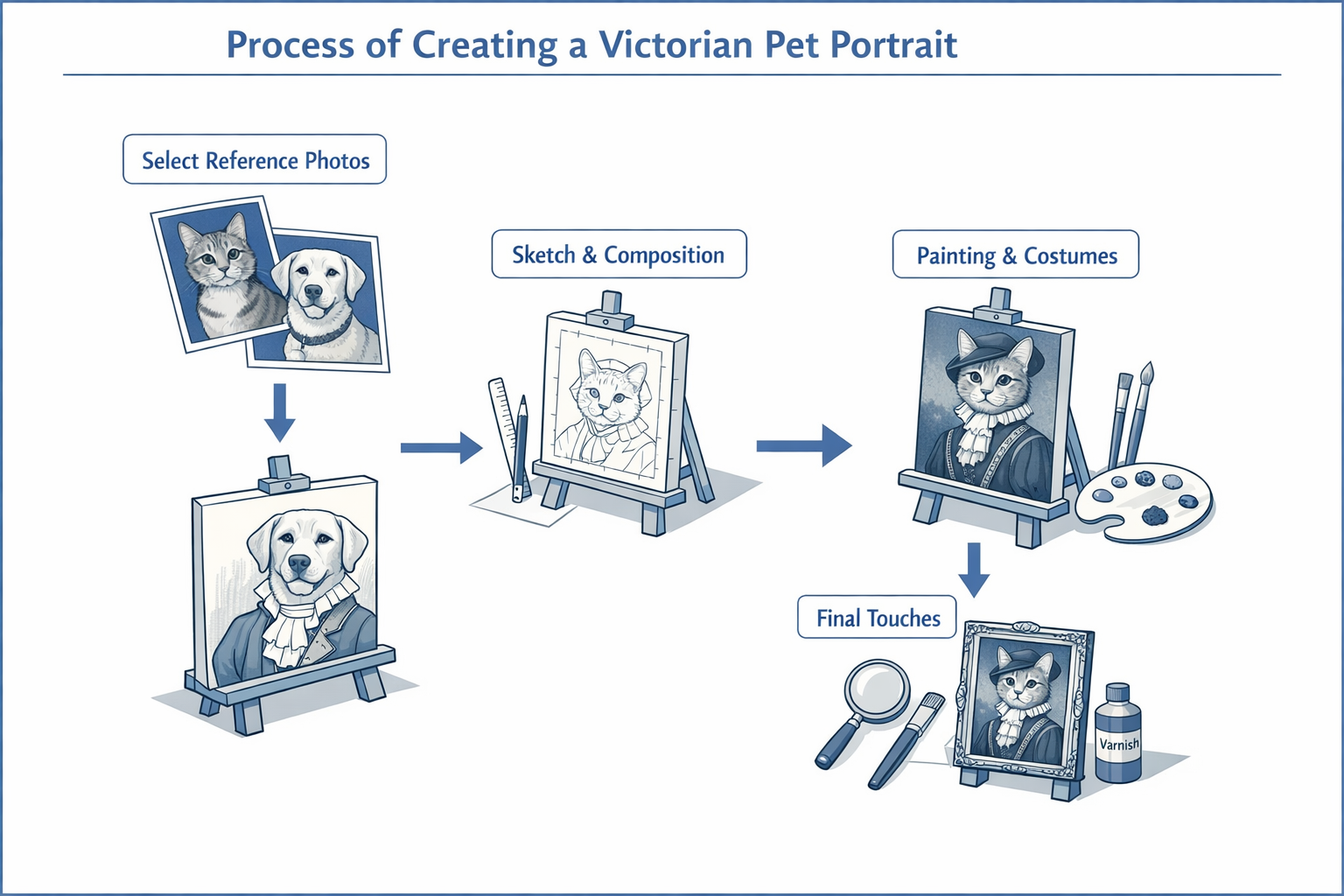
Here is the thing about turning your pet into a Victorian masterpiece: the photo you start with does most of the work. You do not need a professional studio setup or a dog who sits perfectly still for twenty minutes. You need a clear shot of their face, good light, and a little bit of planning. That is it. The rest is about choosing the right theme and letting the transformation do what it does best.
What You Need Before You Start
Before you dive in, get these three things lined up. First, a clear photo of your pet's face — their eyes should be sharp, and you should be able to see their expression without squinting. Second, access to a platform that can handle the transformation. Third, a sense of what kind of Victorian scene fits your pet. Are they regal and serious, or do they have that mischievous look that would work better in a parlor setting than a throne room?
Your phone camera works fine for this. No studio required. Just make sure the background is not too busy — you want the focus on them, not the laundry pile behind them. If you are working with a cat, catch them during a calm moment when their ears are forward and their eyes are open. Dogs are easier — a treat just above the camera does wonders.
Choosing a Theme That Matches Your Vision
The Victorian era was not one-size-fits-all. You had the grand royal portraits with crowns and thrones, but you also had the quieter, more intimate parlor scenes with velvet chairs and soft drapery. Think about your pet's personality. A dignified older dog with a calm demeanor? Royal garments and a throne work beautifully. A playful cat with big eyes? A softer parlor setting with lace and muted tones might be the one you keep coming back to.
Popular Victorian themes include royal and historical settings — think crowns, thrones, and rich fabrics that make your pet look like they belong in a portrait gallery. The key is to pick a scenario that feels like them. You will know it when you see it. If your dog has that serious, noble expression, lean into it. If your cat looks perpetually unimpressed, a Victorian lady in a high-collared gown might be perfect.
For more ideas on how different breeds translate into historical art styles, check out Dog Breeds for Renaissance Portrait: Regal Canines in Art — the same principles apply to Victorian portraits.
Step 1
Select your best photo
Pick a photo where your pet's face is clear, well-lit, and in focus. Avoid busy backgrounds or odd angles. The shot that actually works is usually the one where you can see their eyes and expression without any distractions.
Step 2
Choose your Victorian theme
Decide whether you want a grand royal portrait with crowns and thrones, or a softer parlor scene with elegant fabrics and muted tones. Match the theme to your pet's personality — regal and serious, or soft and dignified.
Step 3
Let the transformation breathe
Once you have uploaded your photo and selected your theme, let the platform do its work. The little details that sell it — the texture of velvet, the glow of candlelight, the way the background fades — come through when you trust the process and do not over-edit.
Getting the Details Right
This is the part people skip: paying attention to the small things that make a Victorian portrait feel authentic. The era you choose matters. Victorian portraits were all about rich textures, deep colors, and a sense of gravitas. Your pet should look like they belong in that world, not like a modern photo with a costume slapped on top.
Good light does most of the work, but so does the right composition. Victorian portraits often featured the subject front and center, with the background serving as a frame rather than a distraction. Keep them in the room — meaning, do not crop so tight that you lose the sense of place, but do not pull back so far that they get lost in the scenery.
The photo you start with should feel like them. If your dog has a goofy side, maybe Victorian is not the right fit — but if they have that dignified, soulful look, this style will make them shine. Same with cats. A cat with big, serious eyes and a calm demeanor? Perfect. A cat mid-yawn or mid-pounce? Save that one for a different style.
Why Choose a Victorian Style for Your Pet
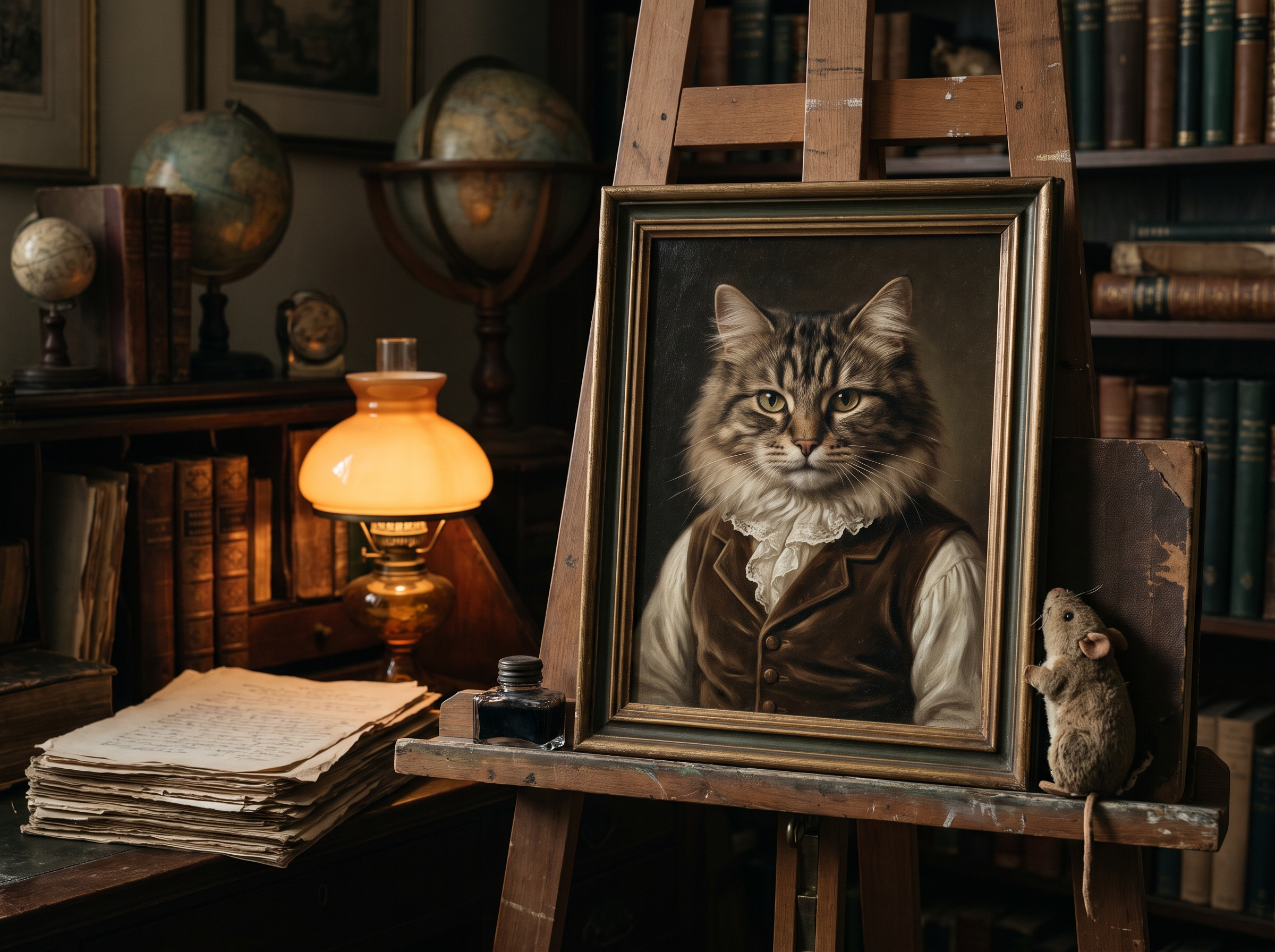
Here is the thing about Victorian pet portraits: they turn your pet into the aristocrat they already think they are. The style captures elegance and dignity in a way that makes even the scruffiest rescue look like they belong in a manor house. If your pet has that regal, slightly aloof energy — the kind that makes you feel like you work for them — this is the era you choose.
Victorian portraits are all about rich textures, intricate backgrounds, and a sense of permanence. They elevate your pet to something worth hanging, not just saving on your phone. The style flatters pets with expressive eyes and dignified postures — cats especially, but also dogs who carry themselves like they know something you do not. It is soft, warm, and a little dramatic, which is exactly what makes it work.
The Emotional Weight Victorian Portraits Carry
Queen Victoria herself was famously devoted to her dogs, particularly her Cavalier King Charles Spaniel named Dash. The portraits of her pets were not just decoration — they were a way to honor the bond she had with them. That tradition of celebrating the emotional connection between pets and their owners is what makes Victorian pet portraits feel so personal. You are not just getting a painting; you are acknowledging that your pet holds a place in your life worth commemorating.
Victorian pet portraits capture not just the likeness of the pet, but the essence of the bond between owner and companion.
This style works especially well for memorial portraits because it carries that sense of reverence without feeling heavy-handed. The formality of the era lends itself to honoring a pet who has passed, while still keeping the warmth and personality that made them yours. It does not have to be perfect — it just has to feel like them.
Which Pets Suit the Victorian Style Best
Not every pet is a Victorian portrait waiting to happen, but more fit than you might think. Cats with long fur, serious expressions, or a habit of sitting very still are naturals. Dogs with noble profiles — think spaniels, collies, or any breed that looks like it could have lived in a country estate — translate beautifully. Even smaller dogs work if they have that dignified, slightly haughty look.
The key is matching the style to your pet's personality. If your dog is a goofball who never stops moving, Victorian might feel too formal. But if your cat spends hours staring out the window like she is contemplating the empire, this is the portrait that makes sense. The little details that sell it — the tilt of the head, the way the light catches their fur — are what turn a good photo into a portrait worth framing.
For more guidance on choosing the right artistic approach for your pet, see Dog Painting Styles: Watercolor vs Oil vs Renaissance.
Customer Testimonials and Experiences
Here is the thing about Victorian pet portraits: the proof is in the wall. People who commission them do not talk about pixels or brushstrokes — they talk about the moment they unwrapped it, or the look on someone's face when they saw their dog in a monocle and cravat. That is the whole game.
What People Actually Say
The portraits that work are the ones that feel like the pet — not just dressed up, but elevated. One example that keeps coming up is the Victorian portrait where a dog is posed beside an antique mahogany desk, wearing a tailored tweed waistcoat, white lace cravat, and monocle. It is soft, warm, and a little dramatic, and it is the one people keep coming back to. The photo everyone gets wrong is trying to make the pet look serious when the charm is in their natural expression — the Victorian frame does the dignity work for you.
Royal historical pet portraits, where pets are digitally painted into Renaissance or Victorian royal attire, have become highly viral and make great gifts. They are popular because they tap into something people already love: the idea that your pet belongs in a museum. That tweed waistcoat or velvet collar is not just costume — it is a way to say this animal matters, and the era you choose tells the story.
The best Victorian portraits are the ones where the pet still looks like themselves, just dressed for a much fancier century.
Why These Work as Gifts
Victorian portraits land well as gifts because they are both personal and timeless. A portrait worth framing is one that someone would actually hang — not hide in a drawer. The little details that sell it are the ones you do not have to explain: the texture of the fabric, the way the light catches the collar, the background that does not compete with the subject. You will know it when you see it.
If you are looking for other portrait styles that match different pet personalities, custom dog portraits from photos can help you figure out what suits your dog best — whether that is Victorian elegance or something looser and more playful.
The portraits that get framed and hung are the ones where the owner sees their pet first, and the costume second. That is what makes it worth hanging.
Pricing and Packages for Victorian Portraits
Here is the thing about pricing a Victorian pet portrait: it varies wildly depending on where you go, what size you want, and whether you are working with a traditional artist or a service that turns your photo into a digital painting. The good news is that you have options at almost every price point — from affordable prints to heirloom-quality commissioned pieces.
If you are shopping on platforms like Etsy, you will find custom pet portraits averaging between $30 and $80. These are typically digital files or smaller prints, and they are a great entry point if you want to test the Victorian style before committing to something larger. The quality can be hit-or-miss, so read reviews carefully and look for sellers who show you the photo they started with alongside the finished portrait. That tells you everything.
For traditional hand-drawn or painted portraits, expect to pay more — and the size makes a big difference. An A5 or A4 pencil portrait might run around £150 to £250, while a larger A3 piece can go up to £400 or more. These are the portraits worth framing and hanging in the room you actually use, not tucked away in a hallway. The investment reflects the hours of work, the artist's skill, and the fact that you are getting something one-of-a-kind.
Most artists and services offer package tiers based on size, medium, and turnaround time. A rush order or a particularly detailed background will cost extra, and that is fair — good work takes time. If you are on a budget, start with a smaller size or a simpler background. You can always go bigger on the next one once you see how it turns out.
The era you choose matters here too. Victorian portraits often include ornate frames, rich fabrics, and detailed settings, which can drive up the cost if you are commissioning a fully custom piece. But that is also what makes them feel expensive and gallery-ready. If you want that look without the full custom price tag, look for services that offer pre-designed Victorian templates where you just drop in your pet's photo. It is a middle ground that still delivers the elegance.
One more thing: do not assume the cheapest option is a bad deal or that the most expensive is automatically the best. The portrait you keep coming back to is the one that feels like your pet — and sometimes that comes from a $60 Etsy shop, and sometimes it takes a $400 commission. Trust your gut, ask for samples, and make sure the artist understands what you are after before you pay.
For more guidance on how the whole process works from photo to finished portrait, check out Custom Dog Portraits From Photos: How It Works.
Final Thoughts on Victorian Pet Portraits
Here is the thing about Victorian pet portraits: they turn your pet into someone worth remembering for generations. The Victorians understood that commissioning a portrait was not just about capturing a likeness — it was about saying this life mattered, this companion deserved visual attention. That tradition still holds. When you choose a Victorian style for your pet, you are placing them in a lineage of beloved animals who were celebrated, not hidden.
The Victorian era marked a shift in how we saw our pets — from status symbols to true companions. That is the heart of what makes these portraits work. The formality, the rich textures, the careful composition — they all say your pet is not just cute or funny, but dignified and irreplaceable. Whether it is a dog with soulful eyes or a cat in regal posture, the Victorian style gives them the gravitas they deserve.
One of the joys of working with Victorian styles is how they lend a sense of timelessness to our beloved pets. There is a whole tradition of royal pets in court portraits, and the Rijksmuseum is full of very serious-looking dogs. Your dog belongs there. The Victorian style, with its emphasis on elegance and sophistication, perfectly complements the natural grace of our pets, making them look as if they belong in the halls of a grand estate.
If you are ready to see your pet in a new light, a royal dog portrait or Victorian-style piece might be exactly what you have been looking for. The photo you already have on your phone — the one you keep coming back to — is probably the right starting point. Good light does most of the work, and the era you choose does the rest. Trust me on this: a Victorian portrait is worth hanging, and it will keep them in the room long after the everyday snapshots fade.