Introduction
Here is the thing about cats: they are not going to wag their tail or jump all over you when you walk in the door. Their affection is quieter, more deliberate, and if you are not paying attention, you might miss it entirely. But once you know what to look for, you will see it everywhere — in the way she watches you from across the room, the slow blink she gives you from the windowsill, the fact that she always seems to be in whatever room you are in.
Cats absolutely form attachments to their people. Research shows they experience separation anxiety when you leave and show a clear preference for you over strangers. They value your companionship, even if they show it differently than a dog would. The trick is learning their language.
I have spent years photographing cats for custom cat portraits, and the ones that make the best art are always the ones where the owner really gets their cat. You can see it in the photo — the trust, the comfort, the little moments that only happen when a cat feels safe with you. Once you start recognizing the signs your cat likes you, you will catch those moments more often, and you will have a better relationship with your pet.
By the end of this you will know exactly what your cat is telling you — and why it matters. Let me walk you through the signals that mean your cat actually likes having you around.
Understanding Cat Behavior
Here is the thing about cats: they are not dogs. They do not wag their tails when they are happy or jump all over you when you walk in the door. Their affection is quieter, more subtle — and if you are not paying attention, you will miss it entirely. But once you know what to look for, the signs are everywhere.
Cats communicate primarily through body language. Posture, facial expressions, and tail positions tell you almost everything you need to know about what your cat is thinking. The problem is that most people read cat body language the way they would read a dog's — and that is where the wires get crossed. A cat's tail sweeping slowly back and forth? That is contentment. A dog's tail doing the same thing? Usually irritation. See the difference?
What to Watch For
Ears are a good place to start. When your cat's ears are forward and perked up, she is interested — in you, in the room, in whatever just moved. Relaxed ears mean she feels safe. Flattened ears? That is fear or aggression, and you should give her space.
The tail is even more telling. A relaxed, sweeping tail movement — slow and fluid — signals happiness and calm. A tail held high with a slight curve at the tip is the feline equivalent of a wave. She is saying hello, and she is glad to see you. A puffed-up tail or one that is thrashing? That is stress or overstimulation.
Facial expressions matter too, though they are harder to read. A soft gaze with half-closed eyes is affection. Wide eyes with dilated pupils can mean excitement, fear, or playfulness depending on the rest of her body language. The key is to read the whole picture, not just one piece.
Why This Matters for Portraits
If you are thinking about turning a favorite photo of your cat into a custom cat portrait, understanding her body language makes all the difference. The photo you love on your phone might show her mid-yawn or with her ears back — and that is not the version of her you want painted. You want the one where her ears are forward, her eyes are soft, and her tail is relaxed. That is the version that actually looks like her.
The best portraits come from photos where your cat looks like herself — calm, engaged, and present. Not tense, not mid-leap, not caught off guard. Good light does most of the work, but the right expression seals it. And you cannot pick the right expression if you do not know what her body is telling you.
Purring: The Sound of Contentment
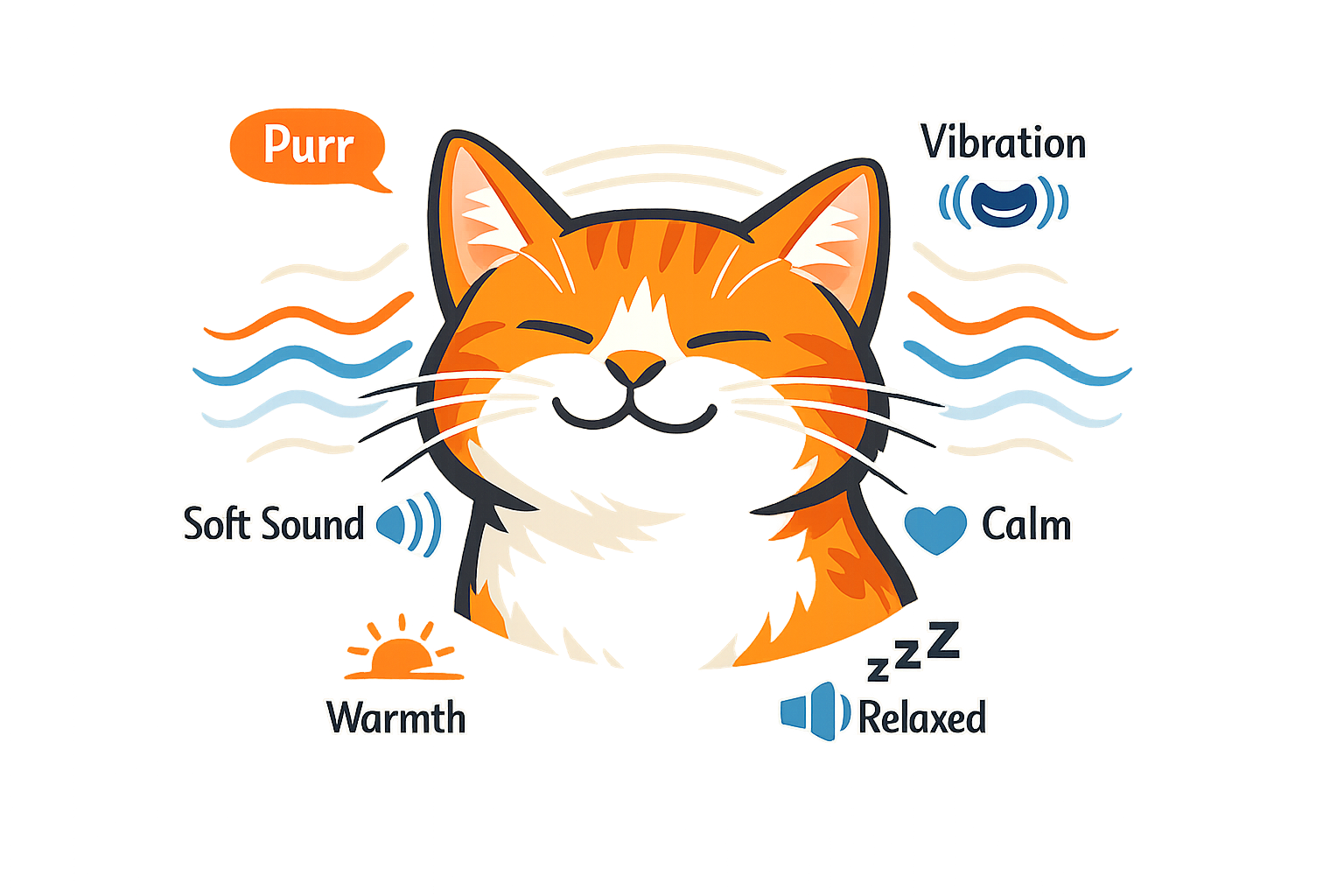
Here is the thing about purring: it is one of the clearest signs your cat actually likes you. When your cat curls up next to you and starts that low, rumbling motor, she is telling you she feels safe. Purring is not just noise — it is a self-soothing behavior that cats reserve for moments when they are genuinely comfortable and trust the person they are with.
What Purring Really Means
Purring happens when your cat is relaxed. You will notice it when she is in a loose, easy posture — maybe stretched out on your lap or sitting next to you with her tail pointing straight up or gently curled. That combination of sound and body language is the whole package. She is not just tolerating you; she is choosing to be near you because you make her feel good.
The sound itself is a good indicator of mood. A steady, rhythmic purr in a calm setting almost always means contentment. If she is purring while making eye contact or slow-blinking at you, that is affection. If you are petting her and she starts purring, you are doing something right — keep doing that.
When Purring Happens
You will hear purring in specific moments: when you first sit down and she climbs into your lap, when you scratch behind her ears in just the right spot, or when she settles in next to you at the end of the day. These are the times when she is actively choosing your company. The purr is her way of reinforcing the bond — it is both a sign of happiness and a signal that she wants this moment to continue.
Some cats purr louder than others, and some barely make a sound. Do not worry if your cat is a quiet purrer. What matters is the context: if she is relaxed, her body is loose, and she is staying close to you, the purr (loud or soft) means the same thing. She likes you, and she is showing it the best way she knows how.
If you want to capture that moment — the one where she is curled up purring, completely at ease — that is the kind of photo that makes a great custom cat portrait. The expression, the posture, the trust — it is all there, and it is worth keeping.
Slow Blinking: A Sign of Trust
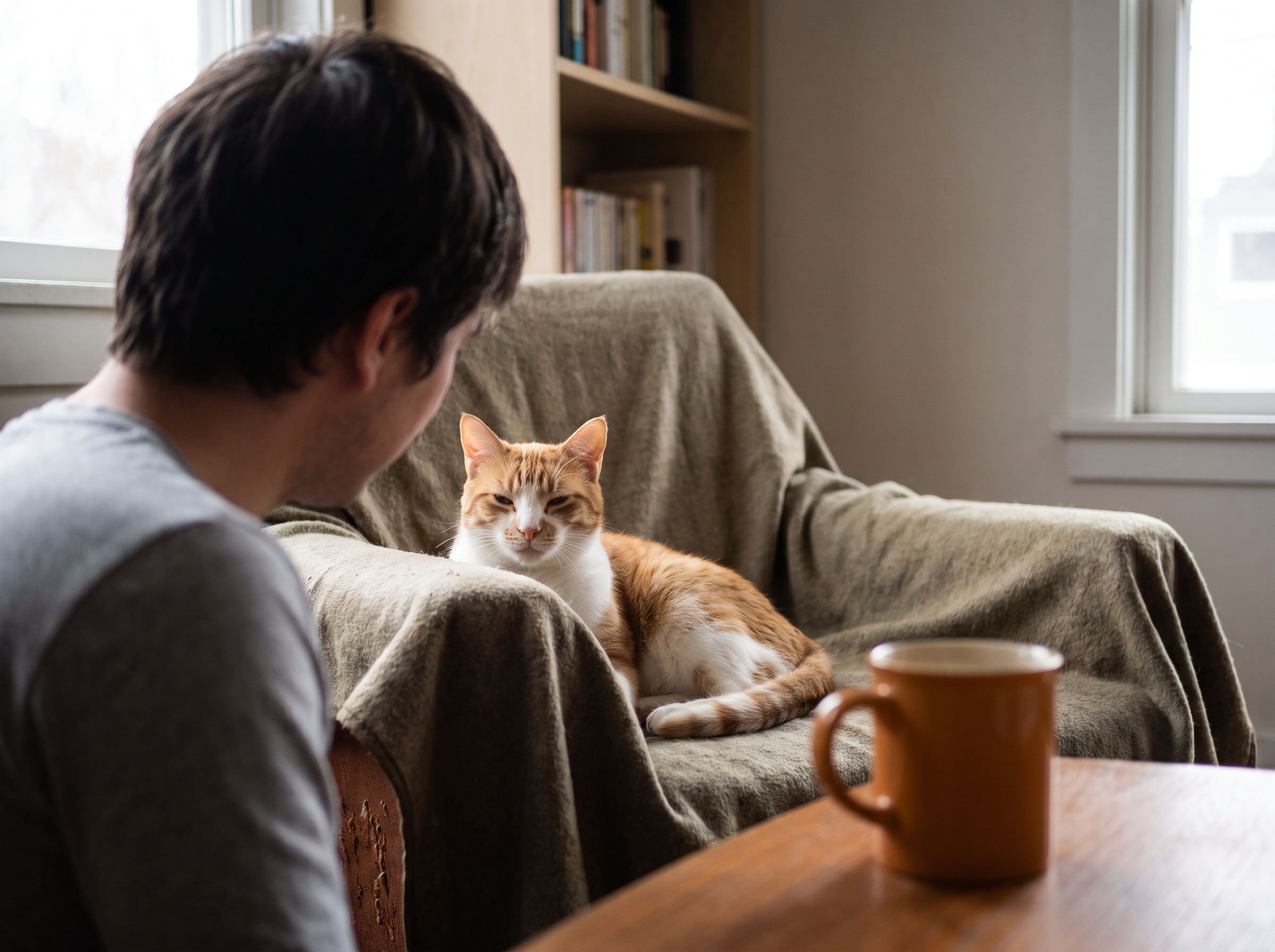
Here is the thing about slow blinking: it is one of the clearest signs your cat likes you, and most people miss it entirely. When your cat looks at you and deliberately closes their eyes in a slow, languid blink, they are telling you something important. That blink is a deliberate signal of trust and a relaxed emotional state — basically, it is a kiss in feline language.
You will know it when you see it. Your cat locks eyes with you, then slowly closes them for a beat or two before opening them again. It is not a sleepy blink or a quick flutter — it is slow, intentional, and calm. This is your cat saying they feel safe with you. They are vulnerable when their eyes are closed, so doing this in your presence means they trust you completely.
How to Slow Blink Back
The good news? You can return the gesture. Look at your cat, make soft eye contact, and slowly close your eyes for a second or two before opening them again. Keep your face relaxed and your body still. Most cats will respond — either with another slow blink or by walking over to you. It is a simple way to say "I trust you too" in a language they actually understand.
Trust me on this: slow blinking works. It is especially useful with cats who are a little skittish or new to your home. You are meeting them where they are, using their communication style instead of forcing yours on them.
Why This Matters for Photos
If you are trying to capture a portrait of your cat that actually feels like them, pay attention to moments like this. A photo of your cat mid-slow-blink — eyes soft, face relaxed — shows their personality in a way a stiff, wide-eyed shot never will. That is the one you keep coming back to, because it is the version of your cat you see every day.
When you are choosing a photo for a custom cat portrait, look for images where their expression is calm and their eyes are soft. Those are the shots that translate into portraits worth hanging — the ones that actually look like your cat, not a stranger who happens to have the same fur color.
Following You Around: A Loyal Companion
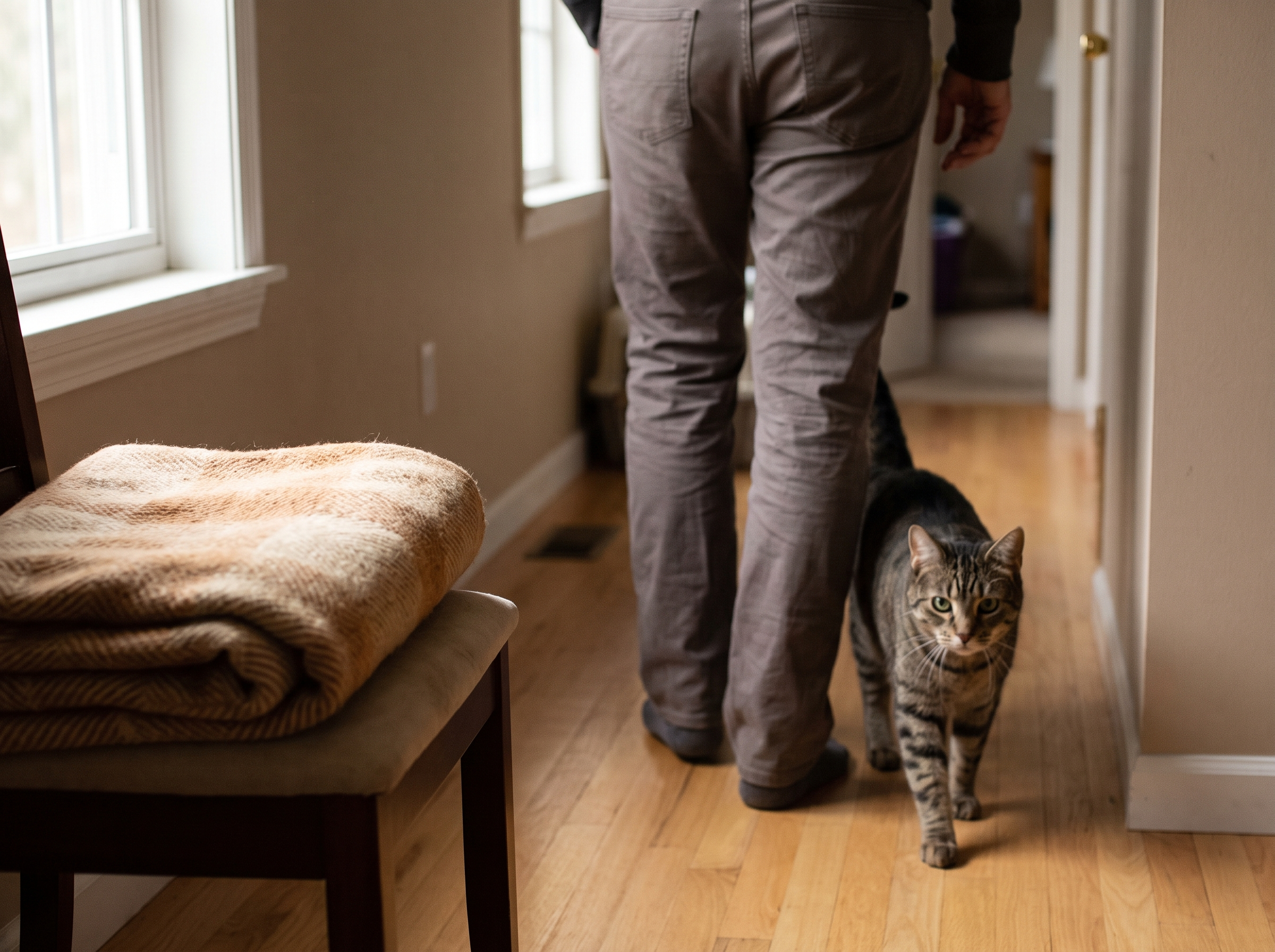
You stand up to get water — your cat follows. You walk to the bedroom — she is right behind you. You head to the bathroom — she waits outside the door. If this sounds familiar, you have a cat who genuinely likes being near you.
This behavior is not about needing something. It is about wanting your company. A cat that follows you from room to room is expressing trust and a secure attachment. She feels safe in your presence and prefers being wherever you are to being alone in another part of the house.
What Following Behavior Really Means
When your cat monitors your movements and shadows you throughout the day, she is showing a level of bonding that goes beyond basic care. Cats are territorial creatures who value their independence — so when one chooses to orbit around you instead of claiming her favorite sunny spot, that choice means something.
This following pattern often includes waiting outside closed doors (especially bathrooms), sitting nearby while you work, and relocating to whatever room you move to. It is a quiet, persistent presence that says: I like where you are.
Some cats are more demonstrative than others. A particularly bonded cat might follow you everywhere, while another might check in periodically or just keep you in visual range. Both are valid expressions of affection — the intensity varies by personality, but the underlying message is the same.
If you are thinking about capturing this loyal companionship in a portrait, custom cat portraits can preserve those everyday moments that define your relationship — the ones where she is always just a few steps behind you, keeping you in sight.
The next time your cat trails you to the kitchen for the third time in an hour, even though her food bowl is full, remember: she is not following the food. She is following you.
Bringing You 'Gifts': A Unique Gesture
Here is the thing about cats and their presents: when your cat drops a dead mouse at your feet, she is not trying to gross you out. She is sharing. That toy she drags to your bedroom at 3 a.m.? Same deal. It is a social behavior — cats bring things to the people they trust.
Why Cats Bring Gifts
In the wild, cats share prey with family members. Your cat sees you as part of her group, so she brings you what she values. Sometimes it is a toy. Sometimes it is a bug. Sometimes it is something you really wish she had left outside. The gesture is the same — she is including you.
This is the part people skip: your reaction matters. If you shriek or scold her, she learns that sharing with you is bad. If you stay calm and say something kind, she learns that you appreciate the effort — even if you are secretly horrified.
How to Respond Appropriately
When your cat brings you a gift, keep your voice soft and your movements slow. Pick up the item (or let her keep it if it is a toy), thank her, and redirect her attention to play or a treat. You are not rewarding the hunt — you are acknowledging the social gesture.
If she brings live prey, stay calm and remove it gently. Do not chase her or yell. She is doing what cats do, and she is doing it because she likes you enough to share.
Capturing these quirky moments — the toy drop, the proud strut — makes for portraits that actually feel like her. The photo you keep coming back to is usually the one where her personality is right there on her face. If you are thinking about turning one of those everyday moments into something worth hanging, start with the shot that makes you smile every time.
Conclusion: Strengthening Your Bond
Here is the thing about cats: they are not waiting for you to decode them perfectly. They are already showing you affection in their own language — purring when you are close, slow-blinking from across the room, following you into the bathroom, leaving you the occasional "gift" that makes you question everything. The signs are there. You just have to notice them.
Once you start recognizing these behaviors for what they are — trust, attachment, genuine fondness — the relationship shifts. You stop wondering if your cat actually likes you and start responding in ways that deepen the bond. Return the slow blink. Let them sleep near you. Accept the hunting trophy with grace (and a paper towel). These small acknowledgments tell your cat you see them, and that matters more than most people think.
Cats form secure attachments to their caregivers, showing separation anxiety when owners leave and a clear preference for their person over strangers. That is not indifference. That is loyalty in a form that does not beg for attention but quietly insists on your presence. A cat who chooses to sleep near you — especially touching you — demonstrates profound trust, because sleep represents maximum vulnerability for them. If your cat is doing that, you have earned something real.
The bond you have with your cat is worth celebrating, and one way to do that is to capture it. A portrait that actually looks like them — the tilt of their head, the way they watch you from the windowsill — keeps that connection visible long after the moment has passed. Custom cat portraits turn the everyday look your cat gives you into something you can hang and come back to, a reminder of the quiet affection that fills your home.
Your cat likes you. They have been telling you all along. Now you know what to look for — and how to say it back.
Discover the signs your cat likes you, from purring to following you around. Strengthen your bond with your feline friend.