Introduction
Custom horse portraits from photos transform your favorite snapshot into painted art that captures your horse's true character. Here is the thing about horse photos: the one you love on your phone is almost never the one that makes a great portrait. You have hundreds of shots — your horse mid-blink, ears back, half-turned away from the camera. Then you have the one. The one where the light catches their eye just right, where their expression is calm and present, where you can see exactly who they are. That is the photo you want.
Creating a custom horse portrait from your photo is all about capturing the essence of your equine companion. People often ask how to choose the right photo for a portrait, and my advice is simple: focus on the expression and the light. Horses have a natural elegance, and when you capture them in the right light, it can transform a simple snapshot into a work of art.
This guide will walk you through everything — from understanding what makes a horse portrait worth hanging, to picking the style that suits your horse, to getting the shot that actually works. By the end, you will know exactly which photo to use and how to turn it into something you keep coming back to. If you are curious about how the photo-to-painting process works in general, check out Turn Any Photo Into a Painting: How Photo-to-Painting Works for the full breakdown.
Whether you are honoring a horse you have lost or celebrating the one in your barn right now, a portrait keeps them in the room in a way that matters more than people expect. Let me show you how to get it right.
What Makes Custom Horse Portraits From Photos Special?
Here is the thing about custom horse portraits from photos: you need exactly one sharp photo where the horse's head is clear. That is it. No planned pose, no perfect backdrop, no studio setup. The photo everyone gets wrong is the one where they try too hard — you want the shot that actually works, not the one that looks like a stock image.
Horses have been portrait subjects for centuries, and it is not hard to see why. The muscular lines, the expressive eyes, the way their manes catch light — they are already works of art. Your job is just to capture that in a way that translates to canvas or paper.
What Makes a Portrait Worth Hanging
A custom horse portrait is not just a printed photo. It is painted. The artist takes your image and interprets it — brushstrokes, texture, depth. The difference between a portrait and a photo is that a portrait breathes. It has weight. It is the one you keep coming back to because it feels like them, not just looks like them.
The best portraits start with a photo where your horse is at their eye level, in good light, with an expression that makes you stop scrolling. If the photo does not make you feel something, the portrait will not either. Trust me on this.
Artistic Styles That Suit Horses
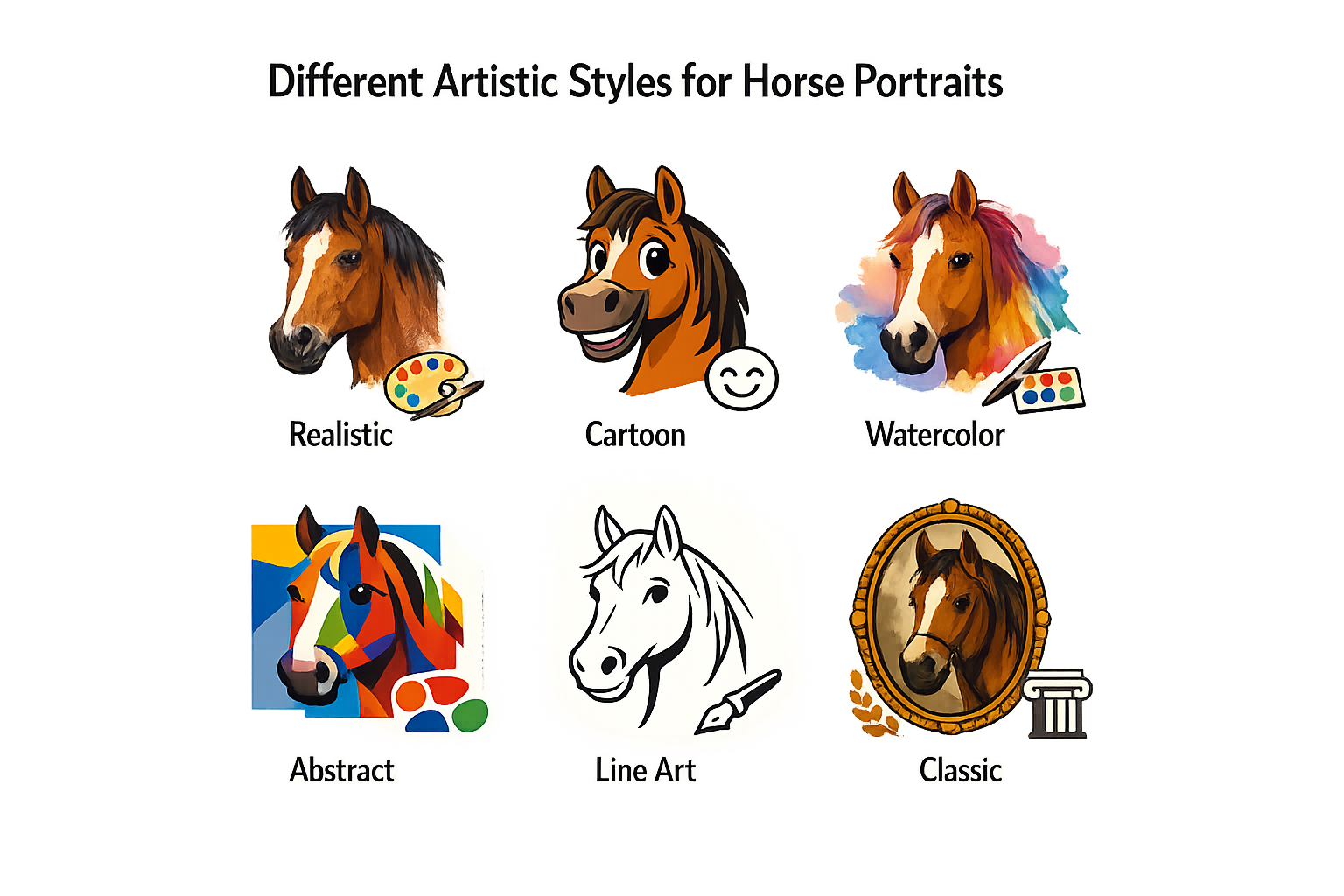
The classic oil painting style is the one most people think of first — your horse in a regal pose, set against a park landscape or palace backdrop. It is the era of historical equestrian portraits, the kind you see in museums where very serious horses stand next to very serious people. If you want something that looks expensive and timeless, this is the move.
Baroque is all about drama and warm light. Deep shadows, a glow that highlights your horse's features, and an almost unfair level of elegance. Imagine your horse with those soulful eyes, bathed in that kind of light — it is the portrait equivalent of golden hour, but permanent.
Watercolor and softer styles work beautifully if your horse has a gentle personality or if you want something a little less formal. These portraits feel lighter, more intimate. They let the photo breathe instead of locking it into a heavy frame.
The style you choose should match the horse and the room where it will hang. A dramatic Baroque piece might overwhelm a small bedroom, but it will anchor a living room. A watercolor portrait might get lost on a big wall, but it is perfect next to family photos.
The era you choose is not just about taste — it is about making the portrait feel like them.
If you are curious about how different subjects translate into painted portraits, custom dog portraits from photos follow a similar process — the principles of light, expression, and style apply across species. For more options on transforming photos into fine art, explore picture to painting techniques.
Finding the Right Artist
Here is the thing about finding someone to turn your horse photo into a portrait: you are not just hiring a service — you are trusting someone to see what you see. The artist who gets it right will make your horse look like your horse, not just a horse that happens to wear the same halter.
The difference shows up fast. One client sent a photo of her late champion and said other versions looked generic, but not like hers. That gap — between "a horse" and "King" — is what you are paying for.
What to Look for in an Artist
Start with their portfolio. You want to see horses they have already painted, not just dogs or people. Horses have different proportions, different light on their coats, and a specific kind of presence that does not translate if the artist usually works in other subjects.
Look for clean lines around the eyes and muzzle. If those details feel off in their samples, they will feel off in yours. The best artists capture the expression first and the coat color second — that order matters more than people expect.
The Process Should Feel Easy
A good artist makes the whole thing seamless — from the first email to the final framed piece. You should not have to chase updates or guess what happens next. If the process feels confusing before you even start, it will not get smoother once your deposit clears.
Some artists specialize in capturing the connection between horse and rider, which works beautifully if you want both of you in the frame. Others focus on the horse alone, with all the attention on expression and posture. Know which one you are after before you start comparing options.
If you are still figuring out how to get the right photo in the first place, turn any photo into a painting walks through what converts well and what does not.
Trust Your Gut on Style
You will know it when you see it. The right artist's samples will feel like something you would actually hang — not something you would politely accept and then store in a closet. If their style does not match the version of your horse you carry in your head, keep looking.
The goal is a portrait worth framing, and that starts with finding someone who sees horses the way you do.
How Do You Prepare Your Horse for Custom Horse Portraits From Photos?
Here is the thing about horse photos: the one you love on your phone is almost never the one that makes a great portrait. You need a photo where your horse looks like themselves — ears forward, alert, the expression that made you fall for them in the first place. Good light does most of the work, but getting the shot that actually works takes a little planning.
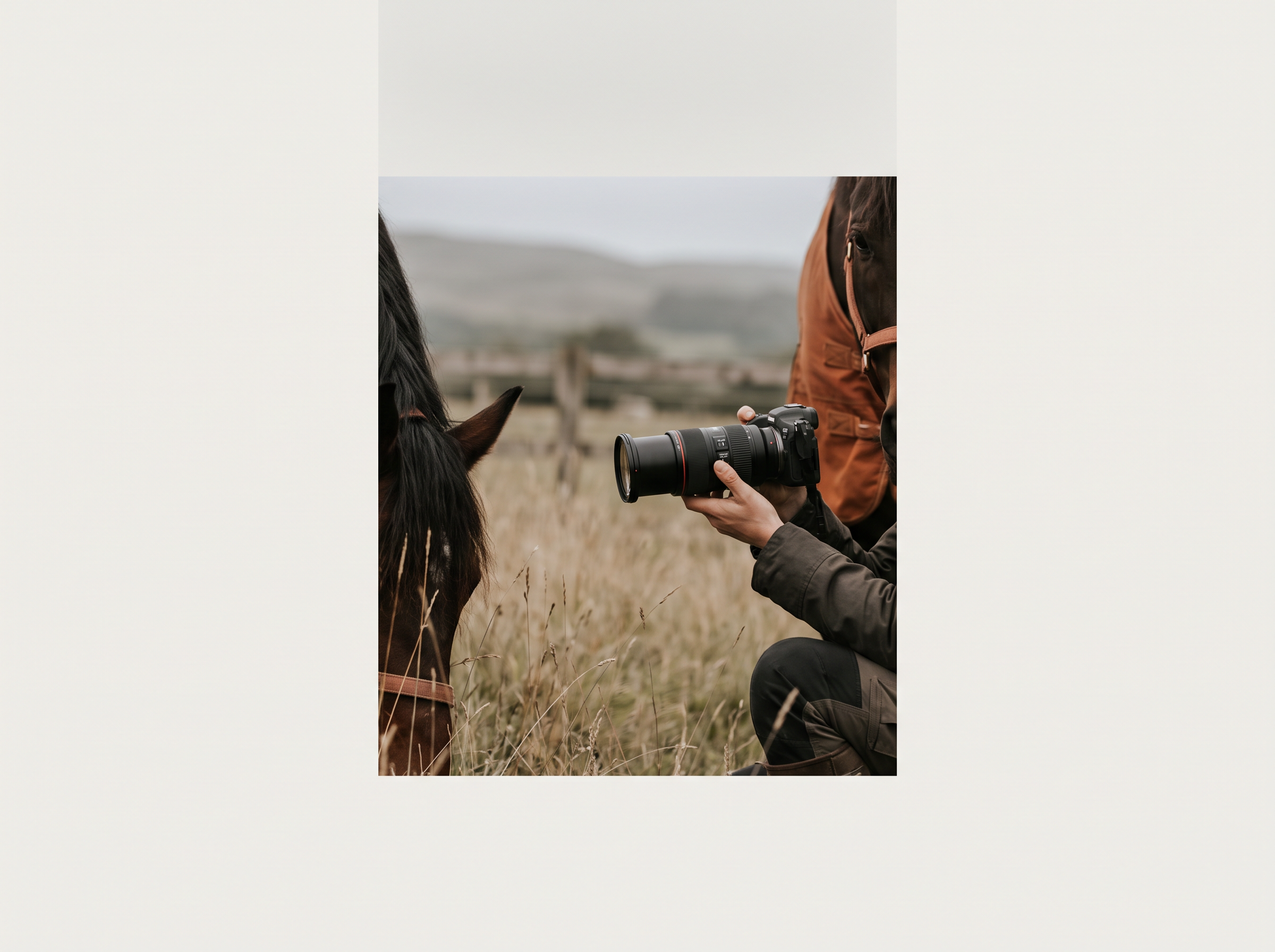
The photo everyone gets wrong is the close-up from two feet away. Step back. Use a photo taken from a slight distance so the crop feels natural and you can see their whole head and neck without cutting anything off awkwardly. Let the photo breathe.
Choose a Location That Feels Like Home
Your horse knows when they are somewhere familiar, and it shows in the photo. A location that feels like home keeps them relaxed — ears up, expression soft, none of that tense look they get in new places. You do not need a fancy backdrop. Their stall, the pasture fence, the spot where they always stand waiting for you — those work better than anything staged.
If you are shooting outside, pay attention to the light. Early morning or late afternoon gives you that warm glow that makes even a quick phone shot look like it belongs in a frame. Harsh midday sun flattens everything and creates shadows you will regret later.
Get the Right Angles and Expression
When preparing custom horse portraits from your photo, provide multiple reference shots — side views, a straight-on angle, close-ups of their head and mane. Artists work from what they can see, and one photo rarely tells the whole story. Three to eight photos from different angles give them enough detail to capture the little things that make your horse recognizable.
Watch their ears. Pinned back reads as annoyed or anxious. Forward and pricked means they are paying attention, interested, present. That is the expression you want — the one you keep coming back to when you scroll through your camera roll.
If you are working with a painted portrait, similar principles apply. Learning how to photograph your cat for a portrait covers many of the same fundamentals — natural light, relaxed subjects, and shooting at their eye level all translate directly to horses.
Capture the Details That Sell It
Close-ups matter. Get a clear shot of their blaze, any markings, the way their mane falls. These are the little details that sell it — the things that make a portrait feel like them and not just a generic horse. If they have a white sock or a distinctive star, make sure at least one of your reference photos shows it clearly.
Do not stress about perfection. A bit of dust, a stray piece of hay in the mane — those are fine. What you are after is their personality and their structure, not a grooming-show polish. The artist can work with real, everyday photos as long as the light is decent and the expression is there.
Displaying Your Horse Portrait
You spent time picking the right photo, the right style, and now you have a portrait worth hanging. Here is the thing: where you put it matters as much as the portrait itself. A beautiful piece in the wrong spot is just expensive wall filler. At their eye level, in good light, with room to breathe — that is how you make it feel like them.
Choosing the Right Location
The best spot for a horse portrait is somewhere you actually spend time. Not the formal dining room you use twice a year — the living room, the hallway you walk through every morning, the home office where you sit for hours. You want to keep them in the room with you. If it is a memorial portrait, that presence matters more than people expect.
Natural light helps, but avoid direct sun. UV fading is real, and it does not care how much you paid. A wall perpendicular to a window works better than one facing it head-on. If the portrait has warm tones — Baroque drama, golden-hour glow — warm artificial light at night keeps that feeling consistent.
Framing and Presentation
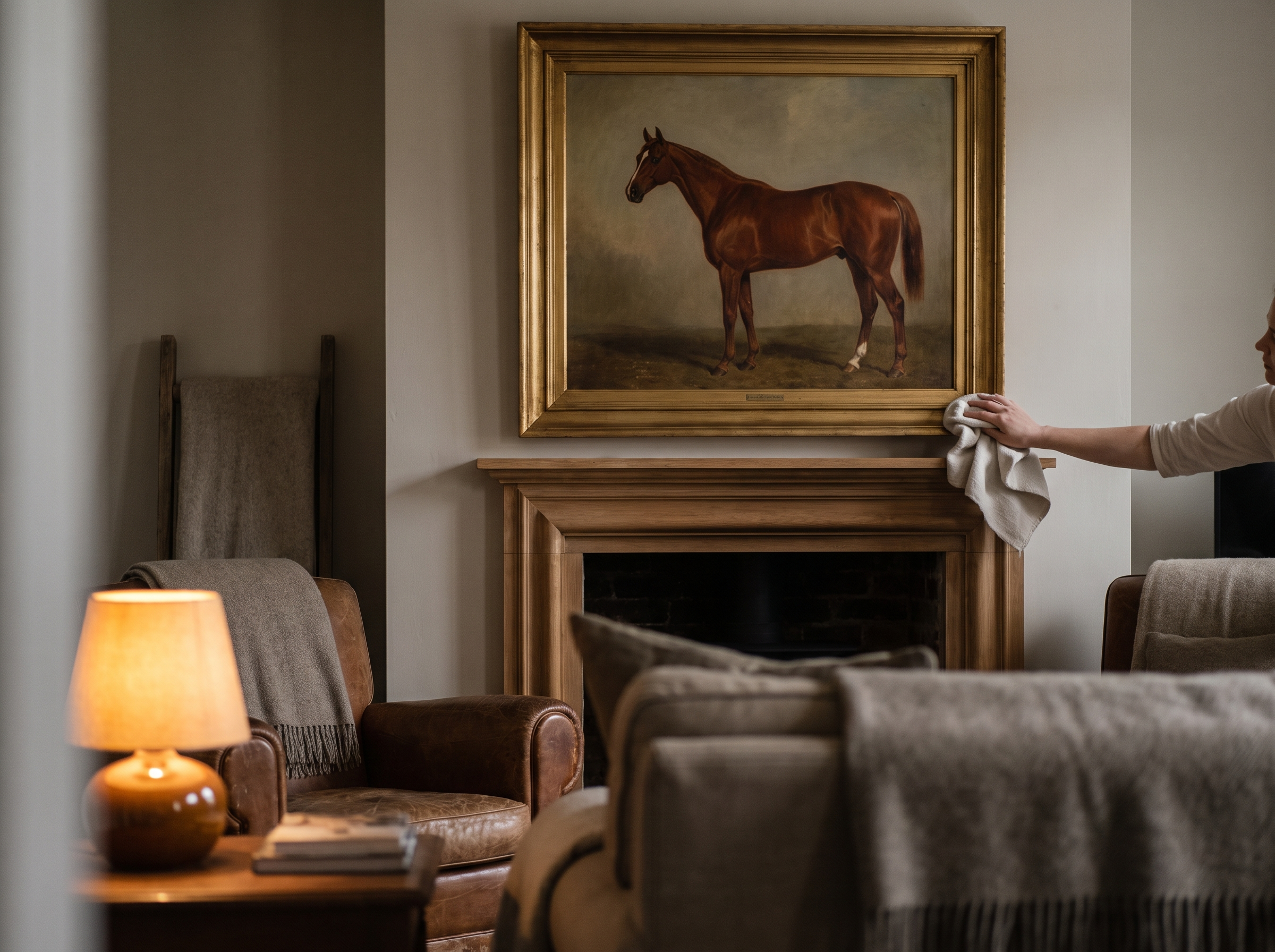
The frame does half the work. A classic wood or metal frame in a neutral tone lets the portrait be the focus. Ornate gold frames work for royal or Renaissance styles, but they can overwhelm a softer watercolor piece. Match the frame to the era you chose for the portrait — it keeps the whole thing cohesive.
Mat boards add breathing room, especially for smaller prints. A wide mat in cream or soft gray gives the image space and makes it look more expensive. Skip the mat if the portrait is large or already dramatic — let the image fill the frame edge to edge.
Caring for Your Portrait
If your portrait is printed on canvas or fine art paper, treat it like any other piece of art. Dust it gently with a soft, dry cloth — no cleaners, no water. For framed pieces behind glass, standard glass cleaner works, but keep it off the frame and away from the edges where it can seep in.
Keep the portrait away from heat vents, fireplaces, and humid areas like bathrooms. Temperature swings and moisture warp paper, fade ink, and loosen adhesives over time. A stable environment is all it takes to keep the piece looking good for years.
If you are working with a high-quality print, the editing process likely focused on making the image suitable for large formats. That means it will hold up well at bigger sizes, but only if you protect it from the elements. For more on how photos are transformed into art-quality images, see how photo-to-painting works.
Grouping and Gallery Walls
A single large portrait makes a statement. Multiple smaller portraits tell a story. If you have more than one horse — or want to include other pets or family members — a gallery wall keeps everyone together without crowding. Stick to consistent framing and mat styles so the group feels intentional, not random.
Leave space between frames — at least two to three inches. Too tight and it looks cluttered. Too far apart and the connection breaks. Lay the arrangement on the floor first, measure twice, and use a level. This is the part people skip, and you can always tell.
Frequently Asked Questions About Custom Horse Portraits From Photos
How much do custom horse portraits from photos typically cost?
Pricing varies based on size, medium, and artist experience. Digital portraits start around $50-$150, while hand-painted oil portraits range from $200-$800 or more. Canvas prints typically fall in the $100-$300 range depending on dimensions and framing options.
What photo resolution do I need for custom horse portraits from photos?
For best results, use high-resolution images (at least 1500 x 2000 pixels or 2MB file size). Clear, well-lit photos with sharp focus on your horse's face and features translate better to painted portraits than low-resolution or blurry images.
How long does it take to complete custom horse portraits from photos?
Timelines depend on the artist and medium. Digital portraits often take 1-2 weeks, while hand-painted oil or acrylic works may require 4-8 weeks. Rush orders may be available for an additional fee, but quality work takes time.
Can I include multiple horses in one custom portrait?
Yes, most artists can create multi-subject portraits. Provide clear photos of each horse from similar angles and lighting conditions. Expect pricing to increase with additional subjects, typically 50-75% of the base price per extra horse.
What if I'm not satisfied with my custom horse portrait?
Reputable artists offer revision rounds (usually 1-3) to adjust details like coat color, markings, or background elements. Review artist policies before ordering — some offer satisfaction guarantees or refunds if the portrait does not meet agreed specifications.
Conclusion
Here is the thing about custom horse portraits from photos: the right image, the right light, and the right style can turn your favorite snapshot into something you will actually hang. You do not need a professional photographer or a studio setup — you just need to know what to look for. Good light does most of the work, and the expression you keep coming back to is usually the one that works.
When you pick a style, think about what feels like them. Baroque is all about drama and warm light, with deep shadows and a glow that highlights your horse's features — imagine those soulful eyes bathed in that kind of light. It is almost unfair how good it looks. If you want something regal, the tradition of royal pets in court portraits is worth exploring, much like dog breeds for Renaissance portraits that capture that same timeless elegance.
A portrait is more than just an image. It keeps your horse in the room, especially if you are dealing with loss. It will not fix the heartache, but it keeps their presence alive in a way that matters more than people expect. Whether you are commissioning a portrait as a gift, a memorial, or just because you want something worth hanging, trust your instincts. The photo you love is the one that will make the portrait you love.
If you are ready to start, take a look at how the process works — turn any photo into a painting and see what is possible. The shot that actually works is closer than you think.
Learn how to create stunning custom horse portraits from your favorite photos. Discover tips on selecting the right artist and preparing your horse for the perfect portrait.