
Introduction
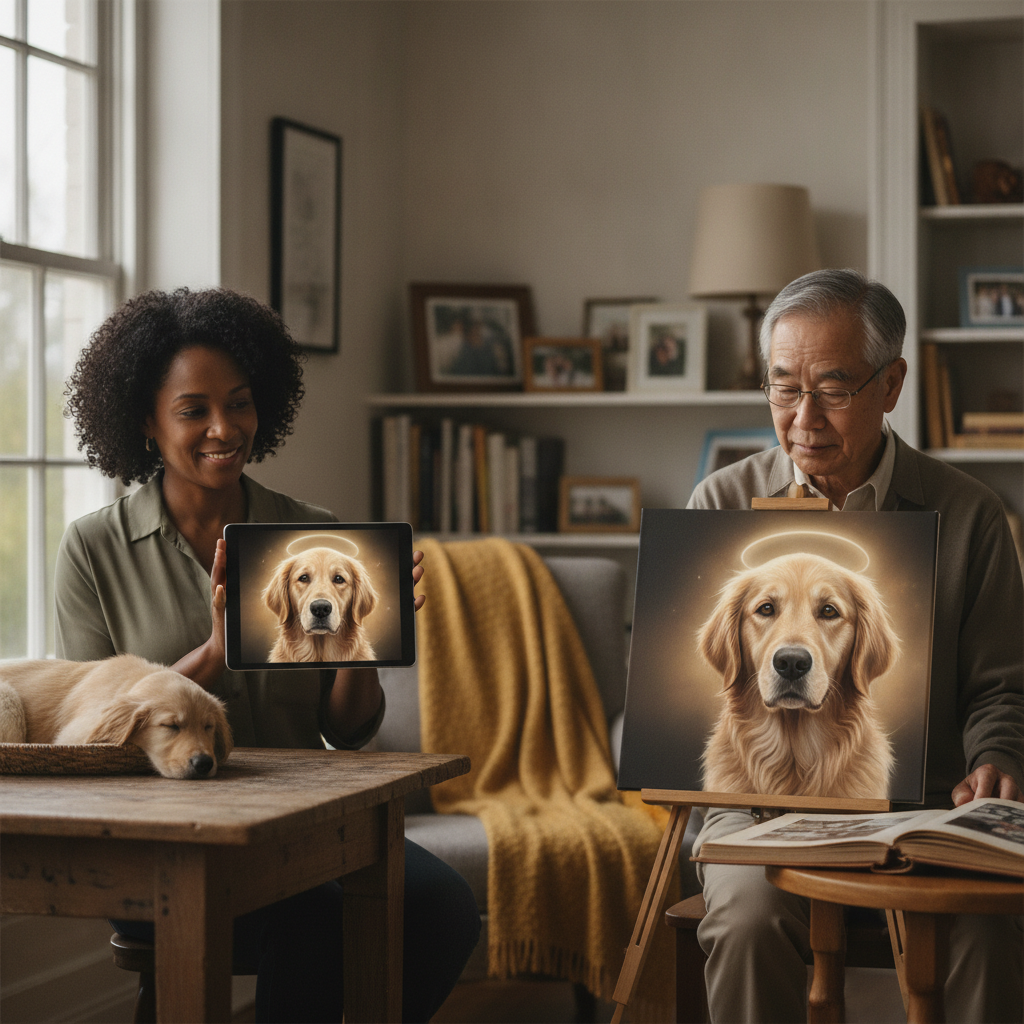
Here is the thing about pet portraits as gifts: the photo you choose and the frame you pick matter less than understanding what the recipient is actually going through. A portrait of a dog who greets them at the door every day is a completely different gift than one of a dog they lost six weeks ago. Same art form, opposite emotional landscapes.
Most people get this wrong because they treat all pet portraits the same — wrap it, hand it over, wait for tears of joy. But the recipient's relationship to that image changes everything. When the pet is alive, you are giving them something to enjoy now, in the middle of the ordinary chaos of kibble and walks and fur on the couch. When the pet is gone, you are stepping into grief, and grief after losing a pet hits harder than most people realize — even the person experiencing it is often shocked by the intensity.
The portrait itself can be identical. The timing, the presentation, and the conversation around it cannot be. If you want to give someone a portrait they will actually hang — not tuck in a drawer because it showed up at the wrong moment — you have to know which situation you are walking into. By the end of this you will know exactly how to approach both, and which mistakes to skip.
This is not about being morbid or overthinking a gift. It is about making sure the portrait you give becomes the one they keep coming back to, the one that feels like their pet, not a reminder that you did not quite understand what they needed. Let me show you how to get it right.
Understanding the Emotional Landscape
Here is the thing about Gifting a Pet Portrait: the emotional context changes everything. A portrait of a living pet is a celebration — you are capturing who they are right now, in this moment, while they are still running around stealing socks. A memorial portrait is something else entirely. It is a way to hold on to someone who is gone, and the weight of that is real.
When you are gifting to someone whose pet is still here, you are giving them something to enjoy together. The dog can sniff the frame when it arrives. The cat can ignore it with maximum disdain. It is playful, it is warm, and the recipient gets to show it off without a lump in their throat. You are saying, "I see how much you love them, and I want you to have this while they are still around to appreciate it too."
The Living Pet Portrait
A portrait of a living pet is low-stakes in the best way. You can ask the owner which photo they love most. You can talk about whether their dog would look better as a Renaissance noble or a Victorian gentleman. You can even get it wrong — pick a style they would not have chosen — and it is still a gift they will hang because it is their dog, and their dog is perfect. The emotional risk is almost zero.
The recipient gets to live with the portrait while the pet is still in the room. That matters more than you might think. Every time they walk past it, they see the real version curled up on the couch or begging for dinner. It is not a memory yet. It is just a really good likeness of someone they love.
The Memorial Portrait
A memorial portrait is a different animal. You are stepping into someone's grief, and that requires more care. Some people want to talk about their pet — they want to tell you stories, show you photos, relive the good days. Others find it hard to even say the name out loud. You have to read the room, and you have to be okay with the fact that this gift might make them cry.
The portrait itself becomes a way to mark the loss. Many pet owners struggle with how to honor a pet who is gone — 28% of pet owners took no time off to grieve, and 26% struggled to mark their loss. A portrait gives them something tangible, something they can hang and look at and say, "This was him. This is how I want to remember him." It is not about replacing the pet. It is about keeping them in the room.
Timing Is Everything
For a living pet, timing is easy. Birthdays, holidays, "just because" — it all works. For a memorial portrait, timing is trickier. Too soon, and you risk overwhelming someone who is still raw. Too late, and it might feel like you forgot. There is no universal rule here, but a few weeks to a few months after the loss is often the sweet spot. It shows you remember, without forcing them to process grief before they are ready.
If you are not sure, you can always ask. A simple "I was thinking about getting you something to remember [pet's name] — would that be okay?" gives them the space to say yes or to say "not yet." That is worth more than any surprise.
Steps for Gifting a Pet Portrait
The steps you take depend entirely on whether the pet is here or gone. The approach, the timing, the style — all of it shifts. Here is how to get it right in both situations.
For a Living Pet: Choose Joy and Presence
When the pet is alive, you have the luxury of celebration. This is a gift that says "look at this ridiculous, wonderful creature we get to love." Start by choosing a photo that captures their personality — not just a pretty shot, but the one that feels like them.
Step 1
Pick the photo that makes you smile
Go through your camera roll and find the shot you keep coming back to. The one where their ears are doing that thing, or the light caught them just right. That is your portrait photo. It does not have to be perfect — it has to feel true.
Step 2
Match the style to the recipient
Some people love a regal Renaissance look, all velvet and gold frames. Others want something softer — watercolor, warm tones, less formal. Think about what they hang on their walls now. If their home is clean and modern, a classical portrait might feel out of place. If they love drama and history, go full royal. Turn your pet photo into art and choose the era that fits their taste, not yours.
Step 3
Time it to a happy occasion
Birthdays, holidays, adoption anniversaries — these are the moments when a living pet portrait lands perfectly. You are adding to the joy, not creating it. The portrait becomes part of the celebration, not the whole event.
For a Memorial Portrait: Lead with Care
When the pet is gone, the entire calculus changes. This is no longer about surprise or delight — it is about honoring a bond and giving someone a way to keep their companion in the room. Timing here is everything.
Step 1
Wait, but not too long
Do not show up the week after. That is too raw. But do not wait years either, when the gesture might feel like reopening a wound. A few months out — when the shock has passed but the love is still close — that is the window. Trust your read of the person.
Step 2
Choose a photo they already love
If you can, ask gently which photo they treasure most. If you cannot ask, look for the one they posted, framed, or kept coming back to. Do not pick a photo you think is better. This is about their memory, not your aesthetic.
Step 3
Keep the style warm and personal
Memorial portraits work best when they feel intimate, not grand. Softer styles — watercolor, muted tones, gentle light — tend to land better than high-drama royal treatments. You want something they can look at every day without it feeling like a shrine. The goal is comfort, not spectacle.
Present It with Intention
How you give the portrait matters as much as the portrait itself. For a living pet, wrap it, make it part of the celebration, let them open it with excitement. For a memorial, hand it to them quietly, in private, with a sentence or two about why you chose that photo. Let them have the moment without an audience.
The portrait is not the whole story — it is a way to hold onto the story they are already living or the one they are learning to carry forward.
Tips and Tricks for a Thoughtful Gift
Choose the Right Moment
Timing is everything when Gifting a Pet Portrait. For a living pet, birthdays and adoption anniversaries are natural anchors — they celebrate what is here. For a memorial portrait, wait until the recipient has had time to process the initial shock. Grief is more like a tide than a timeline, and what feels too soon in week two might feel exactly right in month three.
Trust your instincts. If you are close enough to be considering a portrait, you are close enough to read the room.
Let the Photo Breathe
The photo you choose sets the tone for the entire gift. For a living pet, pick the shot where they look most like themselves — not the fanciest one, the truest one. For a memorial, go with the image the recipient keeps coming back to. That is the one that matters.
If you are unsure which photo to use, ask. Frame it as needing help choosing between two favorites. Most people will tell you exactly which one they cannot stop looking at.
Presentation Matters More Than You Think
How you give the portrait shapes how it lands. For a living pet, wrap it like the celebration it is — let them open it with the pet in the room if possible. For a memorial, keep it quieter. Hand it to them in a private moment, not at a crowded gathering. Let them have space to react without an audience.
Offer Practical Help Alongside the Gift
A portrait is a beautiful gesture, but it does not walk the dog or clean the litter box. If you are gifting to someone who is grieving, pair the portrait with something tangible — a meal, help with errands, or just showing up to sit with them. The portrait honors the memory; your presence honors the person.
For someone with a living pet, consider practical gifts that complement the portrait. A quality frame, a gift card for more prints, or a link to turn your pet photo into art in other styles all extend the gesture without overwhelming it.
Trust the Little Details
The frame you choose, the card you write, the moment you pick — these are the details that sell it. Match the frame to their home, not yours. Write the card in your own words, not something you found online. And if you are giving a memorial portrait, say their pet's name out loud when you hand it over. It is not silly. It is a way of keeping their memory alive.
You do not need to be perfect. You just need to show that you thought about what would matter to them.
Conclusion
Here is the thing about gifting a pet portrait: the difference between a gift someone treasures and one that sits in a closet comes down to understanding where they are emotionally. When the pet is alive, you are celebrating something present — the portrait is a way to keep them in the room even when they are not. When the pet is gone, you are honoring something that still matters deeply, and the timing and presentation have to reflect that.
The mechanics are simple — choose a good photo, pick a style that feels like them, and present it thoughtfully. But the part that makes it work is knowing whether you are giving someone a joyful surprise or a gentle tribute. One is about delight; the other is about care. Both are worth doing, but they are not the same gift.
If you are not sure which approach fits, trust your instincts about the recipient. The people who love their pets enough to want a portrait are the same people who will notice when you get the tone right. And if you are still deciding on a style or era that suits the pet's personality, Renaissance and classical pet portraits offer a timeless option that works for both living tributes and memorials.
Take your time with the photo, think about the moment you are marking, and let the portrait do what it does best — keep the connection alive, whether the pet is curled up on the couch or living on in memory.