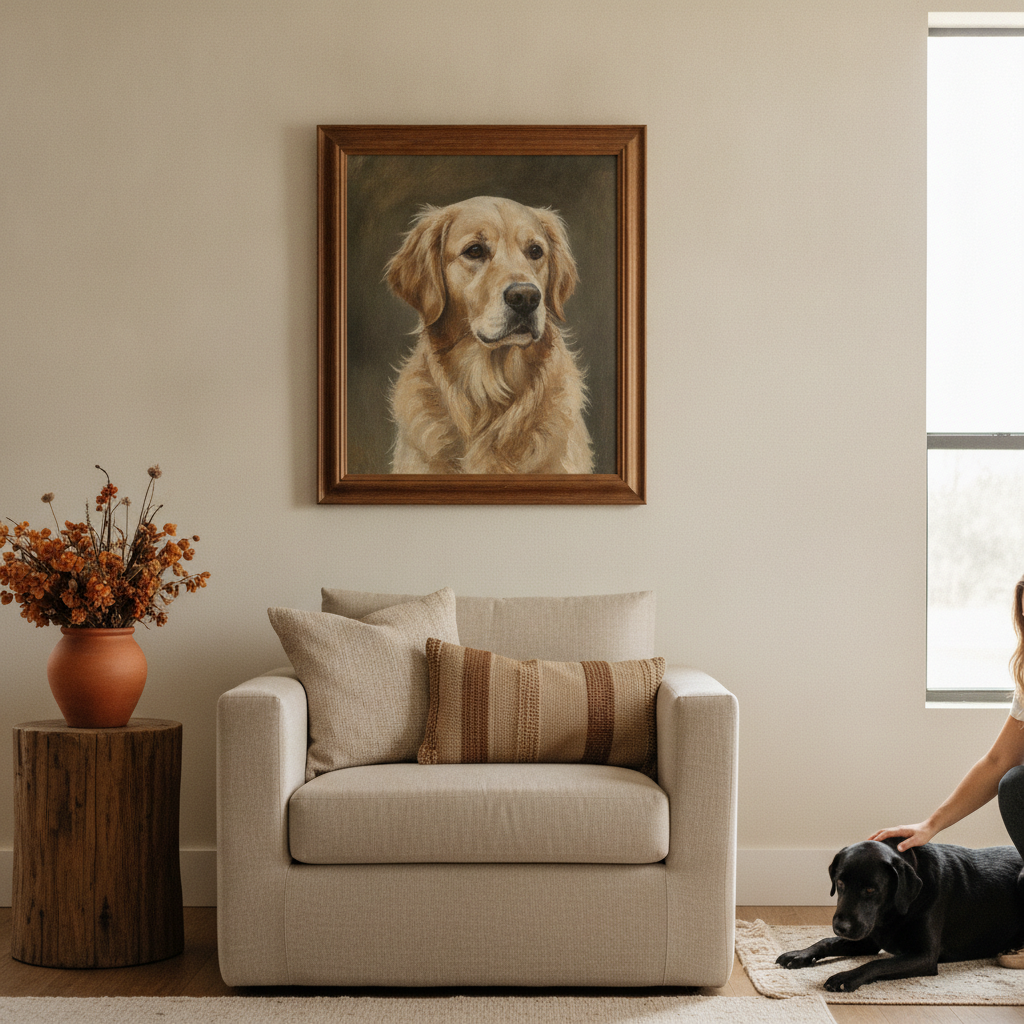

Transforming Your Pet Photos into Portrait Prints
You have hundreds of photos of your dog on your phone. Maybe thousands. But here is the thing: the one you love scrolling past at 2 a.m. is almost never the one that belongs on your wall. Turning a pet photo into a portrait you would actually hang — something that feels like them, not just a snapshot — is easier than you think, but it starts with knowing which photo to choose and how to print it so it does not look cheap.
Pet portraits have become a popular way to celebrate the love and joy that our pets bring to our lives. A good print is not about fancy equipment or a studio setup. It is about light, expression, and a little bit of planning. By the end of this guide, you will know exactly which photo works, which format suits your space, and how to frame it so it looks like it belongs there.
Whether you are turning a favorite snapshot into Renaissance-style art or keeping it simple with a classic framed print, the goal is the same: something worth hanging that makes you smile every time you walk past it. Let's walk through how to get there.
Learn how to turn your pet photos into stunning portrait prints and frame them beautifully for your home.
What is a Pet Portrait Print?
A pet portrait print is a photograph of your dog, cat, or other companion turned into a finished piece you can hang. The image itself might be the original photo, or it might be painted — Renaissance-style, watercolor, royal — but what makes it a print is that it lives on paper or canvas, ready to go on your wall.
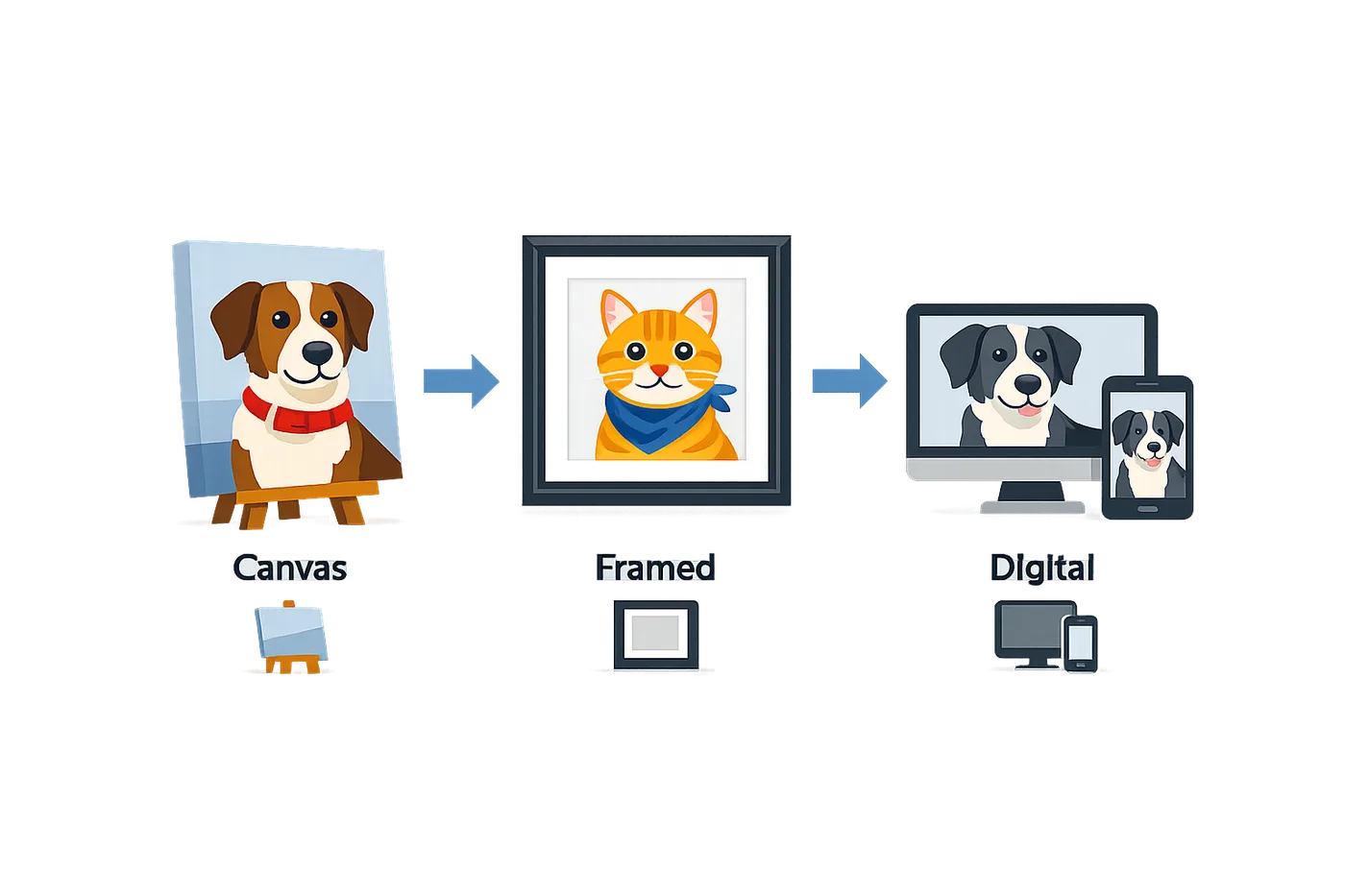
Here is the thing: the format you choose changes how the portrait feels in the room. A canvas print is stretched over a wooden frame with the image wrapping around the edges, giving you a clean, contemporary look with no glass. A framed print sits behind a solid-wood frame, offering a polished finish that suits classic and formal spaces. The photo is the same; the presentation is everything.
Canvas vs Framed Print: The Core Difference
Canvas is lightweight, resists glare, and lets big, dramatic sizes breathe. It works beautifully in modern homes, open-concept spaces, and anywhere you want the portrait to feel like part of the architecture. Framed prints tend to hold up better in rooms with strong light or high humidity, and they give you more control over matting, glass, and that gallery-wall polish.
Neither is better. One just fits your space — and your pet — more naturally than the other.
Portrait Styles You Can Print
The style you choose shapes the whole portrait, not just the look. Renaissance and classical portraits put your pet in velvet and lace, with soft light and old-master brushwork. Regal and Victorian styles dress them in crowns, military uniforms, or period gowns — formal, a little dramatic, and worth hanging in the dining room. Watercolor portraits are softer, warmer, and a little more understated; they work in bedrooms, nurseries, and quieter corners of the house.
You will know it when you see it. The era you choose should feel like your pet, not like someone else's idea of what a portrait should be.
Why Pet Portrait Prints Matter
Here is the thing about hanging a portrait of your pet: it changes the room. Not in some abstract design-theory way — it just makes the space feel more like yours. You walk past it every day, and every day it reminds you why you keep that leash by the door and why you are okay with fur on the couch. A portrait worth framing does that work quietly, without you thinking about it.
Pet portraits have become a popular way to celebrate the love and joy that our pets bring to our lives. They are not just decoration — they are a way to keep your pet in the room, even when they are somewhere else. When you choose a photo and turn it into something you actually hang, you are saying this matters, this is part of the story of this house. That is not sentimental — it is just true.
Why People Hang Pet Portraits
The emotional connection is obvious. You love your dog, so you hang a painting of your dog. But the reasons people actually put a portrait on the wall go a little deeper than that. Here are the ones that come up again and again:
- Memory anchor — A portrait freezes a moment you want to keep coming back to. The way she looked at two years old, or the expression he made when you said his name. You will forget those details faster than you think, and a good portrait holds them in place.
- Presence — When your pet is gone — at work with you, staying with a friend, or no longer here — the portrait keeps them in the house. It is a way of saying they belong here, always.
- Aesthetic weight — A well-chosen portrait does not look like a snapshot blown up and stuck in a frame. It looks like art you picked because it works in the space. Turn your pet photo into art and it holds its own next to anything else on the wall.
- Conversation piece — People notice. They ask about the dog, the style, where you got it. A portrait gives you a reason to talk about something you care about, and that is worth more than you would think.
A portrait worth framing does not just show your pet — it keeps them in the room, even when they are somewhere else.
The Aesthetic Benefit
Let the photo breathe. That is the whole trick to making a pet portrait work in a room. If you crowd it with other frames, busy wallpaper, or too much else going on, it becomes part of the clutter. Give it space — a clean wall, good light, and nothing competing for attention — and it becomes the thing people look at when they walk in.
The style you choose matters too. A Renaissance-style portrait of a golden retriever in full regalia works in a formal living room; a soft watercolor works in a bedroom or hallway. The era you choose should match the room, not fight it. When those two things line up, the portrait does not look like you are trying too hard — it just looks right.
Emotional Significance During Difficult Times
Some people commission a portrait when their pet is aging or unwell. It is a way to focus on what you love about them now, instead of what you are about to lose. The emotional significance of pet portraits becomes especially clear in those moments — you are not decorating, you are holding on to something that matters while you still can. There is no pressure in that, and no wrong way to do it. You just pick the photo that feels like them, and you make it permanent.
How to Choose the Right Photo for Your Pet Portrait Print
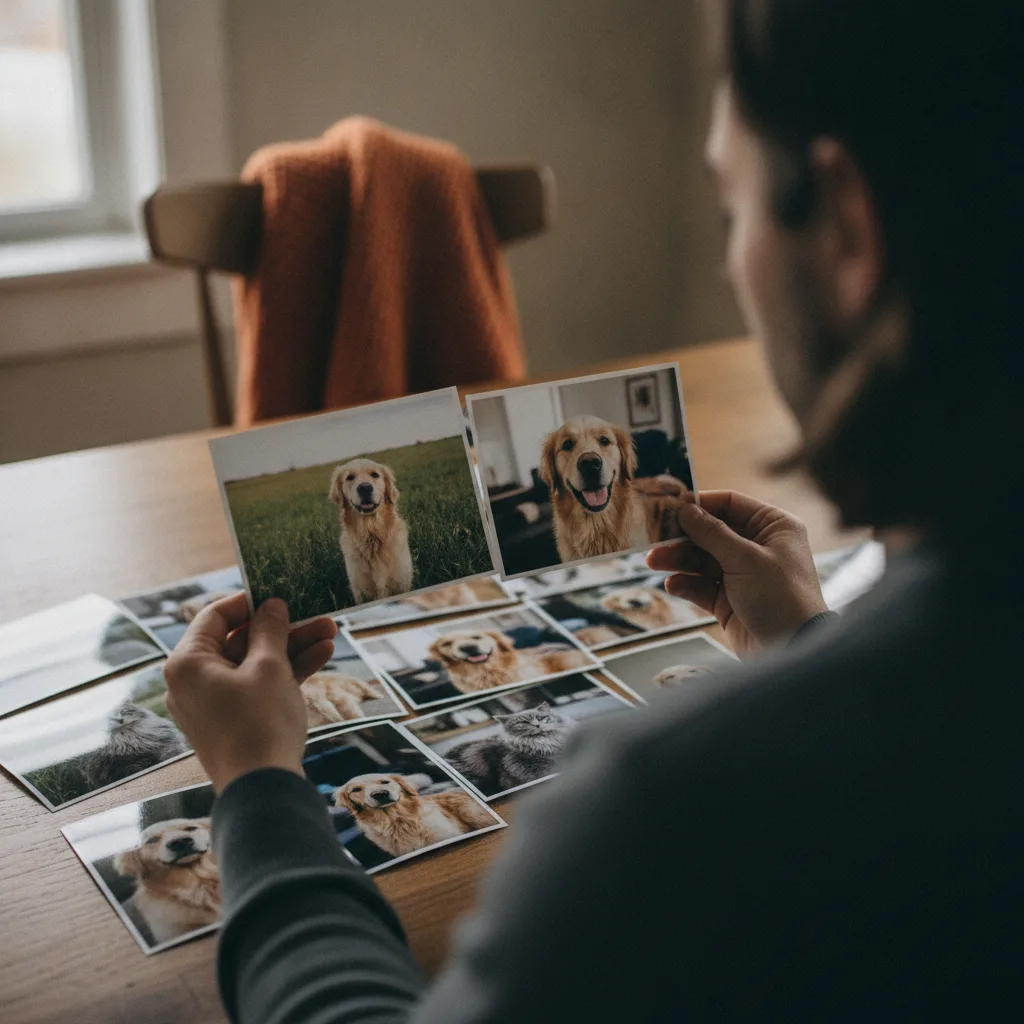
Here is the thing about pet photos: the one you love on your phone is almost never the one that makes a great portrait. You scroll through fifty shots of your dog and land on the cutest face — but when you blow it up for print, the background is chaos, the focus is soft, or her eyes look like two dark holes. The photo everyone gets wrong is the one where the pet looks adorable but the image itself does not hold up at wall size.
The shot that actually works for a portrait print has three things going for it: clarity, a clean background, and a face you can read. Everything else — the perfect pose, the fancy lighting — is optional. Let me show you how to pick the right one.
Start With a Clear, Well-Focused Image
Your phone camera is good enough for this, but only if the photo is sharp. Zoom in on your pet's face — can you see individual whiskers, the texture in their fur, the catchlight in their eyes? If the image looks soft or blurry when you zoom, it will look worse printed large. A clear photo captures the details of your pet's face and expression, and that is what makes a portrait feel like them.
Good light does most of the work here. Natural light from a window or shooting outside in the morning or late afternoon gives you the sharpness and detail you need without a studio setup. Avoid dim indoor shots where your phone has to guess at focus — those rarely convert well.
Keep the Background Simple and Uncluttered
A simple, uncluttered background will help your pet stand out and be the focus of the artwork. The busy kitchen counter, the pile of laundry, the half-open door — all of that pulls attention away from your pet's face. You want a background that lets the portrait breathe: a plain wall, a soft blur of green from the yard, a neutral sofa.
If your favorite photo has a messy background, it can still work depending on the portrait style you choose. Renaissance and classical pet portraits often replace the background entirely with a painted scene, so the original setting matters less. But if you are going for a clean, photographic print or watercolor style, start with a cleaner backdrop.
Look for Expression and Personality
The one you keep coming back to — that is usually the right photo. Not the most technically perfect shot, but the one where you see your pet's personality in their eyes or the tilt of their head. A portrait worth framing captures something true about them: the way your cat side-eyes you, the goofy open-mouth pant your dog does, the calm, wise look your old horse gives the camera.
Expression beats perfection every time. A slightly imperfect photo with a great face will always make a better portrait than a technically flawless shot of a bored or distracted pet.
You will know it when you see it — the photo that feels like them, not just a picture of them.
Check the Composition and Framing
Framing matters more than you think. A portrait cropped too tight feels claustrophobic; too loose and your pet gets lost in the frame. Aim for a composition that includes their full face and a little breathing room around the edges — what photographers call headroom. For most pets, a head-and-shoulders crop or a three-quarter body shot works best.
Avoid cutting off ears, tails, or paws at awkward spots. If you are cropping in tight on the face, make sure the eyes are in the upper third of the frame, not dead center. This is the part people skip, and it is why some portraits feel off even when the photo itself is good.
Consider the Canvas vs Framed Print Format
Once you have the right photo, think about how you want to display it. The canvas vs framed print decision affects how the final portrait looks on your wall. Canvas prints have a soft, painterly texture and wrap around the edges, so they work well for portraits with a little extra space around the subject. Framed prints give you a crisp, gallery-quality finish and let you choose matting and frame styles that match your decor.
Neither format is better — it is about what suits the photo and the room. A bold, high-contrast portrait often looks sharper in a framed print. A softer, more painterly image feels at home on canvas. If your photo has a busy or uneven background, canvas can hide some of that texture; a framed print will show every detail, so choose accordingly.
Best Practices for Printing and Framing Your Pet Portrait
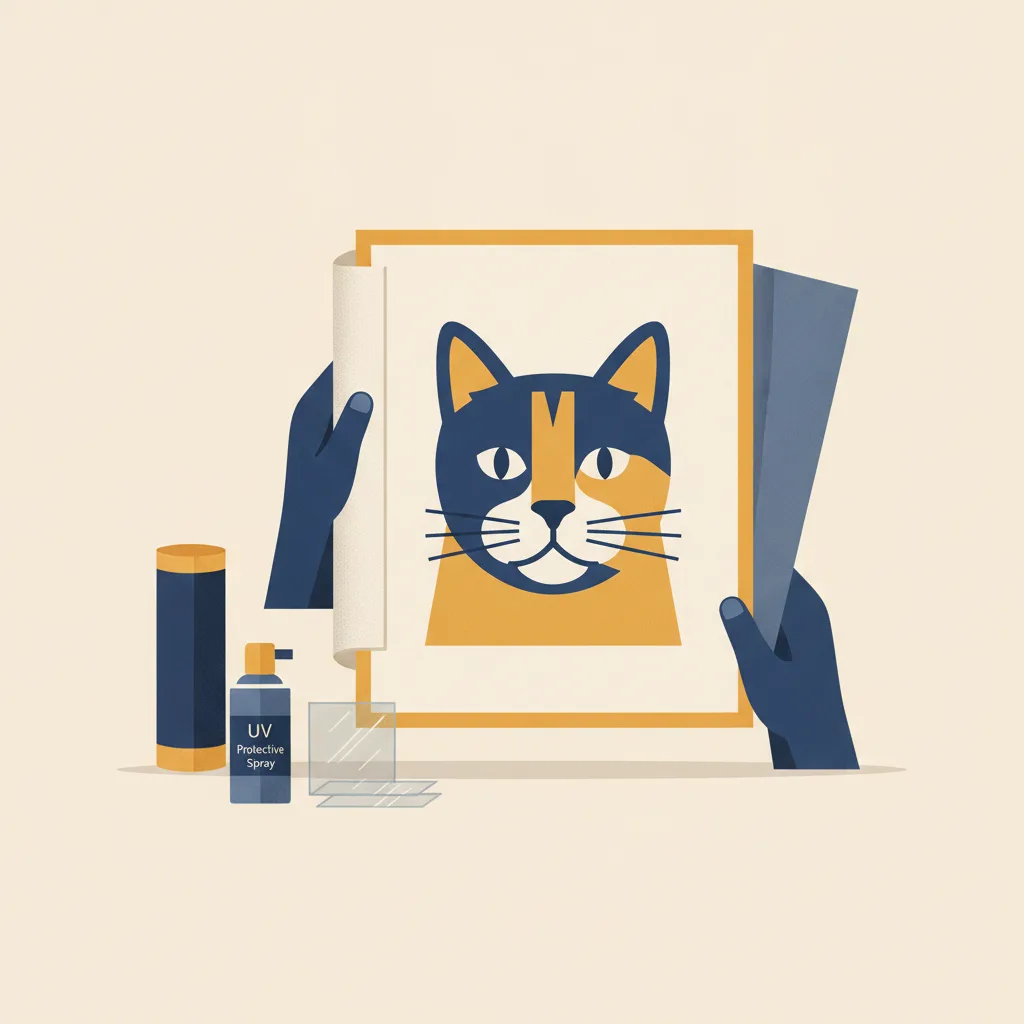
You have the photo. You know it is the one. Now comes the part where most people either nail it or end up with something that looks cheaper than it should — the printing and framing. This is where good light and a clear shot turn into something worth hanging, or where a great photo gets buried under the wrong material or a frame that fights it. Let me walk you through what actually works.
Canvas vs Framed Print: Which Format Fits Your Space
Here is the thing about canvas vs framed print: they are not interchangeable, and the room you are hanging it in should decide for you. Canvas is lightweight and resists glare, which makes it ideal for spaces with strong natural light or where you want the portrait to feel soft and a little dramatic. It breathes. Framed prints, on the other hand, tend to hold up better in rooms with bright, direct light or high humidity — the glass or acrylic adds a layer of protection that canvas does not have.
If you are going big — say, over 24 inches — canvas usually wins because it does not need the structural support a frame requires at that size. But if you want a more finished, structured look, or if the portrait is going in a formal space like a dining room or entryway, a framed print delivers that polished edge.
Start with the Right Print Quality
A good pet portrait canvas starts with a clear photo, accurate eyes and fur detail, balanced composition, and a size that suits the wall. But even the best photo will look flat if the print quality is not there. You want a printer that can hold fine detail — the individual whiskers, the catch-light in the eyes, the texture of the fur. If the print looks soft or blurry up close, it will look worse from across the room.
Ask about DPI (dots per inch) if you are working with a print service. Anything below 300 DPI is a gamble. And if you are printing at home, test a small version first — a 5x7 proof will show you whether the color balance and sharpness are right before you commit to a full-size print.
Match the Frame to the Portrait, Not the Other Way Around
This is the part people skip: the frame should support the portrait, not compete with it. If your pet portrait has warm tones — think golden retrievers, orange tabbies, or anything with a lot of amber and brown — go with a wood frame in a natural or walnut finish. If the portrait is cooler or more neutral, a black or white frame keeps it clean and lets the image do the work.
Avoid ornate frames unless the portrait itself is formal or Renaissance-style. A simple, flat profile almost always wins. And leave some breathing room — a mat or a wide border between the image and the frame edge keeps the portrait from feeling cramped.
The frame should support the portrait, not compete with it.
Size It for the Wall, Not the Photo
You will know it when you see it — the portrait that is too small for the wall, floating in a sea of blank space, or the one that is so big it crowds everything else out. Measure the wall before you pick a size. A portrait should take up about two-thirds to three-quarters of the width of the furniture below it (if there is furniture), or it should be large enough to anchor the wall on its own if it is standing alone.
For a gallery wall, keep them in the room — meaning, scale the pet portrait so it holds its own among the other frames without dominating or disappearing. And remember: bigger is not always better. A 16x20 portrait in the right spot will always look better than a 30x40 that does not fit the space.
Protect It from Light and Humidity
This does not have to be perfect, but it does matter. Direct sunlight will fade any print over time, canvas or framed. If the wall gets strong afternoon sun, hang the portrait somewhere else or use UV-protective glass if you are framing it. And if you are putting a canvas in a bathroom or kitchen — anywhere with steam or moisture — expect it to warp eventually. Framed prints with glass handle humidity better, but even they have limits.
The goal is to keep the portrait looking like the day you hung it for as long as possible. A little planning now saves you from ordering a replacement in two years.
Let the Portrait Breathe
Whether you go canvas or framed, give the portrait space. Do not crowd it with too many other frames, and do not hang it so low that it gets lost behind furniture. At their eye level — meaning, the center of the portrait should be at average standing eye height, around 57 to 60 inches from the floor — is the sweet spot. If you are hanging it above a sofa or console, leave 6 to 8 inches between the top of the furniture and the bottom of the frame.
The little details that sell it are the ones you do not notice until they are wrong. Get the height right, match the frame to the portrait, and choose the format that fits the room. That is how you turn a photo of your pet into a portrait worth framing.
If you are working with a more formal portrait style, like a Renaissance or classical look, the framing choices shift slightly — heavier frames and richer finishes tend to suit that era better.
Common Mistakes to Avoid When Printing Pet Portraits
Here is the thing: most people mess up their pet portrait before they even hit print. They choose the wrong size, skip the framing conversation, or assume the vendor knows what they want. Then the portrait arrives and it is not what they pictured — literally.
Let me walk you through the mistakes I see all the time, and how to skip them.
Ordering Without Confirming What You Are Getting
This is the part people skip: before you order, confirm the support, the size, the framing, and the hanging arrangement separately. Do not assume canvas means stretched and ready to hang. Do not assume framed means glass and matting. Ask exactly what is included.
Some vendors ship a rolled canvas. Some ship a poster that needs a separate frame. Some ship a stretched canvas with no hanging hardware. If you do not ask, you will find out when the box arrives.
Picking the Wrong Format for Your Space
A canvas can suit someone who likes an artwork object with visible depth. A paper print can suit someone who wants control over a separate frame. But if you choose canvas for a formal gallery wall where everything else is framed, it will look out of place. If you choose a poster for a casual den where you wanted something that feels finished, you will end up hunting for a frame.
Think about the room first. What is already on the walls? What is the vibe? Then pick the format that keeps your pet in the room, not fighting it.
Skipping the Framing Conversation Entirely
Framing serves two purposes: it enhances the look of the portrait, and it protects the print. If you order a paper print and never frame it, the edges will curl and the surface will fade. If you order a canvas and hang it in direct sunlight with no UV coating, the colors will shift.
Decide early whether you want a frame, what style, and whether you need glass or acrylic. If you are ordering a canvas, ask if it comes with a protective finish. If you are ordering a print, plan for matting and a frame that complements the portrait style — not one that fights it.
Choosing Size Based on Price Instead of Wall Space
The cheapest size is almost never the right size. Measure your wall. Hold up a piece of cardboard cut to the dimensions you are considering. Stand back. Does it feel too small? Too big? Does it leave enough breathing room?
A portrait that is too small for the space looks like an afterthought. A portrait that is too large crowds the wall and makes the room feel tight. Get the size right first, then figure out the budget.
Ignoring the Finish and Assuming All Prints Look the Same
Canvas has texture. Paper has a smooth or matte finish. Some vendors offer glossy finishes that reflect light and show fingerprints. Others offer matte finishes that absorb light and look softer.
If you want something that feels like a painting, canvas or textured paper works. If you want something crisp and formal, go for a smooth matte print behind glass. The finish changes how the portrait reads in the room — choose it on purpose.
For more on how different portrait styles translate to print, see Turn Your Pet Photo Into Art: Every Style Explained.
Frequently Asked Questions about Pet Portrait Prints
Which is better for a pet portrait: canvas vs framed print?
Neither is better — it depends on your space and what you want the portrait to feel like. Canvas prints have texture and a softer, organic look. They work well in casual rooms and modern spaces where you want the art to feel approachable. Framed prints feel more permanent and structured. They tend to look sharper and more formal, which is why people choose them for entryways, living rooms, and places where the portrait is the focal point.
Here is the thing: if you are unsure, think about the wall. A big open wall with lots of light? Canvas. A smaller wall with other framed art nearby? Framed print. You want the portrait to fit the room, not fight it.
How do I choose the right size for my pet portrait print?
Look at the wall, not the photo. The portrait should fill the space without crowding it. For a wall above a couch or console table, aim for a print that is roughly two-thirds the width of the furniture below it. For a gallery wall, smaller prints (8×10 or 11×14) work better. For a statement piece on a big blank wall, go larger — 16×20 or 20×24.
Stand back and imagine the frame outline on the wall. If it feels too small or lost, go up one size. If it feels like it is eating the wall, go down. Trust me on this: most people go too small. A portrait worth framing deserves room to breathe.
What kind of frame should I use for a pet portrait?
Keep it simple. The frame is there to support the portrait, not compete with it. For classic or royal-style portraits, a traditional wood frame in black, walnut, or gold works well. For watercolor or softer styles, a lighter wood or white frame keeps the mood calm. For Renaissance or old-master portraits, a slightly ornate frame adds to the era you choose — but do not overdo it.
Avoid frames that are too trendy or too busy. You want something that will still look good in five years. The portrait is the star. Let the photo breathe.
Can I hang a canvas print without a frame?
Yes. Canvas prints are designed to hang frameless — the image wraps around the edges of the stretcher bars, so there is no white border. This gives them a clean, modern look. You just need a nail or picture hook. No glass, no frame, no fuss.
That said, some people prefer to frame a canvas for a more finished look or to protect the edges. It is not required, but it is an option if your space calls for it.
How do I care for a framed pet portrait print?
Keep it out of direct sunlight — UV light fades prints over time, especially if they are not behind UV-protective glass. Dust the frame and glass with a soft cloth every few weeks. If the print is behind glass, avoid cleaners with ammonia; use a damp microfiber cloth instead.
For canvas prints, dust gently with a dry cloth. Do not use water or cleaners on the canvas surface. If you are hanging the portrait in a high-humidity room (like a bathroom), a framed print with glass will hold up better than an unprotected canvas.
What is the best way to display multiple pet portraits together?
Match the format and frame style. If you are hanging portraits of two or three pets, use the same size, the same frame, and the same style (all canvas or all framed prints). Hang them in a row at eye level, spaced evenly — about 2 to 4 inches apart.
If you are building a gallery wall with other art, treat the pet portraits as anchors. Place them at eye level and fill in around them with smaller pieces. Keep the frames consistent within the pet portraits themselves, even if the surrounding art varies.
For a detailed breakdown of different portrait styles and how to choose the right one for each pet, see Turn Your Pet Photo Into Art: Every Style Explained.
How long does it take to get a custom pet portrait print?
It depends on whether you are ordering a print of an existing portrait or commissioning a new one. If you already have the digital portrait file, printing and framing typically takes one to two weeks. If you are starting from scratch with a custom portrait, expect two to four weeks for the artwork itself, then another week or two for printing and framing.
Rush options exist, but they cost more and sometimes mean fewer revisions. Plan ahead if the portrait is a gift or memorial piece.
Should I use a mat with my framed pet portrait print?
A mat adds breathing room between the portrait and the frame. It works well for smaller prints (8×10 or smaller) and helps the portrait feel more intentional and less crowded. For larger prints (16×20 and up), a mat is optional — the portrait itself has enough presence.
If you do use a mat, keep it neutral: white, cream, or soft gray. Avoid colored mats unless the portrait style specifically calls for it. The mat is there to let the photo breathe, not to add decoration.
The Joy of Framing Your Pet's Portrait
Here is the thing about hanging a portrait of your pet: it changes the room. Not in a flashy way — just in the way that matters. You walk past it every day, and every day it reminds you why you wanted it in the first place.
The photo you chose, the style you picked, the frame or canvas you settled on — all of that was about making something that feels like them. And now it is on your wall, at their eye level, where it belongs. That is the whole point.
A portrait worth framing is one you keep coming back to — not because it is perfect, but because it feels like them.
Whether you went with canvas or framed print, the decision was about what works in your space and what does the portrait justice. Canvas gives you texture and dimensionality — it sits on the wall like a painting, no outer frame required. Framed prints give you structure and a clean border — classic, contained, gallery-ready. Both are right. It just depends on the room and the portrait itself.
The best part? You do not need a studio or a professional setup to get here. You needed good light, a decent photo, and a willingness to trust what you saw in that image. The rest — the printing, the framing, the hanging — that is just mechanics. The portrait was already there.
So hang it where you will see it. Let it breathe. Let the little details that sell it — the expression, the light, the way the frame or canvas complements the whole thing — do their work. You will know it when you see it, and so will everyone else who walks into the room. If you are still deciding on a style or era, explore options like Renaissance and classical pet portraits to see what fits your vision.
That is the joy of it. Not that it is perfect, but that it is worth hanging.