
Introduction
Here is the thing about losing a pet: the pain is real, and the need to believe they are somewhere safe and happy is just as real. The Rainbow Bridge gives that belief a name and a place. It is not about religion or science — it is about the comfort of imagining your dog or cat in a meadow where they can run again, where nothing hurts, and where they are waiting for you.
When we talk about the Rainbow Bridge, we are touching on something deeply personal. If you are here because you have lost a pet, I am truly sorry. A custom dog painting or portrait will not bring them back, but it can keep their spirit alive in your home. It is a way to honor their memory and keep them close, even when they are no longer physically present.
The Rainbow Bridge is not a physical location — it is a meadow just this side of heaven where animals who have died arrive restored and free of pain. They wait there, whole again, until the day they can reunite with their owners. That image — your pet running toward you, healthy and joyful — is what makes the concept so powerful for so many people.
The Rainbow Bridge is an imaginary, very pleasant place where a pet is believed to go after it dies, and where its owner hopes to see it again when they die.
You do not have to believe in it literally for it to help. The Rainbow Bridge is a framework for grief, a way to process the loss without feeling like it is the absolute end. It lets you hold onto the connection while you heal. And for many pet owners, that is exactly what they need in those first raw weeks and months.
By the end of this you will understand where the Rainbow Bridge idea came from, why it resonates so deeply, and how you can find your own meaning in it — whether that is through the traditional concept, a memorial portrait, or simply the memory of the time you had together.
What is the Rainbow Bridge?
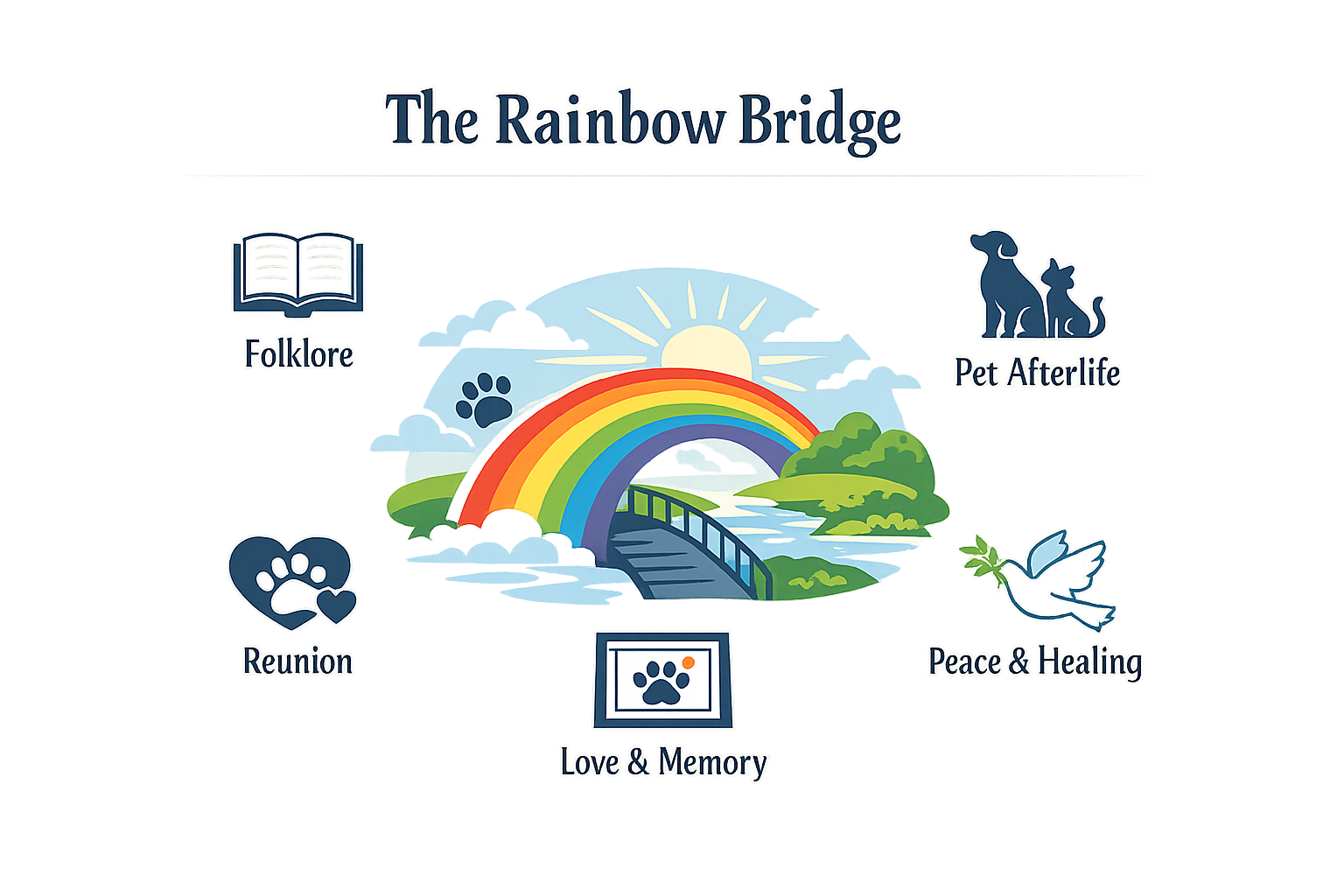
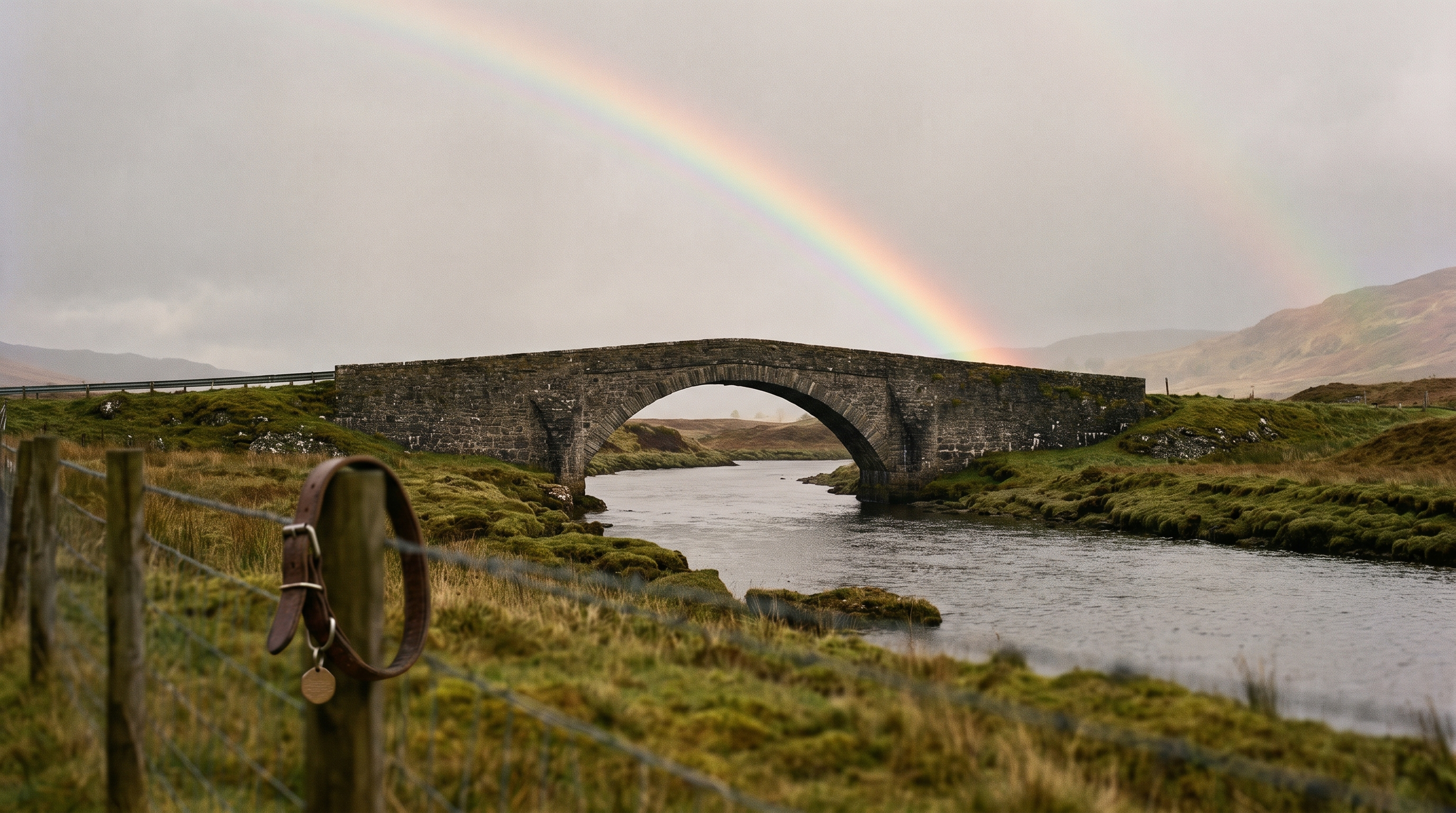
The Rainbow Bridge is a green meadow just this side of heaven where animals who have died arrive restored and free of pain. They wait there for their owners, and when the time comes, they reunite and cross the bridge together. That is the heart of it — a place where your pet is whole again, running and playing until you meet them.
The term comes from poems written to help grieving pet owners find comfort after loss. The most recognized version begins with the line, "Just this side of heaven is a place called Rainbow Bridge." That opening is known by millions because it captures something simple and true: the hope that death is not the end of the bond you share.
The Origin of the Poem
The original Rainbow Bridge prose was written in 1959 by Edna Clyne-Rekhy after the death of her Labrador, Major. She needed a way to process her grief, and what she wrote became a lifeline for others facing the same loss. The poem was not published commercially at first — it spread quietly, person to person, because it said what people needed to hear.
There are other versions and authors sometimes credited, but the core idea remains the same: a peaceful place where animals wait, healthy and happy, for the people who loved them. It is not tied to any one religion or belief system. It is simply a story that offers comfort when you need it most.
Why It Resonates
The Rainbow Bridge works because it gives you permission to grieve fully while also holding onto hope. It acknowledges that your pet mattered, that the loss is real, and that the love does not just disappear. For many people, that is exactly what they need to hear in the hardest moments.
Some pet owners find comfort in creating something tangible to honor that memory — a custom dog painting from your photo or a portrait that keeps their presence in the home. It is not about replacing them. It is about keeping them close in a way that feels right to you.
How the Rainbow Bridge Provides Comfort
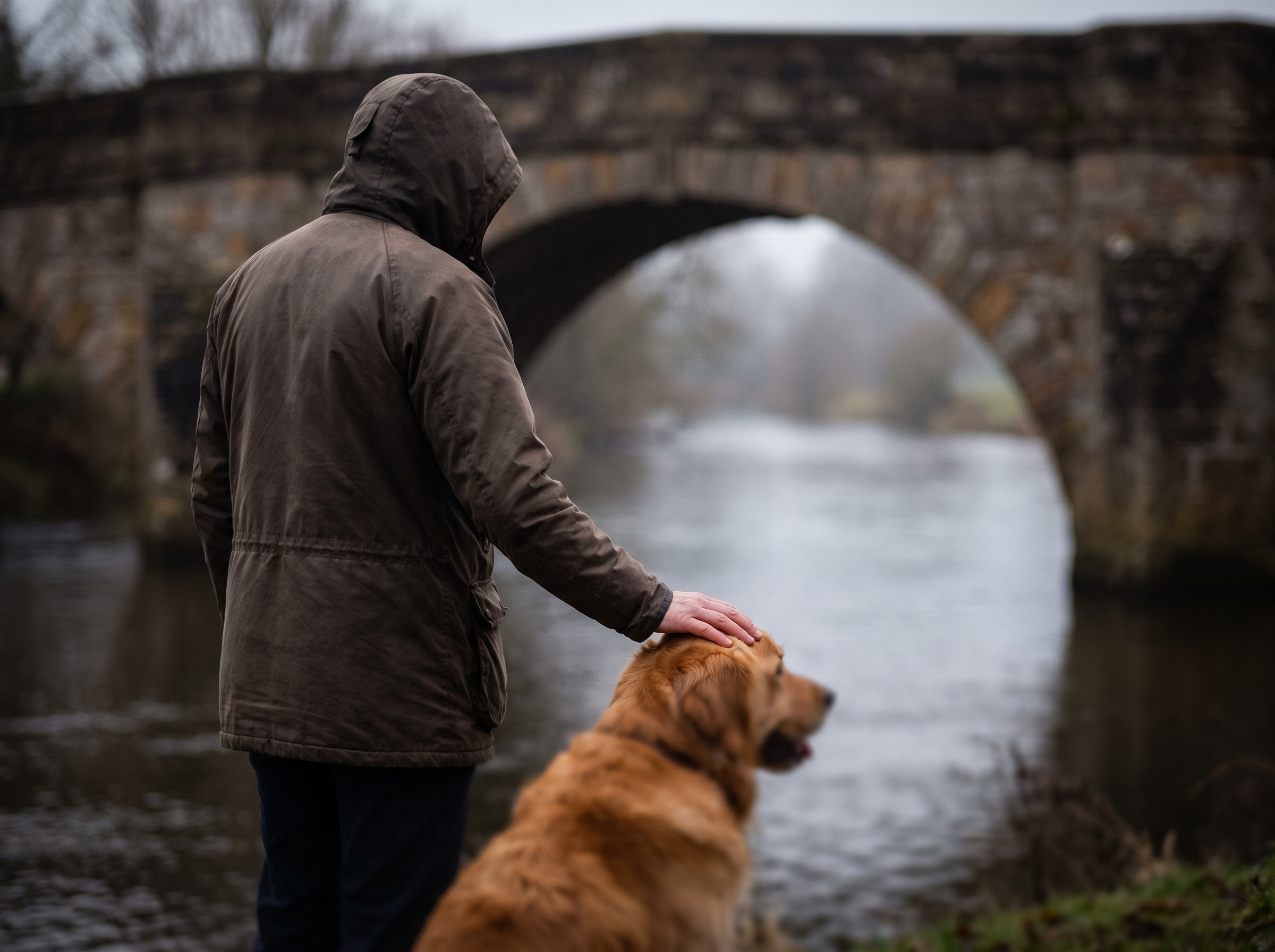
The Rainbow Bridge gives your grief a shape. When you lose a pet, the pain is abstract and enormous — it has no edges, no place to put it. The Rainbow Bridge changes that. It lets you picture something: your dog running through meadows, your cat basking in sunlight, waiting for you. That image does not erase the loss, but it softens the sharpest parts of it.
Millions of grieving families have found comfort in the simple words of the Rainbow Bridge. It does not promise to fix the pain. But it can soften the edges just enough to let you keep going. You are not alone in feeling this way — the poem has traveled across cultures and decades because it names something true about how we love our pets.
Why the Rainbow Bridge Resonates
The Rainbow Bridge works because it offers reunion. The idea that your pet is not gone forever — just waiting — makes the present moment bearable. You can hold two things at once: the grief of today and the hope of someday. That balance is what gets people through the first weeks and months.
It also gives you permission to keep loving them. Grief can feel like you are supposed to move on, let go, stop thinking about them. The Rainbow Bridge says the opposite: they are still yours, and you will see them again. That permission matters more than people realize.
The poem does not fix the pain. But it can soften the edges just enough to let you keep going.
Turning Comfort Into Something You Can See
Some people need more than words. They need something they can look at, touch, or hang on the wall. A custom dog painting from your photo or a portrait of your cat can be that anchor. It keeps them in the room with you. It says: they mattered, they still matter, and I am not pretending otherwise.
The portrait you choose does not have to be sad. It can show them the way they were — playful, regal, goofy, dignified. The Rainbow Bridge is about remembering them whole, not frozen in the moment they left. A good portrait does the same thing.
Finding Personal Meaning in the Rainbow Bridge
The Rainbow Bridge is not a one-size-fits-all idea. What it means to you is entirely personal, and that is the part people skip when they talk about grief. Some pet owners find comfort in the poem itself — reading it aloud when they scatter ashes or hanging it beside a framed photo. Others take the concept and build their own rituals around it, creating something that feels like theirs.
You do not need permission to make the Rainbow Bridge your own. If the poem resonates, keep it close. If it does not, take the idea of reunion and shape it however you need to. The point is not the exact wording or the meadow or the bridge — it is the feeling that your pet is somewhere safe, waiting, and that the love between you did not end.
Creating Your Own Rainbow Bridge Ritual
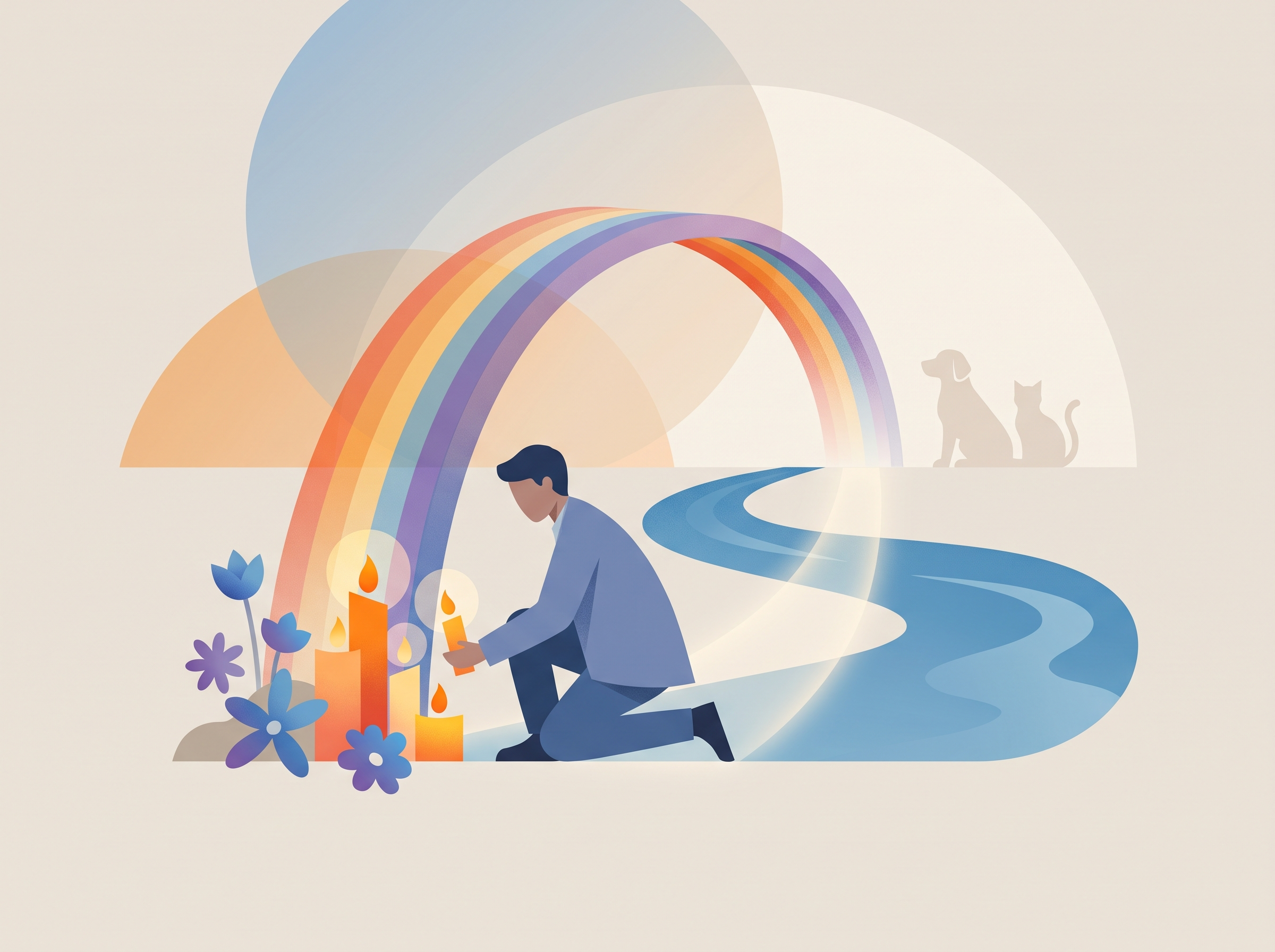
Some people light a candle on the anniversary of their pet's passing. Others plant a tree, commission a portrait, or write a letter they never send. These are not grand gestures — they are quiet ways to keep your pet in the room with you. A custom dog painting or a framed photo can become the centerpiece of that ritual, a place where you pause and remember.
The Rainbow Bridge poem has been translated and shared across cultures, which tells you it touches something universal. But the ritual you build around it is yours alone. It does not have to look like anyone else's.
Keeping Them Close
Here is the thing about memorials: they are not about perfection. They are about presence. A portrait on the wall, a collar in a shadow box, a garden stone with their name — these are the little details that sell it. They remind you that your pet was here, that they mattered, and that the bond you shared is still worth honoring.
The Rainbow Bridge gives grief a shape. It lets you picture a place where your pet is whole again, running and playing, and it offers the hope that one day you will see them there. Whether you believe in that literally or hold it as a comforting metaphor, it does the same work: it keeps them close.
Conclusion
The Rainbow Bridge has given comfort to millions of pet owners since it was first written in 1959. The simple words of the poem — "Just this side of heaven is a place called Rainbow Bridge" — have resonated across generations because they speak to something universal: the fear that our pets might have suffered, or that they might forget us. The poem answers those fears with reassurance, and that is why it endures.
If you are here because you have lost a pet, I am truly sorry. A portrait will not bring them back, but it can keep their spirit alive in your home. It is a way to honor their memory and keep them close, even when they are no longer physically present. Whether you choose a style that reflects their playful nature or one that highlights their regal demeanor, the important thing is that it resonates with you.
Creating a custom dog painting from your photo or a custom cat portrait can be a comforting process. It is not just about capturing their likeness, but also their personality and the joy they brought into your life. Remember, it is okay to grieve and to find comfort in whatever form helps you heal. The Rainbow Bridge is one way to process that loss — a portrait is another. Both can coexist, and both can help you move forward while keeping your pet's memory alive.