
Introduction
Here is the thing about cats: they have a reputation for being aloof, but anyone who has ever lived with one knows that is only half the story. The cat who curls up on your lap every evening, who follows you from room to room, who waits by the door when you come home — that cat is attached to you. The question is not whether cats feel something when you leave. The question is whether we are paying attention to how they show it.
Cats are not dogs. They do not wear their hearts on their sleeves. But that does not mean the bond is any less real. When you leave for work, for a trip, or even just for the afternoon, your cat notices. Some cats pace. Some meow more. Some sit by the window and wait. The signs are there if you know what to look for.
This article walks you through what we know about cat emotions, how cats express attachment, and what experts say about whether cats actually miss their owners when they are gone. By the end, you will know exactly what your cat is telling you — and how to make separations easier for both of you. If you are thinking about ways to honor that bond, a custom cat portrait can be a beautiful way to keep them close, even when you are apart.
Cats are capable of deep emotional connections.
The evidence is compelling. Pandora, a cat who went missing, was reunited with her family six years later — proof that cats remember the people they love. In New York, a bodega cat named Jabal was abducted, and the entire community rallied to bring him home because his owner, Jimmy, and Jabal shared an undeniable bond. These are not isolated stories. They are windows into how cats attach, how they remember, and how much they care.
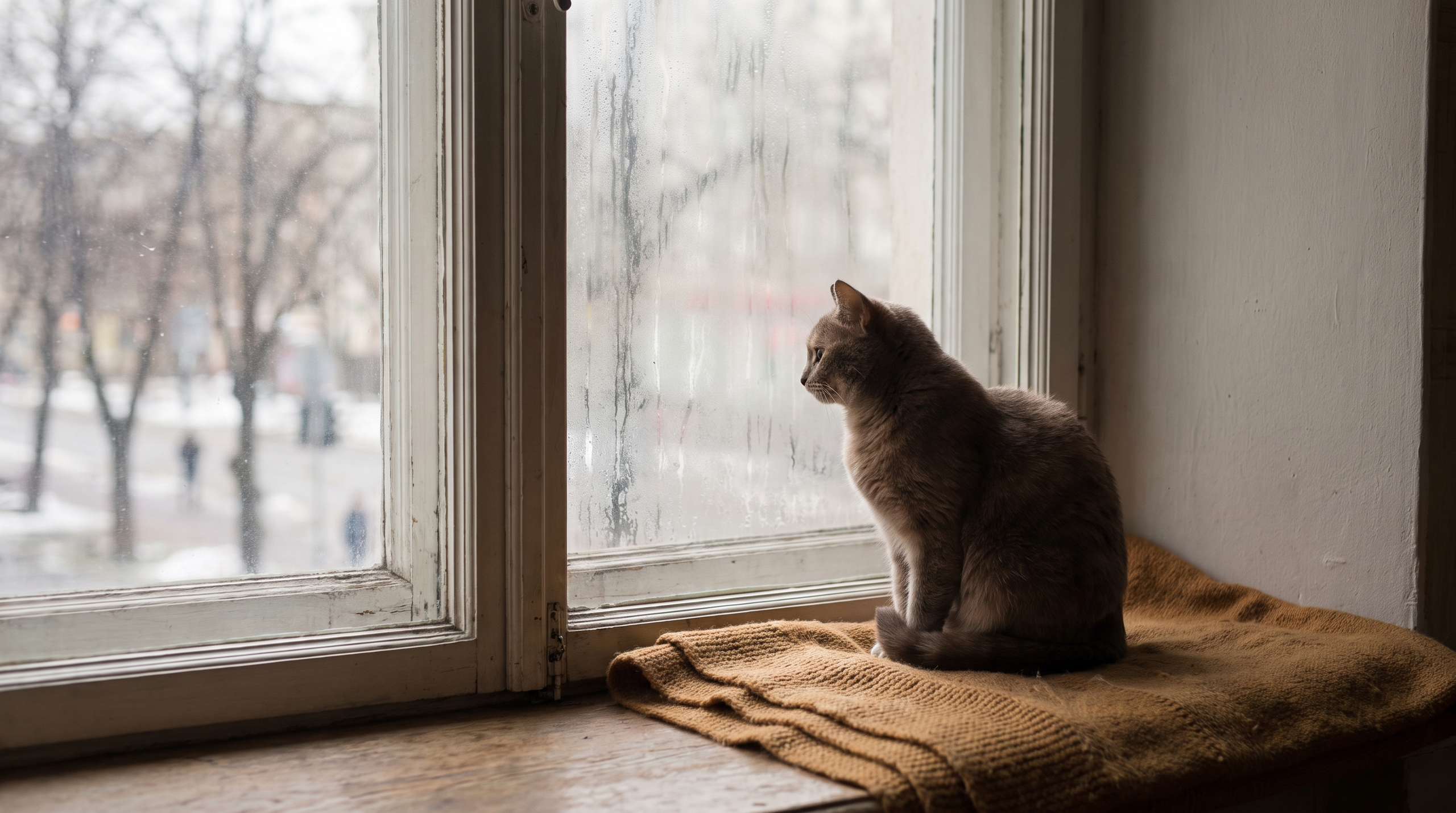
Let the photo breathe for a second. Your cat is not indifferent. She is just speaking a different language.
Understanding Cat Emotions
Here is the thing about cats: they feel more than most people give them credit for. They are not tiny robots who tolerate you for food. They form real emotional connections — the kind that show up in how they greet you, where they sleep, and what happens when you leave. The difference is they express it on their own terms, not yours.
Cats are capable of deep emotional connections. Stephanie Merlin, a cat well-being educator, has said it plainly: cats bond with their humans in ways that matter. A 2019 study found that about 65% of cats displayed secure attachment styles with their caregivers — the same kind of attachment you see in human infants and dogs. That is not background noise. That is proof that your cat knows who you are and what you mean to them.
How Cats Show Emotion
Cats do not wag their tails or jump on you when you walk in the door, so it is easy to miss what they are actually doing. They show emotion through small, deliberate gestures: a slow blink, a head bump, sitting near you without touching, following you from room to room. They also show it through routine — cats are creatures of habit, and when their routine includes you, that is attachment.
When you are gone, that routine breaks. The emotional connection does not disappear, but the behavior changes. Some cats become quieter. Some become louder. Some stop eating as much or sleep in different spots. The bond is still there — it is just waiting for you to come back.
The Bond Between Cats and Their Humans
The bond is real, and it is not one-sided. Cats choose their people. They do not attach to just anyone — they attach to the person who feeds them, plays with them, respects their space, and shows up consistently. That is why your cat might ignore a houseguest but follow you into the bathroom. You are the one they trust.
That trust is emotional, not transactional. When you leave, your cat notices. The emotional connection between cats and their owners influences their behavior when separated — some cats wait by the door, some hide, some act out. It is not spite. It is attachment. And if you have ever wondered whether your cat would remember you after a long trip, the answer is yes. They remember, and they feel it when you are not there.
If you are thinking about ways to honor that bond — especially after a loss — a custom cat portrait can be a way to keep them in the room, even when they are not.
Signs That Cats Miss Their Owners
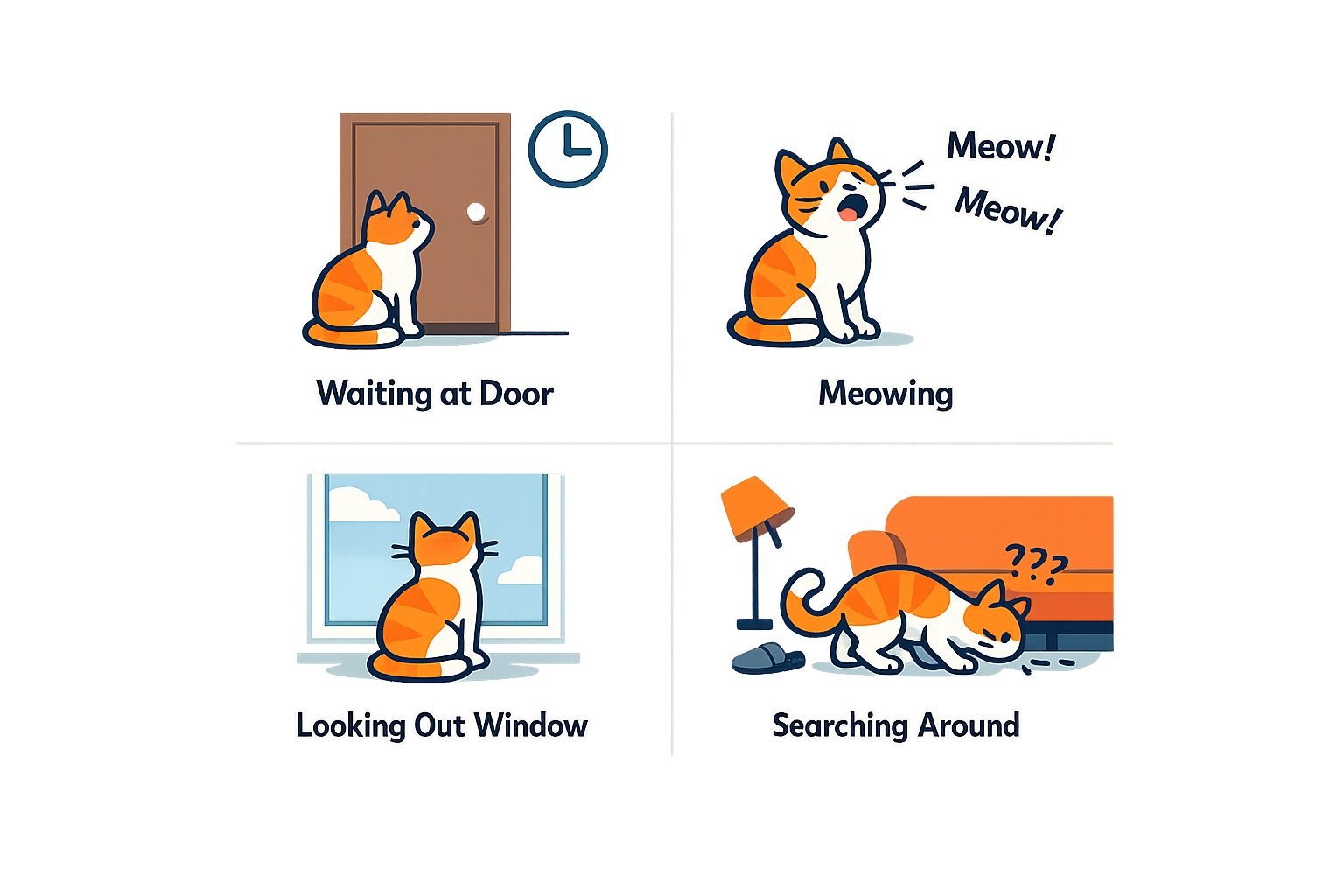
Here is the thing about cats: they will not sit by the window pining like a dog in a movie, but that does not mean they are not keeping track of you. Cats miss their people — especially when a routine is disrupted for more than a day — and the signs show up in ways that are easy to miss if you are not looking.
The behaviors are subtle at first. Your cat might start meowing more than usual, following you from room to room, or waiting by the door around the time you normally come home. These are not random quirks — they are your cat checking in, recalibrating, trying to figure out where you went and when you are coming back.
Behavioral Changes That Signal Missing You
When cats experience separation-related stress, the signs can range from quiet to loud. Some cats become destructive — scratching furniture they normally ignore, knocking things off counters, or chewing on plants. Others go the opposite direction and withdraw, hiding more than usual or sleeping in spots they never used before.
Excessive vocalization is one of the clearest tells. If your normally quiet cat starts yowling at odd hours or greeting you with long, insistent meows, she is telling you something. Cats vocalize to communicate with humans — not with each other — so when the volume goes up, it is usually directed at you.
Inappropriate elimination is another red flag. A cat who suddenly stops using the litter box or starts urinating on your bed or clothing is not being spiteful — she is stressed, and your scent is the anchor she is trying to hold onto.
Clinginess and Routine Disruption
Some cats respond to your absence by becoming clingy when you return. The cat who used to nap solo now wants to be on your lap every time you sit down. The one who ignored you in the morning now follows you into the bathroom. This is not needy behavior — it is reconnection.
Cats miss owners during long absences, and the reunion behavior — the extra purring, the head-butting, the refusal to leave your side — is how they tell you they noticed you were gone.
Changes in eating habits are also common. Some cats eat less when their person is away; others stress-eat and then refuse food when you come back. If your cat's appetite shifts noticeably around your travel schedule, that is a sign she is tracking your presence more closely than you thought.
If you are planning a trip and want to leave something comforting behind, a custom cat portrait in a familiar spot can help keep the routine steady — cats notice when their environment changes, and a portrait of them in their favorite pose can be a small anchor in your absence.
What the Signs Mean
Not every cat will show all of these signs, and some cats handle separation better than others. But if you see a cluster of behaviors — the meowing, the clinginess, the disrupted eating or litter habits — your cat is telling you she missed you. It does not look like longing in a movie, but it is real, and it is worth paying attention to.
The good news is that most cats bounce back quickly once you are home and the routine resets. The behaviors fade, the appetite normalizes, and your cat goes back to pretending she does not care whether you are there or not — until the next time you leave.
Expert Opinions on Feline Attachment
Here is the thing about cats and attachment: the science is finally catching up to what a lot of us already suspected. For years, people treated cats like they were these aloof, emotionally unavailable roommates who tolerated us for the food. Turns out, that is not the whole story.
What the Research Actually Shows
A 2019 study looked at how cats respond to their owners after a separation, and the results were surprisingly familiar. About 65% of cats displayed what researchers call secure attachment styles — the same kind of bond you see in human infants and dogs. That means most cats are not just hanging around for the kibble. They are forming real emotional connections with the people who feed them, play with them, and let them sleep on the good pillow.
The cats in the study showed clear preferences for their owners over strangers. They sought out their humans when they returned, stayed close, and then went back to exploring once they felt reassured. That is attachment behavior, plain and simple.
How Experts Talk About Feline Emotions
"Cats are capable of deep emotional connections," says Stephanie Merlin, a cat well-being educator. That is the part people get wrong when they compare cats to dogs. Dogs wear their feelings on their sleeves. Cats are more subtle, but the bond is still there. They just express it differently — a slow blink instead of a tail wag, sitting near you instead of on you, that little chirp when you walk in the door.
The idea that cats are indifferent is outdated. What we are learning is that cats form attachments that look a lot like what we see in other social animals. They remember their people, they notice when routines change, and yes, they can miss you when you are gone. It is not the same as a dog pacing by the door, but it is real.
Why This Matters for Custom Cat Portraits
Understanding that your cat actually cares about you — and that the bond goes both ways — changes how you think about the relationship. It is not one-sided. Your cat is not just tolerating you. She is attached to you, in her own specific way, and that is worth recognizing. Whether you are gone for a weekend or thinking about how to honor a cat who is no longer with you, knowing that the connection was real makes it all feel a little more significant.
Coping with Separation
Here is the thing about leaving your cat: they notice, and the way you set them up before you go makes all the difference. You cannot explain to them that you will be back Tuesday — so the next best thing is making sure their world stays predictable while you are gone.
Keep the Routine Intact
Cats are creatures of habit. Feed them at the same time every day, keep the litter box in the same spot, and do not rearrange the furniture right before you leave. If you are going to be out of town, consider hiring a pet sitter who can drop by your home to check on your cats and maintain their routine. Someone coming by once a day to scoop, feed, and play for twenty minutes does more than you think — it keeps the rhythm of the day familiar.
Give Them Something to Do
A bored cat is a stressed cat. Providing enrichment like puzzle feeders, climbing trees, and regular play sessions can help reduce loneliness and strengthen the bond between cats and their owners. Leave out a window perch if you have one. Rotate toys so there is always something that feels new. The goal is to keep them engaged, not just fed and watered.
Use What You Have
You do not need fancy tech to stay connected, but if you have a pet camera or can leave a radio on low, it helps. Some cats respond well to hearing your voice on a recording. Others just want the ambient noise. The point is not to simulate your presence — it is to keep the environment from feeling too silent or too different.
When You Get Back
Do not make a huge production out of your return. Let them come to you. Some cats will act indifferent for an hour and then glue themselves to your lap. Others will greet you at the door. Both are normal. The photo you take of them curled up next to you that first night back — that is the one worth keeping. If you are thinking about turning a favorite moment like that into something you can hang, custom cat portraits let you hold onto those quiet reunion moments long after they happen.
Conclusion
Here is the thing about cats and their people: the bond is real, even when it does not look like the one you have with a dog. Your cat might not throw a parade when you walk through the door, but those slow blinks, the way she follows you from room to room, the quiet presence at your feet — that is her version of missing you. She feels your absence. She notices when you are gone. And when you come back, even if she pretends she does not care, she does.
The research backs it up. Cats form attachments. They recognize your voice, your routine, your smell. They wait by the door. They get quieter or louder or clingier when you have been away. Some cats take longer to show it than others, but the connection is there. It is just quieter, more private, more cat.
If you want to strengthen that bond — or if you are looking for a way to keep your cat close even when life pulls you in different directions — a portrait is one way to do it. Not a snapshot on your phone that you scroll past, but something you hang where you see it every day. A painted portrait of your cat at her eye level, in good light, looking exactly like herself. The kind of thing that reminds you why you two belong to each other in the first place. Custom cat portraits turn that everyday photo into something worth keeping in the room.
Your cat might not throw a parade when you walk through the door, but those slow blinks and quiet presence — that is her version of missing you.
So yes, cats miss their owners. Not the way dogs do, but in their own steady, stubborn, deeply feline way. And if you have ever wondered whether she actually cares when you leave, trust me on this: she does. You will know it when you see it — in the way she greets you, the way she settles in next to you when you are finally home, the way she makes sure you are still there before she falls asleep. That is her telling you she missed you. You just have to know how to read it.
Explore the emotional connection between cats and their owners. Do cats miss their humans when they are away? Find out what experts say about feline attachment.
Related reading
How Long Does a Custom Painting Take? Timelines Explained