
Explore the ultimate pet portrait gift guide to find the perfect portrait for every occasion.
Introduction to Pet Portrait Gifts
Here is the thing about pet portraits: the one you love on your phone is almost never the one that makes a great portrait. You want something that actually looks like her — not a stranger who happens to have her collar. That is the whole game, and it is easier than you think.
When it comes to finding the perfect custom pet portrait gift, the choices can feel overwhelming. Whether you're celebrating a new pet, commemorating a beloved companion, or just looking for a unique personalized pet gift, it's important to match the style to the occasion. For a touch of drama and warmth, consider a Baroque style portrait. Baroque is all about deep shadows and a glow on the face, which can make a dog with soulful eyes look absolutely captivating. If you're honoring a pet that's passed, a portrait won't replace them, but it does keep them in the room, offering comfort in ways you might not expect.
A custom pet portrait gift is more than decoration — it's a way to hold onto the little details that sell it: the tilt of their head, the way their ears catch the light, the expression you recognize instantly. And if you're aiming for a touch of history, remember that royal pets have graced court portraits for centuries. Your pet deserves a place among them, just like the serious-looking dogs at the Rijksmuseum. Each style brings its own flair to the portrait, making it a truly custom pet portrait gift.
Why Pet Portraits Make Meaningful Gifts
Pet portraits work as gifts because they honor the bond between a person and their pet in a tangible, lasting way. A thoughtful portrait acknowledges that bond without being pushy or sentimental in the wrong way. It's something you can hang at their eye level, where it becomes part of the daily routine — a quiet reminder that doesn't demand attention but gives comfort when it's needed.
For memorial gifts, timing and tone matter. Preparing for the loss of a pet can be incredibly painful, but a portrait offered with care — not too soon, not with pressure — can help someone feel seen. One pet owner shared her gratitude for a portrait her colleagues commissioned after her dog passed: "I'm so incredibly grateful for the beautiful portrait they made of her, as well as for the kindness and support they showed me." That kind of gesture, when it's done right, keeps the memory alive without forcing someone to talk before they're ready.
Whether you're gifting a portrait for a birthday, a new pet celebration, or a memorial, the key is choosing a style and photo that feel like the pet — not like a generic painting that could be anyone's dog. Soft, warm, and a little dramatic works for most pets, but the era you choose and the way you crop the photo will make or break whether it's worth framing. If you're exploring different artistic approaches, Renaissance and Classical Pet Portraits: Your Pet as Old-Master Art walks through how historical styles translate to modern pet photography.
What to Expect from This Guide
By the end of this you will know exactly which photo of your pet to use — and which three to skip. We'll cover how to match portrait styles to occasions, the little details that turn a snapshot into something worth hanging, and the common mistakes that make a portrait feel cheap instead of custom. No studio required, just good light, a photo that breathes, and a clear idea of what you're trying to say.
What is a Pet Portrait Gift?
A custom pet portrait gift is a piece of art made from a photo of someone's pet — painted, printed, or rendered in a style that turns an everyday snapshot into something worth hanging. It is not just a framed photo. It is a photo reimagined as a painting, whether that means Renaissance brushwork, royal court drama, or soft watercolor washes.
The difference between a portrait and a photo print comes down to interpretation. A portrait adds light, texture, and a sense of era. It puts your dog in a velvet collar or your cat in front of a moody Dutch-master background. The photo you start with does not have to be perfect — good light does most of the work, and the style you choose fills in the rest.
The Styles That Actually Work
Here is the thing about portrait styles: the era you choose changes the whole feeling of the piece. Renaissance and classical portraits lean formal and timeless — think Rembrandt lighting, where the face glows and the background fades to shadow. Victorian portraits add lace, posture, and a touch of ceremony. Royal and regal styles go full drama: crowns, robes, and the kind of composition you see in court paintings at the Rijksmuseum.
Baroque is all about deep shadows and a glow on the face, which can make a dog with soulful eyes look absolutely captivating. Watercolor portraits feel softer and less formal — good for a gift that is warm without being heavy. The style you pick should match the occasion and the personality of the pet. A serious-looking bulldog might suit a royal treatment; a goofy golden retriever might be better in something lighter.
For more on how each style translates from photo to portrait, see Turn Your Pet Photo Into Art: Every Style Explained.
Custom Portrait Gifts Beyond Pets
Pet portraits are the most common, but the same process works for people — family portraits, memorial pieces, or gifts that honor someone important. The mechanics are identical: you send a photo, choose a style, and the portrait gets rendered in that era's visual language. Memorial portraits, whether for a pet or a person, do not replace who was lost, but they do keep them in the room in a way that feels intentional and lasting.
Grieving pet owner Sheryl took great comfort from the portrait her teammates commissioned as a gift to honor her dog Willow, saying it sits watching over her each day while she works. That is what a good portrait does — it holds space without asking for anything back.
Why Pet Portrait Gifts Matter
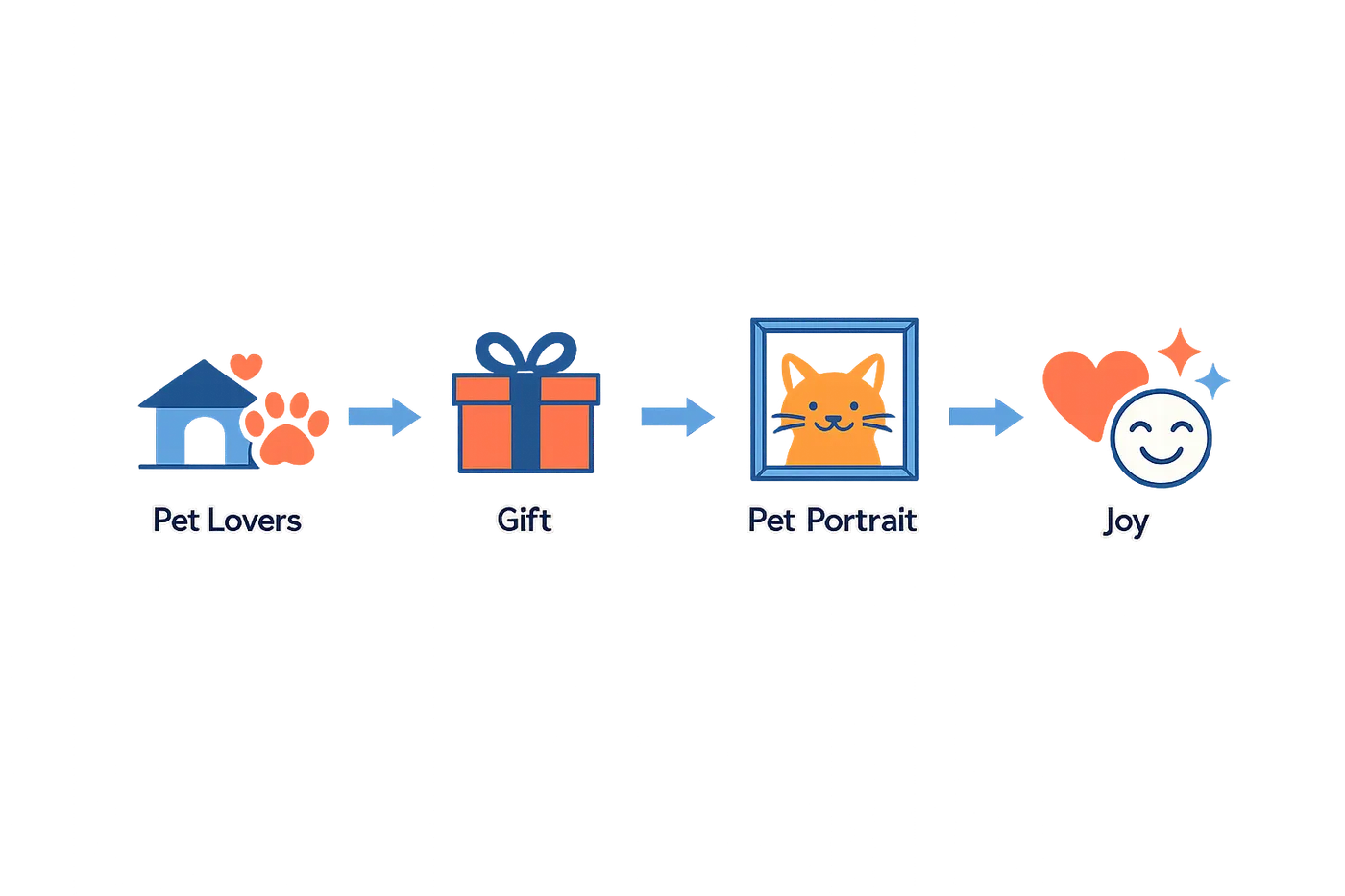
Here is the thing about a custom pet portrait gift: it does something a toy or a treat never can. It keeps them in the room. When you lose a pet, the house feels different — quieter, emptier, even when it is full of people. A portrait does not replace them, but it does keep their presence close in a way that feels comforting rather than sad. The photo everyone gets wrong is the one they think will be easiest to paint. The one that actually works is the one you keep coming back to, the one that feels like them.
The Emotional Weight of a Portrait
Pets are not just animals. They are companions, constants, the ones who never judge. One grieving pet owner shared, "I'm so incredibly grateful for the beautiful portrait they made of her, as well as for the kindness and support they showed me." That portrait sat watching over her desk every day while she worked, a tangible reminder of the bond they shared. Another person put it plainly: "The love for a pet is as deep as the love for a close family member. Losing them can make a house feel empty even though the house is full."
A portrait is not decoration. It is a way to honor that love. It is the difference between scrolling past a phone photo and stopping to really see them again — their expression, their personality, the little details that made them yours. When you give someone a custom pet portrait, you are giving them permission to grieve, to remember, and to keep that love visible.
Why Portraits Work as Gifts
A custom pet portrait gift is thoughtful in a way that feels personal without being intrusive. It says, "I see how much they meant to you." It works for celebrations too — new puppies, adoptions, milestones — but it carries the most weight when it is a memorial. People who have lost pets often say that the hardest part is coming home to a house that no longer greets them the same way. A portrait does not fix that, but it does something quieter: it keeps them present.
The right portrait style matters. Baroque is all about deep shadows and a glow on the face, which can make a dog with soulful eyes look absolutely captivating. Renaissance styles bring a sense of history and gravitas. Victorian portraits add elegance and formality. The style you choose should match the occasion and the personality of the pet. A playful terrier might not suit a somber Renaissance frame, but a dignified older cat absolutely would.
When Portraits Offer Comfort
Grief is isolating, and pet loss is often dismissed. People say things like "it was only a pet" or "you can get another one," and those words sting. A portrait is a quiet acknowledgment that the loss was real, that the love was real, and that it deserves to be honored. It does not demand conversation or explanation. It just is.
One person described it this way: "She sits watching over me each day while I work, and I can't stress enough what a difference it made to receive such a thoughtful gift at such a difficult time." That is what a portrait does. It does not erase the pain, but it softens the edges. It lets the person grieving know that someone else saw the bond, understood it, and wanted to help preserve it.
The love for a pet is as deep as the love for a close family member. Losing them can make a house feel empty even though the house is full.
Portraits as Celebration
Not every portrait is a memorial. Some are celebrations — a new puppy, a milestone birthday, a family addition. These portraits work because they capture a moment of joy and make it permanent. The photo you take today might feel casual, but painted and framed, it becomes something worth hanging. It becomes part of the story you tell about your family.
Whether you are honoring a pet that is gone or celebrating one that is here, the portrait does the same thing: it says this life mattered. It says this bond was worth preserving. And it does it in a way that lasts.
How to Choose the Perfect Pet Portrait Gift
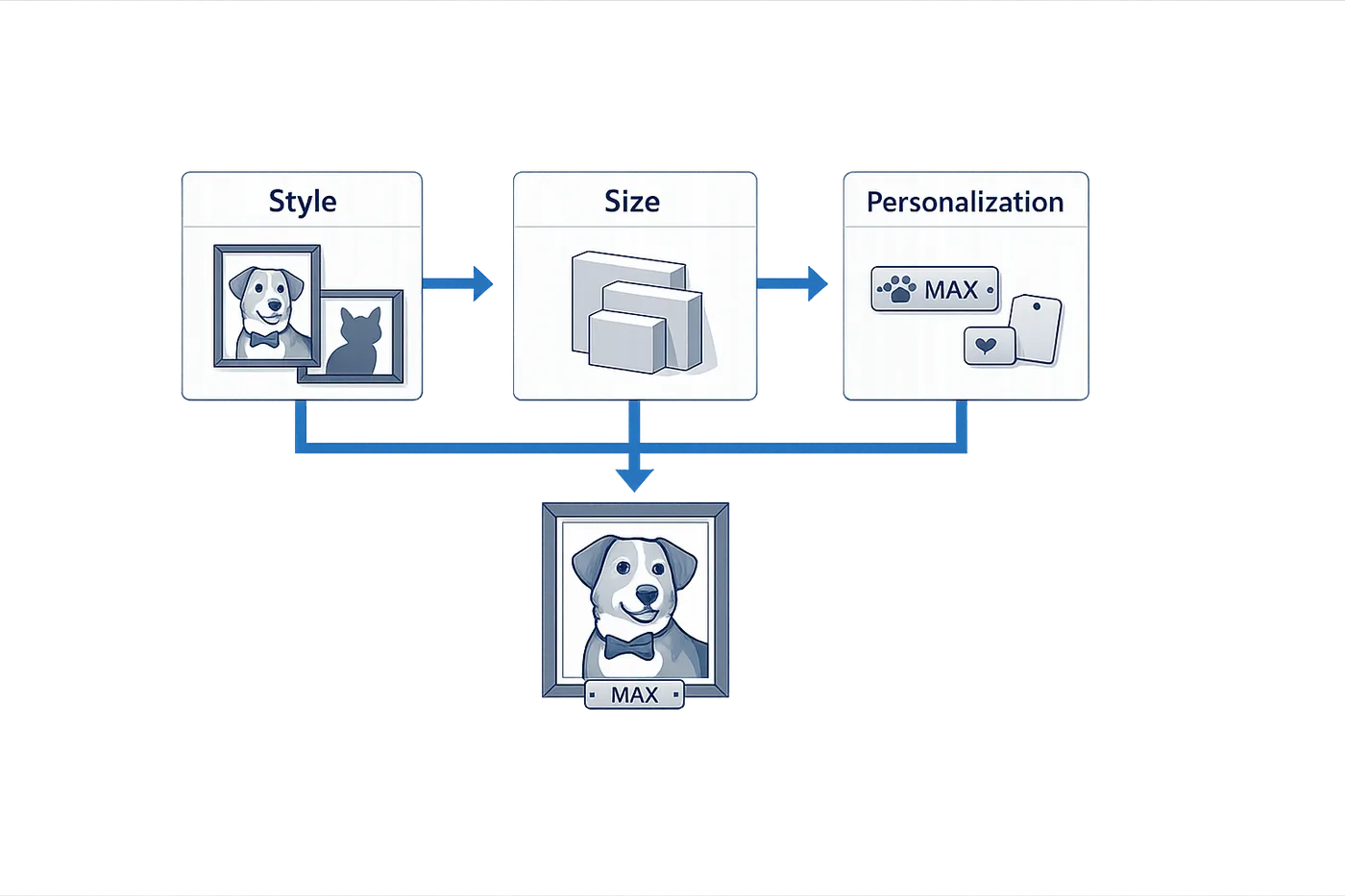
Here is the thing about choosing a custom pet portrait gift: the right portrait is not about what looks impressive — it is about what feels like them. The person you are giving it to should look at it and think, "That is exactly her." That is the whole game, and it starts with knowing who you are buying for and what the moment calls for.
Match the Style to the Occasion
Not every portrait style fits every situation. A Renaissance portrait with soft light and a timeless background works beautifully for a milestone — a new pet, a big birthday, an anniversary. It has weight. It says, "This matters." For someone who has lost a pet, you want something that keeps them in the room without being heavy-handed. A watercolor or a softer classical style can offer comfort in ways you might not expect. The portrait does not replace them, but it does give grief a place to land.
If you are celebrating a personality — the dog who thinks he runs the house, the cat who poses like royalty — lean into drama. Regal pet portraits with rich backgrounds and formal framing let you play up that confidence. Trust me on this: the era you choose sets the tone for the whole gift.
Step 1
Start with the recipient's taste
Look at their home. Do they lean traditional or modern? Neutral walls or bold colors? A portrait worth hanging is one that fits the room it is going into. If their style is clean and minimal, a simple classical portrait on a soft background will feel right. If they love color and texture, a Baroque portrait with deep shadows and warm tones will hold its own.
Step 2
Pick the photo that actually works
The photo everyone gets wrong is the one where the pet is too far away or the lighting is flat. You need a shot where you can see their face clearly, their expression is relaxed, and the light is doing most of the work. Good light — natural, soft, not harsh — makes the difference between a portrait that looks expensive and one that does not. The little details that sell it are in the eyes and the expression, so choose a photo where both are sharp.
Step 3
Consider the size and framing
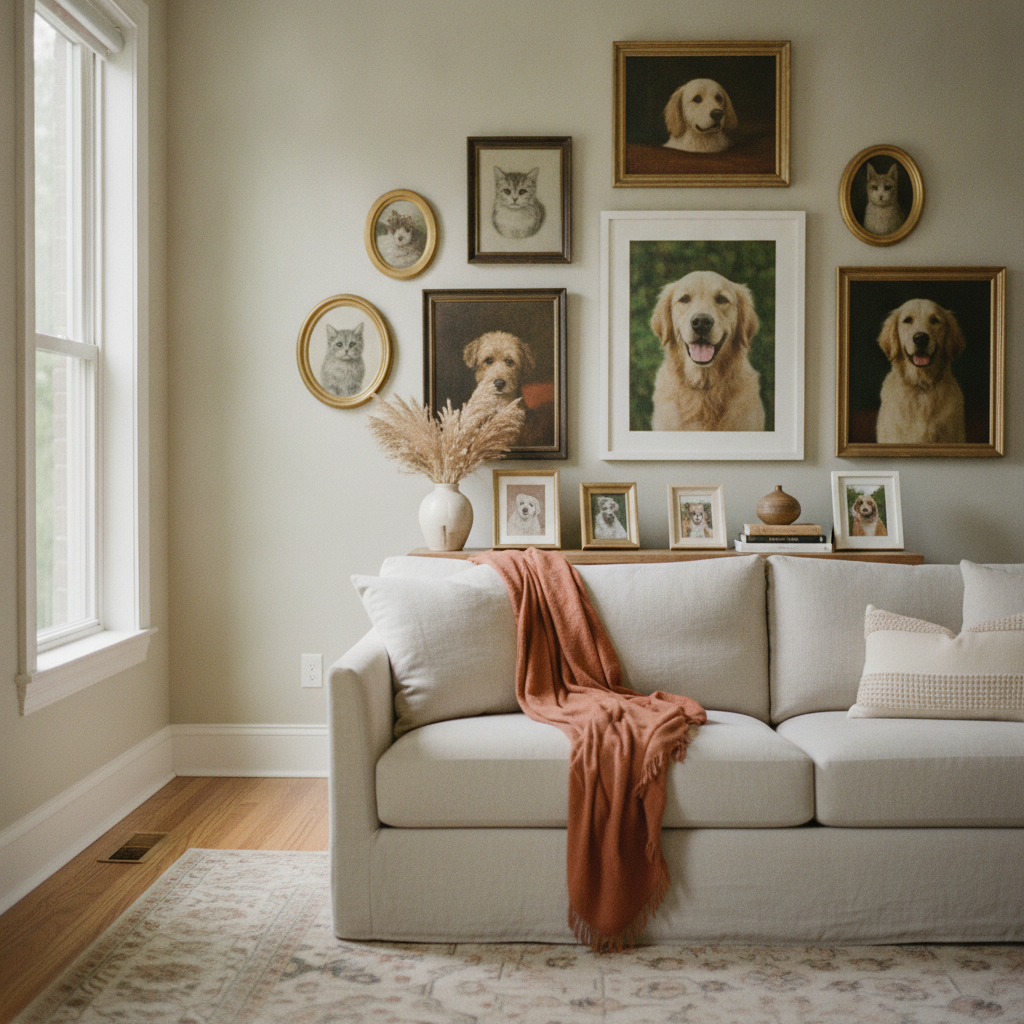
A small portrait on a big wall disappears. A huge one in a tight space overwhelms. Think about where it will go and size it so it breathes. For a gallery wall or a shelf, something around 8x10 or 11x14 works. For a statement piece over a couch or mantel, go bigger — 16x20 or larger. Let the photo breathe in the frame, and make sure there is enough headroom so the portrait does not feel cramped.
Step 4
Choose materials that match the moment
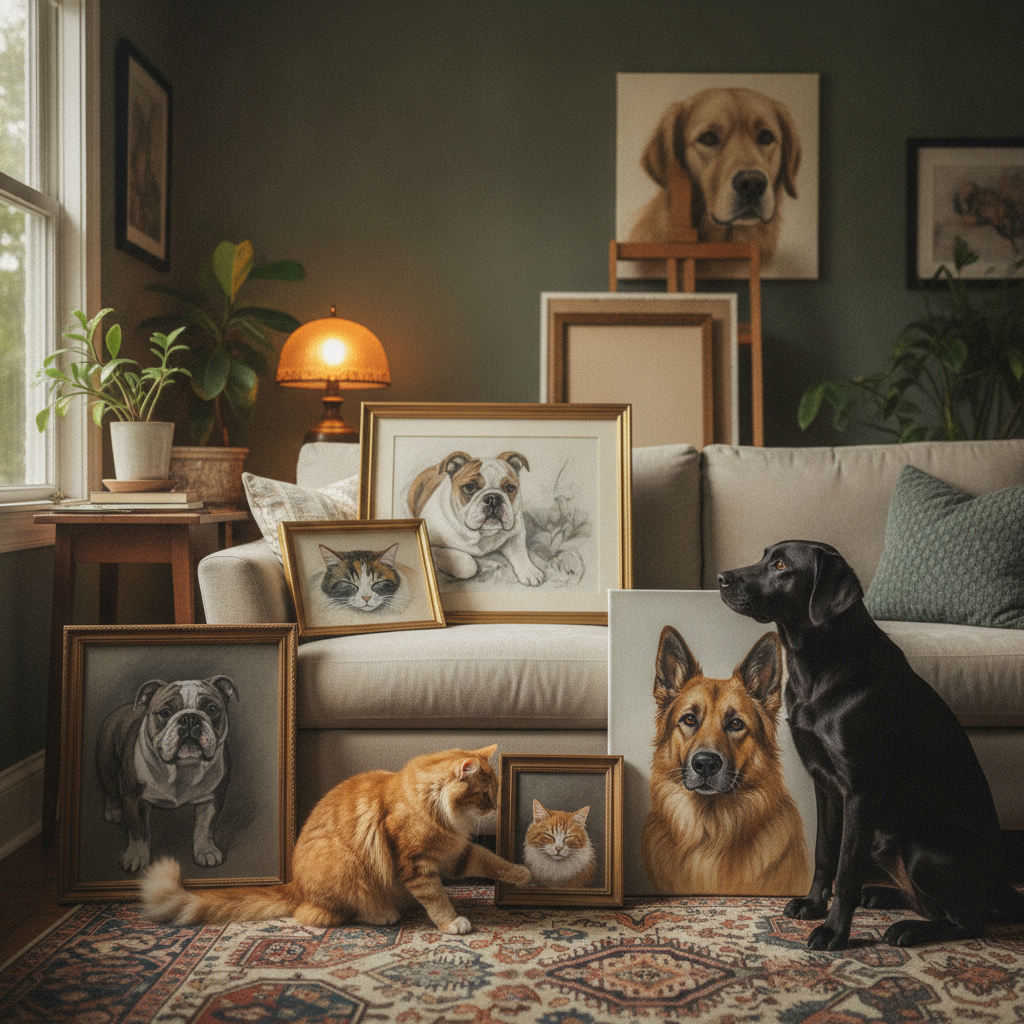
Canvas feels classic and substantial. It works for formal portraits and anything you want to feel permanent. Paper prints are lighter, easier to frame yourself, and better for watercolor styles. If you are gifting something for a memorial, canvas or a framed print signals that this is meant to last. If it is a fun gift for a friend, a high-quality print they can frame themselves is perfectly thoughtful.
Think About Timing
If the portrait is for a specific date — a birthday, a holiday, a memorial — plan ahead. Custom work takes time, and rushing it shows. Give yourself a buffer so the portrait arrives when it should, not a week late with apologies. The shot that actually works is the one you have time to get right.
When You Are Not Sure, Ask
If you are buying for someone else and you are not certain what they would want, it is okay to ask. Frame it as, "I am thinking about getting you a portrait of Max — would you like to pick the photo, or should I surprise you?" Most people appreciate being included, especially if the portrait is for a pet they have lost. Grief is personal, and giving them a say shows you are paying attention.
Best Practices for Gifting Pet Portraits
Here is the thing about giving a custom pet portrait gift: the portrait itself is only half of it. How you present it, when you give it, and how you handle the moment — that is what makes it land. A beautiful portrait handed over in a grocery bag does not hit the same as one that feels like the event it is. Let me walk you through what actually works.
Timing Matters More Than You Think
Do not surprise someone with a memorial portrait the week after their pet dies. Trust me on this — grief is too raw, and even the most thoughtful gift can feel like pressure to move on. Give them a few weeks, or wait for a meaningful date like a birthday or the anniversary of when they got their pet. If you are giving a portrait of a living pet, any occasion works — but if it is a memorial, let the dust settle first.
For celebration portraits (new puppy, gotcha day, just because), you have more freedom. But even then, think about the recipient's schedule. Handing someone a framed portrait when they are rushing out the door means they cannot sit with it the way they will want to.
Presentation and Packaging
The portrait should feel like an occasion when they open it. Here is what that looks like in practice:
- Wrap it properly. Not in tissue paper — use a sturdy box or a protective sleeve, then wrap that. Framed portraits are heavier than they look, and corners get dinged easily.
- Include a short note. One or two sentences about why you chose this portrait or what you love about their pet. Handwritten beats printed every time.
- Let them open it privately if it is a memorial. Some people cry, and that is fine — but they might not want an audience for it.
Personalization Beyond the Portrait
The portrait itself is personal, but you can go a step further without overdoing it. A small brass plate on the frame with the pet's name and dates (for memorials) or just their name (for living pets) makes it feel finished. Some people include a favorite quote or line — "Good dog. Best friend." — but keep it short. The portrait is the star; the plate is just the credit line.
If you are giving this as part of a bigger gift (say, for a wedding or housewarming), pair it with something small and practical — a nice frame stand if it is a desk-sized portrait, or a picture light if it is going on a wall. Do not bury the portrait in a pile of other gifts. Let it be the closer.
What to Say When You Give It
This is the part people skip, and it shows. When you hand over the portrait, say something simple and true. For a living pet: "I know how much she means to you — I wanted you to have something that shows it." For a memorial: "I thought you might like to keep him in the room this way."
Do not apologize for the gift ("I hope this is okay" or "I wasn't sure if you'd like it"). You chose it for a reason — own that. And do not hover. Give them the portrait, say your piece, and let them have the moment. They will come back to you when they are ready.
A portrait won't replace them, but it does keep them in the room — and that comfort is real.
Supporting Someone Who Is Grieving
If the portrait is a memorial gift, understand that grief does not follow a schedule. Some people will love the portrait immediately; others will need time before they can look at it without falling apart. Both reactions are normal. Do not take it personally if they do not display it right away, and do not ask where they hung it the next time you see them.
Practical support matters just as much as the portrait itself. Offering to help with small things — a meal, a walk, just being around — makes a difference. The portrait is a long-term comfort, but in the short term, presence is what counts.
For more ideas on choosing the right portrait style for your pet, see our guide to turning your pet photo into art — it covers every major style and what suits which personality.
When Not to Give a Pet Portrait
There are a few situations where a pet portrait is not the move:
- Before the recipient has chosen a photo. If you pick the photo without asking, you are guessing — and you might guess wrong. Let them choose, or ask them to send you their favorite.
- As a surprise memorial gift if you are not close. Acquaintances and coworkers mean well, but memorial portraits are intimate. If you would not normally exchange personal gifts, a condolence card is the safer choice.
- When the pet is seriously ill and the outcome is uncertain. Wait until there is clarity. A portrait given in hope that turns into a memorial is a painful reminder of timing, not comfort.
Framing and Display Considerations
If you are giving a framed portrait, make sure the frame fits the home. A heavy baroque gold frame works in a traditional space but looks out of place in a minimalist apartment. When in doubt, go simple and classic — a clean black or wood frame fits almost anywhere, and the recipient can always reframe it later if they want something different.
For unframed portraits (canvas or print only), include a suggestion for framing in your note. Most people do not know where to start, and "I'd recommend a simple black frame — it will let the portrait breathe" gives them a direction without being prescriptive.
The Follow-Up
A week or two after you give the portrait, check in. Not about the portrait specifically — just a normal check-in. If they bring it up, great. If they do not, that is fine too. Some people need time to process a meaningful gift, and that is not a reflection on how much they appreciated it.
For memorial portraits especially, the real value shows up months later — when the rawness fades and the portrait becomes a quiet comfort instead of a sharp reminder. You will know it landed when they mention it in passing, or when you see it on their wall the next time you visit.
Common Mistakes to Avoid When Gifting Pet Portraits
Here is the thing about custom pet portrait gifts: the mistakes people make are almost always about timing, tone, or assumptions. You think you are giving something meaningful, but if you get one of these wrong, the whole thing lands flat — or worse, it hurts. Let me walk you through the traps so you can skip them.
Choosing the Wrong Moment for a Memorial Portrait
This is the one people get wrong most often. Someone loses a pet, and you want to help, so you commission a portrait right away. The impulse is kind, but the timing can be terrible. Grief does not follow a schedule, and what feels comforting six months later might feel unbearable in the first few weeks.
If you are thinking about a memorial portrait as a gift, wait. Let the person tell you they are ready — or give them a gift card so they can choose the timing themselves. A portrait does not replace the pet, but it does keep them in the room, and that is only comforting when the recipient is ready for it.
Using a Photo That Does Not Look Like Them
You want the portrait to feel like the pet, not a stranger who happens to have the same markings. The photo you choose matters more than the style you pick. If the photo is blurry, cropped too tight, or taken from a weird angle, no amount of artistic skill will fix it.
The shot that actually works is the one where you can see their face clearly, the light is decent, and the expression is the one you keep coming back to. Trust me on this: a boring, well-lit photo beats a dramatic, poorly-lit one every time.
Picking a Style That Does Not Match the Occasion
Not every portrait style fits every situation. A playful watercolor might be perfect for a new puppy gift, but it can feel too light for a memorial. A heavy, dramatic Renaissance portrait might be too serious for a birthday. The era you choose sets the tone, so think about what the moment actually calls for.
If you are honoring a pet that has passed, a portrait with soft, warm light and a little drama often feels right. For a celebration, you have more room to play. For more on matching style to subject, see our guide on turning your pet photo into art.
The cheapest mistake is the one where the style fights the occasion instead of supporting it.
Assuming One Size Fits All
People often order a portrait in a standard size without thinking about where it will actually go. A huge canvas is impressive, but if the recipient lives in a small apartment, it is also a problem. A tiny print might get lost on a big wall. Ask about their space, or go medium — something like 16×20 inches works in most homes and does not demand a specific wall.
Ignoring the Recipient's Taste
You might love bold, saturated colors and ornate frames, but if the person you are gifting lives in a minimalist space with neutral tones, your portrait is going to stick out for the wrong reasons. Pay attention to how they decorate. If their walls are clean and simple, a restrained style in a slim frame is going to feel more at home than something busy.
Rushing the Process
Custom work takes time. If you are ordering a portrait for a specific date — a birthday, an anniversary, a memorial service — and you wait until two weeks before, you are setting yourself up for disappointment. Quality portraits are not instant. Plan ahead, and if you are cutting it close, be honest with the recipient about the timeline rather than promising something you cannot deliver.
Skipping the Conversation Entirely
This one applies mostly to memorial portraits, but it is worth saying plainly: do not assume. Almost half of people who lose a pet say that empathy and understanding from others would help them cope, but that same empathy means respecting where they are in their grief. Some people want to talk about their pet often; others find it too hard. Follow their lead.
If you are a colleague or friend and you are thinking about commissioning a portrait as a group gift, ask first — or give them the option to decline privately. The gesture only works if it is wanted.
Forgetting That Grief Does Not Have a Timetable
People assume that after a few weeks, someone should be "over it." They are not. Grief does not follow a schedule, and for many people, the loss of a pet affects daily life in ways that last. A portrait given too early can reopen a wound; one given thoughtfully, when the person is ready, can be a source of real comfort.
Be patient. Let them set the pace.
Frequently Asked Questions about Pet Portrait Gifts
Here is the thing about custom pet portrait gifts: the questions people ask are usually the same three or four, and they all come down to whether the portrait will actually look like the pet and whether it will arrive on time. Let me walk you through the ones that come up most often.
How long does it take to get a custom pet portrait gift?
Most custom pet portraits take anywhere from a few days to a few weeks, depending on the style and the vendor. If you are ordering a digital portrait that gets printed and shipped, expect something closer to one to two weeks. If you are commissioning a hand-painted piece, it can stretch to four weeks or longer. The timeline matters most when you are gifting for a specific occasion — a birthday, a holiday, or a memorial service. Order early. If you are cutting it close, ask the vendor directly about rush options before you pay.
For a detailed breakdown of what affects timelines, check out how long does a custom painting take — it covers the variables that stretch or shrink delivery windows.
Can I customize the style and background of a pet portrait gift?
Yes, and you should. The style you choose — Renaissance, Victorian, royal, watercolor — changes the entire mood of the portrait. A regal portrait with a formal background works beautifully for a dog with a serious face, while a softer watercolor suits a cat with delicate features. Most vendors let you pick the era, the outfit, and the background. Some will let you add props or adjust the color palette. If the portrait is a gift, think about the recipient's home and what they would actually hang. A Baroque portrait with deep shadows and warm light feels dramatic and expensive; a clean, minimal background feels modern and versatile.
What photo should I use for a custom pet portrait gift?
The photo you love on your phone is almost never the one that makes a great portrait. You want good light, a clear face, and the pet looking somewhere near the camera — not off to the side or down at the ground. The photo does not have to be perfect, but it does need to show their expression clearly. Avoid busy backgrounds, harsh shadows, and anything where the pet is too far away or blurry. If you are choosing between two photos, pick the one where you can see their eyes. That is what sells the portrait. The little details — the tilt of the ear, the way they hold their head — those are the things that make it feel like them.
Are pet portrait gifts appropriate for memorial occasions?
Yes, but handle it carefully. A portrait will not replace the pet, but it does keep them in the room in a way that feels comforting. Many people find peace in having a formal portrait made after a loss — it honors the bond and gives the grief a place to land. If you are giving a memorial portrait as a gift, make sure the recipient is ready for it. Some people want that reminder right away; others need more time. Do not surprise someone with a memorial portrait at a gathering or in front of others. Give it privately, with no pressure to display it immediately. Let them decide when and where it goes.
A portrait will not replace them, but it does keep them in the room.
If you are navigating grief yourself, tangible reminders like portraits, memory walls, or keepsakes can be part of the healing process. The act of choosing a photo and commissioning a portrait can feel like a quiet way to honor what you had.
Can I order a custom pet portrait gift for someone else's pet?
You can, but you need a good photo first. If you do not live with the pet, ask the owner for a few high-resolution images — explain what you are planning so they can send you the right shots. The best gifts are the ones where the recipient sees their pet, not a stranger wearing the same collar. If you are not sure which photo to use, ask. Most pet owners have a favorite shot already in mind, and they will appreciate being part of the process. Just keep the style choice to yourself if you want it to be a surprise.
What is the difference between a digital portrait and a hand-painted one?
A digital portrait is created using software or AI, then printed on canvas or paper. A hand-painted portrait is done by a human artist with brushes and paint. Digital portraits are faster and usually less expensive; hand-painted ones take longer and cost more, but they have texture and brushwork you can see up close. Neither is better across the board — it depends on what you value. If you want something that looks painted and feels traditional, digital prints can deliver that. If you want an original piece with physical paint layers, you need the hand-painted route. Both can look expensive if the composition, lighting, and framing are right.
How do I know if a custom pet portrait gift will look good?
You will know it when you see it. A good portrait has three things: the pet's expression is recognizable, the lighting flatters their face, and the style matches the setting where it will hang. If any of those is off, the portrait feels wrong. Before you order, look at the vendor's past work — not just the style, but whether the pets look like themselves. Read reviews that mention likeness, not just shipping speed. And trust your gut. If a sample portrait makes you feel something, that is the vendor. If it looks generic or stiff, keep looking.
Conclusion: Making Memories with Pet Portrait Gifts
Here is the thing about a custom pet portrait gift: it does not replace the pet, but it keeps them in the room. That is the part people do not always expect until they hang it and realize how much it changes the space. The photo you choose, the style you pick, the frame that goes around it — all of it adds up to something worth keeping.
If you are honoring a pet that has passed, a portrait offers comfort in ways you might not predict. One person put it like this: "Because my love for you didn't leave with you. It just learned how to carry you in pieces." That is what a good portrait does. It holds the memory without asking you to explain it.
For a celebration — a new puppy, an adoption anniversary, a birthday — the portrait becomes part of the story you are still writing together. And if you are aiming for a little drama and warmth, styles like Baroque bring that glow to a dog with soulful eyes. Royal portraits have featured serious-looking pets for centuries, the kind you see at the Rijksmuseum. Your pet deserves a place among them.
The best custom pet portrait gift is the one that feels like the pet it represents. Trust me on this: you will know it when you see it. If you are still deciding which style suits your occasion, explore every portrait style explained to find the one that clicks. Start with the photo you keep coming back to, choose the era that matches the moment, and let the portrait do what it does best — make the memory last.