Introduction
Housewarming and new-home pet portraits transform blank walls into anchors of personality and warmth. When you move into a new home, the walls are blank, the rooms echo, and you want it to feel like yours as fast as possible. A housewarming pet gift — whether it is your dog painted as a Renaissance noble or your cat in full Victorian regalia — does that work better than almost anything else. It keeps them in the room with you, even when the boxes are still half-unpacked.
But the portrait only works if the size is right. Too small and it disappears. Too big and it overwhelms the space or fights with the furniture. Most people guess, hang it, step back, and realize it is not quite landing. Then they live with it anyway, because who wants to re-drill the wall?
This guide walks you through how to size housewarming and new-home pet portraits so they fit the wall, the room, and the life you are building there. By the end, you will know exactly what dimensions to order — and which walls can handle what. No studio required, no design degree, just a tape measure and a little bit of planning. If you are curious about which portrait style suits your pet best, check out Turn Your Pet Photo Into Art: Every Style Explained for a full breakdown of options.
Let me show you how to get it right the first time.
The Challenge of Sizing Pet Portraits
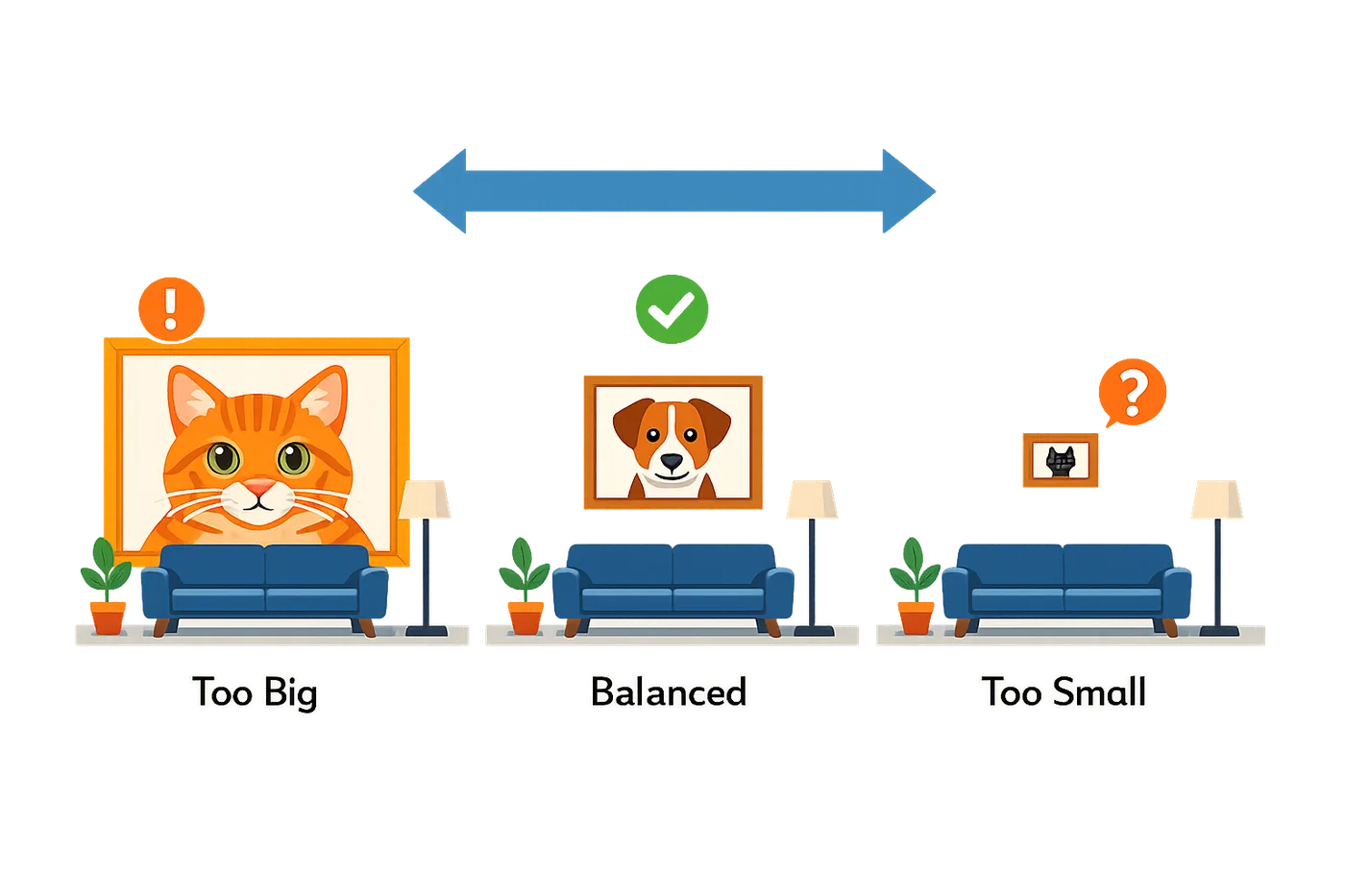
Here is the thing about blank walls in a new home: they make you second-guess everything. You stand there with a tape measure, a photo of your dog, and no idea whether you need an 11×14 or a 24×36. Too small and it looks like you taped up a postcard. Too big and it swallows the room. The sweet spot feels impossible to find.
Why Size Feels Like Guesswork
Most people eyeball it. They hold their hands up against the wall, squint, and hope for the best. Then the portrait arrives and it is either lost in all that empty space or crowding the furniture below it. The problem is not your eye — it is that walls lie. A blank wall always looks smaller than it is, and a framed portrait always looks bigger in your head than it does on the wall.
The photo you love on your phone does not come with dimensions written on it. You know you want it painted, but translating that image into inches that work in a real room is a different skill. And if you are gifting a regal pet portrait for a housewarming, you are guessing at someone else's wall and furniture, which makes it even harder.
The Furniture Problem
Portraits do not float in midair. They sit above a sofa, a console table, or a mantel. If the portrait is narrower than two-thirds the width of the furniture below it, it looks unmoored. If it is wider than the furniture, it looks like it is trying to escape. And if you hang it too high, it becomes ceiling decor instead of something you actually look at.
The other issue: most new homeowners do not have all their furniture yet. You are sizing a portrait for a room that is half-empty, which means you are making decisions based on a space that does not exist yet. That console table you ordered will not arrive for six weeks, and by then the portrait is already framed and hung.
The Gift Dilemma
When you are commissioning a portrait as a housewarming pet gift, you do not get to measure their walls. You are working blind. You want something that feels generous and thoughtful, but you also do not want to hand them a portrait so large they need to rearrange the living room to make it fit. The safe choice is often too safe — a size that works anywhere but does not make a statement anywhere.
This is the part people skip: asking the recipient about their space before you order. It feels awkward, like you are giving away the surprise. But a portrait that fits the room is worth more than the surprise of unwrapping it.
Steps to Choose the Right Size for Your Portraits
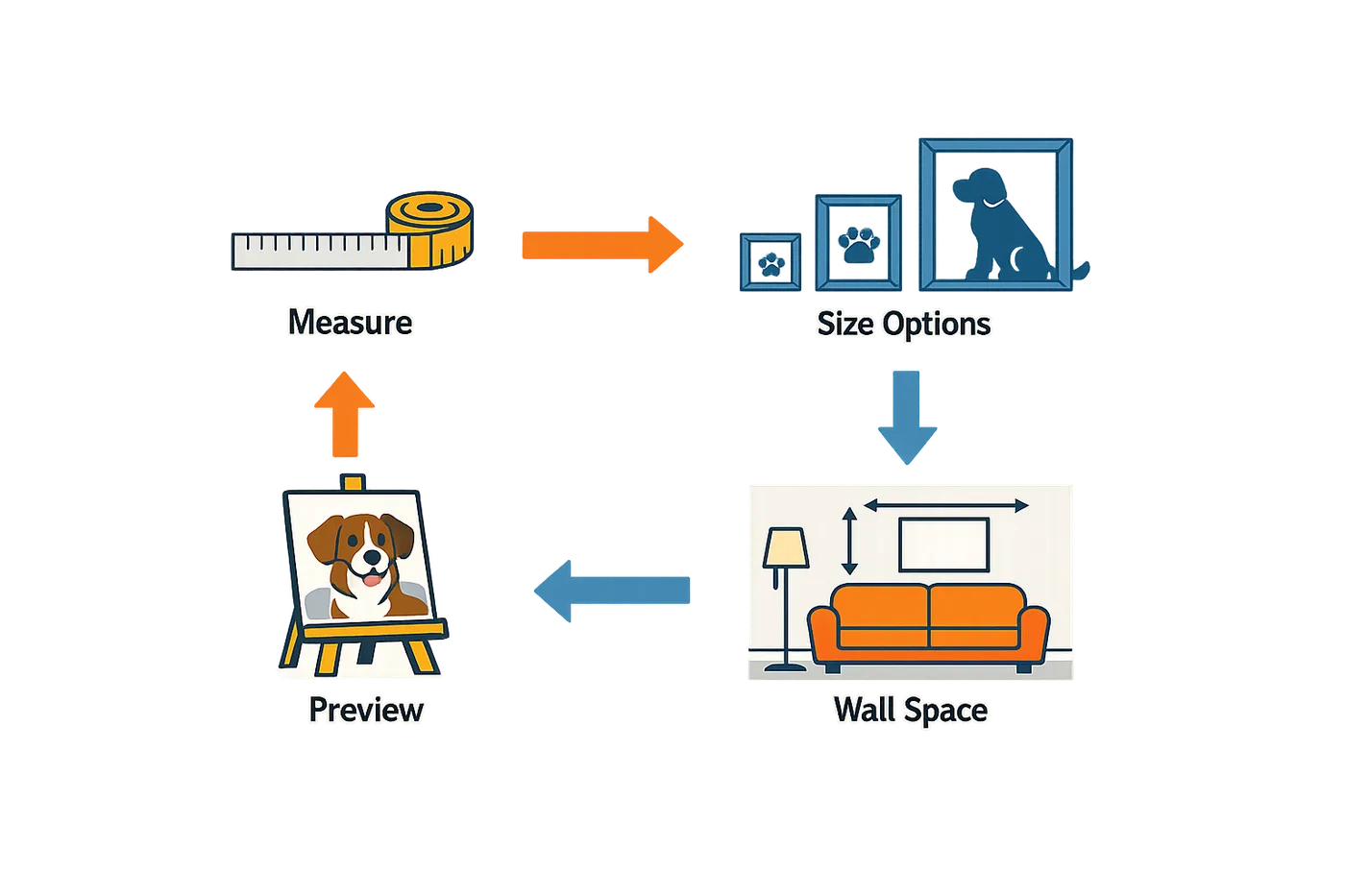
Here is the thing: measuring your wall is not the same as knowing what size portrait actually works. The wall might be eight feet wide, but that does not mean you want an eight-foot painting. Let me walk you through the steps that get you to the right answer — the one you will know when you see it.
Measure the Wall (and Everything Around It)
Start with the basics. Measure the width and height of the blank wall. Then measure the furniture below it — the sofa, console table, or credenza. Your portrait should be about two-thirds to three-quarters the width of the furniture piece. Any smaller and it floats; any bigger and it crowds the room.
If there is no furniture, measure the wall section between doorways, windows, or corners. Leave at least six to twelve inches of breathing room on each side. The portrait should anchor the space, not fight for it.
Step 1
Measure wall and furniture width
Use a tape measure to record the full wall width and the width of any furniture below. Your portrait should be roughly two-thirds to three-quarters the furniture width, or leave 6–12 inches of margin on a bare wall.
Decide on a Single Statement Piece or a Gallery Arrangement
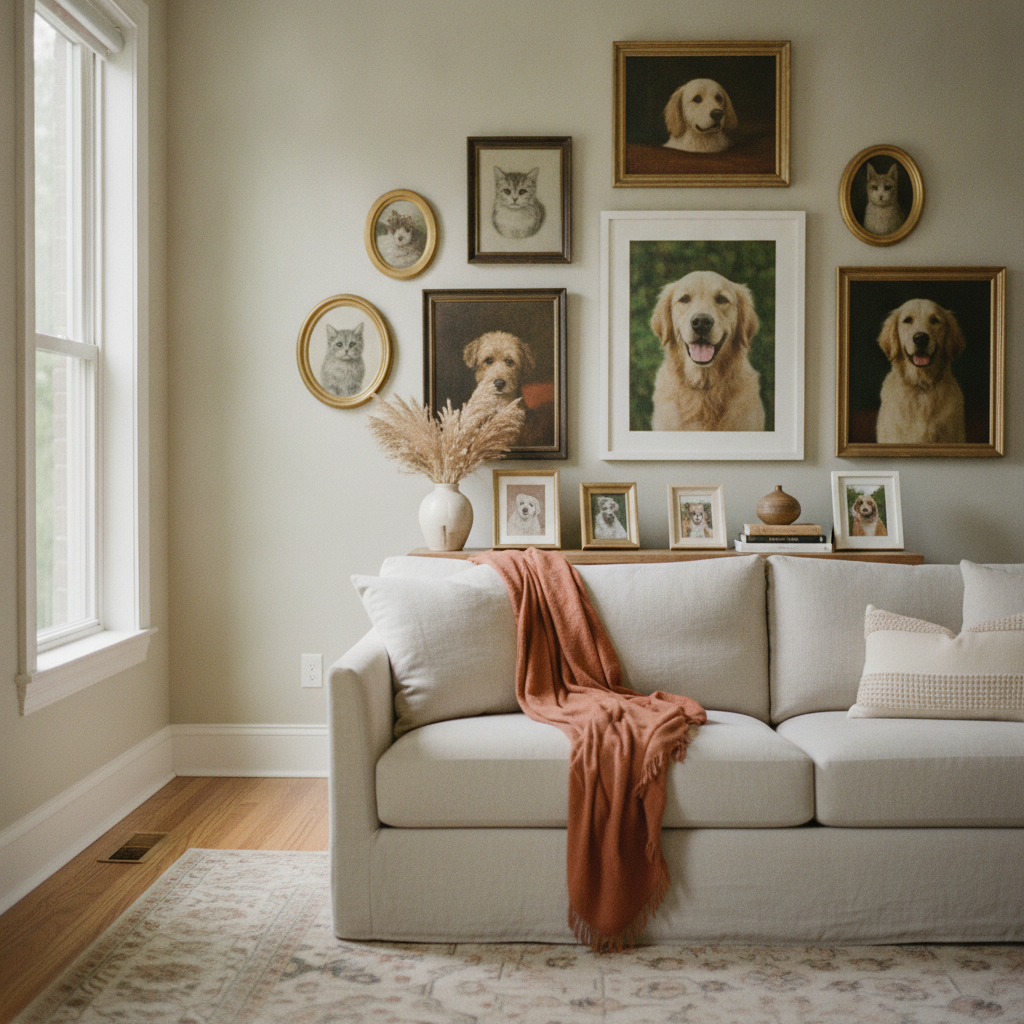
You have two paths here. A single large portrait makes a bold, clean statement — one image, one frame, done. A gallery wall with multiple smaller portraits lets you tell a story or show off more than one pet. Neither is wrong, but they solve different problems.
For a single piece, go bigger than you think. A 24×36-inch or 30×40-inch portrait feels substantial without overwhelming most living rooms. For a gallery wall, plan the full layout on the floor first — arrange three to five frames in a balanced grid or organic cluster before you put a single nail in the wall.
Step 2
Choose single or gallery layout
Decide whether you want one large statement portrait or a multi-frame gallery. Lay out gallery arrangements on the floor first to test spacing and balance before hanging.
Consider Viewing Distance and Room Scale
The farther you stand from the wall, the bigger the portrait can be. In a large living room where you view the wall from across the room, a 40×60-inch piece works beautifully. In a narrow hallway or small entryway, a 16×20-inch or 20×24-inch portrait feels right — you are standing closer, so the image does not need to be huge to fill your field of vision.
Think about where people will be when they look at the portrait. If it is above a sofa where guests sit, they will see it from close range. If it is across from the dining table, they will see it from farther away. Match the size to the distance.
Test with Paper Before You Commit
This is the part people skip, and it is the one that saves the most regret. Cut paper or tape to the exact dimensions you are considering and stick it to the wall with painter's tape. Live with it for a day or two. Walk past it. Sit in the room. You will know immediately if it is too small, too big, or just right.
If you are deciding between two sizes, tape both up side by side on different walls or at different times. The one that feels like it belongs — that is your answer.
Factor in Frame and Matting
The frame adds width and height. A thin frame might add an inch on each side; a chunky gallery frame can add three or four inches. If you are working with tight wall space, account for the frame when you measure. The same goes for matting — a wide mat makes the overall piece larger even if the portrait itself stays the same size.
When in doubt, choose the portrait size first, then pick a frame that complements it without overwhelming the image. The portrait is the star; the frame is there to support it.
If you are still deciding which photo to use or which style suits your pet best, turn your pet photo into art and explore the options that work for different breeds and personalities. Understanding how long a custom painting takes helps you plan your housewarming timeline.
Match the Portrait Orientation to the Wall Shape
A tall, narrow wall calls for a vertical portrait. A wide, low wall over a sofa wants a horizontal or square piece. If your wall is an odd shape — say, a narrow slice between two windows — consider a vertical diptych or a small square portrait centered in the space.
Do not force a horizontal portrait onto a vertical wall just because you love the photo. Crop it, reframe it, or choose a different wall. The portrait and the wall should work together, not against each other.
Tips and Tricks for Perfectly Sized Pet Portraits
Here is the thing about hanging pet portraits: the sizing is only half the story. The frame, the placement, and how you arrange them in the room do just as much work. A portrait that looks perfect on paper can feel off if the frame fights the wall or the height is wrong.
Let the Frame Breathe
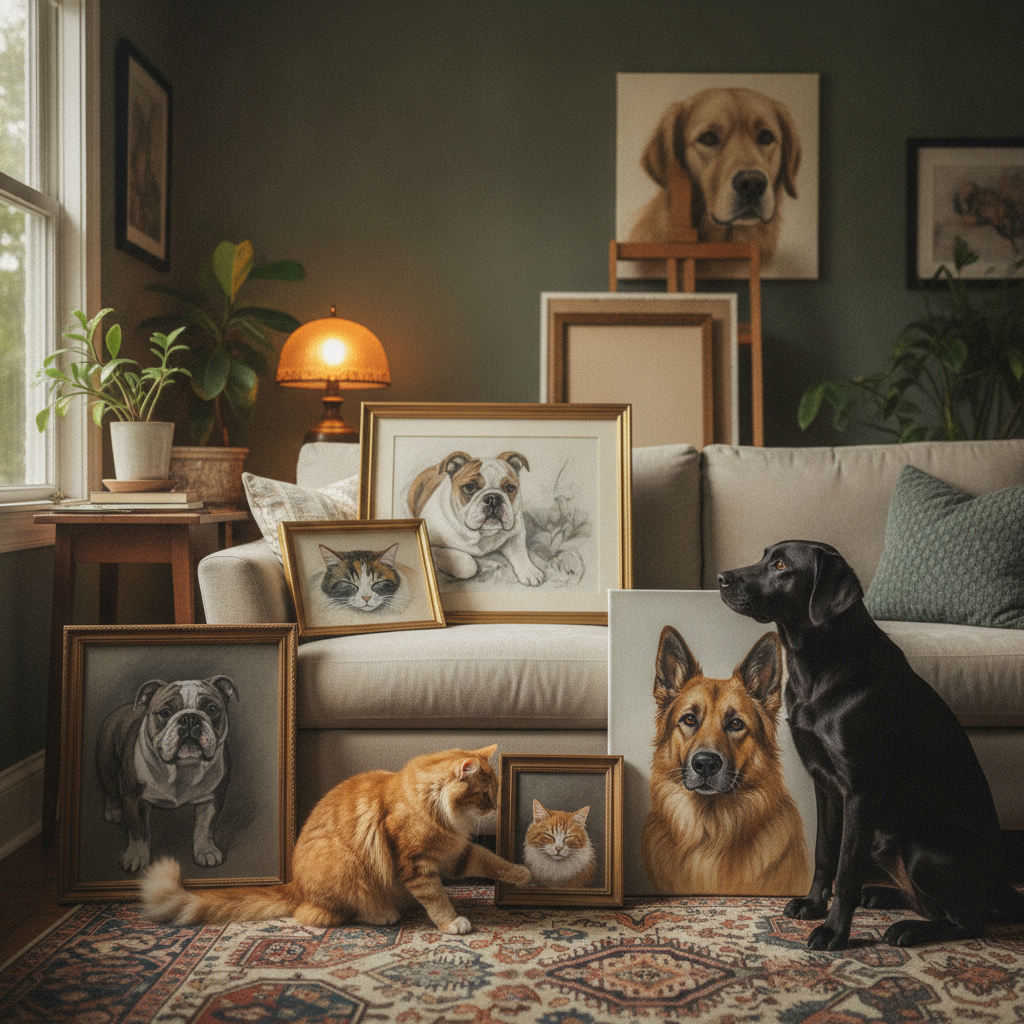
The mat and frame add inches — sometimes a lot of them. A 16×20 print in a wide mat and chunky frame can easily become 24×30 on the wall. Measure the finished piece, not just the canvas. If you are ordering online, ask for the outer dimensions before you commit to a spot.
Wide mats work beautifully for portraits because they give the image room to breathe. A two- or three-inch mat around a smaller portrait makes it feel more intentional, less like a snapshot stuck to the wall. For larger pieces, you can go narrower or skip the mat entirely if the frame is substantial enough.
Hang at Eye Level (or Theirs)
The center of the portrait should sit at average eye level — about 57 to 60 inches from the floor. That is gallery standard, and it works in most rooms. If you are hanging in a hallway or entryway where people walk past, err on the lower end. In a dining room where everyone sits, you can drop it a few inches so it feels connected to the furniture.
For a playful touch in a pet-focused space, hang the portrait at your pet's eye level. It sounds silly, but a dog portrait hung lower on a mudroom wall or in a cozy corner feels more like it belongs to them.
Group Smaller Portraits Into a Gallery Wall
If you have multiple pets or want to showcase different eras or styles, a gallery wall lets you use smaller portraits without losing impact. Three 11×14 or 12×16 portraits arranged in a row or grid can fill the same visual weight as one large piece — and they give you more flexibility to add or swap over time.
Keep the spacing consistent: two to three inches between frames is the sweet spot. Too tight and they blur together; too loose and the wall reads as scattered. Use painter's tape on the wall to mock up the layout before you hammer a single nail.
A portrait hung at the right height and framed with intention does not just fill a wall — it anchors the room.
Match the Portrait Style to the Room's Era
If your home has traditional molding, wainscoting, or classic furniture, lean into Renaissance and classical pet portraits or Victorian pet portraits with ornate frames. Modern spaces with clean lines and neutral palettes pair beautifully with simpler frames and watercolor or minimalist portrait styles. The frame and the style should feel like they were always meant to be there.
Consider Lighting Before You Hang
Good light does most of the work, but bad light will kill even the best portrait. Avoid hanging directly opposite a bright window — the glare washes out the details. If the wall gets strong afternoon sun, use UV-protective glass in the frame to keep colors from fading.
If the wall is dim, add a picture light or a nearby lamp. Soft, warm light makes painted portraits glow. You want enough light to see the brushstrokes or the texture, not so much that it flattens the image.
Leave Room to Grow
Your first portrait does not have to be your last. If you are starting with one piece, choose a size and spot that leaves room to add more later — either flanking it with smaller prints or building a gallery wall over time. Blank walls are not failures; they are just waiting for the next chapter.
Conclusion
Here is the thing about housewarming and new-home pet portraits: the right size makes the difference between a wall that feels finished and a wall that feels like it is still waiting for something. You do not need a designer or a tape measure that speaks in golden ratios. You need to know your wall, trust your eye, and pick a portrait that keeps your pet in the room with you.
Start with the wall dimensions — measure high and wide, then aim for art that fills two-thirds to three-quarters of that width. Go bigger over a sofa or console, smaller in a gallery wall or hallway. Let the photo breathe by keeping headroom generous and the frame simple. And if you are stuck between two sizes, go up — a portrait worth hanging is one you notice every time you walk past it.
The love for a pet runs deep, and a new home is the perfect place to make that visible. Whether it is a Renaissance general, a Victorian lady, or just your dog looking like himself in good light, turn your pet photo into art that fits the space and feels like home. You will know it when you see it — and so will everyone who walks in.
FAQ
What is the best size for housewarming and new-home pet portraits above a sofa?Aim for a portrait that is two-thirds to three-quarters the width of the sofa. For a standard 84-inch sofa, that means a 24×36-inch to 30×40-inch portrait works well.
How do I size a pet portrait for a narrow hallway?In narrow spaces, choose a 16×20-inch or 20×24-inch portrait. You are viewing from close range, so smaller dimensions still make an impact without overwhelming the wall.
Should I hang one large portrait or create a gallery wall?A single large portrait makes a bold statement and simplifies the design. A gallery wall with three to five smaller frames lets you showcase multiple pets or styles and adds flexibility.
How high should I hang housewarming and new-home pet portraits?Hang the center of the portrait at eye level, about 57 to 60 inches from the floor. In dining rooms or spaces where people sit, drop it a few inches lower.