Introduction
Can you use a blurry photo for pet portrait art? Yes, sometimes — it depends on what is blurry, how blurry, and what you are trying to capture. A blurry photo for pet portrait work is usable when the eyes and face remain discernible, even if the edges or background are soft. A little motion blur in the background? Fine. A face so soft you cannot see their eyes? That is harder.
Here is the thing about pet photos: the one you love on your phone is almost never the one that makes a great portrait. You have a hundred shots of your dog mid-zoomie, tongue out, ears flying — and they are perfect for your camera roll. But when you want something painted, something worth hanging, you need a different kind of photo.
Most people ask me if they can use a blurry photo for pet portrait work because it is the only one where their pet looks like them. The good news is that you probably already have a usable photo — you just need to know what to look for. By the end of this you will know exactly which photo of your pet to use, which three to skip, and how to set yourself up for a portrait you will actually want to frame. If you are exploring different artistic approaches, check out Turn Your Pet Photo Into Art: Every Style Explained to see how style choice can work with the photo you have.
The Challenge of Blurry Photos
Here is the thing about blurry photos: they fall into two very different camps, and knowing which one you have changes everything. There is soft — the kind of blur that happens when your dog turned her head mid-shot or the light was low — and then there is absent, where the detail you need simply is not there anymore. Soft you can work with. Absent you cannot.
What Makes a Photo Too Blurry
The line between usable and unusable comes down to whether you can still see the basic structure of your pet's face. If the eyes are discernible — even if they are a little fuzzy — and you can make out the shape of the head, the ears, and the general expression, the photo is probably workable. Motion blur from a wagging tail or a turned head does not kill a portrait. What does kill it is when those features are genuinely lost — swallowed by deep shadow, extreme motion blur, or a photo taken from so far away that your pet is just a smudge in the frame.
This matters most when the photo is all you have left. If your pet has passed and the only image you kept coming back to is a little blurry, you want to know whether it will translate into something worth hanging. The honest answer is that choosing clear and well-lit photos is the best path to art that feels like them — but a slightly soft photo with good light and the right expression will almost always beat a technically sharp photo where your pet looks like a stranger.
Why Clarity Matters for Pet Art
Clarity does most of the work when it comes to turning a snapshot into a portrait. Good light, a visible face, and enough detail to capture the little things — the way one ear flops, the exact curve of a nose, the look in their eyes — these are what make a portrait feel like your pet instead of just any dog or cat. When a photo is too blurry, those details vanish, and what you are left with is a guess. An artist or an algorithm can follow shapes and tonal changes, but they cannot invent the specifics that make your pet recognizable if the photo does not show them.
That said, if the photo everyone gets wrong is the one where your pet is perfectly still but the lighting is terrible, a blurry photo for pet portrait work in natural light will give you better results every time. Blur you can sometimes forgive. Bad light, you cannot. For more on how different portrait styles handle photo quality, see Turn Your Pet Photo Into Art: Every Style Explained.
How Do You Choose the Right Photo for a Blurry Photo for Pet Portrait?
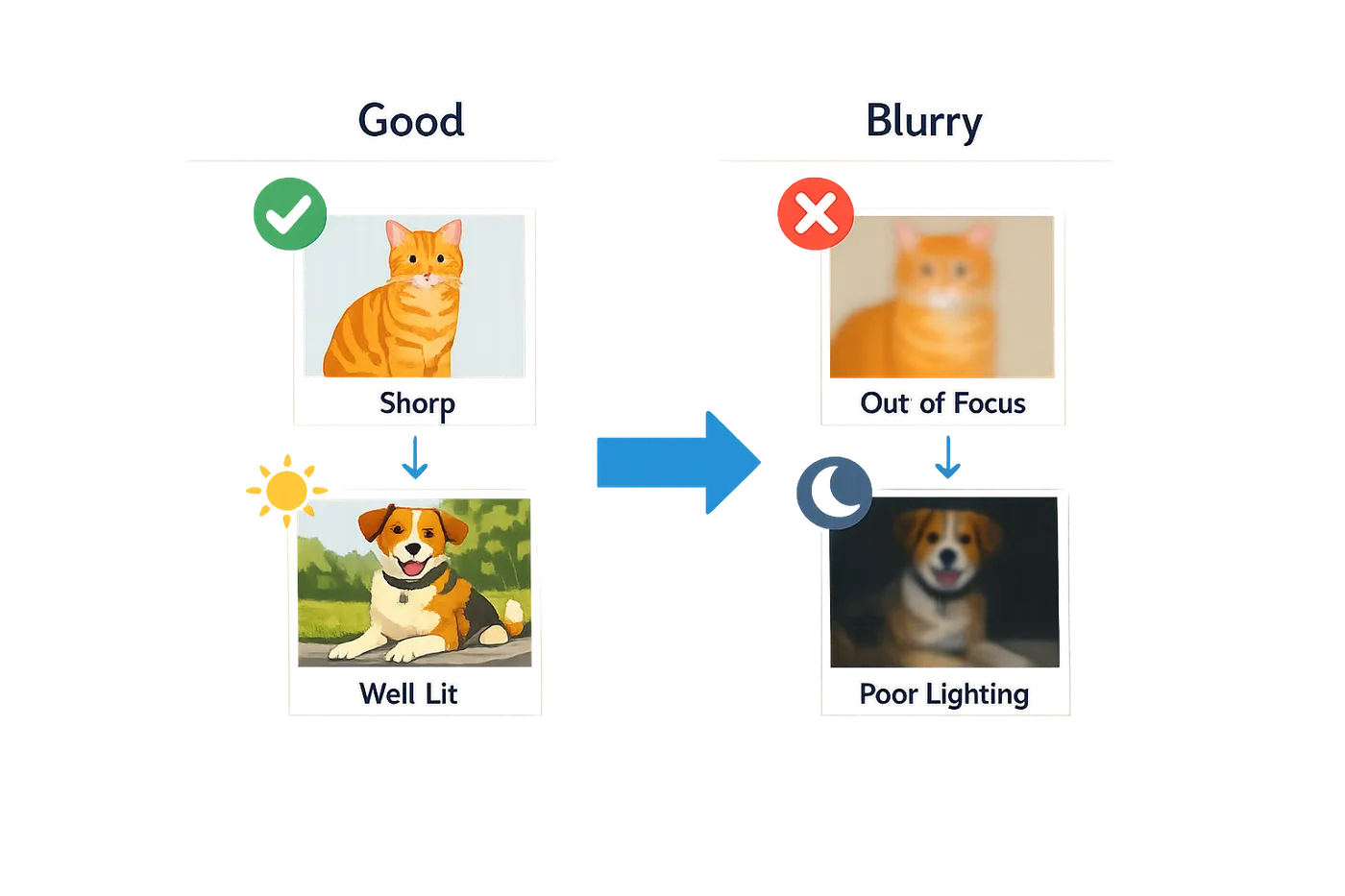
Here is the thing: choosing the right photo is not about finding the sharpest one. It is about finding the one that actually looks like your pet — the expression you keep coming back to, the way they tilt their head, the light in their eyes. A slightly soft photo with the right personality will always beat a razor-sharp photo of a stranger who happens to have their collar.
What to Look For First
Start with their face. You want a clear view of their eyes — not necessarily pin-sharp, but clear enough that you can see the shape, the color, and the direction they are looking. Good light on the eyes does most of the work. If the eyes are lost to shadow or motion blur, the portrait will feel off no matter how crisp the rest of the photo is.
Next, look at the expression. Is it the one you recognize? The slightly goofy tilt, the serious stare, the soft look they give you at their eye level on the couch? That is the shot that actually works. It does not have to be perfect — it just has to feel like them.
Zoom in on their face. Can you see the shape of their eyes, the direction of their gaze, and the color clearly? If the eyes are readable — even if the photo is a little soft overall — you are in good shape. If the eyes are a blur or lost in shadow, keep looking.
This is the part people skip. Does the photo look like your pet, or does it look like a dog who could be anyone's? The expression you choose will define the portrait. Pick the one you keep coming back to, not the one that is technically sharpest.
Do not forward a photo from a text thread or pull it from social media. Go back to your camera roll and send the original file. Compressed versions lose the little details that sell it — the texture in their fur, the catch light in their eyes, the tonal shifts that make the portrait feel three-dimensional.
What to Do When You Have a Few Candidates
If you have two or three photos that feel right, compare them side by side. Look at the light first — which one has the warmest, most even light on their face? Then look at framing. A portrait worth framing usually has a little breathing room around the subject. Let the photo breathe — tight crops can work, but they are harder to paint well if the original is already soft.
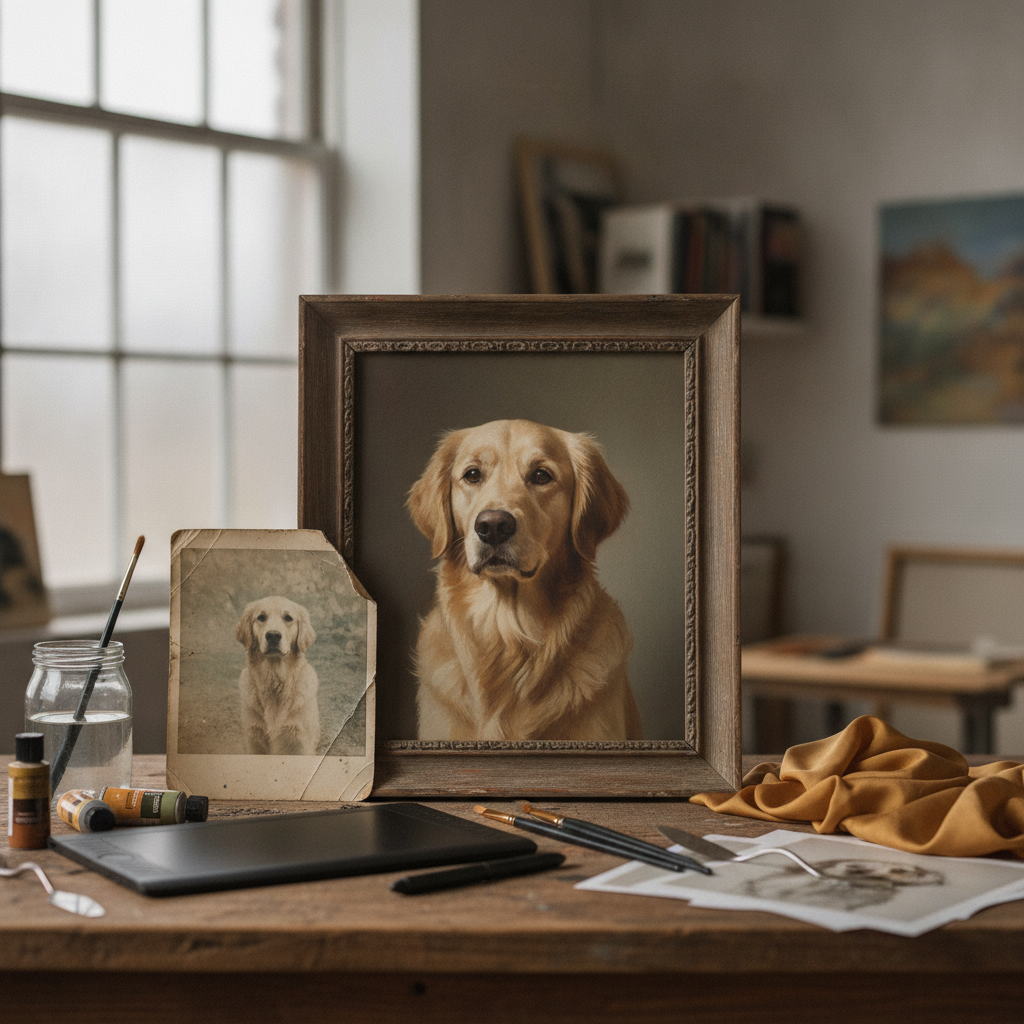
Finally, think about the era you choose. A Renaissance or classical pet portrait can be more forgiving of slight softness because the painted style smooths and interprets the photo rather than copying it pixel by pixel. A photo that would not work as a straight print can absolutely work as painted art. If you want a sense of how different portrait timelines work, see How Long Does a Custom Painting Take?
Tips and Tricks for Working with Blurry Photos
Here is the thing: a blurry photo for pet portrait work is not automatically a lost cause. Painted portraits reconstruct form and character from a photo — they do not copy pixels. That changes the game. A photo that looks rough on your phone can still give an artist everything they need if you know what to work with and what to leave alone.
Focus on the Eyes First
The eyes are where you win or lose. If the blur wiped out the eyes completely — deep shadow, motion smear, or they are just two dark smudges — that is your limit. But if you can see the shape of the eye, the highlight, even a hint of the iris, you have enough. When you edit, adjust the eyes first: a little brightness, a touch of clarity on just that area. Do not sharpen the whole face. Sharpen the eyes, the nose, maybe the edge of the ear, and let the rest breathe.
Let the Blur Work for You in Softer Styles
Some portrait styles actually benefit from a softer source photo. Watercolor, impressionist, and Victorian pet portraits all lean into soft edges and gentle transitions. A slightly blurry photo for pet portrait art gives the artist a head start — the blur smooths out distracting details and lets color and form do the work. If your photo has motion blur because your dog turned mid-shot, that same blur can translate into a dreamy, painterly background that keeps all the focus on their face.
Crop Tight and Lose the Messy Edges
Blur gets worse at the edges. The center of the frame is almost always sharper than the corners, so crop in. A tight crop on the face — eyes at their eye level, a little headroom, nothing else — hides a lot of blur problems. You lose the blurry paws, the soft ear tips, the out-of-focus background, and you keep the part that actually matters. The tighter the crop, the less the blur shows.
Good light does most of the work — a blurry photo for pet portrait art taken in soft, even light will always beat a sharp photo taken in harsh shadow.
Avoid Over-Sharpening the Fur
This is the part people skip: fur texture does not need to be sharp to look real in a painting. Over-sharpening fur creates a wiry, unnatural look that no amount of paint can fix. If the photo is blurry, leave the fur soft. Sharpen only the key features — face, nose, eyes — and keep the rest gentle. A painted portrait will reconstruct the fur from color, shape, and the direction of the coat, not from pixel-level sharpness.
Combine Multiple Photos if One is Not Enough
If the photo you love has blurry eyes but sharp ears, and another photo has sharp eyes but a weird expression, tell the artist. Many portrait services can combine references — the expression from one, the detail from another. It is not cheating. It is giving the artist the information they need to make it feel like your pet. If you are curious about the difference between AI-generated and hand-painted approaches, read AI Portrait vs Hand-Painted Portrait.
FAQ
Can you use a blurry photo for pet portrait if the face is clear?Yes. If the eyes, nose, and general expression are discernible, a blurry photo for pet portrait work is usable. Painted styles can work around soft edges and motion blur in the background.
What photo quality do you need for a pet portrait?You need a photo where the face is visible, the eyes are clear, and the light is decent. Sharpness matters less than expression and clarity in the key features.
Can an artist fix a blurry pet photo?An artist can interpret and reconstruct detail from a slightly blurry photo, but they cannot invent features that are completely lost to blur or shadow. Send the clearest version you have.
What is the best lighting for a pet portrait photo?Natural, soft, even light — like near a window or outdoors in open shade — gives the best results. Avoid harsh overhead light or deep shadow on the face.
Conclusion
Here is the thing: the photo you love is almost always worth trying. A little blur does not disqualify a shot — it just means you need to think about style, crop, and what you want the final portrait to feel like. A blurry photo for pet portrait work can turn into watercolors that belong on a wall, and technically sharp images can feel flat because the expression is not there.
The real question is not whether the photo is blurry — it is whether it captures something you want to keep. If your pet looks like themselves, if the light is decent, and if you can see their face clearly enough to recognize them, you have what you need. The era you choose and the way you crop it will do the rest of the work.
Start with the shot that actually works — the one you keep coming back to — and let the portrait style breathe life into it. No studio required, no perfect conditions, just a photo worth framing and a little help from the right approach. If you are ready to see what your favorite photo can become, turn your pet photo into art and explore the styles that make even imperfect shots feel like heirlooms.
Wondering if you can use a blurry photo for pet portrait art? Discover tips on choosing the right photo for stunning pet portraits.