
Introduction
Here is the thing about pet portraits: the format matters as much as the photo. You can have the perfect shot of your dog — good light, her ears up, that look she gives you — and still end up with something that feels wrong on the wall. Canvas vs framed print vs metal is not just about materials. It is about whether the portrait feels like her, fits your room, and looks like something you would actually hang.
People often agonize over which photo to use, then pick a format in thirty seconds. That is backward. The era you choose, the room it goes in, and how formal or relaxed you want it to feel — all of that decides whether canvas, framed print, or metal is the one that works. A Renaissance portrait of your cat in a gilded frame hits different than the same image printed on brushed aluminum. One feels like a museum piece. The other feels like a coffee-table book came to life.
The good news: once you know what each format does well — and where it falls flat — the decision is easy. By the end of this you will know exactly which one suits your pet, your space, and the portrait style you are going for. No studio required, no guesswork. Just the shot that actually works, in the format that makes it worth hanging. For a deeper look at how different artistic treatments change the feel of a portrait, see Turn Your Pet Photo Into Art: Every Style Explained.
Let me show you the differences that matter — and the ones that do not.
Explore the differences between canvas, framed print, and metal for your pet portrait. Find out which format best suits your style and space.
Overview of Canvas
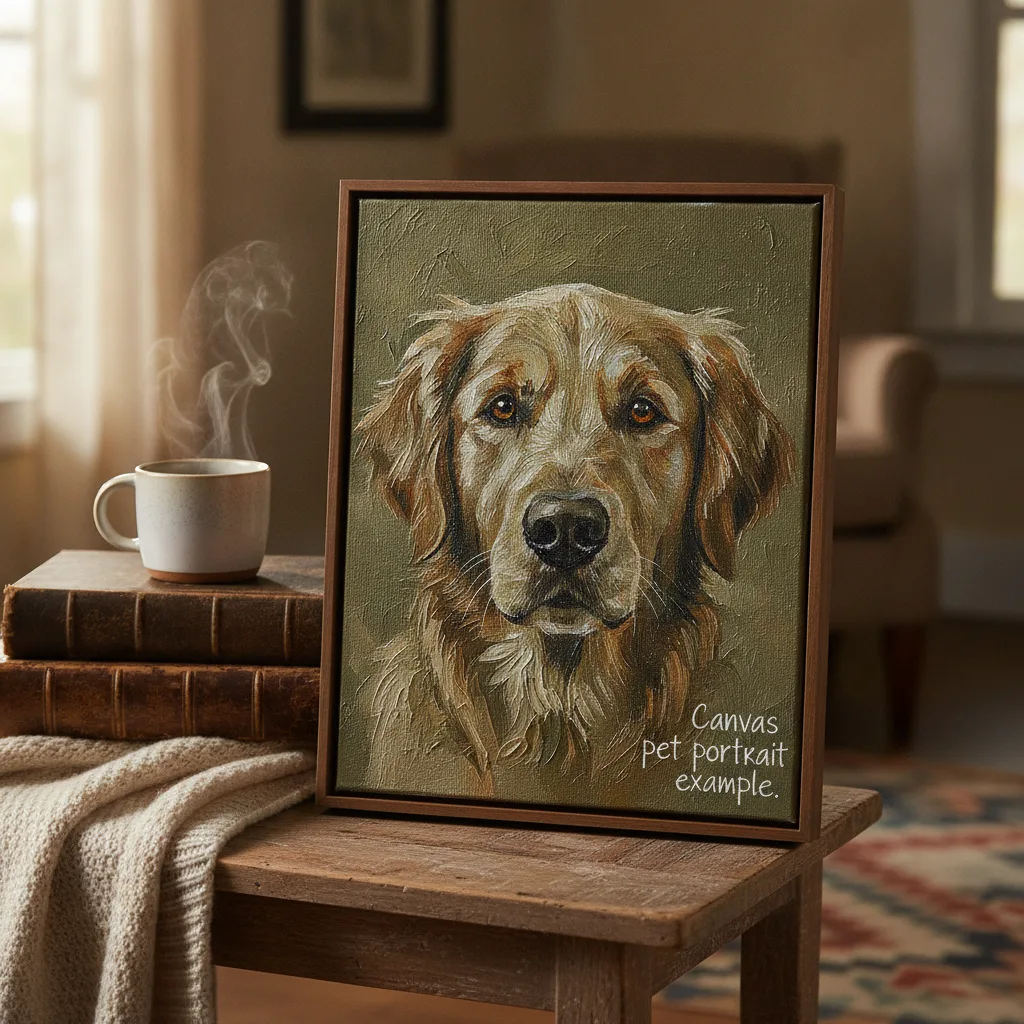
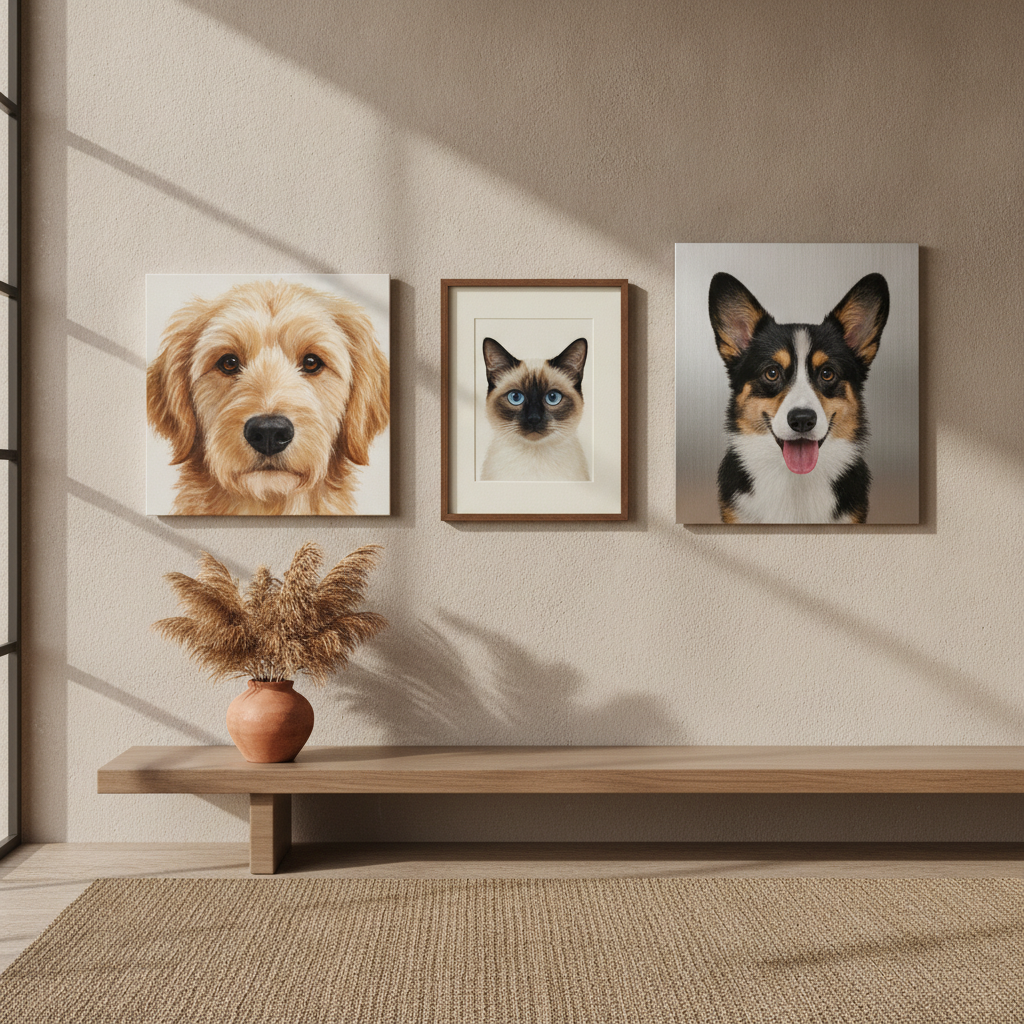
Canvas is the format most people picture when they think "painting." It is a woven fabric — usually cotton or linen — stretched tight over a wooden frame. Your pet portrait gets printed directly onto that textured surface, giving it the look and feel of something an artist might have painted by hand. The texture is subtle but present; you see it when light hits the surface at an angle, and it softens the image in a way that feels warm and approachable.
The whole thing is frameless by default. The image wraps around the edges of the stretcher bars, so you hang it straight on the wall without glass or matting in the way. That simplicity is part of the appeal — it does not demand much from your décor, and it does not fight for attention. Canvas works in living rooms, hallways, bedrooms, anywhere you want something that feels like art without the formality of a traditional frame.
Why Canvas Works for Pet Portraits
Canvas has a softness that flatters fur and fabric. The woven texture breaks up sharp digital edges, so even a phone snapshot can look like it belongs on a wall. It is forgiving in that way — good light does most of the work, and the canvas finish handles the rest. If your photo has a little noise or grain, canvas absorbs it rather than highlighting it.
It is also lightweight and easy to hang. You are not dealing with glass, heavy frames, or complicated mounting hardware. Most canvas prints come with a sawtooth hanger or wire on the back, and you are done in two minutes with a single nail. If you move or rearrange often, canvas goes with you without the stress of packing fragile materials.
For pet portraits specifically, canvas leans traditional. It suits the Renaissance and Classical pet portraits style beautifully — think rich robes, dramatic lighting, and a background that could have come from a Flemish master. But it also works for softer, more modern styles like watercolor or pastel. The texture does not overpower the image; it supports it.
What Canvas Does Not Do Well
Canvas is not the sharpest option. The texture that makes it forgiving also means fine details — individual whiskers, the glint in an eye, tiny patterns in fur — can get slightly softened. If your portrait depends on razor-sharp clarity, canvas might not deliver what you are after.
It also fades faster than metal or framed prints behind UV-filtering glass. Canvas is an unprotected surface exposed to air, light, and humidity. Over time, especially in bright rooms or near windows, colors will shift. It is not immediate, but it is real. If you want something that will look the same in twenty years, canvas requires more care — keep it out of direct sunlight, and consider a UV-protective spray if the room gets a lot of natural light.
The surface can also be damaged more easily than a print behind glass. A bump, a scratch, a curious cat — canvas is vulnerable. It is durable enough for normal household life, but it is not bulletproof.
Overview of Framed Print
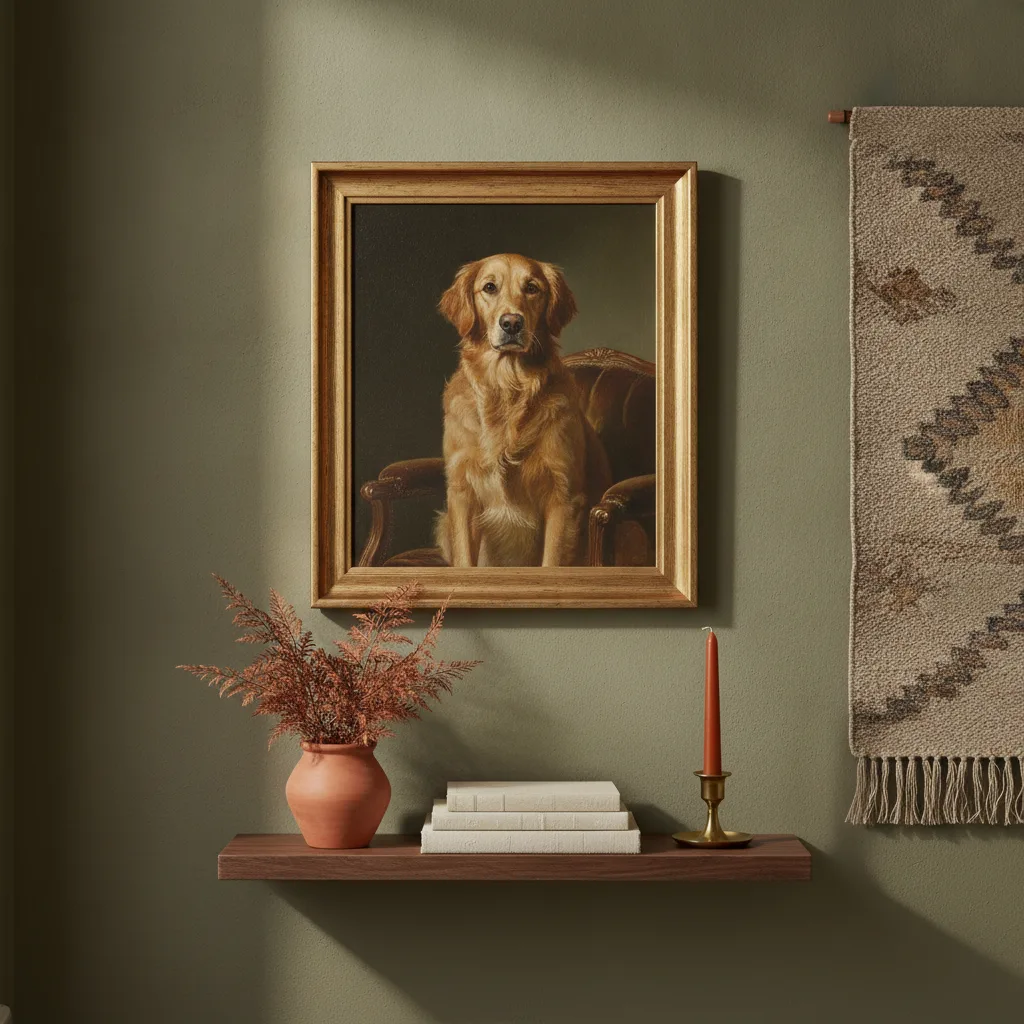
Here is the thing about framed prints: they are the classic choice for a reason. A framed print is essentially a photograph or digital print mounted behind glass or acrylic glazing, surrounded by a mat and frame. That combination — the mat, the glass, the frame — gives you a polished, formal presentation that works in nearly any room. It is the look you see in galleries, in formal living rooms, in offices where you want something that feels intentional and finished.
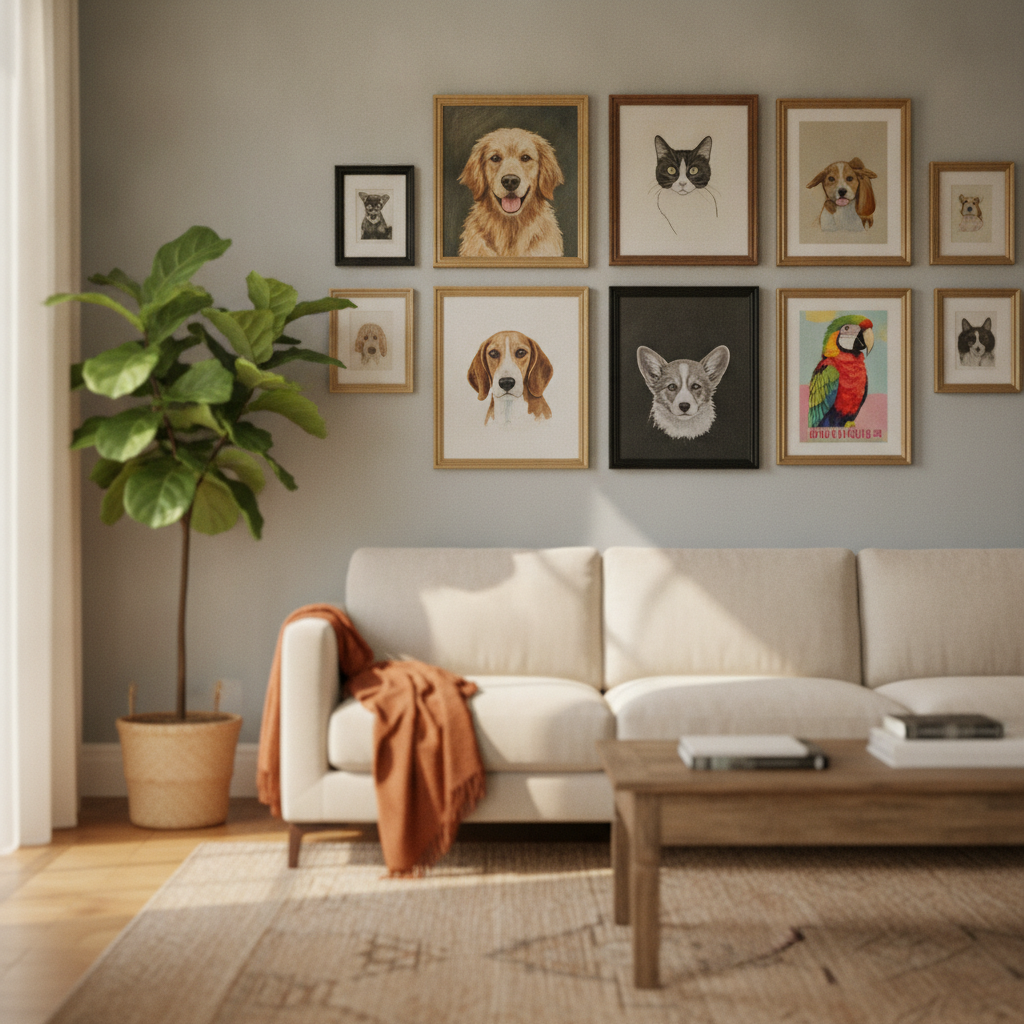
The versatility is what makes framed prints worth considering. You can choose a thin black frame for a modern, minimalist space, or go with ornate wood for something more traditional. The mat — that border between the image and the frame — gives the portrait breathing room and keeps the eye focused on your pet. You control the whole aesthetic: frame color, mat width, even the type of glazing. That flexibility means a framed print can suit almost any decor style, from farmhouse to contemporary.
Traditional Elegance and Protection
Framed prints offer a timeless elegance that fits beautifully into formal settings. The glass or acrylic glazing does more than look polished — it protects the print from dust, moisture, and handling. When you choose UV-filtering glazing (ideally blocking at least 99 percent of UV radiation), you are also protecting the image from fading over time. That extra layer of protection makes framed prints a smart choice if you are hanging the portrait in a bright room or want something that will last for years without visible wear.
The mat inside the frame keeps the print from touching the glass, which prevents condensation damage and gives the portrait a gallery-quality look. That separation also means the portrait has depth — it is not flat against the wall the way a canvas or metal print might be. For detailed work or portraits where you want the fine details of your pet's face to stand out, that crisp, protected presentation is hard to beat.
When Framed Prints Make Sense
Framed prints are the go-to when you want something traditional, formal, or highly customizable. They work well in spaces where you already have framed art or photos — they blend in without looking out of place. If you are giving a portrait as a gift, a framed print feels complete and ready to hang, no additional steps required.
They are also the best choice when you want to match existing decor. Because you control the frame style, mat color, and finish, you can make the portrait fit the room exactly. A Victorian pet portrait in a dark wood frame with a cream mat looks right at home in a traditional study, while the same image in a sleek metal frame with no mat fits a modern apartment.
The trade-off is weight and cost. Framed prints, especially larger ones, become heavy quickly — the glass, mat, and frame add up. Shipping a framed print safely is more expensive than shipping a rolled canvas or a lightweight metal print, and larger sizes climb steeply in price. If you are looking at anything over 24 inches, expect the frame to dominate the budget and the installation to require sturdy wall anchors.
Overview of Metal
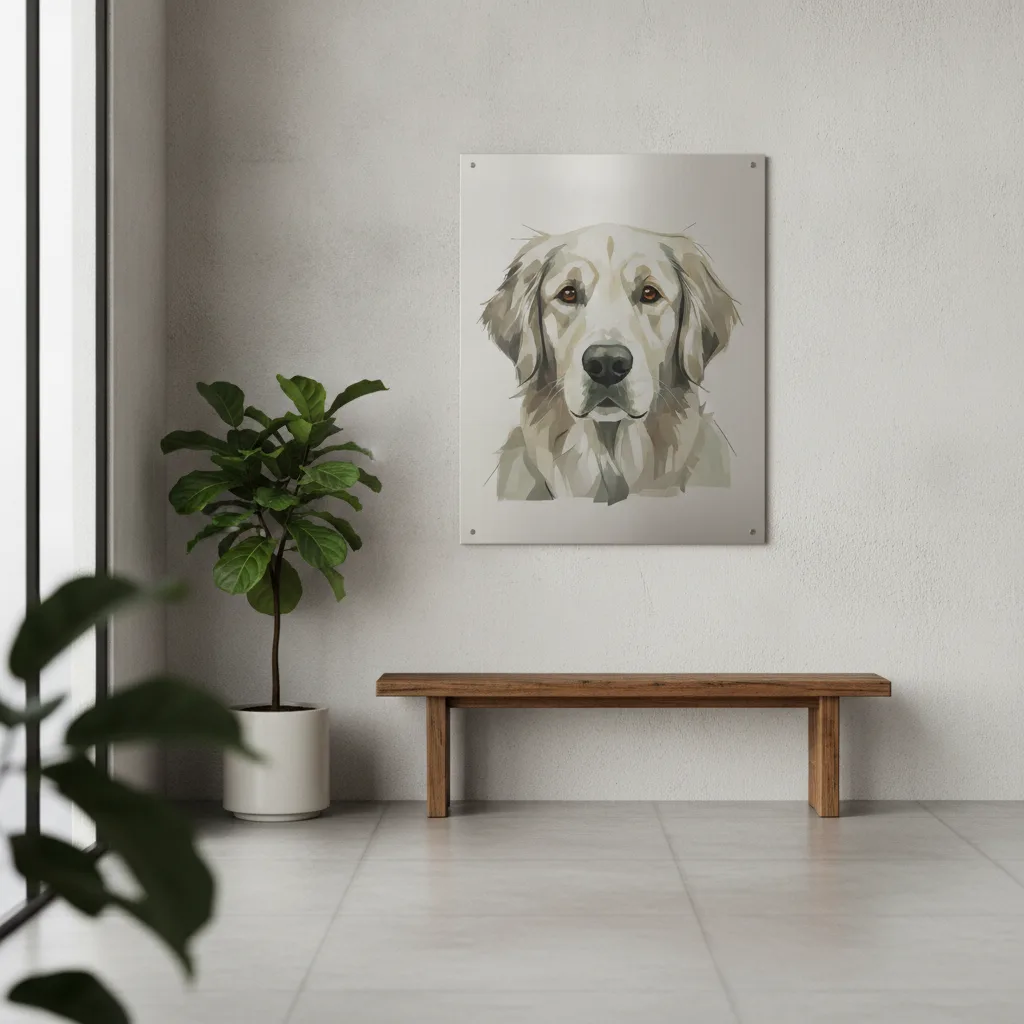
Metal prints are made by infusing dyes into specially coated aluminum sheets — the image becomes part of the metal itself. The result is a clean, contemporary presentation with exceptional sharpness, depth, and vivid color saturation. If you want your pet portrait to look modern and gallery-quality, metal delivers that look straight out of the box.
The surface is rigid and lightweight. There is no frame, no glass, no texture to compete with the image. The photo sits directly on the aluminum, which gives it a smooth, almost luminous finish. Colors pop — especially bright backgrounds and high-contrast subjects — and the detail is sharp at every viewing distance.
Durability You Can Trust
Here is the thing about metal: it is built to last. Metal prints are waterproof, scratch-resistant, fade-proof, and UV-resistant. You can hang one in a bathroom, a kitchen, or even a covered outdoor space without worrying about humidity, splashes, or sunlight doing damage over time. The material does not warp, sag, or yellow.
If you have pets or kids — or both — metal can take the wear. It is not fragile. A quick wipe with a damp cloth keeps it clean, and there is no glass to break or canvas to tear.
The Modern, Minimalist Look
Metal suits contemporary spaces. The frameless design, the high-gloss or matte finish, the way the image seems to float off the wall — it all reads as sleek and intentional. If your home leans modern, industrial, or minimalist, metal fits right in.
That same look can feel out of place in a traditional or cozy room. Metal does not soften — it sharpens. If you are after warmth or a classic gallery-wall feel, turn your pet photo into art in a format that plays to that mood instead.
Feature Comparison
Here is the thing: the format you pick changes how your portrait looks, how long it lasts, and how much work you put into keeping it nice. Let me walk you through what actually matters.
Canvas vs Framed Print vs Metal: Durability
Canvas can sag over time — the fabric stretches, and if it is in a sunny spot, the colors fade. Dust sticks to the weave, and you cannot just wipe it down without risking the surface. Metal prints are the opposite. They do not sag, they do not fade in sunlight the way canvas does, and you can clean them with a damp cloth. Framed prints sit behind glass, so they are protected from dust and fingerprints, but the glass can break, and if moisture gets in, you are dealing with mold or warping.
If you want something that holds up without babying it, metal wins outright.
Appearance: Texture and Color
Canvas has a fabric texture that softens everything — colors look flatter, details get a little fuzzy, and the whole thing feels warm and traditional. That works beautifully for portraits in Renaissance or Victorian styles, where you want that painterly, old-master look. Metal prints produce strong contrast, rich blacks, and vibrant colors. If your portrait has dramatic light or bold color, metal makes it pop. Framed prints sit somewhere in the middle: sharp and clean, but without the luminous depth metal gives you.
Neither approach is universally better — it depends on the portrait style you chose and the room it is going into. A Renaissance pet portrait feels right on canvas; a sleek, modern photo portrait looks incredible on metal.
Maintenance: What It Takes to Keep Them Looking Good
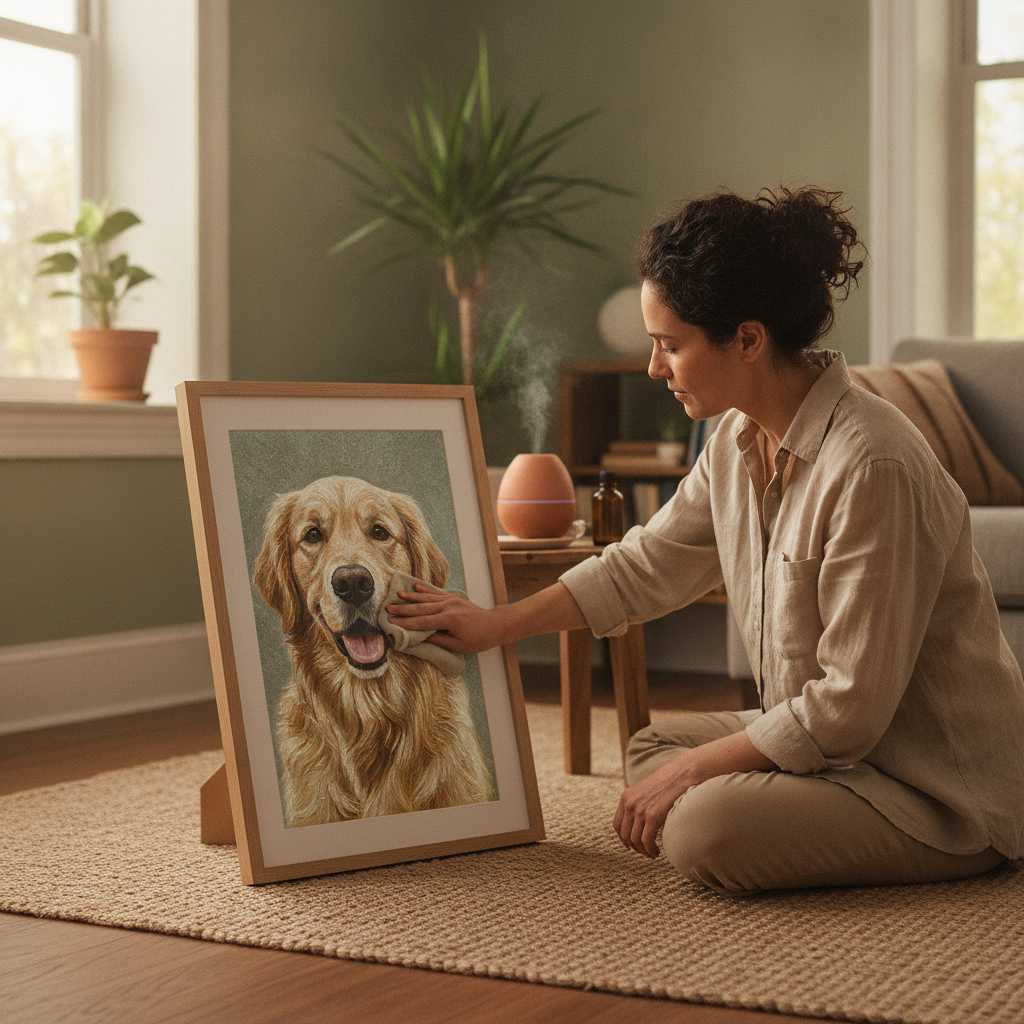
Canvas collects dust in the weave, and you cannot scrub it. A soft brush or a very light vacuum with a brush attachment is about all you can do. Metal prints are easy — wipe them down with a microfiber cloth, and they look new again. Framed prints need the least maintenance if the seal is good, but you have to clean the glass, and if you are not careful, you will leave streaks or smudges.
This is the part people skip when they are deciding: how much do you want to think about it after it is on the wall? Metal asks the least of you. Canvas asks the most.
Pricing Comparison
Here is the thing about pricing: the number on the screen is only part of what you pay. Canvas, framed print, and metal all start in different places — and the gap widens fast once you add size, custom framing, or protective finishes.
Canvas is the budget-friendly entry point. Small prints start around $16–$40 depending on the vendor, and even large pieces stay under a few hundred dollars in most cases. You get a ready-to-hang product with no frame required, which keeps the upfront cost low. The trade-off is durability — canvas needs gentler handling and fades faster in bright rooms, so you may replace it sooner than you would a metal or framed piece.
Framed prints sit in the middle, but custom framing changes the math quickly. A basic matted print behind glass might run $50–$100 for a medium size. Add museum glass, a thicker mat, or a hand-finished wood frame, and you are looking at several hundred dollars for the same image. The print itself is inexpensive; the frame is where the cost lives. That is why framed prints work best when you already have a frame you love or when you are willing to invest in the presentation.
Metal prints are the premium option. Small sizes start around $20–$45, but larger pieces and thicker substrates push the price well above canvas. Metal's longevity and low-maintenance finish justify the cost if you plan to keep the portrait up for years — you will not need to replace it, reframe it, or worry about UV damage the way you do with canvas. For a custom horse portrait or a memorial piece you want to last, metal's durability often makes it the better value over time.
What Drives the Price Differences
Size is the biggest lever. Canvas and framed prints scale up more affordably than metal because the substrate is lighter and the printing process is simpler. Metal prints require specialized dye-sublimation equipment and thicker aluminum sheets, so every inch you add costs more.
Finish and mounting options also matter. A glossy metal print with a float mount costs more than a matte canvas on stretcher bars. UV-protective coatings, thicker substrates, and custom sizing all add to the final bill. If you are working within a budget, canvas gives you the most surface area for the least money. If you want something that holds up in a bright room or a high-traffic hallway, metal's higher upfront cost pays off in the long run.
Pros and Cons of Each Format
Every format has its place. The trick is matching the right one to what you actually want on your wall — and how much hassle you are willing to deal with down the road.
Canvas: Warm, Traditional, and Forgiving
Canvas gives you that gallery feel without the sticker shock. The texture hides small imperfections in the photo, which is why it works so well for portraits where the subject matters more than pixel-perfect sharpness. It is lightweight, easy to hang, and you can go big without needing reinforcements.
The downside: canvas can fade if you hang it in direct sunlight, and humidity will make it sag over time. It is also harder to clean — a smudge or a paw print is there to stay unless you are very careful. If you have pets or kids who might brush up against it, that texture you love will collect dust and fingerprints.
Framed Print: Classic, Protective, and Versatile
A framed print behind glass (or acrylic) keeps the image safe from just about everything — dust, moisture, UV rays if you choose the right glazing. The frame itself gives you endless style options, from sleek modern black to ornate Victorian gold. It is the format that feels most like a keepsake, and it is the one most people think of when they picture a portrait on the wall.
But framed prints are heavier, especially with glass. Acrylic glazing is lighter but scratches more easily. Shipping a framed piece is riskier — glass can shatter, and even a small crack ruins the whole thing. And if you want UV protection, you are paying extra for specialized glazing that filters harmful light.
A framed print is the one you hand down — it is built to last if you choose archival materials and keep it out of extreme conditions.
Metal: Bold, Durable, and Modern
Metal prints are nearly indestructible. They do not fade, they do not warp, and you can wipe them down with a damp cloth without worrying. The colors are vivid — almost too vivid for some tastes — and the finish (glossy or matte) changes the whole mood of the image. They are lightweight, frameless, and they make a statement.
The trade-off: metal can look cold or clinical if the portrait style does not match. A soft watercolor pet portrait on metal feels off; a high-contrast modern photo looks incredible. Glare can be an issue with glossy finishes, and while metal is tough, a deep scratch will show. If you are going for warmth and nostalgia, metal is not the answer.
For a detailed breakdown of how different portrait styles translate to each format, see Turn Your Pet Photo Into Art: Every Style Explained.
Who Should Choose What?
Here is the thing: the right format is the one that makes you want to keep looking at it. Not the one that sounds fanciest or costs the most — the one that fits your space, your style, and the way you actually live.
Choose Canvas If You Want Warmth and Softness
Canvas works when you want the portrait to feel like part of the room, not a statement piece fighting for attention. It is lightweight, easy to hang, and the texture gives the image a painted, gallery feel. If your pet portrait is going in a bedroom, a cozy hallway, or anywhere you want something soft and approachable, canvas does that work quietly. It is also the affordable choice for larger prints — you can go big without the price jumping off a cliff.
Canvas is the move for Renaissance and classical pet portraits or anything with rich, warm tones. The fabric texture plays nicely with brushstroke effects and muted palettes. If you are a renter, know that canvas requires drilling to mount — not a dealbreaker, but worth planning for.
Choose a Framed Print for Protection and Tradition
Framed prints give you options. You pick the mat, the frame style, the glass — it is the most customizable route, and it protects the print from dust, fingerprints, and the chaos of high-traffic rooms like kitchens or living rooms. If the portrait is going somewhere it might get bumped, touched, or scrutinized up close, the frame and glass keep it looking clean.
This format works well when you want the portrait to match existing décor or when you are gifting something that needs to arrive ready to hang. Framed prints feel polished and intentional. They cost more than canvas for the same size, but you are paying for durability and that finished, gallery-wall look.
Choose Metal for Bold, Modern Spaces
Metal prints are sharp, bright, and unapologetically modern. The colors pop, the surface reflects light, and the whole thing feels contemporary in a way canvas never will. If your space is clean-lined, minimalist, or full of bold contrasts, metal fits right in. It is also the best choice for high-detail images — cityscapes, abstracts, anything where you want edge-to-edge clarity.
For renters, metal has a real advantage: magnetic mounting systems mean no drilling, no wall damage, and easy swaps when you move. The downside is weight and fragility — metal prints are heavier than canvas and can dent if mishandled. But if your style skews modern and you want something that looks expensive without trying too hard, metal delivers.
Final Verdict
Here is the thing: there is no single best format for every pet portrait. The one you choose depends on where it is going, how you want it to feel, and what you are willing to maintain.
Canvas gives you warmth and texture. It feels like art you would hang in a living room or bedroom — soft, traditional, and a little forgiving if the light is not perfect. The texture hides small imperfections in the photo, and the stretched look works in spaces that already feel cozy. If you want something that feels painted and approachable, canvas does that job well.
Framed prints give you control. You pick the mat, the frame, the glass — and you can change your mind later without replacing the whole piece. They work in formal spaces, galleries, and anywhere you want clean lines and a polished look. If you are the kind of person who rearranges frames or swaps art seasonally, a framed print is the format that grows with you.
Metal is sharp, modern, and built to last. The colors stay vivid, the surface is easy to clean, and it holds up in high-traffic areas, kitchens, and bathrooms where canvas and paper would struggle. If your space is contemporary and you want a portrait that looks expensive without a frame, metal delivers.
The cheapest option is the one you will actually hang and keep hanging — not the one you replace in two years because it does not fit the room.
What Wins Where
For a traditional home with warm tones and soft lighting, canvas is the safe bet. For a gallery wall or a space where you might swap frames, go with a framed print. For a sleek, modern interior or a high-humidity room, metal is the clear winner.
If you are gifting a portrait, think about the recipient's space. A framed print is the most adaptable — they can reframe it to match their style. Canvas works if you know their taste leans traditional. Metal is a bold choice for someone with a contemporary home who will appreciate the durability.
For memorial portraits, choose the format that feels right for the person or pet. There is no wrong answer here — just the one that you will want to see every day. If that is a soft canvas in the hallway or a crisp framed print on the mantel or a sleek metal piece in the office, trust that instinct.
The Bottom Line
You do not need to overthink this. Pick the format that fits your space, your style, and your maintenance tolerance. If you are still unsure, start with a framed print — it is the most flexible, and you can always reframe it later. If you know you want something modern and low-maintenance, go metal. If you want warmth and texture, go canvas.
The portrait is what matters. The format is just how you keep it on the wall. Choose the one that makes you want to hang it — and then actually hang it.
If you are still deciding which style suits your pet best, read our guide on Renaissance and Classical Pet Portraits to see how different artistic eras change the feel of the final piece.