
Introduction
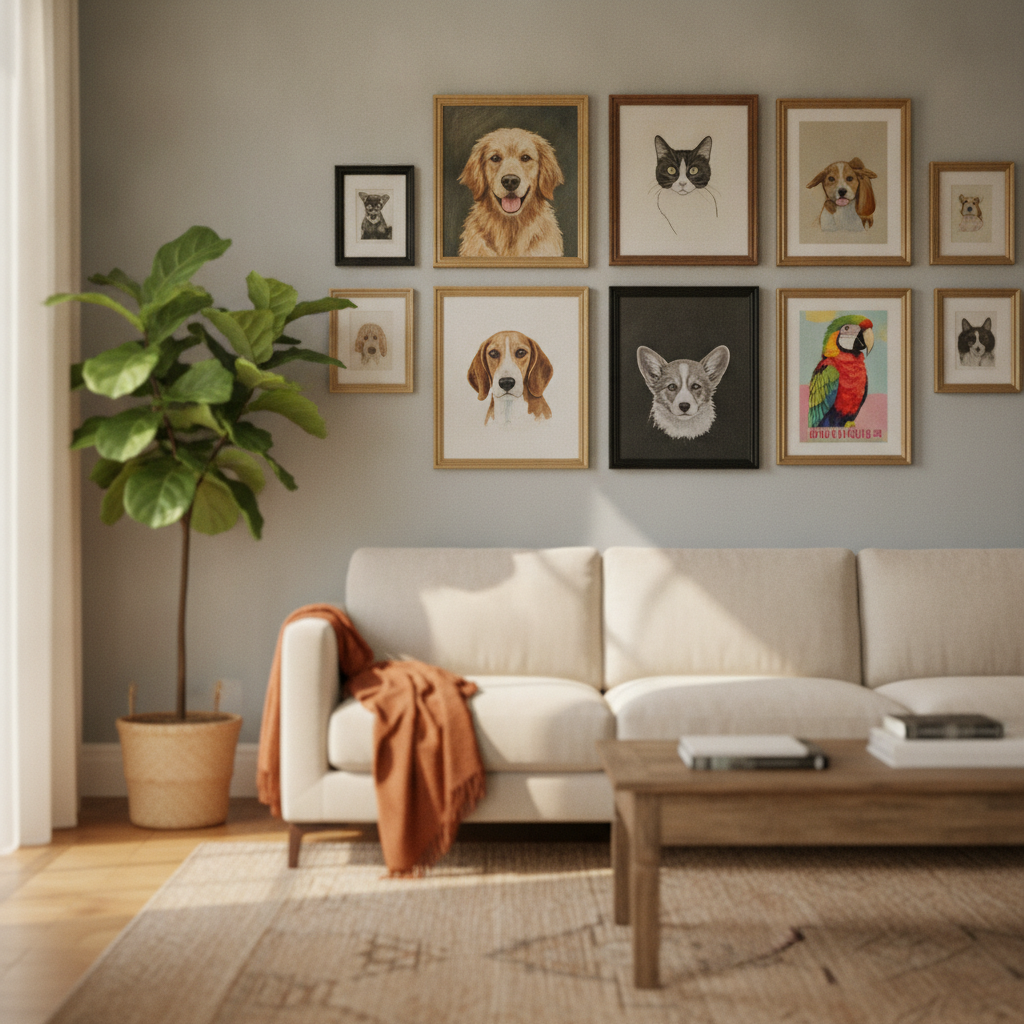
Printed pet portrait care is the difference between a piece that lasts a decade and one that looks cheap by next summer. The moment you hang a portrait, you want it to stay exactly as vibrant as the day it arrived. You paid for something worth hanging — a portrait that actually looks like your dog, your cat, the pet you keep coming back to when you scroll through your photos. The last thing you want is for that portrait to fade into a washed-out shadow of itself six months later.
I have seen it happen. A beautiful portrait, perfectly framed, hung in the wrong spot — and within a year the colors are dull, the paper is warped, and the whole thing looks tired. It does not have to be that way. Trust me on this: a little attention to printed pet portrait care makes all the difference.
The good news is that keeping your portrait in great shape is not complicated. You do not need a climate-controlled gallery or museum-grade equipment. You just need to understand what actually threatens a printed portrait — and most of it comes down to three things: moisture, heat, and light. Get those right, and your portrait stays vibrant, sharp, and worth looking at every time you walk past it. If you are considering turning your pet photo into art, knowing how to protect the finished piece is just as important as choosing the right style.
By the end of this you will know exactly how to display, store, and protect your printed pet portrait so it stays as good as the day you opened the box. Let the photo breathe, keep it out of harm's way, and it will hang beautifully for years.
What Threatens Your Printed Pet Portrait?
Here is the thing about printed pet portraits: the moment they leave the printer, they start aging. Not in a romantic, vintage way — in a fade-to-gray, curl-at-the-edges, what-happened-to-her-face kind of way. Most people hang them and forget them, and six months later the colors are not what they remember.
The culprits are simple and everywhere. Light — especially the UV kind that comes through windows and from overhead bulbs — breaks down the dyes and pigments in the print. Humidity makes inks bleed and paper warp. Temperature swings cause the support to buckle. Even the air itself, if it is too dry or too damp, speeds up deterioration you cannot see until it is too late.
What Goes Wrong (and When)
High humidity is one of the fastest ways to ruin a print. When relative humidity climbs above 60%, inks can bleed through the paper, colors shift, and the whole image starts to look muddy. You might see the paper ripple or the coating peel at the edges. It does not take long — a few weeks in a bathroom or basement and the damage is done.
Light exposure is the other big one. Ultraviolet radiation — from sunlight, fluorescent bulbs, even those trendy track lights — causes rapid fading, yellowing in the white areas, and color-balance changes that make your pet look like a stranger. The paper itself becomes brittle and weak. If the portrait is in direct sun, you will notice it within months. Indirect light takes longer, but it still gets there.
Temperature matters too. Elevated heat accelerates every chemical reaction happening in the print — fading, yellowing, dye degradation. If the room swings between hot and cold with the seasons, the paper expands and contracts, leading to warping and stress cracks in the coating. The portrait might look fine on the wall, but the damage is cumulative.
The Part People Skip
Most of this is invisible until it is not. You do not see the UV slowly breaking down the pigments. You do not notice the humidity creeping into the paper fibers. You just wake up one day and realize the portrait does not look like it used to — and by then, the damage is permanent. No amount of reframing or cleaning brings it back.
The good news: all of this is preventable. You just have to know what you are protecting it from, and that starts with understanding the environment where it lives.
How to Care for a Printed Pet Portrait: Step-by-Step
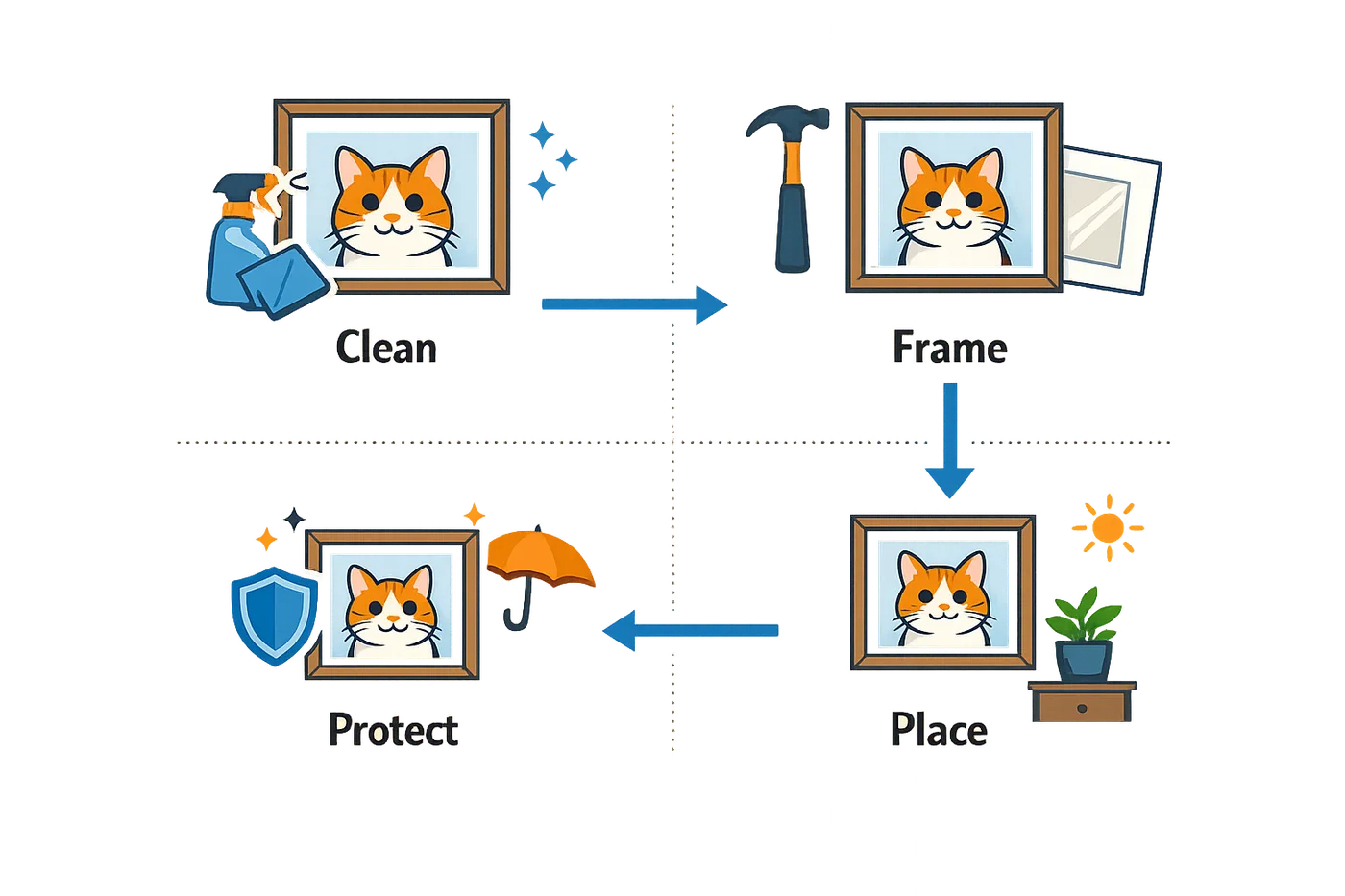
Here is the thing: printed pet portrait care is not complicated, but it does require a few deliberate choices. The good news is that most of the work happens once — when you first hang it — and the rest is just keeping an eye on the conditions in the room. Follow these steps and your portrait will stay vibrant and worth hanging for years.
Step 1: Control the Humidity
Relative humidity is the single biggest factor in how long your print lasts. High humidity speeds up chemical reactions in the paper and ink, leading to fading, discoloration, and in some cases, bleeding. Keep the room below 50% relative humidity — ideally between 30% and 40% with minimal fluctuations. Never let it drop below 15% to 20%, which can make the paper brittle.
If you live in a humid climate, a dehumidifier in the room where the portrait hangs is worth the investment. If you are in a dry climate, a small humidifier during winter can prevent the paper from becoming too fragile. The key is stability — wild swings in humidity cause the paper to expand and contract, which leads to warping.
Step 2: Keep the Temperature Steady
Temperature control is almost as important as humidity. High temperatures accelerate fading, yellowing, and dye degradation. Keep the room between 65° and 70°F, and avoid seasonal swings. If the portrait is near a heating vent, radiator, or fireplace, move it — those temperature spikes will shorten its life.
Air conditioning in summer and controlled heating in winter are your friends here. The goal is a stable environment, not a perfect one. A few degrees of variation is fine; ten or fifteen degrees of swing between seasons is not.
Step 3: Limit Light Exposure
Light — especially ultraviolet radiation — is the enemy of printed portraits. Natural daylight, fluorescent bulbs, and halogen track lights all carry UV that fades colors, weakens paper, and yellows coatings. If your portrait is in direct sunlight for even part of the day, move it.
When you frame the portrait, use UV-filtering glass or acrylic. It blocks most of the harmful radiation without changing how the portrait looks. If the room gets a lot of natural light, consider blackout curtains or shades that you can close during the brightest hours. For artificial lighting, use LED bulbs — they emit far less UV than fluorescent or halogen.
Step 1
Choose the right wall
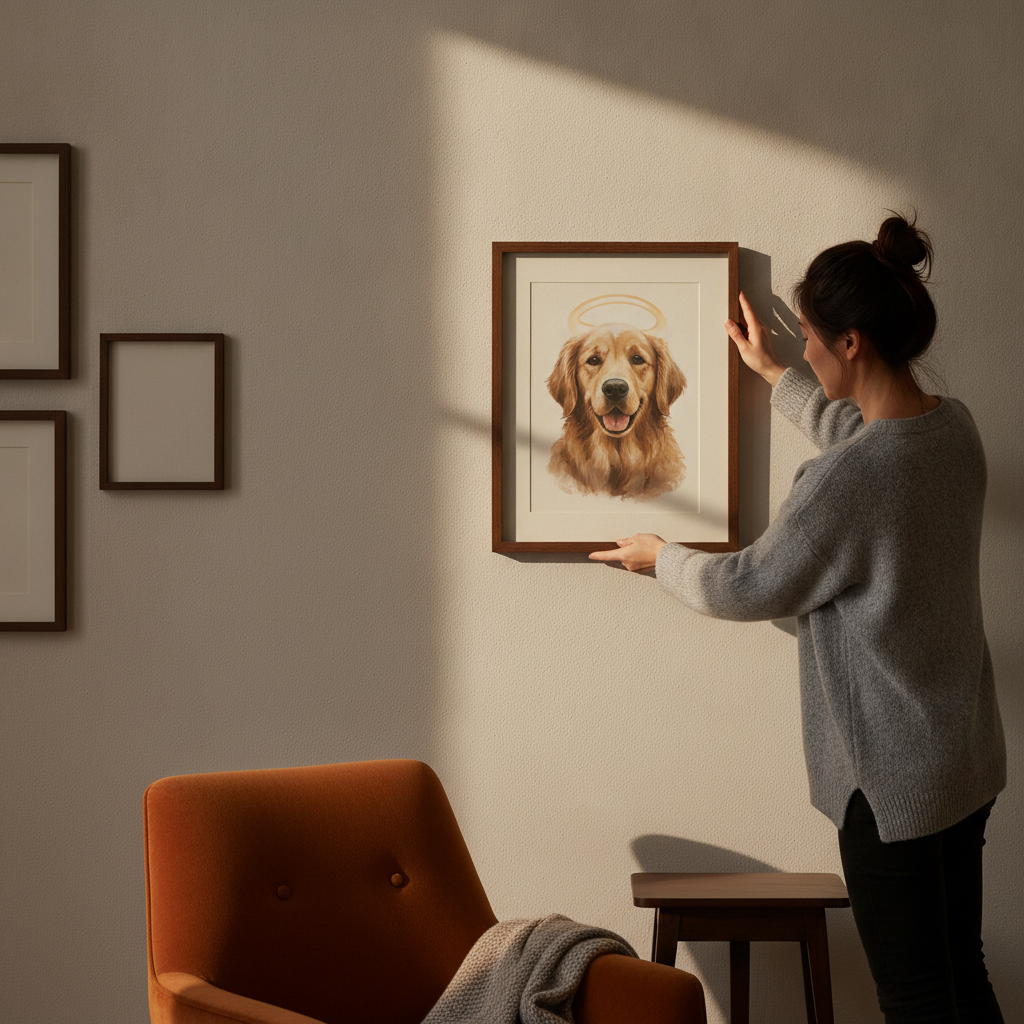
Hang your portrait on a wall that does not get direct sunlight at any time of day. Interior walls or walls facing north (in the Northern Hemisphere) are usually the safest.
Step 2
Frame with UV protection
When you frame the portrait, specify UV-filtering glass or acrylic. Most framers offer this as a standard option — it costs a little more, but it is the easiest way to add years to the print.
Step 3
Monitor the room conditions
Place a hygrometer near the portrait and check it weekly. If humidity climbs above 50% or the temperature swings more than a few degrees, adjust the environment before damage starts.
Step 4: Handle With Care
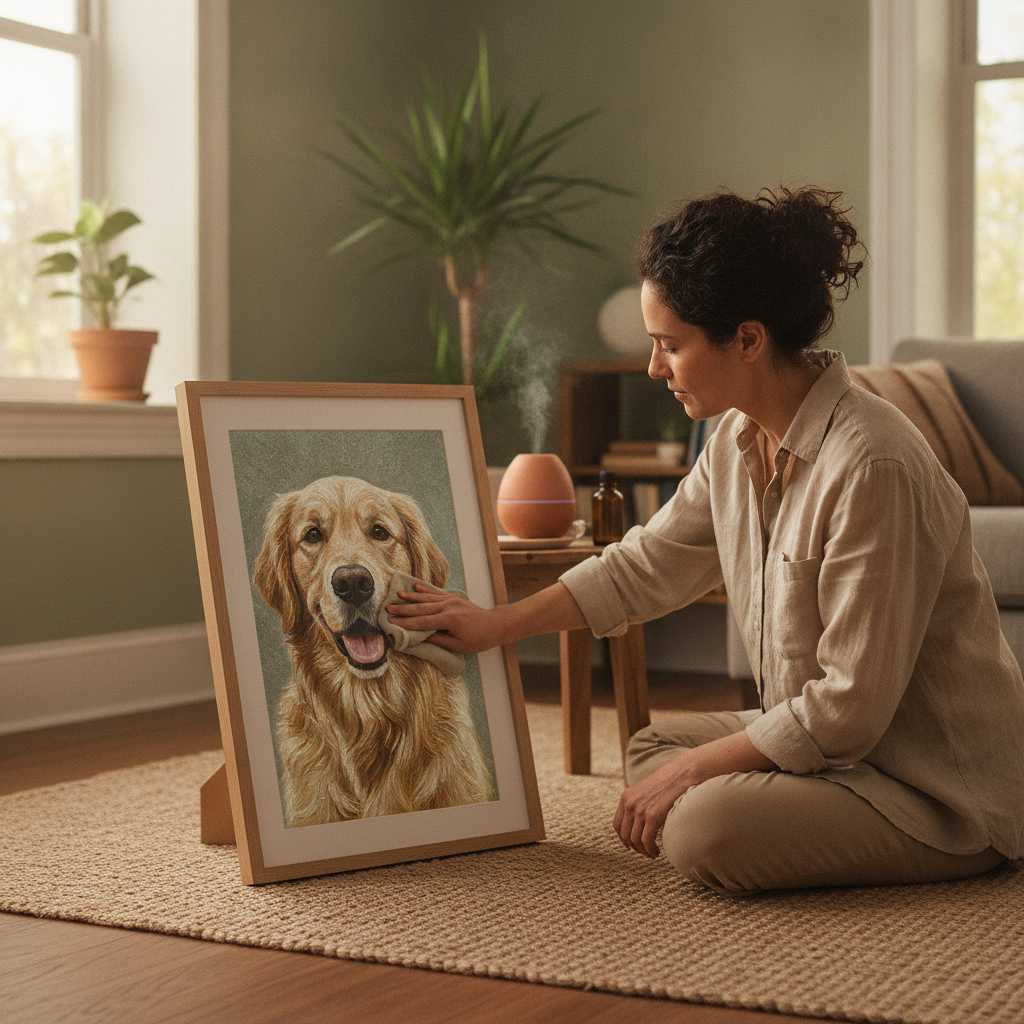
When you move or clean the portrait, handle it by the frame, not the print itself. Oils from your fingers can leave marks that attract dust and accelerate deterioration. If you need to dust the glass, use a dry microfiber cloth — no sprays, no water, no cleaners that might seep behind the glass.
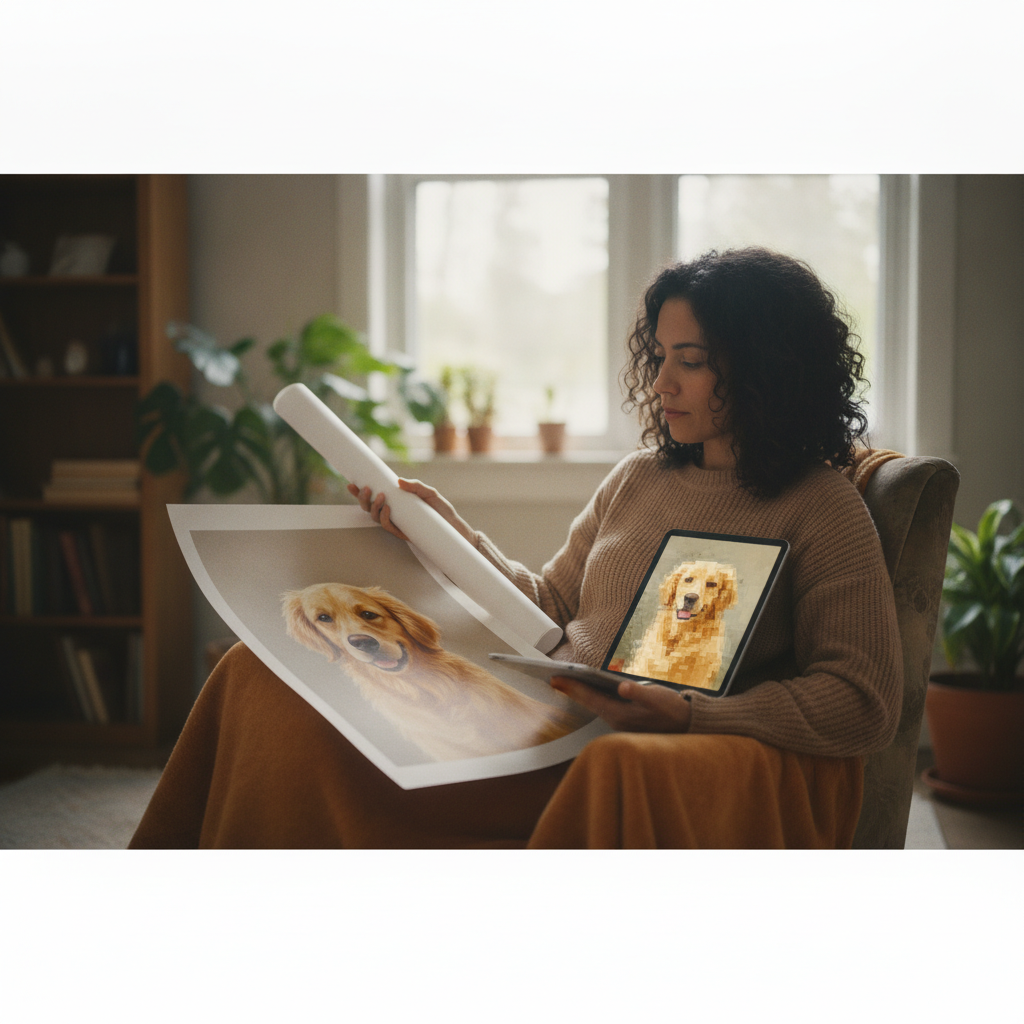
If the portrait is unframed, store it flat in a cool, dry place, ideally in an acid-free sleeve or folder. Never roll it, stack heavy objects on it, or lean it against a wall where it can warp.
For more ideas on turning your favorite photos into art you will actually hang, see our guide on turning your pet photo into art — it walks through every style and what works best for different subjects. If you are considering custom horse portraits, the same care principles apply.
Tips and Tricks for Longevity
Here is the thing about keeping a printed pet portrait looking good: the little details that sell it are the ones people skip. You frame it, you hang it, and then you forget that light and air are working on it every single day. A few small moves now save you from watching your favorite portrait fade into something you would not hang.
Keep Humidity in Check
Humidity is the silent enemy. High moisture in the air makes inks bleed, paper warp, and colors shift faster than you would expect. Keep the room where your portrait hangs below 50% relative humidity — ideally between 30% and 40%. A small hygrometer (the kind you use for houseplants or cigars) will tell you if you are in the safe zone. If you live somewhere humid, a dehumidifier in that room is worth it. Never hang a portrait in a bathroom or directly above a radiator.
Control the Temperature
Heat speeds up every kind of deterioration. Keep the room between 65° and 70°F, and try to avoid big seasonal jumps. That means no portraits over fireplaces, near heating vents, or in un-insulated sunrooms. Temperature swings also cause the support to warp, so a stable environment does most of the work for you.
Limit Light Exposure
Light fades prints — especially ultraviolet light from windows and fluorescent bulbs. If your portrait is in a room with natural light, use UV-filtering glass in the frame or hang it on a wall that does not get direct sun. Track lighting and halogen spots are also UV sources, so if you are lighting the portrait, use LED bulbs rated low-UV. The less light hits the print, the longer it stays vibrant.
All light causes damage over time, but UV radiation is the fastest route to faded colors and yellowed paper.
Rotate Display Locations
If you have more than one portrait, rotate them every year or two. The one in the bright hallway gets more exposure than the one in the bedroom, so swapping them out evens the wear. This is especially helpful for memorial portraits or pieces you want to keep for decades.
Use Archival Matting and Backing
When you frame, ask for acid-free mat board and backing. Regular cardboard and cheap mats leach acids into the print over time, which causes yellowing and brittleness. Archival materials cost a little more, but they are the difference between a portrait that lasts ten years and one that lasts fifty. For more on how custom work holds up over time, see how long does a custom painting take.
Handle With Clean, Dry Hands
Oils and moisture from your fingers transfer to the print surface and attract dust and grime. If you need to move or reframe a portrait, handle it by the edges only, or wear cotton gloves. Never touch the printed area directly.
Dust Gently
Dust the frame and glass with a soft, dry microfiber cloth. Do not use glass cleaner directly on the frame — spray it onto the cloth first, then wipe. If the print is unframed or you are storing it, do not dust the print itself. Let it breathe in a clean, low-humidity space and keep it flat.
Conclusion
Here is the thing about printed pet portrait care: it is not complicated, but it is worth doing right. A little attention now — the right frame, the right spot on the wall, a quick dust every few weeks — keeps the portrait you love looking the way it did the day it arrived. You did the hard part already: you picked the photo, you chose the style, you hung it where you see it every day. Now you just have to let it live there without fading, warping, or collecting dust behind the glass.
The portraits that last are the ones people actually protect. UV glass, a frame with a backing board, a wall that does not get direct afternoon sun — these are the details that separate a portrait you keep for decades from one that looks tired in two years. If you are hanging a memorial portrait, you already know it matters. If it is a gift, the person receiving it will notice that you thought it through. Either way, the care you put into displaying and preserving it is what makes it worth hanging in the first place.
I have seen families create memory boxes with photos, collars, and other keepsakes to honor a pet they have lost — tangible tributes that keep the love present even after the loss. A printed portrait on the wall does the same work: it keeps them in the room with you. Protect it well, and it will be there as long as you need it to be. If you wonder whether pets know they are loved, a portrait on your wall is one more way they feel your care.
If you are still deciding which portrait style suits your pet best, take a look at Renaissance and Classical Pet Portraits: Your Pet as Old-Master Art — the era you choose changes the whole feel of the piece, and it is easier to get right than you think. For a more formal look, explore regal pet portraits or Victorian pet portraits.
Learn how to care for a canvas print so it lasts and remains a cherished piece of art in your home.
Table of Contents
- Introduction — To introduce the importance of caring for printed pet portraits for longevity.
- What Threatens Your Printed Pet Portrait? — To highlight common issues that can affect printed pet portraits if not properly cared for.
- How to Care for a Printed Pet Portrait: Step-by-Step — To provide actionable steps for maintaining and preserving pet portraits.
- Tips and Tricks for Longevity — To share insider tips and tricks that can help enhance the care of printed pet portraits.
- Conclusion — To summarize the importance of caring for pet portraits and encourage readers to take action.
- Table of Contents
FAQ
How often should I check humidity levels for printed pet portrait care?Check your hygrometer weekly. Printed pet portrait care requires monitoring humidity levels to catch any swings above 50% or below 20% before damage starts.
What is the best frame for printed pet portrait care?Use UV-filtering glass or acrylic in an archival-quality frame with acid-free matting and backing. This combination provides the foundation for effective printed pet portrait care.
Can I hang a printed pet portrait in direct sunlight?No. Direct sunlight causes rapid fading and yellowing. Proper printed pet portrait care means choosing a wall without direct sun exposure at any time of day.
How do I clean a framed printed pet portrait?Use a dry microfiber cloth on the glass. For printed pet portrait care, never spray cleaner directly on the frame — spray the cloth first, then wipe gently.